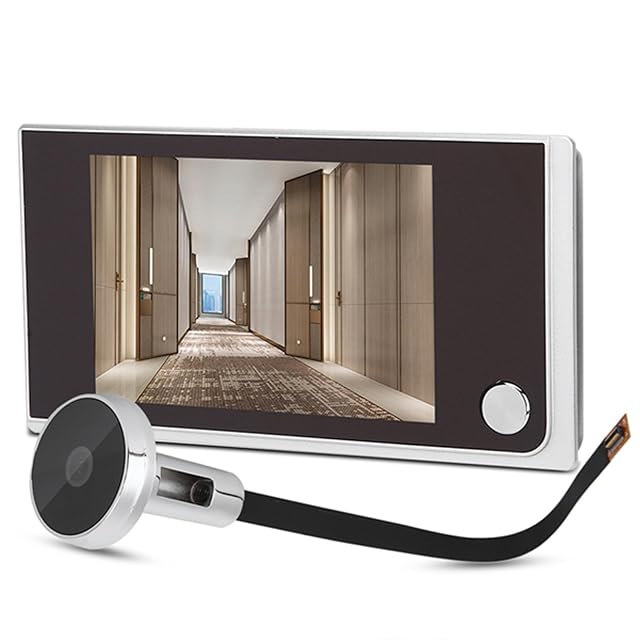
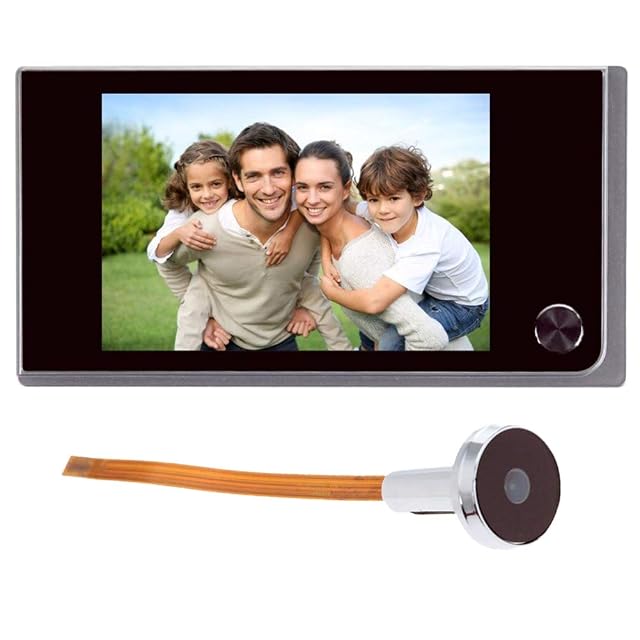
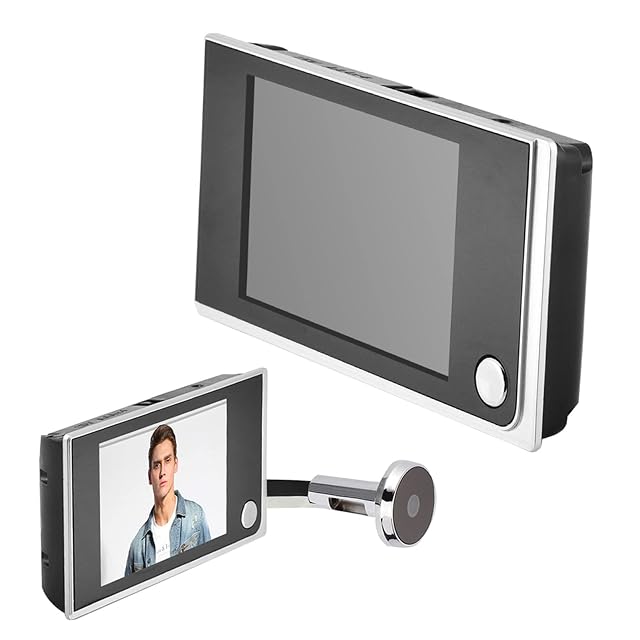
The conclusion The only viewer on this shelf that works in the dark, keeps a picture and recharges: two 850 nm infrared lamps, seventy-five photos to built-in memory, and a 1200 mAh battery rated at a hundred and eighty days of standby. On an unlit communal landing those three things settle it. The problem is the one figure it does not publish — no door thickness range, no bore range — so get both from the seller in writing before ordering, because a barrel that will not span the door cannot be fixed.
What the maker puts in writing
3-inch TFT LCD · 1 MP IR night vision camera · two built-in 850 nm infrared lamps
120 degree wide angle lens
Built-in memory holds up to 75 photos, oldest deleted automatically, no memory card needed
Built-in 1200 mAh lithium battery, standby up to 180 days
Zinc alloy, anti-destructive design, for outdoor use
No door thickness range. No peephole bore range. No motion capture.
Three things nothing else here does
Sees in the dark. Keeps a picture. Recharges.
Two 850 nm lamps, seventy-five photos in memory, and a 1200 mAh cell rated at a
hundred and eighty days of standby.
The other three viewers on this shelf take AAA cells — and two of them say in
their own titles that the cells are not included.
On an unlit communal landing that is the whole decision.
And the figure that can ruin it
The one this shelf’s introduction asks for first.
A digital viewer is a barrel pushed through the door with plates clamping on both
sides. It spans the door or it does not, and there is no adjusting it.
This listing publishes no thickness range and no bore range.
The two viewers here that do publish theirs say 40–100 mm (1.57 to 3.94 in) and 35–100 mm (1.38 to 3.94 in), which
gives you a sense of the normal span.
Get the figures from the seller in writing before ordering.
Eight hundred and fifty nanometers
Which the eye nearly sees.
It is the efficient choice, and the trade is a faint red glow at the lens in the
dark. A caller can tell the viewer is watching.
A deterrent announces itself. Covert observation does not. Decide which you
wanted.
The invisible alternative is 940 nm, and it is dimmer.
Seventy-five photos, and no card
Which is a buffer, not a record.
It overwrites the oldest when full, so it never stops working and never keeps
anything long.
No card slot. Sonew calls that a convenience, and it is also the ceiling.
Availability
On sale at around $73 on the American Amazon store at the time of checking.
Prices and availability are what Keepa reported on the date this page was updated; both move.
Prices quoted in this text were read on October 8, 2026. The live price is at the top of the page.
What reassures, and what does not
Strengths
Two 850 nm infrared lamps, the only night vision on this shelf
Seventy-five photos to built-in memory, with no card to buy
A 1200 mAh rechargeable battery rather than AAA cells
A hundred and eighty days of standby, the only runtime figure here
Zinc alloy outdoor unit, stated for harsh weather
The oldest photo overwrites automatically, so it never silently stops recording
Compromises
No door thickness range published, which the shelf calls the first check
No peephole bore range either
A 3-inch screen, the smallest in this group
Seventy-five photos is a small buffer with no card slot to extend it
No motion-triggered capture stated
Seventy-three dollars, the most expensive viewer here
Specifications
Night vision
A 1 MP infrared camera with two built-in 850 nm infrared lamps, stated to allow monitoring in total darkness. It is the only night vision on this shelf, and 850 nm lamps give a faintly visible red glow at the lens — which is a deterrent to some and a giveaway to others
Storage
Built-in memory holding up to 75 photos, with the oldest overwritten when it fills — stated, and stated to need no memory card. It is the only storage on this shelf, and the only one of the introduction's comparison points about capture that any viewer here answers
Battery
A built-in 1200 mAh lithium battery with up to 180 days of standby — stated. It is the only rechargeable viewer here and the only published runtime figure; the other three take AAA cells, and two of them say in their own titles that the cells are not included
Screen
3-inch TFT LCD — stated, and the smallest screen on this shelf. The three other US-listed viewers are 3.5-inch; the Yale viewers are 3.2-inch
Field of view
120 degrees — stated, the same as every other viewer here
Finish
Zinc alloy, stated for outdoor use and harsh weather, with an anti-destructive design
Door thickness
NOT PUBLISHED. This shelf's introduction calls this the specification to check first, because the barrel has to span the door and clamp on both sides, and this listing gives no range at all
Peephole bore
Not published. This shelf's buying tip says to measure the existing barrel diameter before anything else, and no hole range appears here
Motion detection
Not published. The photo storage is manual: nothing states that the camera captures when motion is detected
Amazon reference
B07MVBDKSZ
EAN
0719527573804
The questions we are asked
Why does the missing door thickness matter so much?
Because it is the one specification that can make the purchase useless. A digital viewer is a barrel pushed through the door with plates clamping from each side, and the barrel either spans your door or it does not — there is no adjusting it. This shelf's introduction names this as the first thing to check, and this listing publishes no range. At least two of the nine viewers here state theirs (40–100 mm (1.57 to 3.94 in) and 35–100 mm (1.38 to 3.94 in)), which gives you a sense of the normal span. Ask the seller for the figure in writing before ordering, particularly on a thick front door.
What do 850 nm lamps actually do?
Illuminate the landing in infrared, which the camera sees and the eye almost does not. Eight hundred and fifty nanometers is the common choice because it is efficient, and the trade is that it leaves a faint red glow visible at the lens in the dark — a caller can tell the viewer is watching. Whether that is good depends on what you want: a deterrent announces itself, and covert observation does not. The alternative is 940 nm, which is invisible and dimmer. This is the only viewer on this shelf with lamps of any wavelength.
Is 75 photos enough?
For reviewing the last few days of callers, yes; as a record, no. The memory holds seventy-five images and overwrites the oldest when full, which means it never stops working but also never keeps anything long. There is no card slot, which Sonew presents as a convenience and which is also a ceiling — a card would let you keep months. This shelf's introduction lists motion capture to card as something this shelf compares; of the four viewers here, this one has the storage and none of them has the card.
Against the rest of the digital door viewers
Between security devices of the same category and nearby price. Shown: what they all state. A half-filled column says nothing.
Model
Price
Screen
Field of view
Sonew 3-inch TFT digital door viewer with 1 MP IR camera and 1200 mAh battery
$73
3-inch TFT LCD — stated, and the smallest screen on this shelf. The three other US-listed viewers are 3.5-inch; the Yale viewers are 3.2-inch
120 degrees — stated, the same as every other viewer here
3.5-inch LCD color display at 480 × 320 — stated. It is the only screen resolution published on this shelf, and a useful figure: 480 × 320 across 3.5 inches is about 165 pixels per inch, which is legible rather than sharp
120 degrees — stated, the same as every viewer on this shelf
What separates the models, in security devices
If price decides: Dioche 3.5-inch digital door viewer, 120°, 4 × AAA, at $58.
What this one costs among digital door viewers
Details checked on October 8, 2026.
The buyer this one serves, among security devices
An unlit communal landing, on a door whose thickness and bore you can confirm with the seller first
Sources
Specifications: the manufacturer sheet for home security products and the matching Amazon product page. Prices and availability: Keepa. Every figure on this page names its source.
3.5-inch LCD · 1 Mega CMOS · 120° actual viewing angle · door hole 14–28 mm (0.55 to 1.10 in), door thickness 40–100 mm (1.57 to 3.94 in), both published · indoor unit 120 × 62 × 20 mm (4.72 × 2.44 × 0.79 in) · outdoor camera 32 mm (1.26 in) · 4 AAA, not included · low-battery alert · press to wake, no standby drain
One of only two viewers here that publish both the door thickness range and the peephole bore — the two measurements this shelf says to check first.
Best for: A tenant replacing an existing peephole who needs to know it will fit before ordering
3.5-inch LCD · 2 Mega CMOS · 120° · door hole 14–28 mm (0.55 to 1.10 in), door thickness 35–100 mm (1.38 to 3.94 in), a wide range · indoor unit 120 × 62 × 20 mm (4.72 × 2.44 × 0.79 in) · camera ≈30 mm (1.18 in) · 4 AAA, not included · battery changed without removing the unit · the only listing here that argues against itself
The widest door range on the shelf, and the only listing on this site that tells you what its own product cannot do.
Best for: A thin apartment door — 35 mm (1.38 in) up — where the honesty about low light is worth more than a night vision claim
3.5-inch LCD at 480 × 320 — the only screen resolution published on this shelf · 720p camera claimed · 120° · zinc alloy outdoor unit · NO door thickness, NO peephole bore, NO battery, NO storage · five of its ten bullets are empty
The only listing here that publishes its screen resolution, on a page whose last five bullets contain nothing at all.
Best for: Nobody, until the seller supplies a door thickness range and a bore diameter in writing