Skip to content

The best door and window sensors for 2026

A contact sensor is two parts — a switch and a magnet — and it reports the moment a door or window starts to open, which is earlier and less ambiguous than a motion detector reporting that someone is already inside. The specification that decides whether it works on your window is the gap tolerance: how far the magnet can sit from the switch before the contact drops: 7 to 20 mm (0.28 to 0.79 in) for the sensors in this hub that publish it. Metal frames can complicate this, and some sensors state a reduced gap on steel. We compare gap tolerance, battery type and stated life, radio protocol, tamper detection and metal frame behavior.

The models we recommend

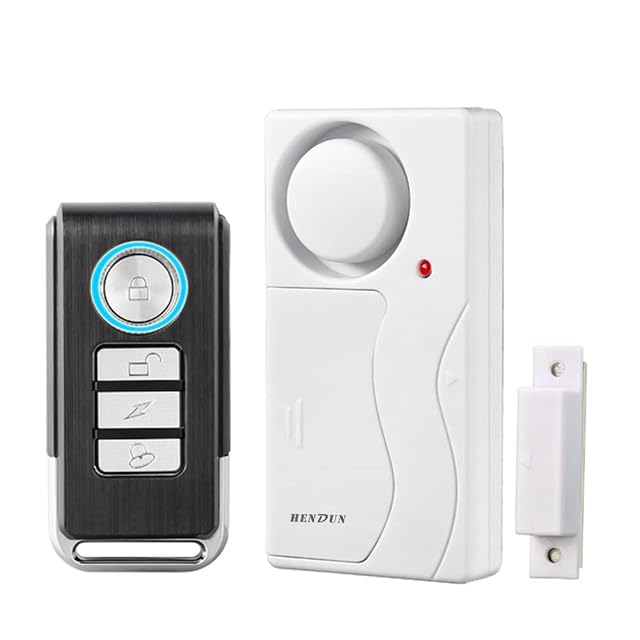
  1. HENDUN SZSF03R

    Standalone magnetic contact · remote control · up to 8 remotes per sensor · chime or alarm

    A standalone magnetic door and window alarm with a remote control, which HENDUN states can be paired with up to eight remotes per sensor, and used as a chime as well as an alarm.

    Best for: A single door — a shed, a gate, an internal door — that should announce itself with no system behind it.

    6.9/10

    ≈ $10

  2. PLOJOP Door and window alarm, 90 dB, 3.4 × 1.1 × 0.6 in

    THE ONLY GAP FIGURE ON THIS SHELF: the magnet must sit no more than 0.6 in — 15.2 mm (0.60 in) — from the alarm · 90 dB standalone siren, alerts nobody remotely · 2 AAA, not included · 3.4 × 1.1 × 0.6 in · dust-proof, stated for humidity and extreme temperatures · pack count not published

    The only listing on this shelf that publishes the one measurement the shelf says decides everything.

    Best for: Any window whose recess you have measured — this is the only sensor here you can check against it

    ≈ $10

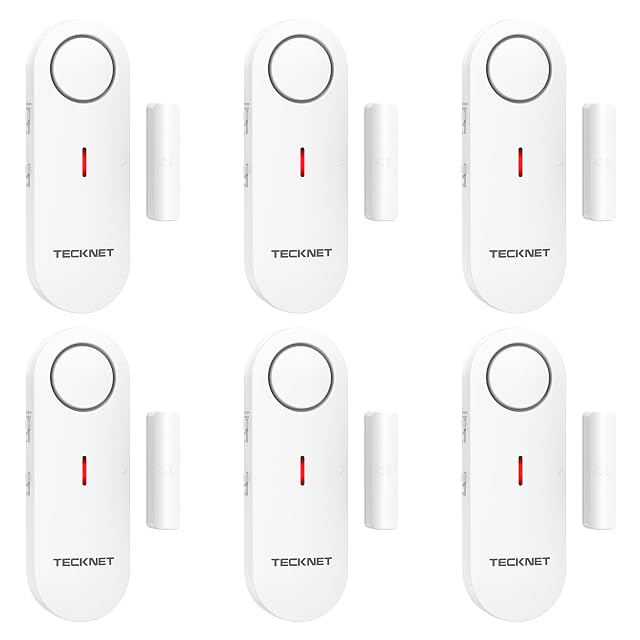
  3. TECKNET TK-WA801

    6-pack · standalone · trigger at a 2 cm (0.8 in) gap · 3 volume levels · 3 modes · adhesive mounting

    A pack of six standalone door and window alarms that TECKNET states trigger when the two halves separate by more than 2 cm (0.8 in), with three volume levels and three modes, mounted with the supplied adhesive pads.

    Best for: A window, a shed or a sliding door where a local noise is the whole requirement.

    8.1/10

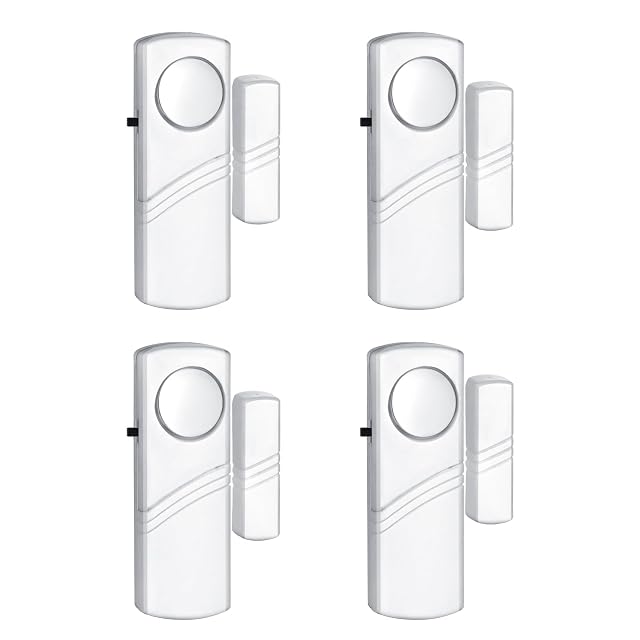
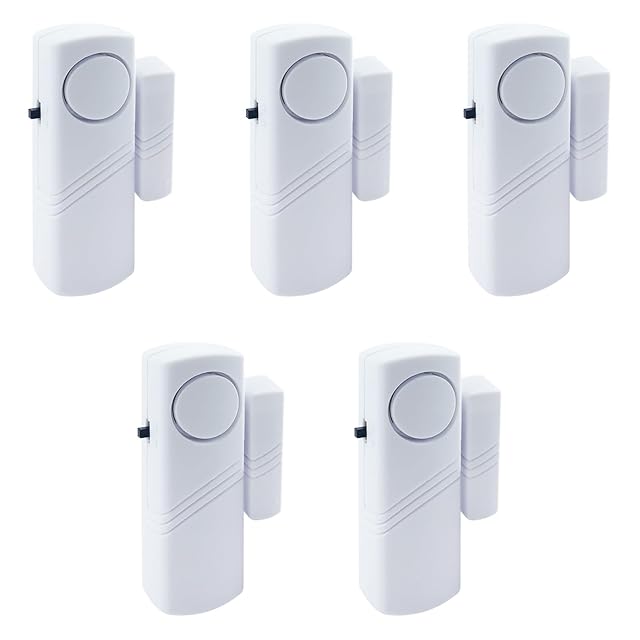
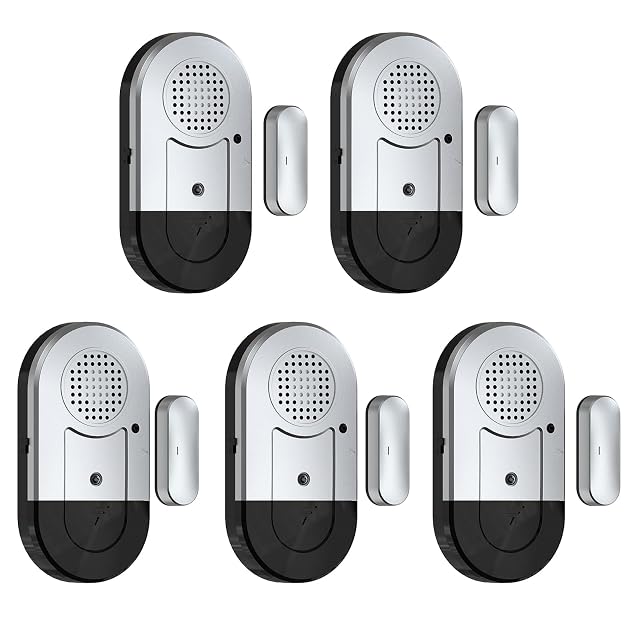
  4. KOLODOGO Door and window alarm, 5-pack, 90 dB, 3.54 × 1.18 × 0.79 in

    90 dB standalone siren · 3.54 × 1.18 × 0.79 in and about 0.08 lb, both published · 2 AAA, NOT included · a three-step install written out · five units for ten dollars · no gap figure, no battery life, no tamper detection

    Five alarms for ten dollars with their dimensions and weight published — two figures the cheapest sirens here usually leave out.

    Best for: Five openings on a tight budget, where the body has to be measured against a shallow frame first

    ≈ $10

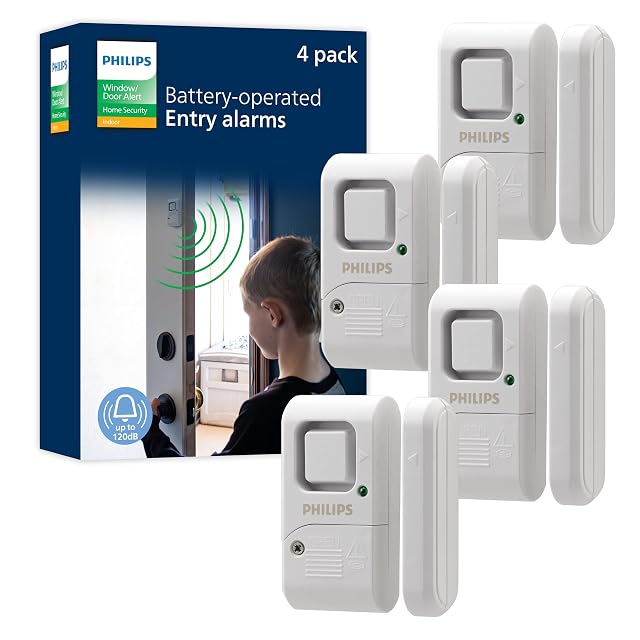
  5. Philips LRM3320W/27 window and door alarm, 4-pack, 120 dB with chime mode

    120 dB alarm or chime, switched on the side: OFF / chime / alarm · 4 LR44 cells SUPPLIED · a battery TEST BUTTON and a low-battery LED, the only test button on this shelf · double-sided tape included · no gap figure, no battery life, no tamper detection

    The only sensor here with a button that tells you the battery is still good — which on an alarm nobody checks is worth more than it sounds.

    Best for: A household that wants a chime for the back door in the day and an alarm on it at night

    ≈ $19

  6. SanJie YYDOA01 door and window alarm sensors, 5-pack, 125 dB with volume control

    125 dB, the loudest on this shelf, with 100 dB and 100 dB chime modes · a 31-second alarm that will not stop until the opening is closed · 3 LR44 cells SUPPLIED · up to 13 months of stated life · low-battery indicator · no gap figure

    The loudest, the most configurable and the only one here with both supplied batteries and a stated life — three modes, 125 dB and thirty-one seconds.

    Best for: A pool gate, a medicine cabinet or a front door where the volume and the mode need to differ by room

    ≈ $34

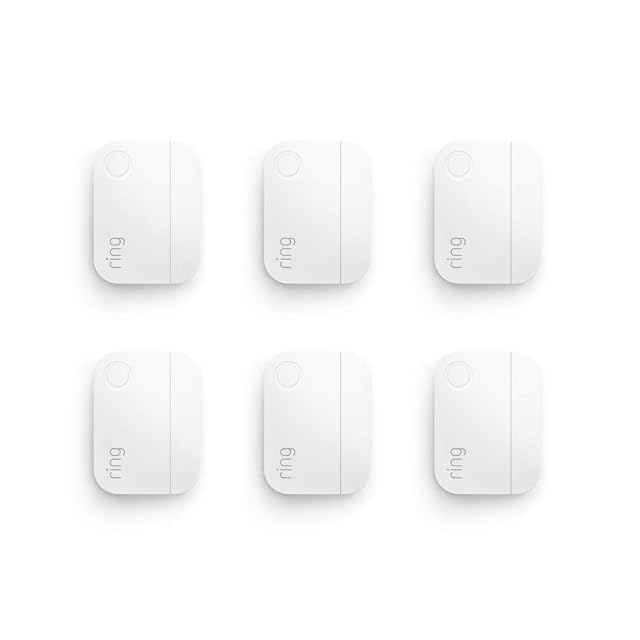
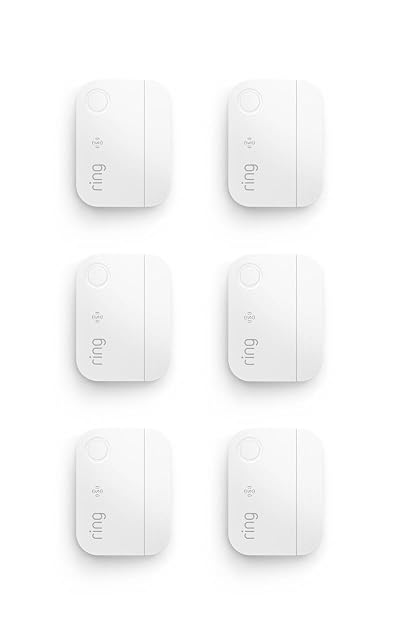
  7. Ring Alarm Contact Sensor 6-pack, 2nd generation

    Six system sensors that alert a phone, not a siren on the frame · approximately 3-year battery life, the longest published here · two 3 V CR2032 cells included per sensor · REQUIRES a Ring Alarm Base Station · mobile alerts require a Ring Protect subscription · no gap figure, no protocol, no tamper detection

    Six sensors that tell your phone rather than the street — on condition you already own a base station and pay a subscription.

    Best for: A house that already has a Ring Alarm base station and six more openings to cover

    ≈ $60

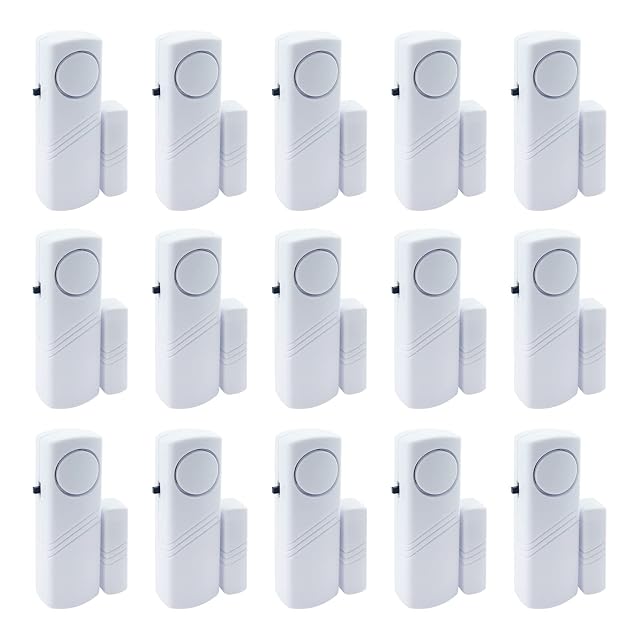
  8. WimuPath Door and window alarm, 15-pack, 90 dB

    FIFTEEN alarms in one box, the largest pack on this shelf — about a dollar forty each · 90 dB standalone siren, alerts nobody remotely · 2 AAA, NOT included · dust-proof · no gap figure, no dimensions, no battery life, no tamper detection

    Fifteen alarms for twenty-one dollars, which is the cheapest way on this shelf to put something on every opening in a house.

    Best for: A whole house, a vacation rental or a small office where every window should make a noise and nothing needs an app

    ≈ $21

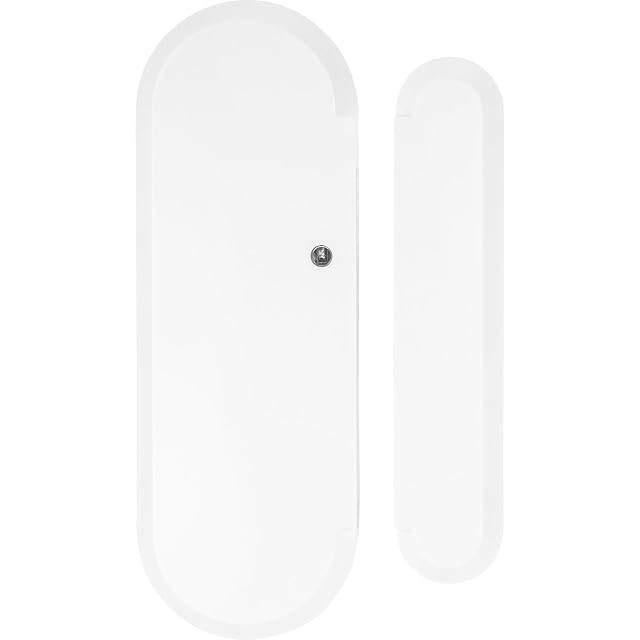
  9. Sone Smart One SB589

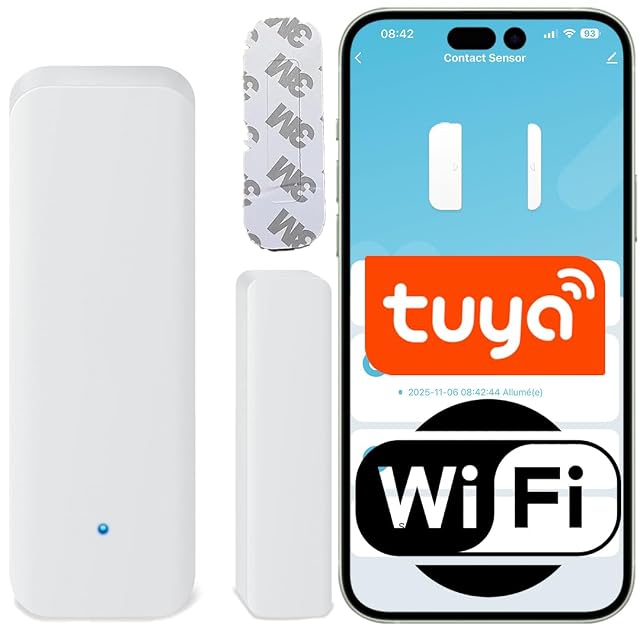
    Wi-Fi 2.4 GHz direct, no bridge · Tuya · 70 × 25 mm (2.76 × 0.98 in) and 11 × 44 mm (0.43 × 1.73 in) · 2 × AAA · adhesive

    A Wi-Fi door sensor that connects straight to the router with no bridge or hub, on the Tuya platform. Sone publishes both module sizes and states adhesive mounting on two AAA cells.

    Best for: One or two doors, in a house with no hub and no intention of getting one.

    8.1/10

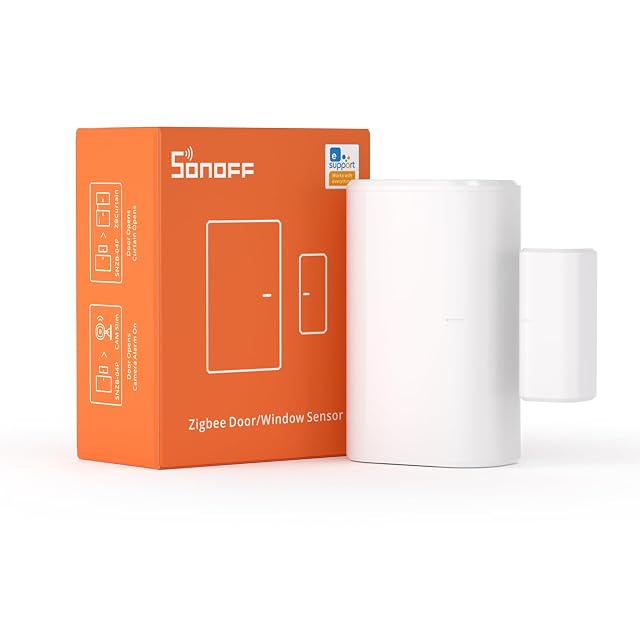
  10. SONOFF SNZB-04P

    Zigbee · tamper alarm · local scenes without cloud · requires a Zigbee hub

    A Zigbee door and window sensor with a tamper alarm, which SONOFF states can run local scenes between Zigbee devices without the internet — provided a compatible hub is present.

    Best for: A Zigbee household — Home Assistant, SmartThings or SONOFF's own hub — wanting cheap, reliable contacts.

    7.5/10

  11. Ring Window and Door Sensor (newest model), 6-pack, no base station

    NO BASE STATION REQUIRED — connects over Amazon Sidewalk, the only named network on this shelf · six sensors · 24/7 professional monitoring on a subscription · no battery type, no battery life, no gap figure, no tamper detection

    The only sensor on this shelf that needs no hub at all — and the only one that names the network it talks to.

    Best for: A house with no alarm system that wants phone alerts on six openings and nothing else to buy

    ≈ $80

  12. ABUS FUMK45000

    For Smartvest Pro · wireless opening detector · triggers configured scenarios · doors and windows

    The opening detector for ABUS's Smartvest Pro alarm. It reports unauthorized opening of doors, windows and patio doors, and triggers whatever scenarios have been configured on the panel.

    Best for: An ABUS Smartvest Pro system being extended door by door.

    8.7/10

The need before the model, across door and window sensors

Equipping every opening

One sensor per accessible opening is the principle of the device. The TECKNET pack puts six alarms in one box; the SONOFF also needs a Zigbee hub. In exchange, the TECKNET only sounds on the spot and sends nothing to your phone.

TECKNET TK-WA801

Tolerating a loose frame

A sensor that needs less than five millimeters of gap triggers on its own on a window that moves in the wind. The stated maximum gap decides the number of false alarms a month.

SONOFF SNZB-04P

Running for years on one coin cell

Changing eight cells a year across eight openings turns monitoring into a chore and ends in silent sensors. The stated battery life decides the real reliability of a whole system.

SONOFF SNZB-04P

Who buys what, across door and window sensors

Detection on opening
The sensor alerts the moment the opening moves, before entry into the room. That is earlier than a motion detector.
Partial mode
Protecting the openings while you are inside is a very common use at night. Volume detectors do not allow it.
Status check
Knowing whether a window was left open when you left is a daily use, independent of any alarm.

Nothing is free: the trade-offs of door and window sensors

Opening detection against glass break
The sensor detects opening, not breaking. A pane broken without opening the window does not trigger it: a glass-break detector answers that question.
Discretion against alignment
A discreet, slim sensor fits anywhere and copes badly with misalignment. The distance between the two parts is a dimension to respect.
Long battery life against supervision
A battery lasting years makes you forget the sensor. Supervision and a low-battery warning are what prevent a silent sensor.

Buyers’ questions on door and window sensors

Does the sensor detect a broken pane?

No: it detects the two parts moving apart, so an opening. A pane broken without opening the window does not trigger it.

What distance between the two parts?

A maximum dimension is stated and has to be respected. Beyond it, the sensor reports a permanent opening.

Can it be fitted to metal?

Metal disturbs some magnetic sensors. Spacers or suitable models exist.

Do I need one sensor per opening?

Yes: every unequipped opening is an unwatched way in. That is the very principle of the device.

How many months does a door-sensor battery last?

Often several years. The low-battery warning is what prevents a sensor silently out of service.

Does the adhesive hold over time?

On a clean, degreased surface, generally well. Temperature variations and damp lift it in the long run.

Does the sensor work in partial mode?

That is precisely its point: protecting the openings while you are inside, which a volume detector does not allow.

Does a sensor stick to an aluminum frame?

The adhesive holds on a clean, degreased profile, but aluminum can disturb the radio range if the transmitter is recessed. Surface mounting, a few centimeters away from the metal, usually solves it.

What to take away from door and window sensors

The sensor detects opening, never breaking: a pane broken without opening the window does not trigger it. Respect the gap dimension, degrease before sticking — and the low-battery warning is what prevents a sensor silent for months.

The gist of door and window sensors, at a glance

  • Volume: 90 to 125 dB at the top setting, on 5 of the 12 models.

A comparison of door and window sensors

A characteristic has to come from four devices in five to hold a column. Below that, we would be lining up empty cells.

ModelPriceMountingType
KOLODOGO Door and window alarm, 5-pack, 90 dB, 3.54 × 1.18 × 0.79 in$10A three-step install written out: insert two AAA cells, peel and stick, turn on the switch — stated, with no tools neededA standalone alarm: the magnetic sensor triggers a 90 dB siren in the unit itself, and nothing is reported remotely. No app, no radio, no base station — Wireless in the title means no cable to run
PLOJOP Door and window alarm, 90 dB, 3.4 × 1.1 × 0.6 in$10Peel-and-stick double-sided tape, with an on/off switch pressed before the cells go in — stated. No screw optionA standalone alarm, not a system sensor: the two parts separate, the unit screams at 90 dB where it is fitted, and nothing is reported anywhere else. The word Wireless in the title means no cable to run, not a radio link
HENDUN SZSF03R$10—Standalone magnetic contact alarm
Philips LRM3320W/27 window and door alarm, 4-pack, 120 dB with chime mode$19Double-sided tape included, stated as completely wire and hassle-free, with everything needed in the boxA standalone alarm with a magnetic sensor: it sounds where it is fitted and reports nothing remotely. No app, no radio, no base station
WimuPath Door and window alarm, 15-pack, 90 dB$21Adhesive, with an on/off switch pressed before the cells go in, then the double-sided tape peeled and the unit stuck to the frame — statedA standalone alarm: the magnetic switch detects the opening, the unit sounds at 90 dB where it is stuck, and nothing is reported anywhere else. No app, no radio, no base station
SanJie YYDOA01 door and window alarm sensors, 5-pack, 125 dB with volume control$343M double-sided tape on the back, with the switch set after sticking. SanJie recommends installing indoors — the only placement advice on this shelfA standalone alarm: the magnet separates, the unit sounds where it is fitted, and nothing is reported remotely. No app, no radio, no base station
Ring Alarm Contact Sensor 6-pack, 2nd generation$60Mounts to door and window frames with no tools required, stated. The second generation is stated to be smaller than the first, which Ring says enables more placement optionsA system contact sensor, not a standalone alarm. It makes no noise of its own: the opening is reported to the base station, which sounds the siren and raises the alert. At least five of the twelve sensors on this shelf are the opposite — a screamer on the frame reporting to nobody
Ring Window and Door Sensor (newest model), 6-pack, no base station$80Mounts in minutes with no tools and no wiring, statedA system sensor that reports to an app rather than sounding where it is fitted. No local siren
ABUS FUMK45000——Wireless opening detector
SONOFF SNZB-04P—Two 3M adhesive pads supplied—
Sone Smart One SB589—Double-sided adhesive—
TECKNET TK-WA801—Adhesive pads suppliedStandalone door and window alarms, pack of 6

What a given budget protects on this shelf

The guides devoted to door and window sensors

Sources, and how we judge

Specifications: manufacturer sheets for home security products and the matching Amazon product pages. Prices and availability: Keepa. Every figure in this table names its source.

Most recent revision in this category: October 8, 2026.

What we look at on door and window sensors

Prices quoted in these summaries are dated readings. The live price is shown next to each product.