Night image depends on the illuminator, not on the sensor count · review
Imou S21FEP review
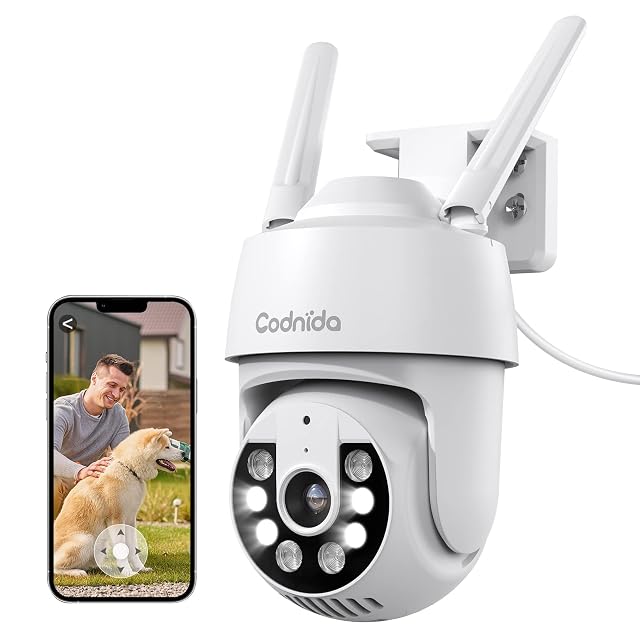
Imou states a 3 MP sensor, four night-vision modes including full color, AI person and vehicle detection and a 110 dB siren, in a dual-antenna housing rated IP66. It also tracks what it detects, as the Codnida Q30S in this hub does.
The conclusion A low-priced pan-and-tilt camera with auto-tracking, bought for its person and vehicle detection. The dual antennas matter more than the specification sheet suggests.
The S21FEP is the camera to look at when a cheaper one has already been
switched off because it notified too often. Imou states AI person and vehicle
recognition specifically to filter the triggers caused by insects and moving
branches, and those two causes account for most of the notifications that
make an outdoor camera unbearable in summer.
What it actually does
A 3 MP sensor gives 2304 × 1296, which is enough to tell a delivery from a
visitor at the length of a drive. The head sweeps 355° and tilts 90°, with
auto-tracking, and Imou lists four night-vision modes — infrared for a
monochrome image that does not announce the camera, and full color when the
spotlight is on.
The dual antennas deserve more attention than they get. Imou states Wi-Fi
coverage to 100 m (328 ft), and on an outbuilding or a gable end at the far corner of
a plot, signal is the thing that decides whether a camera works at all.
Where it gives ground
Auto-tracking has the same flaw here as everywhere: after following
something, the camera is left pointed at wherever that movement ended, which
is usually the street. Set a home position over your weakest entry and the
feature becomes an advantage rather than a risk.
IP66 is a rating Imou declares. It describes dust and
jetting water, which in practice means the camera survives weather and does
not survive being mounted where water can sit in the cable gland.
Who it suits
Someone replacing a first camera that cried wolf. The detection is the reason
to buy it, the antennas are the reason it keeps working at the end of the
garden, and the siren is a bonus rather than a purpose.
Availability
Not found on the American Amazon store, where the buy link falls back to a local search rather than to a page that does not exist.
Prices and availability are what Keepa reported on the date this page was updated; both move.
What reassures, and what does not
Strengths
AI person and vehicle detection, stated to cut triggers from insects and moving branches
Four night-vision modes, including full color, per Imou
Dual antennas, with Wi-Fi coverage stated to 100 m (328 ft)
110 dB siren and spotlight triggered by human motion
Compromises
Auto-tracking leaves the camera pointed wherever the last movement ended
2.4 GHz Wi-Fi only
Mains powered — the cable decides the mounting position
Cloud retention is a subscription; the microSD card (up to 256 GB) is not supplied
Specifications
Resolution
2K QHD, 3 MP (2304 × 1296), stated by Imou
Coverage
355° horizontal, 90° vertical
Night vision
Four modes, including full color, stated to 30 m (98 ft)
Detection
AI person and vehicle recognition, with auto-tracking
Siren
110 dB, stated by the manufacturer
Weather rating
IP66, stated by the manufacturer
Wi-Fi
Dual antennas, coverage stated to 100 m (328 ft)
Audio
Two-way
Storage
microSD up to 256 GB (not supplied), NVR or Imou cloud
Temperature
−30 °C to 60 °C, stated by Imou
Amazon reference
B08BXZY1D2
EAN
6971927236985
The questions we are asked
Does AI detection actually reduce false alarms?
Imou states it is designed to filter triggers caused by insects and moving branches, which are the two commonest causes outdoors. It does not remove them: an insect on the lens at night is lit by the camera's own infrared and fills the frame, and no classifier deals with that. Placement out of the weather does more.
What does full-color night vision need?
Light. Imou lists four night modes, and the color one relies on the spotlight or on ambient light — a camera cannot make color out of an infrared image. If you want color at night, the camera has to be visible at night.
Is 110 dB loud?
It is loud enough to be unpleasant at close range and to wake a house. Decibel figures are quoted at one meter and fall away quickly, so it is a deterrent at the door and much less at the end of a garden.
Our score
8.1/ 10
A low-priced pan-and-tilt camera with auto-tracking, bought for its person and vehicle detection. The dual antennas matter more than the specification sheet suggests.
What this one costs among outdoor security cameras
A reference exists on these Amazon stores: France, Germany, Italy, Spain, United Kingdom. Listed is not the same as in stock — availability changes daily.
Details checked on September 2, 2026.
The buyer this one serves, among security devices
A garden or driveway where false alarms from foliage and insects have already made a cheaper camera unusable.
Specifications: the manufacturer sheet for home security products and the matching Amazon product page. Prices and availability: Keepa. Every figure on this page names its source.
2K 3MP · 350° pan, 90° tilt · color night vision · siren · 2.4 GHz only
A 2K pan-and-tilt outdoor camera with a floodlight and a siren that trigger together on motion. Codnida states auto-tracking, a PIR sensor and custom detection zones, and the camera runs on mains power rather than a battery.
Best for: A driveway or side passage where the point is to make an approach visible and audible, not just recorded.
5MP · dual-band 2.4/5 GHz · 30 m (98 ft) IR · microSD to 512 GB, NVR or FTP · IP66
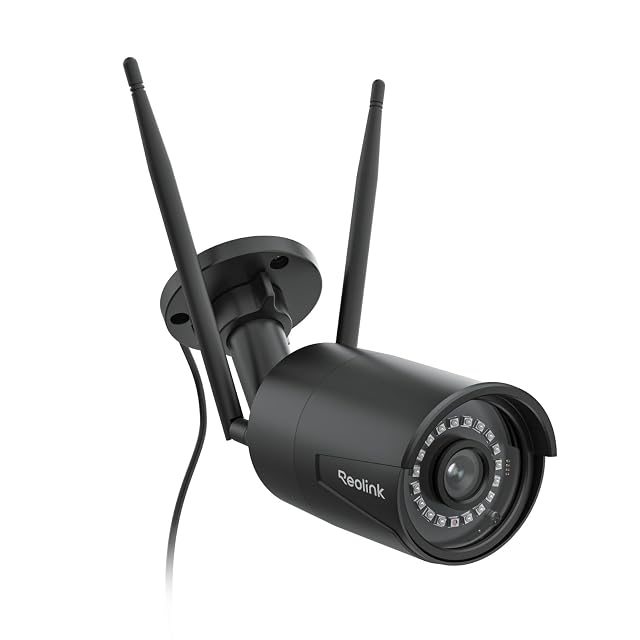
A fixed 5 MP bullet camera rather than a pan-and-tilt, and the only camera in this hub that will record to an FTP server, as well as to a Reolink NVR or a card. Reolink states dual-band Wi-Fi, person, vehicle and animal detection, and 30 m (98 ft) night vision.
Best for: Someone who wants a fixed camera pointed at one thing permanently, recorded somewhere other than the camera itself.
1080p · 360° pan, 130° tilt · 30 m (98 ft) IR · microSD to 512 GB · IP65
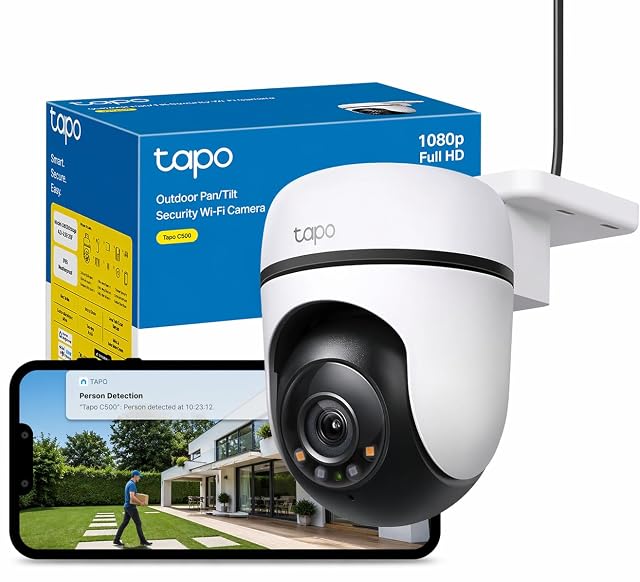
An entry-level pan-and-tilt outdoor camera that records to its own card. TP-Link states 1080p, a 360° horizontal sweep and night vision to 30 m (98 ft), and the listing is unusually frank about what the model is not.
Best for: A first outdoor camera on a wall that already has a socket nearby, where 1080p is enough and the card matters more than the picture.