Skip to content

GardePro E8 vs CEYOMUR CY40

Invisible illumination, or a camera that is harder to take?

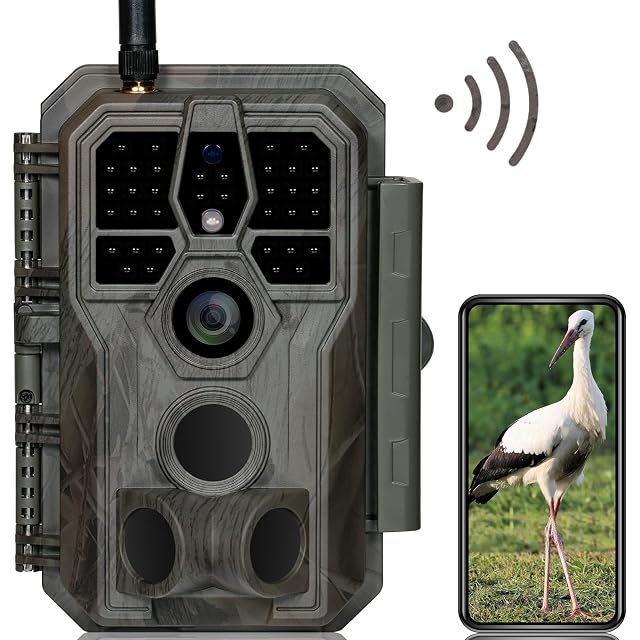
Both run on batteries, need no home network and have an IP66 housing. GardePro uses 940 nm LEDs, which produce no visible glow, and is read out over Bluetooth then local Wi-Fi; CEYOMUR uses 850 nm, brighter but faintly visible, and gives the camera a padlock loop.

GardePro E8 trail camera with external antenna

GardePro E8

7.8/10

Wins 5 of 10

Check price

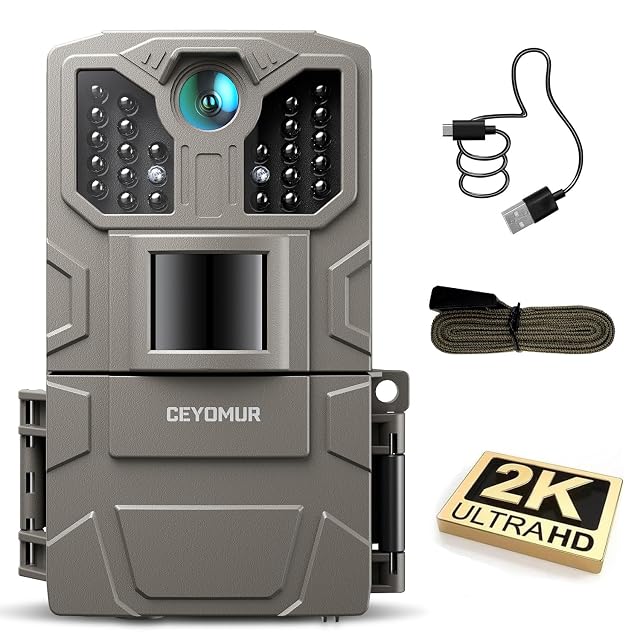
CEYOMUR CY40 camouflaged trail camera strapped to a tree

CEYOMUR CY40

7.2/10

Wins 3 of 10

Search Amazon

Claim against claim

Compared on E8 CY40
Stills Up to 64 MP stated Not stated
Video 1296p H.264 2K
Infrared wavelength 36 × 940 nm, no glow 24 × 850 nm, faint glow
Retrieving footage Bluetooth, then local Wi-Fi up to 15 m (49 ft) No link, card by hand; built-in screen
Trigger time 0.1 s, three PIR sensors Not stated
Weather rating IP66 IP66
Power 8 × AA or external supply Batteries not included
Concealment Not stated Camouflage housing
Anti-theft Not stated Built-in padlock loop
Running cost No subscription None, no app
Listed on amazon.com Yes No

A tick marks the better answer on that line only. Counting ticks does not decide the page — the two verdicts below do, because these products answer different questions.

Which of the two, for which home

Buy the GardePro E8

Buy the E8 where the camera must not be noticed at night. 940 nm LEDs emit nothing the eye can see, and pairing over Bluetooth means retrieving footage without unmounting it.

CEYOMUR CY40

No amazon.com listing was found for this one. We hold references for other markets but none for the United States, so it may not be buyable here — which is the first thing to weigh against anything below.

Buy the CY40 where the camera itself is at risk, and on a tight budget. A camouflage housing and a padlock loop are what keep it in place; in exchange, you walk out to collect the card.

The questions we are asked

What is the difference between 850 nm and 940 nm?

The wavelength of the infrared. At 850 nm the LEDs glow faintly red and give a brighter image; at 940 nm nothing is visible and the image is darker. For wildlife that shies at the glow, 940 nm is the better choice. It does not make covert filming of people acceptable: recording people where they expect privacy is illegal in many states, invisible light or not.

What batteries go in a trail camera?

Lithium, not alkaline. Alkaline cells lose most of their capacity below freezing, which is why trail cameras report low batteries in November on a set fitted in October.

Does the padlock loop stop theft?

It makes theft more work. With a cable lock through the loop and around a tree or post, the CY40 cannot just be lifted off; bolt cutters still get through. GardePro states no loop for the E8; an aftermarket steel security box is the answer there.

The full page for each

  • GardePro E8

    64MP stills · 1296p H.264 video · Bluetooth and Wi-Fi pairing · 36 × 940 nm LEDs · no monthly fee

    GardePro pairs by Bluetooth before switching to Wi-Fi, which removes the step where trail-camera apps usually fail. It states 64 MP stills, 1296p H.264 video, 36 no-glow LEDs and an external high-gain antenna, with no subscription.

    Best for: Anyone who has already given up on a trail camera app once.

    7.8/10

  • CEYOMUR CY40

    2K video · 24 × 850 nm IR LEDs · IP66 · camouflage housing · keyhole lock point

    A camouflaged trail camera with 24 infrared LEDs at 850 nm and a front-opening body. CEYOMUR states 2K video with audio, an IP66 housing and a built-in keyhole for a lock.

    Best for: A shed, a gate on a track or a plot with no power, where the camera should not be obvious.

    7.2/10