What it does when the Wi-Fi drops is the specification that counts · review
ABUS Smartvest Pro starter set review
ABUS's Smartvest Pro starter set: the hub and siren of a system designed to be expanded, installable without prior knowledge and operated by app, from a manufacturer whose main business is physical security.
The conclusion The system to grow into rather than the box to buy. Price the sensors you actually need before comparing it with anything here.
This is a starter set rather than a kit, and the distinction is the whole
review.
What you are actually buying
A hub and a siren, from a company whose main business is locks, safes and
alarms rather than consumer gadgets. The sensors — contacts, motion detectors,
keypads — are bought separately, in the numbers your house needs.
That looks expensive against a 22-piece box. It stops looking expensive when
you consider that an alarm is a system you add to for a decade, and the thing
that ends most cheap systems is that the matching sensors stop being sold.
The bet you are making
That ABUS will still be selling Smartvest sensors in eight years. Nothing
guarantees that, and the company’s business gives it more reason to than a
consumer electronics brand has. It is a judgment rather than a specification.
What the listing does not say
Very little technical detail is published: no radio frequency, no range, no
battery life. Where a manufacturer does not publish a figure, this page does
not supply one, and the manual is where to look before ordering.
Who it suits
Someone prepared to buy a hub now and build a system deliberately, from a
maker likely to still be there.
Availability
Not found on the American Amazon store, where the buy link falls back to a local search rather than to a page that does not exist.
Prices and availability are what Keepa reported on the date this page was updated; both move.
What reassures, and what does not
Strengths
From a company whose main business is locks, safes and alarms
Designed to be expanded — sensors added as needed
Installable without prior knowledge, stated by ABUS
Compatible with voice assistants
Compromises
Starter set: hub and siren, sensors extra
ABUS sensors cost considerably more than generic ones
The listing publishes few technical specifics
More expensive than complete kits from unknown brands
Specifications
Contents
Hub and siren
Expansion
Expandable as required, stated by ABUS
Installation
DIY, no prior knowledge required
Control
App, with voice assistant compatibility
Amazon reference
B0DW46WYGB
EAN
4003318867781
The questions we are asked
Why pay more for ABUS?
Continuity, mainly. An alarm is a system you add to over five or ten years, and the risk with a cheap kit is that the sensors stop being sold. ABUS's main business is physical security rather than consumer electronics, which makes a long product life more likely — though nothing guarantees it.
What does the starter set actually contain?
The hub and a siren. Contacts, motion detectors and keypads are separate. That makes the entry price look higher than the all-in kits here, and it means you buy exactly the sensors your house needs rather than a box of ten contacts for six openings.
Can I mix in other brands' sensors?
Assume not. Alarm systems use proprietary radio protocols, and mixing brands is the exception rather than the rule. Plan on staying inside the system you choose, which is why the choice matters more than any individual component.
Our score
7.8/ 10
The system to grow into rather than the box to buy. Price the sensors you actually need before comparing it with anything here.
What this one costs among alarm kits
A reference exists on these Amazon stores: France, Germany, Italy, Spain, United Kingdom. Listed is not the same as in stock — availability changes daily.
Details checked on September 2, 2026.
The buyer this one serves, among security devices
Someone building a system over time who wants the sensors and the door hardware to come from the same maker.
Sources
Specifications: the manufacturer sheet for home security products and the matching Amazon product page. Prices and availability: Keepa. Every figure on this page names its source.
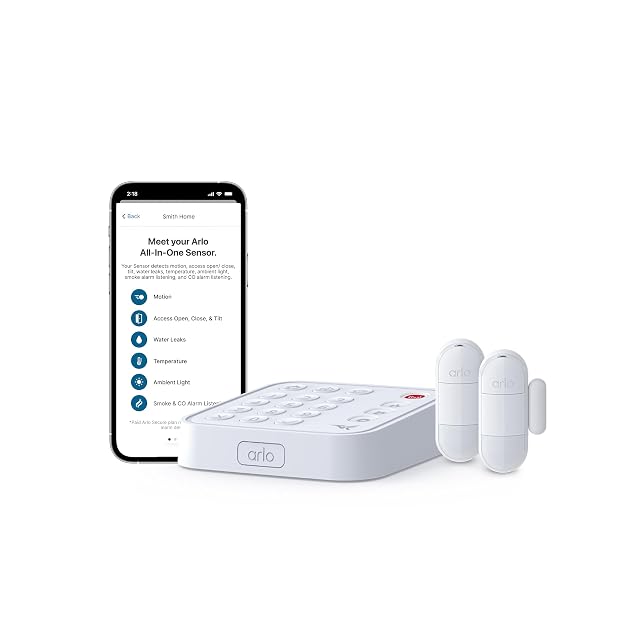
Wired plug-in keypad sensor hub plus 2 all-in-one sensors · 8 detection functions per sensor: motion, open/close, water leak, freeze, smoke/CO listening, tilt, ambient light · one tap emergency response · SecureLink named with no protocol or range
Two sensors that each do eight jobs — which is a genuinely different answer to a shelf that counts pieces.
Best for: An apartment where two well-placed sensors beat eight single-purpose ones, and leaks matter as much as doors
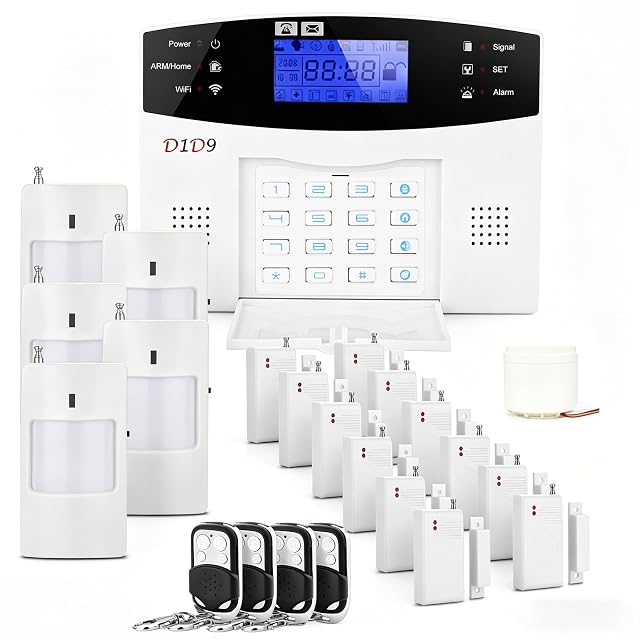
24 pieces · 4G and Wi-Fi, with a mobile fallback that needs no subscription · SIM card or Wi-Fi required · no monthly fee · batteries described as gifts, not warranted · no siren level, no radio frequency, no sensor breakdown
The only kit here with a mobile fallback that costs nothing monthly — and the only one that disclaims its own batteries.
Best for: A second property or a vacation rental, where nobody will be paying a subscription and 4G is the only reliable link
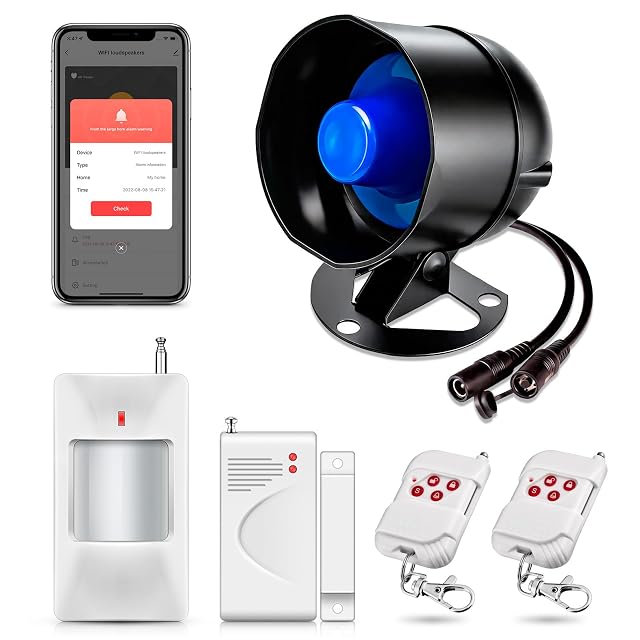
6 pieces: WiFi siren hub, 1 door/window sensor, 1 motion sensor, 2 remotes, power plug · 120 dB · supports up to 30 detectors and 20 remotes — the highest device limit published on this shelf · arm and disarm delays, alarm duration and timers all adjustable · Tuya app, 2.4 GHz Wi-Fi only · no cellular fallback, no backup battery
Thirty detectors and twenty remotes is the biggest expansion figure on this shelf — and the entry delay the hub tip warns about is one you set yourself.
Best for: A shed, a garage or a small shop that will grow to a dozen sensors and never pay a subscription