The conclusion The one kit on this shelf whose mobile fallback is a radio in the box rather than a line in a subscription — and this shelf's introduction makes that failure case its second test, so that is a genuine advantage at a hundred and ten dollars. Against it: twenty-four pieces are claimed and never itemized, no siren level, no radio frequency, no hub battery, and the supplied cells are explicitly disclaimed. Ask for the breakdown before buying.
4G and Wi-Fi connectivity · needs a SIM card or Wi-Fi
No monthly subscription fee
Wireless DIY, peel-and-stick, installable in 30 minutes
Expandable, integrable with other smart devices
“The batteries are gifts. If the batteries are dead, pls buy it by yourself.”
No siren decibels. No radio frequency. No hub battery. No piece breakdown.
A 4G fallback that costs nothing monthly
Which four kits here charge for.
Ring: subscribe to a Ring Protect Plan to keep your system online if the Wi-Fi goes
down. SimpliSafe: the built-in network backup requires a monitoring plan.
This puts a 4G radio in the hub and charges nothing. You supply the SIM, which is
not included, and the airtime.
This shelf’s introduction makes that failure its second test. This is the one kit
that answers it with hardware.
Twenty-four of what
The number leads, and nothing itemizes it.
Door and window sensors. Motion detectors. A remote control. A siren. Four
categories, no counts.
Kits at this piece count are usually a hub, one or two PIRs, a dozen or more
contacts, a few remotes and some RFID tags.
Twenty-four pieces of which eighteen are tags is a different purchase. Ask.
The batteries are gifts
Which is clumsy English for a reasonable position.
Consumables are not warranted, and the listing says so outright.
What it tells you is that twenty-four battery-powered pieces is twenty-four
batteries to track — and nothing on the page mentions low-battery reporting,
which is the feature that makes a large wireless kit maintainable.
And no agent
Self-monitored, by design.
The alert reaches your phone and stops there. No center, no dispatch, nobody
watching while you are asleep.
For a vacation rental where nobody would pay a subscription anyway, that is the
correct trade.
Availability
On sale at around $110 on the American Amazon store at the time of checking.
Prices and availability are what Keepa reported on the date this page was updated; both move.
Prices quoted in this text were read on October 8, 2026. The live price is at the top of the page.
What reassures, and what does not
Strengths
A 4G fallback with no monthly fee, which no other kit here offers
Twenty-four pieces for a hundred and ten dollars
Peel-and-stick, with no wiring and no drilling
Explicitly no subscription of any kind
Expandable and integrable with other smart devices
Sold for vacation properties, where an unmonitored 4G link is the right design
Compromises
Twenty-four pieces with no breakdown of what they are
A SIM card is required and not included for the 4G to work
The batteries are described as gifts and excluded from support
No siren decibel figure and no hub battery
No radio frequency or protocol
No agent and no dispatch: the alert goes to your phone and stops there
Specifications
Contents
24 pieces, stated as door and window sensors, motion detectors, a remote control and a siren. The individual counts are not broken down, so what the twenty-four pieces are is unverifiable from the page
Connectivity
4G and Wi-Fi, stated, with a SIM card or Wi-Fi required. This is the only kit in this group whose mobile fallback is hardware rather than a subscription feature — the figure this shelf's introduction puts second
Monitoring
No monthly subscription fee, stated, with alerts going to the app. Self-monitored by design: there is no agent and no dispatch
Installation
Wireless, peel-and-stick, stated as installable in thirty minutes with no professional required
Expansion
More sensors can be added and the system integrated with other smart devices — stated, with no device limit given
Siren
A siren is listed among the contents with no decibel figure and no location
Radio
Not published. No frequency and no protocol for the sensor link
Backup power
Not published for the hub. The listing states instead that the batteries supplied with the sensors are gifts and are not to be replaced under warranty
Stated for
Homes, offices, vacation properties and elderly care, stated
Amazon reference
B07BRHG4VG
EAN
0727542688250
The questions we are asked
Why is a free 4G fallback unusual?
Because on at least four of the seventeen kits here it is the paid tier. Ring states that keeping the system online when the Wi-Fi drops requires a Ring Protect Plan; SimpliSafe states that its built-in network backup requires a monitoring plan. This kit puts a 4G radio in the hub and charges nothing monthly for it — you supply a SIM, which is not included, and the airtime. This shelf's introduction makes that failure case its second test, and this is the one kit that answers it with hardware instead of a subscription line.
What are twenty-four pieces?
The page does not say, which is the central weakness of a listing that leads with the number. It names door and window sensors, motion detectors, a remote control and a siren — four categories, no counts. Kits at this price and piece count typically contain a hub, one or two PIR detectors, a dozen or more contact sensors, a couple of remotes and some RFID tags, which is a high piece count made of cheap parts. Ask the seller for the breakdown, because twenty-four pieces of which eighteen are tags is a different purchase.
What does "the batteries are gifts" mean?
That the supplied cells are excluded from support, and the listing says so in those words: the batteries are gifts, and if they are dead you buy them yourself. It is clumsy English for a reasonable position — consumables are not warranted — but it tells you something about the kit, which is that twenty-four pieces of battery-powered sensor is twenty-four batteries to track. Nothing on the page mentions low-battery reporting, which is the feature that makes a large wireless kit maintainable.
Against the rest of the alarm kits
Between security devices of the same category and nearby price. Shown: what they all state. A half-filled column says nothing.
24 pieces, stated as door and window sensors, motion detectors, a remote control and a siren. The individual counts are not broken down, so what the twenty-four pieces are is unverifiable from the page
4G and Wi-Fi, stated, with a SIM card or Wi-Fi required. This is the only kit in this group whose mobile fallback is hardware rather than a subscription feature — the figure this shelf's introduction puts second
No monthly subscription fee, stated, with alerts going to the app. Self-monitored by design: there is no agent and no dispatch
A siren is listed among the contents with no decibel figure and no location
24 pieces, stated, with door and window sensors and motion sensors named and a remote. The individual counts are NOT broken down, which is the same omission as the other large-piece-count kit on this shelf
2.4 GHz Wi-Fi together with 2G/4G cellular, with 5G explicitly stated as not supported. A cellular radio in the hub with no subscription is the answer to the question this shelf's introduction puts second — what happens when the broadband drops — and two kits on this shelf have it
No subscriptions and no hidden fees, stated. There is no agent and no dispatch: the alerts go to you by app, SMS or call
Not published as a decibel figure. The SOS is stated to trigger the siren instantly and no sound level appears anywhere, where two kits on this shelf publish 100 and 120 dB
Base station, smash-safe keypad, four entry sensors, motion sensor and a panic button — eight pieces, stated
A built-in network backup for uninterrupted service during a power outage — stated, and stated to require a professional monitoring plan. The hardware is in the box; the service is not
Optional 24/7 professional monitoring, from less than a dollar a day with no long-term contract, one free month included. The panic button requires the subscription to dispatch police
100 dB, built into the base station — stated. It is the only decibel figure published on this shelf, where seven of the eight listings describe a siren without saying how loud it is
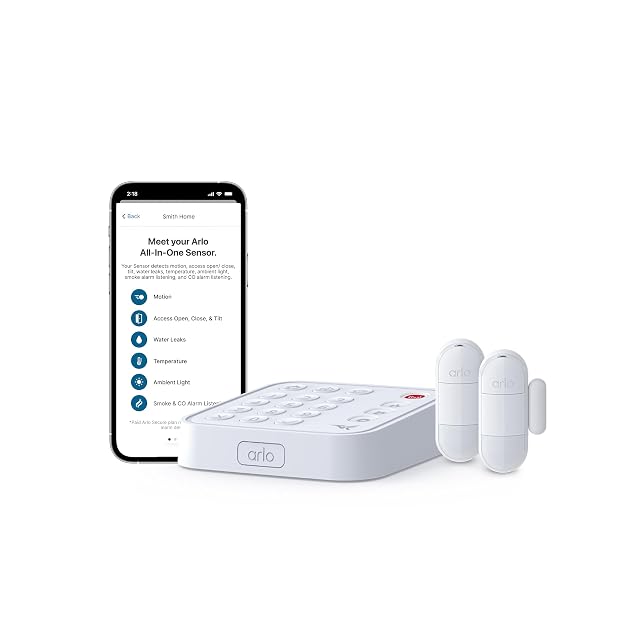
A wired plug-in keypad sensor hub and two wire-free all-in-one sensors — three pieces, which is the lowest count on this shelf and deliberately so
SecureLink is named for longer range and a more secure connection to paired devices. No protocol, no frequency and no distance is given — the name is the whole specification
24/7 professional monitoring with live security experts, video and image verification, and priority dispatch — optional and requiring a paid plan after a trial. Verification is stated to reduce false alarms and gain dispatch priority
Built into the hub, stated. No decibel figure
What separates the models, in security devices
If price decides: this model, at $110.
What this one costs among alarm kits
Details checked on October 8, 2026.
The buyer this one serves, among security devices
A second property or a vacation rental, where nobody will be paying a subscription and 4G is the only reliable link
Amazon reports what buyers took in the month before this page was last checked: at least 50.
The figure is a floor, rounded by Amazon, and read through Keepa — it says what buyers picked, not what a maker claims.
Sources
Specifications: the manufacturer sheet for home security products and the matching Amazon product page. Prices and availability: Keepa. Every figure on this page names its source.
Hub and siren · expandable · DIY installation · app control · voice assistant compatible
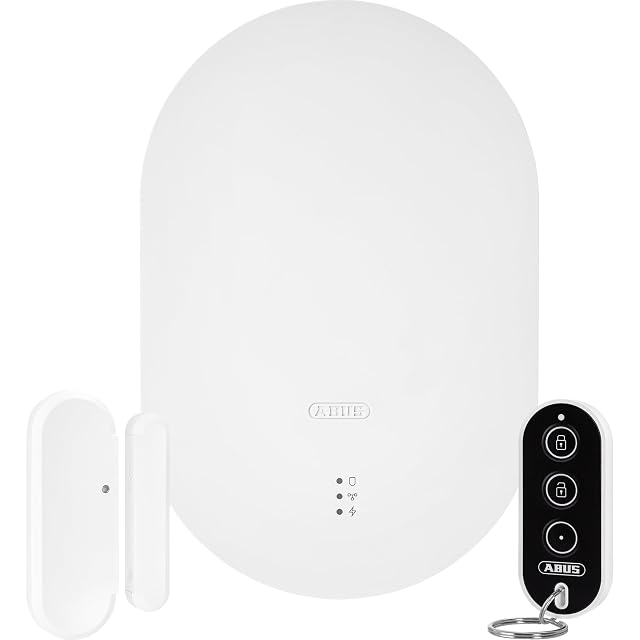
ABUS's Smartvest Pro starter set: the hub and siren of a system designed to be expanded, installable without prior knowledge and operated by app, from a manufacturer whose main business is physical security.
Best for: Someone building a system over time who wants the sensors and the door hardware to come from the same maker.
Wired plug-in keypad sensor hub plus 2 all-in-one sensors · 8 detection functions per sensor: motion, open/close, water leak, freeze, smoke/CO listening, tilt, ambient light · one tap emergency response · SecureLink named with no protocol or range
Two sensors that each do eight jobs — which is a genuinely different answer to a shelf that counts pieces.
Best for: An apartment where two well-placed sensors beat eight single-purpose ones, and leaks matter as much as doors
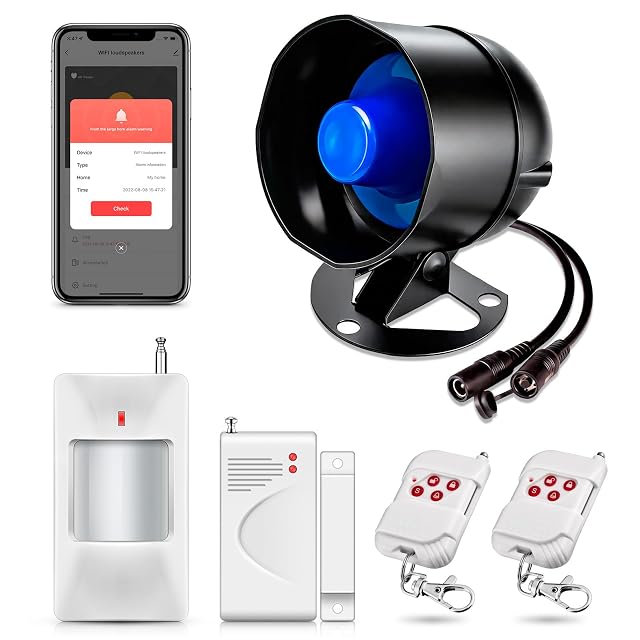
6 pieces: WiFi siren hub, 1 door/window sensor, 1 motion sensor, 2 remotes, power plug · 120 dB · supports up to 30 detectors and 20 remotes — the highest device limit published on this shelf · arm and disarm delays, alarm duration and timers all adjustable · Tuya app, 2.4 GHz Wi-Fi only · no cellular fallback, no backup battery
Thirty detectors and twenty remotes is the biggest expansion figure on this shelf — and the entry delay the hub tip warns about is one you set yourself.
Best for: A shed, a garage or a small shop that will grow to a dozen sensors and never pay a subscription