A tall aspect ratio shows the parcel on the step, not just the face · review
Reolink Video Doorbell B (2nd gen) review
The second-generation battery doorbell: the same square head-to-toe frame with HDR added, and detection that Reolink states runs locally on the device rather than in a cloud service.
The conclusion The best doorbell in this hub. HDR fixes the commonest complaint, and local detection means nothing has to leave the house.
Two changes separate this from the first-generation doorbell below it, and
both address things that actually go wrong rather than adding figures.
HDR, which fixes the usual complaint
Point a camera at a doorstep and it is often pointed at the sky behind it. A
sensor without HDR exposes for the bright background and renders the caller as
a silhouette — the single most common complaint about inexpensive doorbells,
and one no amount of resolution fixes. HDR exposes for both, and the face
comes back.
If your door faces east, west or open sky, this is the specification that
decides whether the footage is usable.
Detection that stays in the house
Reolink states person, vehicle, pet and parcel detection processed locally on
the device. Three consequences: it is faster, it still works when the
broadband is down, and no clip has to be uploaded to a server to decide
whether it contains a person.
For anybody uncomfortable with doorstep footage being processed elsewhere — a
reasonable thing to be uncomfortable about — that is the most important line
on the specification sheet.
Still a battery doorbell
Which means it sleeps, and the seconds before somebody rings are not recorded.
Wired to 8–24 V doorbell wiring it charges its battery but stays in battery mode; the Tapo D235, wired the same way, states that it records those seconds. That remains the one thing
this format cannot do.
Who it suits
A bright doorway, and an owner who would rather the analysis happened on their
own wall.
Availability
Not found on the American Amazon store, where the buy link falls back to a local search rather than to a page that does not exist.
Prices and availability are what Keepa reported on the date this page was updated; both move.
What reassures, and what does not
Strengths
Detection runs locally on the device, stated by Reolink — nothing needs to leave the house to classify a person
HDR, which is what makes a backlit caller visible against a bright sky
1:1 view at 150° × 150° × 180°, head to toe
Up to 10 months per charge stated (5 minutes of recording a day), or charging from 8–24 V doorbell wiring
Compromises
No American listing, so this doorbell carries no price to set against the shelf
Battery doorbell, so the approach is still missed
Card not supplied
Free image notifications capped at 25 a day
Specifications
Resolution
2K, 4 MP, with HDR, stated by Reolink
View
150° × 150° × 180°, 1:1 head to toe
Detection
Person, vehicle, pet and parcel, processed locally
Wi-Fi
Dual band, 2.4 and 5 GHz
Storage
microSD up to 512 GB, Reolink Home Hub, NVR or FTP; not NAS or RTSP
Alerts
Free image notifications, up to 25 a day on the free plan
Power
Battery, up to 10 months stated at 5 min of recording a day; can charge from 8–24 V AC doorbell wiring
Night vision
Infrared
Amazon reference
B0FKBPMVBW
EAN
6978285033577
The questions we are asked
What does local detection mean in practice?
That the decision "this is a person" is made on the doorbell rather than by uploading the clip to a server. It is faster, it works when the internet is down, and nothing has to leave the house to be classified. For anybody uneasy about doorstep footage being processed elsewhere, it is the single most relevant specification here.
Why does HDR matter on a doorbell?
Because of where doorbells point. A caller standing against a bright sky or a white wall is a silhouette on a camera without HDR — the sensor exposes for the background and the face goes black. HDR is what turns that shape back into a person, and it is the commonest complaint about cheaper doorbells.
Is it worth the premium over the first generation?
HDR and local detection are the two differences that matter, and both address real failures rather than adding numbers. If your door faces a bright aspect, HDR alone justifies it.
Our score
8.4/ 10
The best doorbell in this hub. HDR fixes the commonest complaint, and local detection means nothing has to leave the house.
What this one costs among video doorbells
A reference exists on these Amazon stores: France, Germany, Italy, Spain, United Kingdom. Listed is not the same as in stock — availability changes daily.
Details checked on September 2, 2026.
The buyer this one serves, among security devices
A bright doorway where a caller is backlit, and an owner who wants nothing leaving the house.
Amazon reports what buyers took in the month before this page was last checked: at least 300.
The figure is a floor, rounded by Amazon, and read through Keepa — it says what buyers picked, not what a maker claims.
Sources
Specifications: the manufacturer sheet for home security products and the matching Amazon product page. Prices and availability: Keepa. Every figure on this page names its source.
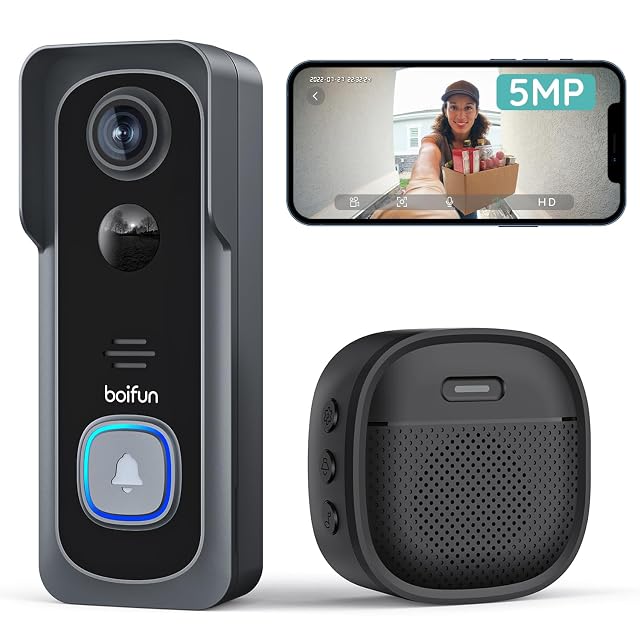
2.5K 5MP · 166° wide · night vision · two-way audio with voice change · chime included
A 5 MP doorbell on a 166° lens with a chime in the box and a voice changer on the two-way audio. BOIFUN states human detection and Alexa compatibility through its own skill.
Best for: A house where the doorbell must be audible indoors without buying a separate chime.
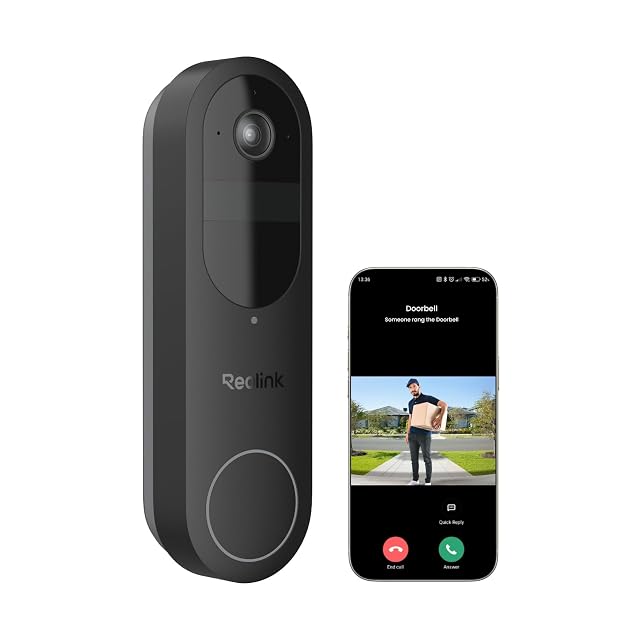
2K 4MP · 1:1 head-to-toe aspect · dual-band Wi-Fi · card to 256 GB · two charging methods
Reolink uses a square 1:1 sensor rather than a widescreen one, so the frame is as tall as it is wide and shows a caller head to toe with the step included. Local storage to 256 GB, with no subscription required.
Best for: A doorstep where the parcel matters as much as the caller.
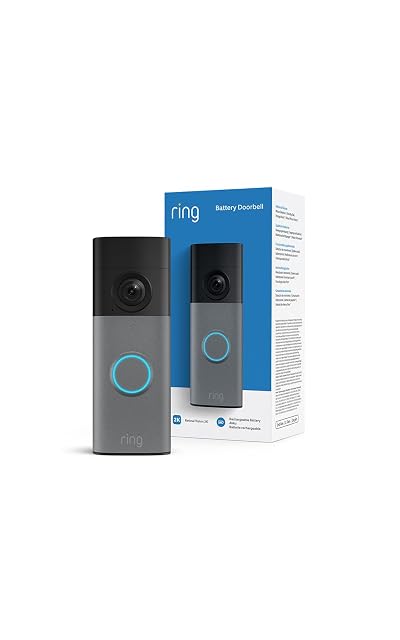
Ring's current battery doorbell at 2K, with a stated six-times zoom for reading detail at distance and a built-in battery charged over USB-C once the doorbell is released with the supplied tool. Recording requires a Ring Home plan.
Best for: A household already on Ring, where the doorbell should share the alarm and cameras' app.