The conclusion A year between charges on a pack that unclips from the door is the best power story on this shelf, and 0.42 seconds across a hundred fingerprints is the best biometric capacity here. For a household tired of eight AA cells, that alone settles it. What is strange is what the dearer lock leaves out that its cheaper stablemate publishes: no BHMA grade, no IP rating, no bore size — four facts available for forty-nine dollars less.
What the maker puts in writing
“Enjoy minimal maintenance and a full year of continuous operation with the removable and rechargeable battery.”
Fingerprint in 0.42 seconds · up to 100 fingerprints
Built-in USB-C port for easy recharging
6 ways: fingerprint, keypad passcodes, Wi-Fi, Bluetooth, smart home assistant, included backup keys
Resident profiles with permanent codes · one-time or scheduled guest codes
Bullet 4: “ensuring your doorbell stays powered and vigilant”
No BHMA grade. No IP rating. No bore size. No door thickness. Nothing about where
fingerprints are stored.
A year, on a pack that comes off
Which is the whole argument.
A lock on eight AA cells means unscrewing the inside escutcheon twice a year,
lifting a carrier, fitting eight cells the right way round, reassembling — and
buying the cells.
A removable rechargeable pack unclips, charges on a worktop over USB-C, and clips
back.
One year rather than six to eight months, and nothing to purchase.
At least two of the fifteen locks here are rechargeable. This one has the longest stated
life.
The cheaper Tapo publishes more
Which is the odd thing about this page.
The DL100 on this shelf, at sixty dollars: BHMA Grade 3, IP54, both standard bore
sizes, and two battery figures for two radio modes.
This one, at a hundred and nine: a fingerprint speed and a battery life, and none
of those four.
The hardware is very likely built to the same standard — same maker, same deadbolt
family — but a grade that is not stated cannot be relied on.
Ask before ordering if certification matters.
And where does the fingerprint go
Not stated, and only one lock on this shelf says.
A reader either keeps a mathematical template in a chip on the lock, which never
leaves the door, or syncs it to the maker’s cloud so the app can manage it.
The first is the privacy design. The second is the convenient one.
Tapo publishes neither, nor whether a template can be deleted.
Of the five biometric locks here — fingerprint, palm vein or face — one states
that the data stays local.
Availability
On sale at around $109 on the American Amazon store at the time of checking.
Prices and availability are what Keepa reported on the date this page was updated; both move.
Prices quoted in this text were read on October 8, 2026. The live price is at the top of the page.
What reassures, and what does not
Strengths
A full year of battery life, the longest on this shelf
A removable rechargeable pack, so nothing to buy and nothing to dismantle
0.42 seconds, the fastest stated fingerprint read here
A hundred fingerprints, the largest biometric capacity on this shelf
USB-C serves as both charger and emergency power
Resident profiles with one-time and scheduled guest codes
Compromises
No BHMA grade, where the cheaper DL100 here publishes Grade 3
No IP rating either, on a lock that lives outdoors
No bore size or door thickness published
Nothing stated about where fingerprint data is stored
A hundred and nine dollars, against sixty for the keypad version
One bullet refers to the product as a doorbell
Specifications
Battery
A full year of continuous operation on a REMOVABLE rechargeable battery — stated, and the longest runtime on this shelf by four months. Removable is the important word: the pack comes off the door and charges indoors over USB-C, so the lock is never dismantled and there are no cells to buy
Failure path
Both layers: a built-in USB-C port for recharging, and included backup keys. On a rechargeable lock the port serves double duty — it is the normal charging route and the emergency one, so a power bank at the door will open it
Biometrics
A fingerprint sensor unlocking in 0.42 seconds, with up to 100 fingerprints registered — the fastest stated read and the largest fingerprint capacity on this shelf. Nothing is published about where the fingerprint data is stored, which one lock on this shelf does state
Credentials
Six ways in: fingerprint, custom keypad passcodes, Wi-Fi from anywhere, close-range Bluetooth, a smart home assistant, and the included backup keys
Access control
Resident profiles with permanent codes, plus one-time or scheduled codes for guests — stated
Grade
NOT PUBLISHED. No BHMA grade and no IP rating appears, where the same maker's cheaper DL100 on this shelf publishes BHMA Grade 3 and IP54. On a lock costing forty-nine dollars more, the omission is conspicuous
Fitting
Not published. No bore size and no door thickness range, where the maker's own DL100 names both standard bore sizes
Connection
Wi-Fi for remote use and Bluetooth for close range, with Alexa, Google Home and Samsung SmartThings integration. Unlike the DL100, no separate battery figure is given for the two radio modes
Copy
The fourth bullet reads "ensuring your DOORBELL stays powered and vigilant" — on a door lock listing. The sentence has been copied from a video doorbell page
Amazon reference
B0DKQQ6Z7Q
EAN
0810142820554
The questions we are asked
Why is a removable battery better than AA cells?
Because of what you do twice a year. A lock on eight AA cells means unscrewing the inside escutcheon, lifting out a carrier, fitting eight cells in the right orientation and reassembling — and buying the cells. A removable rechargeable pack unclips, charges on a kitchen worktop over USB-C and clips back. One year between charges rather than six to eight months between replacements, and nothing to purchase. Of the eleven locks on this shelf, two are rechargeable and this is the one with the longest stated life.
Why does it publish less than the cheaper Tapo lock?
That is the real question about this listing. The DL100 on this shelf, at sixty dollars, publishes BHMA Grade 3, IP54, both standard bore sizes and two battery figures for two radio modes. This one, at a hundred and nine, publishes a fingerprint speed and a battery life and none of those four. The hardware is very likely built to the same standards — it is the same maker and the same deadbolt family — but it is not stated, and a grade that is not stated cannot be relied on. Ask before ordering if certification matters.
Where does my fingerprint go?
The page does not say, and only one lock on this shelf does. A fingerprint reader either stores a mathematical template in a chip on the lock itself, which never leaves the door, or synchronizes it to the maker's cloud so it can be managed from the app. The first is the privacy-preserving design and the second is the convenient one. Tapo publishes neither, nor whether the template can be deleted. Of the five biometric locks on this shelf — fingerprint, palm vein or face — one states that the data stays local.
Against the rest of the smart locks
Between security devices of the same category and nearby price. Shown: what they all state. A half-filled column says nothing.
Model
Price
Failure path
Biometrics
Credentials
Grade
Tapo DL110 smart Wi-Fi deadbolt with fingerprint recognition
$109
Both layers: a built-in USB-C port for recharging, and included backup keys. On a rechargeable lock the port serves double duty — it is the normal charging route and the emergency one, so a power bank at the door will open it
A fingerprint sensor unlocking in 0.42 seconds, with up to 100 fingerprints registered — the fastest stated read and the largest fingerprint capacity on this shelf. Nothing is published about where the fingerprint data is stored, which one lock on this shelf does state
Six ways in: fingerprint, custom keypad passcodes, Wi-Fi from anywhere, close-range Bluetooth, a smart home assistant, and the included backup keys
NOT PUBLISHED. No BHMA grade and no IP rating appears, where the same maker's cheaper DL100 on this shelf publishes BHMA Grade 3 and IP54. On a lock costing forty-nine dollars more, the omission is conspicuous
A physical key, one of the six ways to unlock. NO emergency power terminal is published, so there is one layer rather than two — and this shelf's introduction says this is the question that should decide the purchase. Six locks on this shelf publish both a key and a USB-C port
Self-learning fingerprint recognition that becomes more precise with every touch, stated. Nothing is published about where the fingerprint data is stored
Six ways: fingerprint reading in under one second, the eufy Security app, the keypad, a physical key, an Apple Watch, and Alexa or Google voice. The Apple Watch is unique on this shelf and is the most practical of the six in the rain
BHMA Grade 3 certified after being locked and unlocked more than 100,000 times — stated with the cycle count, which three of the four graded locks on this shelf do not give
Four layers, stated: a 6-month main battery, a 2-week secondary battery that takes over when it drains, an integrated USB-C port that accepts any power bank for an emergency charge, and a mechanical key behind a sliding damping cover. This shelf's introduction says the question that should decide the purchase is what happens at zero battery; nothing else on this shelf answers it in four stages
Palm vein recognition: an infrared sensor reads the vein pattern beneath the palm, contactless, with the hand hovered rather than touched. Veins are internal, so unlike a fingerprint there is nothing left on a door handle to lift — the listing does not make that point, and it is the real argument
Palm vein, keypad code, app, Alexa or Google voice, the live feed of a Wyze video doorbell, and a mechanical key. Up to 50 unique or one-time guest codes
BHMA Grade 3 certified and IP53 weather-resistant, stated
A physical key, and no emergency power terminal published. One layer rather than two, where six locks on this shelf offer both — and this shelf's introduction calls this the question that should decide the purchase
None. No fingerprint, no palm and no face reader, and therefore no biometric data stored anywhere
Four ways: the app, the keypad, a physical key, and voice through Alexa or Google Assistant. There is no fingerprint reader, which is the difference from the maker's C220 on this shelf
Not published. No BHMA grade and no IP rating, where the maker's own C220 on this shelf publishes Grade 3, IP53 and a temperature range
What separates the models, in security devices
If price decides: eufy Security T85D2 Smart Lock C34, Apple Home, keyless entry, at $80.
What this one costs among smart locks
Details checked on October 8, 2026.
The buyer this one serves, among security devices
A household that resents changing eight AA cells twice a year
What buyers actually choose
Amazon reports what buyers took in the month before this page was last checked: at least 500.
The figure is a floor, rounded by Amazon, and read through Keepa — it says what buyers picked, not what a maker claims.
Sources
Specifications: the manufacturer sheet for home security products and the matching Amazon product page. Prices and availability: Keepa. Every figure on this page names its source.
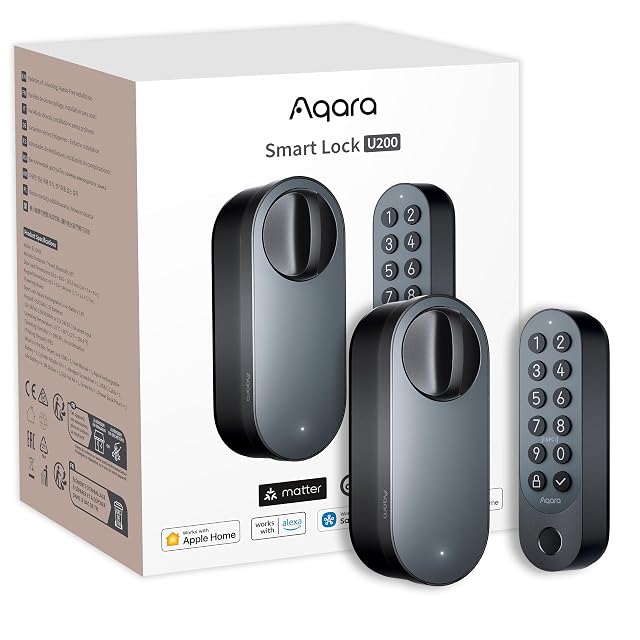
Matter over Thread · Apple Home Key · rechargeable Li-ion, 6 months stated · no drilling
A retrofit lock with native Matter over Thread, so it joins Apple Home, Google Home and Alexa without a vendor bridge. Aqara states Apple Home Key support, a rechargeable battery quoted at up to six months, and a quiet unlocking mode.
Best for: A household already running Matter or Apple Home, that wants the lock to be part of it rather than another app.
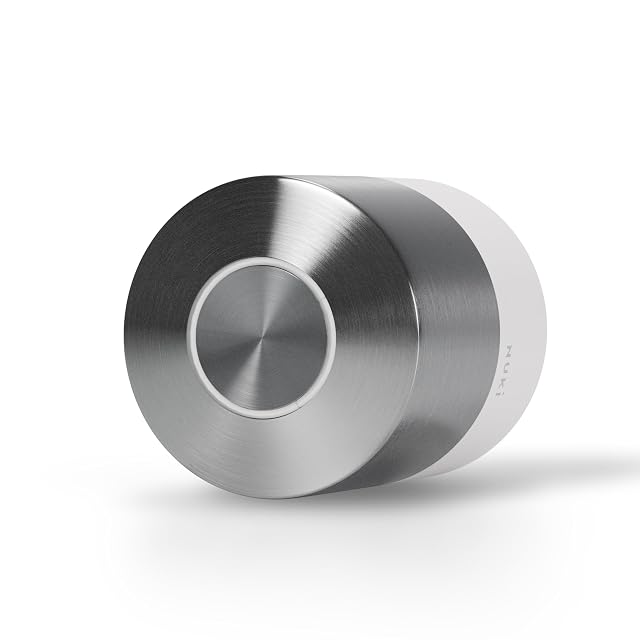
Retrofit · built-in Wi-Fi, no bridge · Matter over Thread · charged at the door · months per charge
Nuki's fifth-generation lock puts Wi-Fi inside the unit, so remote access needs no bridge or hub, and adds Matter alongside Bluetooth. The battery charges at the door with the supplied cable rather than coming off it.
Best for: A household that wants remote access without adding another box to the hallway.
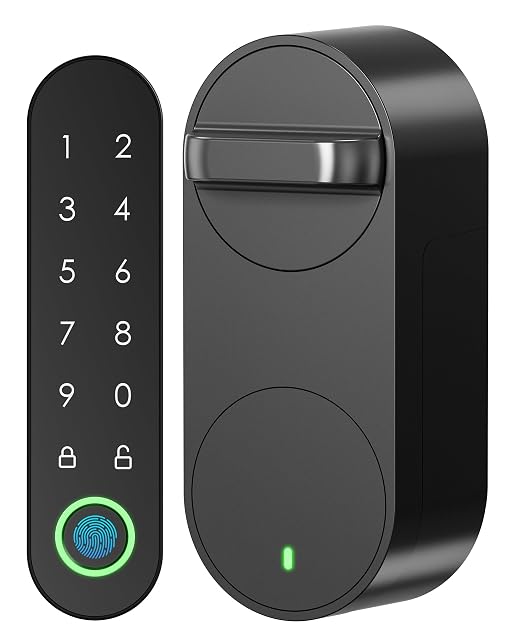
Retrofit · fingerprint, app and Bluetooth · magnetic auto-lock · 6 cells · no drilling
A retrofit lock that mounts over an existing cylinder with no drilling and no cylinder change. Signstek states fingerprint, app and Bluetooth access, magnetic auto-locking, and six batteries; the existing key still works from outside.
Best for: A first smart lock, and particularly a rented apartment where nothing may be altered.