The conclusion The deepest answer on this shelf to the question the hub above says should decide the purchase: a six-month main battery, a two-week reserve, a USB-C port for any power bank, and a mechanical key. The two-week reserve is the one that matters, because it turns a lockout into an errand. Palm vein leaves nothing on the handle to copy, presence radar keeps it awake only for people, and a gyroscope stops the bolt throwing at an open door. No fitting dimensions at all.
What the maker puts in writing
Contactless palm vein recognition — reads the vein pattern beneath the palm, hover to unlock
“A 6-month main battery is backed by a 2-week secondary battery. If both drain, use the integrated USB-C port and any power bank.”
Mechanical lock and key — slide down the damping cover (set of keys included)
Gyroscope auto-lock: detects the angle and movement of the door, locks once it senses the door has closed
Up to 50 unique or one-time guest codes · Anti-Peep Technology: extra digits before or after the real PIN
Millimeter wave radar scans for the presence of a person (not just movement) and only wakes the lock when a person is detected
Tamper and ajar alarms · BHMA3 certified · IP53
No door thickness. No bore size.
Four ways in when the power goes
Which nothing else on this shelf offers.
Main battery, six months. Secondary battery, two weeks. USB-C and any power bank.
Mechanical key.
This shelf’s introduction says the question that should decide the purchase is what
happens at zero battery.
The second battery is the layer that matters. Most locks here give a key and a
USB-C port, and if the power bank is inside the house you need the key.
Two weeks of reserve turns a lockout into an errand: time to notice, order cells
and fit them.
Keep the key outside the house anyway.
Veins leave nothing behind
Which the listing only half says.
A fingertip leaves a print on the handle. A palm does not, because the pattern
being read is under the skin.
And a palm is read without contact — so wet hands, cold hands, gloved hands and
hands full of shopping all work, where a fingerprint sensor fails on all four.
The cost is a new habit. You hover rather than touch.
Radar, because it has to be awake
And a lock that is always awake runs down.
Millimeter-wave radar detects a stationary person, not just movement. Passive
infrared would miss someone standing still; a motion sensor would wake for a cat.
So the lock wakes as you arrive and sleeps the rest of the time.
That is what makes a six-month battery plausible on a hover-to-open lock, and
nothing else on this shelf manages power this way.
A gyroscope, not a timer
Which is the right way to auto-lock.
A timer throws the bolt after thirty seconds whether the door closed or not — into
the frame, or into fresh air.
A gyroscope reads the angle and the movement and locks when the door has actually
shut.
Availability
On sale at around $130 on the American Amazon store at the time of checking.
Prices and availability are what Keepa reported on the date this page was updated; both move.
Prices quoted in this text were read on October 8, 2026. The live price is at the top of the page.
What reassures, and what does not
Strengths
Four layers of failure cover, the deepest on this shelf
A second battery that takes over for two weeks
Palm vein leaves nothing on the handle to copy
Presence radar rather than motion, so it wakes for people
A gyroscope auto-lock that will not throw the bolt at an open door
Anti-peep code entry, tamper alarms and an ajar chirp
Compromises
No door thickness or bore size published
A hundred and thirty dollars, the third most expensive here
BHMA Grade 3, where a cheaper Wyze lock here is Grade 2
A six-month main battery, shorter than several locks here
Palm vein needs a deliberate hover, which is a new habit
Ten bullets, and no fitting information in any of them
Specifications
Failure path
Four layers, stated: a 6-month main battery, a 2-week secondary battery that takes over when it drains, an integrated USB-C port that accepts any power bank for an emergency charge, and a mechanical key behind a sliding damping cover. This shelf's introduction says the question that should decide the purchase is what happens at zero battery; nothing else on this shelf answers it in four stages
Credentials
Palm vein, keypad code, app, Alexa or Google voice, the live feed of a Wyze video doorbell, and a mechanical key. Up to 50 unique or one-time guest codes
Biometrics
Palm vein recognition: an infrared sensor reads the vein pattern beneath the palm, contactless, with the hand hovered rather than touched. Veins are internal, so unlike a fingerprint there is nothing left on a door handle to lift — the listing does not make that point, and it is the real argument
Battery saver
Millimeter-wave radar, the same class used in self-driving cars, scanning for the PRESENCE of a person rather than movement, waking the lock only when a person is detected — stated. It is the only presence-sensing power management on this shelf, and it is what makes a hover-to-open lock practical on batteries
Auto-lock
A built-in gyroscope reading the angle and movement of the door in real time, locking once it senses the door has actually closed — stated to prevent false or jammed locks. A timer-based auto-lock throws the bolt at a door that is still ajar; this does not
Security
Anti-Peep Technology allowing extra digits before or after the real PIN, tamper alarms on excessive incorrect attempts, and an ajar chirp — all stated
Grade
BHMA Grade 3 certified and IP53 weather-resistant, stated
Keys
A set of keys included, reached by sliding down a damping cover — stated
Fitting
Not published. No door thickness range and no bore size appears, where five locks on this shelf publish one
Amazon reference
B0FBWP41LZ
EAN
0810083475004
The questions we are asked
Is palm vein better than a fingerprint?
For two reasons the listing only half makes. Veins sit beneath the skin, so a palm leaves no usable trace on a door handle the way a fingertip does — there is nothing to lift. And a palm is read without contact, which means wet hands, cold hands, gloved hands and hands carrying shopping all work, where a fingerprint sensor fails on all four. Wyze claims it is faster and more reliable than fingerprints, which is plausible for exactly that reason. The cost is a new habit: you hover rather than touch.
Why does the radar matter?
Because a contactless lock has to be awake to read a palm, and a lock that is always awake flattens its battery. Millimeter-wave radar detects the presence of a stationary person rather than only movement, so the lock wakes as you arrive at the door and sleeps the rest of the time — a passive infrared sensor would miss someone standing still and a motion sensor would wake for a cat. It is the only presence-based power management on this shelf, and it is what makes a six-month main battery plausible on a hover-to-open lock.
What makes four layers better than two?
It removes the midnight scenario this shelf's buying tip describes. Most locks here give a key and a USB-C port: if the battery dies and the power bank is inside the house, you need the key. This one adds a second battery that carries two weeks of use after the main one drains — which is time to notice, order cells and fit them without any emergency at all. The key and the power bank are then the third and fourth lines rather than the first. Keep the key outside the house anyway.
Against the rest of the smart locks
Between security devices of the same category and nearby price. Shown: what they all state. A half-filled column says nothing.
Four layers, stated: a 6-month main battery, a 2-week secondary battery that takes over when it drains, an integrated USB-C port that accepts any power bank for an emergency charge, and a mechanical key behind a sliding damping cover. This shelf's introduction says the question that should decide the purchase is what happens at zero battery; nothing else on this shelf answers it in four stages
Palm vein, keypad code, app, Alexa or Google voice, the live feed of a Wyze video doorbell, and a mechanical key. Up to 50 unique or one-time guest codes
BHMA Grade 3 certified and IP53 weather-resistant, stated
Not published. No door thickness range and no bore size appears, where five locks on this shelf publish one
Both layers: a built-in USB-C port for recharging, and included backup keys. On a rechargeable lock the port serves double duty — it is the normal charging route and the emergency one, so a power bank at the door will open it
Six ways in: fingerprint, custom keypad passcodes, Wi-Fi from anywhere, close-range Bluetooth, a smart home assistant, and the included backup keys
NOT PUBLISHED. No BHMA grade and no IP rating appears, where the same maker's cheaper DL100 on this shelf publishes BHMA Grade 3 and IP54. On a lock costing forty-nine dollars more, the omission is conspicuous
Not published. No bore size and no door thickness range, where the maker's own DL100 names both standard bore sizes
A physical key, one of the six ways to unlock. NO emergency power terminal is published, so there is one layer rather than two — and this shelf's introduction says this is the question that should decide the purchase. Six locks on this shelf publish both a key and a USB-C port
Six ways: fingerprint reading in under one second, the eufy Security app, the keypad, a physical key, an Apple Watch, and Alexa or Google voice. The Apple Watch is unique on this shelf and is the most practical of the six in the rain
BHMA Grade 3 certified after being locked and unlocked more than 100,000 times — stated with the cycle count, which three of the four graded locks on this shelf do not give
Compatible with most standard deadbolts and fits bores under 54 mm (2.13 in) by removing a spacer — stated, with a 15-minute installation and no drilling. The spacer detail is the practical part: a smaller bore does not mean a different lock
NOT PUBLISHED. Ten bullets, one of them devoted entirely to the battery and its prohibitions, and not one word about a physical key or an emergency power terminal. This shelf's tag reads: the interesting question is what happens when the battery dies. This shelf's introduction says the answer is a key override, an emergency terminal that takes a power bank, or nothing at all — and at least ten of the fifteen locks here answer it
Keypad codes — permanent, one-time, periodic and recurring — plus fingerprints unlocking in 0.3 seconds, the app, and Alexa or Google voice. Four code types is the most flexible code scheme on this shelf
Not published. No BHMA grade and no IP rating, where four locks on this shelf publish a grade and five publish an ingress rating
Doors 1-3/8 in to 1-3/4 in (38–50 mm) thick, installable with a screwdriver, and designed for RIGHT-OPENING doors by default: a left-opening door needs the lock reset for the direction. Philips also warns against overtightening the screws, which can make it hard to lock
What separates the models, in security devices
If price decides: eufy Security T8506 Smart Lock C220, fingerprint, 6 ways to unlock, at $100.
What this one costs among smart locks
Details checked on October 8, 2026.
The buyer this one serves, among security devices
Anyone who has been locked out once, and anyone whose hands are wet, gloved or full
What buyers actually choose
Amazon reports what buyers took in the month before this page was last checked: at least 1,000.
The figure is a floor, rounded by Amazon, and read through Keepa — it says what buyers picked, not what a maker claims.
Sources
Specifications: the manufacturer sheet for home security products and the matching Amazon product page. Prices and availability: Keepa. Every figure on this page names its source.
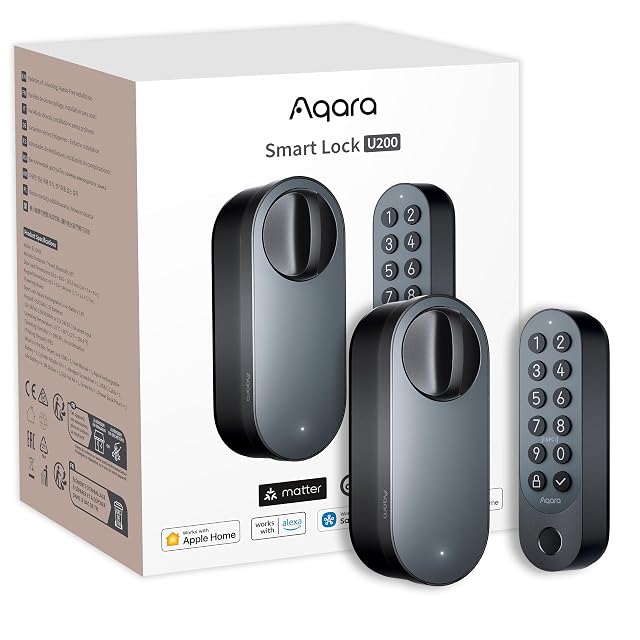
Matter over Thread · Apple Home Key · rechargeable Li-ion, 6 months stated · no drilling
A retrofit lock with native Matter over Thread, so it joins Apple Home, Google Home and Alexa without a vendor bridge. Aqara states Apple Home Key support, a rechargeable battery quoted at up to six months, and a quiet unlocking mode.
Best for: A household already running Matter or Apple Home, that wants the lock to be part of it rather than another app.
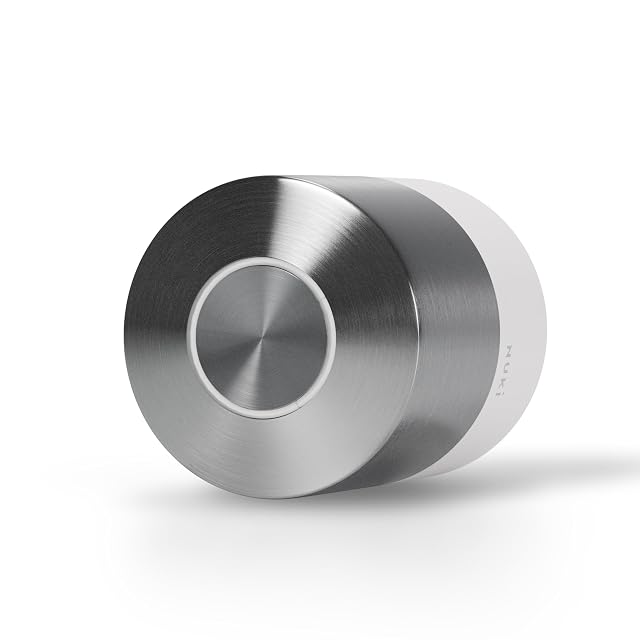
Retrofit · built-in Wi-Fi, no bridge · Matter over Thread · charged at the door · months per charge
Nuki's fifth-generation lock puts Wi-Fi inside the unit, so remote access needs no bridge or hub, and adds Matter alongside Bluetooth. The battery charges at the door with the supplied cable rather than coming off it.
Best for: A household that wants remote access without adding another box to the hallway.
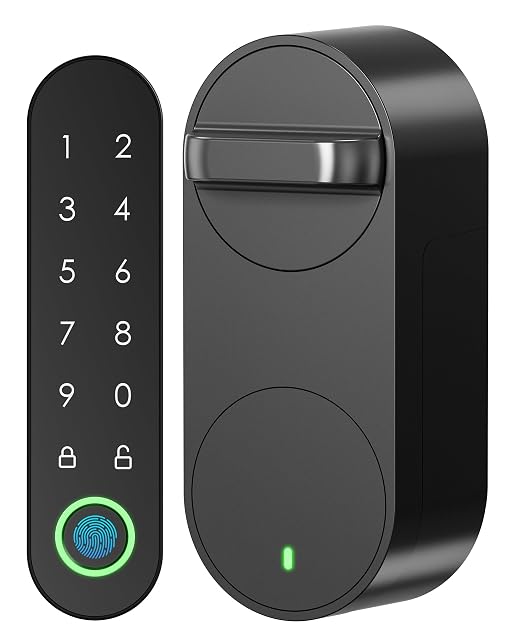
Retrofit · fingerprint, app and Bluetooth · magnetic auto-lock · 6 cells · no drilling
A retrofit lock that mounts over an existing cylinder with no drilling and no cylinder change. Signstek states fingerprint, app and Bluetooth access, magnetic auto-locking, and six batteries; the existing key still works from outside.
Best for: A first smart lock, and particularly a rented apartment where nothing may be altered.