Pet immunity is a stated weight limit, and it is measured at floor level · review
CPVAN CP2 review
A standalone PIR alarm with a remote, from a maker with a decade in detection. CPVAN states a low-battery warning that ticks periodically, and is explicit that the CP2 does not work with its Wi-Fi CP8.
The conclusion Chosen for the low-battery tick and the manufacturer's honesty about compatibility. A local noise, and no more.
Standalone alarms fail in one particular way, and this one addresses it.
Silent failure is the real risk
A battery-powered alarm with a flat cell is indistinguishable from an armed
one. It sits on the wall, it looks correct, and it does nothing. The owner
discovers this on the single day it mattered.
CPVAN states a low-battery warning that ticks periodically. That is the
difference between a device that tells you it is dying and one that simply
stops — and it is worth more than the difference between 120 and 125 decibels.
Site it somewhere the tick will actually be heard. In a garage visited weekly
it may go unnoticed for a month.
The compatibility note
CPVAN says plainly on its listing that this standalone CP2 does not work with
its Wi-Fi CP8. Manufacturers rarely state what their product is incompatible
with, and it is worth reading before buying with a plan to expand later. The
answer is that you cannot.
What it is
A loud local alarm with a remote to arm and disarm it, no hub, no app, no
account and no record. For an outbuilding that is often exactly right.
Who it suits
A shed, a garage or a storeroom, and an owner who visits often enough to hear
a tick.
Availability
Not found on the American Amazon store, where the buy link falls back to a local search rather than to a page that does not exist.
Prices and availability are what Keepa reported on the date this page was updated; both move.
What reassures, and what does not
Strengths
Low-battery warning — a periodic tick rather than silent failure
125 dB standalone alarm with a remote
The listing states plainly what it is not compatible with
No hub, no app, no account
Compromises
Not compatible with CPVAN's own Wi-Fi CP8 — check which you are buying
No notifications and no log
A ticking low-battery warning in a garage may go unheard for weeks
Standalone means no record of what happened
Specifications
Type
Standalone PIR alarm
Sound
125 dB
Control
Remote control
Battery
Low-battery warning, periodic tick
Compatibility
Standalone version — not usable with the Wi-Fi CP8, stated by CPVAN
Amazon reference
B082K699TS
EAN
0703145053701
The questions we are asked
Why does a low-battery warning matter so much?
Because the alternative is silent failure. A standalone alarm with a dead battery looks exactly like a standalone alarm that is armed, and the owner finds out on the day it should have gone off. A device that announces its own decline is worth more than one with a slightly louder siren.
What is the CP2 and CP8 warning about?
CPVAN states on its own listing that the standalone CP2 cannot be used with the Wi-Fi CP8 version. They are separate products with separate remotes, and buying one expecting to add the other later does not work. It is unusually direct of a manufacturer to say so.
Standalone or connected?
Standalone for an outbuilding you visit and a noise is enough. Connected where you need to know remotely. This device is firmly the first, and the honest description is a loud, reliable local alarm with nothing behind it.
Our score
8.1/ 10
Chosen for the low-battery tick and the manufacturer's honesty about compatibility. A local noise, and no more.
What this one costs among motion detectors
A reference exists on these Amazon stores: France, Germany, Italy, Spain, United Kingdom. Listed is not the same as in stock — availability changes daily.
Details checked on September 2, 2026.
The buyer this one serves, among security devices
A shed, garage or storeroom where the alarm should warn you before its battery dies.
Sources
Specifications: the manufacturer sheet for home security products and the matching Amazon product page. Prices and availability: Keepa. Every figure on this page names its source.
4–5 m (13 to 16 ft) × 110° PIR · 110 dB · 58 melodies, 5 volumes · 20 sensors per receiver
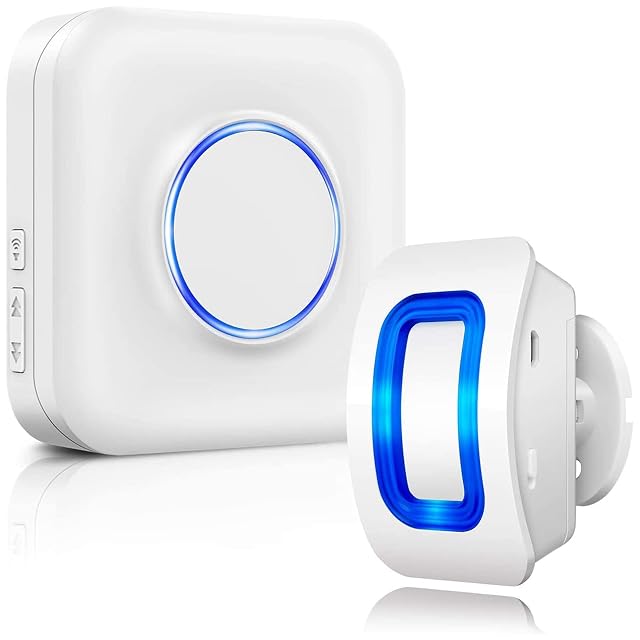
A driveway alarm expandable to twenty sensors on one receiver, with 58 melodies and five volume levels. BITIWEND states a 4 to 5 meter (13.1 to 16.4 ft) detection range across 110 degrees.
Best for: A property with several entrances that should each announce themselves differently.
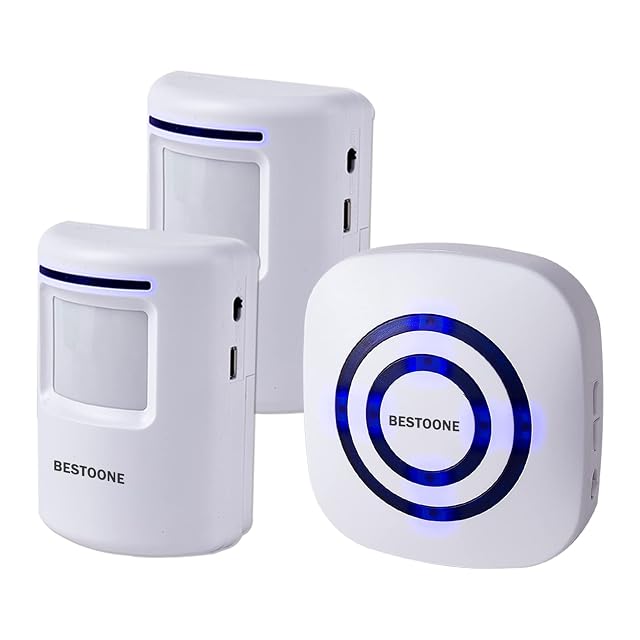
Two sensors and one alarm unit · 300 ft radio to the receiver, detection about 20 ft — both published, and labeled · 38 ringtones with 3 volumes AND A SILENT LED-ONLY MODE, the only silent option on this shelf · 2 sets of mounting screws · AAA not included · not waterproof
The only detector here with a silent mode — a light and no sound — and one of the few that separates its radio range from its detection range on the same page.
Best for: A household with a sleeping baby or a shift worker, where the alert must be visible and not audible
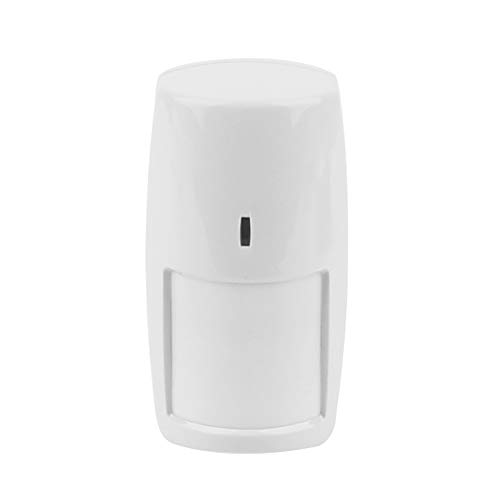
32 ft (10 m) × 110° · pet immune to 55 lb (25 kg), the only stated weight limit on this shelf · voltage-free NC/NO dry contact for a wired panel · DC 9–16 V, 12 V recommended · J1 pulse count, J2 contact mode, J3 LED · mount at 7.2 ft, the only mounting height on this shelf · 2.1 × 4.1 × 1.4 in · −10 to +50 °C (122 °F) · automatic temperature compensation
The only detector here that wires into an alarm panel — and the best-specified product on the shelf by a distance.
Best for: A wired alarm panel, where a voltage-free contact and a jumper for pulse counting are the whole requirement