The conclusion The best-documented product on this shelf and the only one that joins a wired alarm panel: 32 feet over 110 degrees, a voltage-free NC/NO contact, selectable pulse counting, temperature compensation, a published mounting height and a 55 lb pet immunity figure — for fourteen dollars fifty. It is also useless without a panel and 12 V, it has no siren or app, and its dual PIR element is not the dual-technology sensing this shelf compares.
What the maker puts in writing
32 ft (10 m) detection range, 110° detection angle, dual pyroelectric infrared sensing element
Voltage-free NC/NO dry contact output · factory setting N.C. · the output does not supply power
DC 9–16V, 12V DC recommended · power and contact connections separate
J1 pulse count, J2 NC/NO mode, J3 LED indication
Pet immune up to 55 lbs (25 kg (55.1 lb))
Wall mounting at approximately 7.2 ft (2.2 m) · −10°C (14 °F) to +50°C (122 °F)
Automatic temperature compensation, high-frequency interference resistance
2.1 × 4.1 × 1.4 in, 0.13 lb
A switch, and nothing else
Which is why it is the only one here that joins a panel.
The detector opens or closes a pair of terminals and supplies no voltage. That is
what a wired alarm zone expects.
Every other detector on this shelf either sounds its own siren, talks to its own
receiver, or needs a manufacturer’s hub.
Factory setting is normally closed — the alarm convention, because a cut cable
then reads as an alarm.
Dual PIR is not dual technology
And this shelf’s introduction compares dual technology.
A dual-element PIR has two sensing zones in one chip and triggers on the
difference between them. That is how it ignores a room warming up and still sees
a person cross it.
Dual technology means two different physics — usually PIR plus microwave — both
of which must agree.
Nothing on this shelf is dual technology. This is a well-built PIR.
Pulse counting is the real control
And only this listing has it.
First level triggers on one beam crossing: fast, and catches more false alarms.
Second level waits for two: rejects a curtain or a draft, at the cost of a
fraction of a second.
Factory setting is first.
With the 7.2 ft mounting height and the list of what to avoid — air conditioners,
fans, windows, ovens — this page gives more false-alarm control than the other
seven put together.
Fifty-five pounds
One of two weight limits on this shelf.
This shelf’s introduction is exact about the caveat: the figure assumes the animal
stays on the floor.
A cat that climbs is outside the assumption, at any rating.
Availability
On sale at around $14 on the American Amazon store at the time of checking.
Prices and availability are what Keepa reported on the date this page was updated; both move.
Prices quoted in this text were read on October 8, 2026. The live price is at the top of the page.
What reassures, and what does not
Strengths
A voltage-free NC/NO dry contact, which nothing else here offers
A published pet immunity weight: 55 lb
The only mounting height on this shelf: 7.2 ft
Selectable pulse counting, which is the real false-alarm control
Automatic temperature compensation and a stated temperature range
Fourteen dollars fifty, the cheapest detector on this shelf
Compromises
It needs a wired alarm panel and 12 V DC: useless on its own
No siren, no app, no radio and no receiver
Not dual-technology, whatever "dual PIR" suggests
Wiring and jumper work, which is not a peel-and-stick job
The NC factory setting will trip a panel wired for NO until J2 is moved
Indoor only, with no IP rating published
Specifications
Detection
32 ft (10 m) over a 110° angle, from a dual pyroelectric infrared sensing element — stated. Note what dual means here: two sensing zones in one PIR element, which is how a PIR rejects whole-field temperature changes. It is NOT dual-technology sensing, and nothing on this shelf is
Pet immunity
Designed to ignore pets up to 55 lb (25 kg) within the 32 ft area — stated as a weight. It is the ONLY published weight limit on this shelf, and this shelf's introduction is exact about the caveat: the figure assumes the animal stays on the floor, and a cat that climbs is outside the assumption
Output
A voltage-free NC/NO dry contact, factory set to normally closed, selectable with the J2 jumper. The output supplies no power — it opens or closes a contact for a wired alarm panel. It is the only panel output on this shelf, and the only product here that can join an existing hardwired system
Power
DC 9–16 V with 12 V recommended, on a connection separate from the contact pair — stated. No batteries and no battery life, because it is mains-derived from the panel
Mounting
Wall mounting at approximately 7.2 ft (2.2 m) — stated, and the ONLY mounting height published on this shelf, which this shelf's introduction names as one of five comparison points
Settings
Three jumpers: J1 selects first- or second-level pulse counting (factory first), J2 selects NC or NO (factory NC), J3 turns the LED on or off (factory on). Pulse counting is the real false-alarm control — second level requires two beam crossings before triggering
Environment
Automatic temperature compensation, high-frequency interference resistance, and an operating range of −10 to +50 °C (14 to 122 °F) — stated. BROJEN also names what to avoid: air conditioners, fans, windows and ovens
Dimensions
2.1 × 4.1 × 1.4 in, 0.13 lb — stated
Type
A wired panel sensor. It has no siren, no radio, no app and no receiver: it closes a contact and the panel decides what happens
Amazon reference
B07RQCLB2Z
EAN
5059116126291
The questions we are asked
What does a dry contact actually give me?
A switch and nothing else. The detector opens or closes a pair of terminals when it sees movement, supplying no voltage of its own, which is exactly what a wired alarm panel expects on a zone input. That is why this is the only product on this shelf that can be added to an existing hardwired system — every other detector here either sounds its own siren, talks to its own receiver, or needs a manufacturer's hub. Factory setting is normally closed, which is the convention for alarm zones because a cut cable then reads as an alarm.
Is "dual PIR" the same as dual-technology?
No, and the distinction matters because this shelf's introduction lists dual-technology sensing as one of five things this shelf compares. A dual-element PIR has two sensing zones in one chip, and it triggers on the difference between them — which is how it rejects a whole room warming up while still seeing a person cross. Dual-technology means two different physics, usually PIR plus microwave, requiring both to agree. Nothing on this shelf is dual-technology. BROJEN's dual pyroelectric element is the standard construction of a decent PIR, not a second technology.
What is pulse counting for?
Deciding how much movement counts as movement, and it is the most useful adjustment on this shelf. At first-level counting the detector triggers on a single beam crossing, which is fast and catches more false alarms; at second level it waits for two, which rejects a curtain moving or a sudden draft at the cost of a fraction of a second. The factory setting is first level. Combined with the 7.2 ft mounting height and the list of things to avoid — air conditioners, fans, windows, ovens — this listing gives you more control over false alarms than the other seven put together.
Against the rest of the motion detectors
Between security devices of the same category and nearby price. Shown: what they all state. A half-filled column says nothing.
Model
Price
Detection
Pet immunity
BROJEN BJ-960 wired PIR motion sensor, 12 V DC, NC/NO dry contact
$14
32 ft (10 m) over a 110° angle, from a dual pyroelectric infrared sensing element — stated. Note what dual means here: two sensing zones in one PIR element, which is how a PIR rejects whole-field temperature changes. It is NOT dual-technology sensing, and nothing on this shelf is
Designed to ignore pets up to 55 lb (25 kg) within the 32 ft area — stated as a weight. It is the ONLY published weight limit on this shelf, and this shelf's introduction is exact about the caveat: the figure assumes the animal stays on the floor, and a cat that climbs is outside the assumption
120° up to 23 ft (7 m) — stated, with a customisable range of 3 m (10 ft), 5 m (16 ft) or 7 m (23 ft) and an adjustable body. Being able to shorten the range is the feature here: this shelf's introduction says heat sources move too, and a detector cut to 3 m (10 ft) stops seeing the sunlit window at the far end of the room
Not published as a weight. Sensitivity is adjustable, which is not the same thing — this shelf's introduction and this shelf's own tag both say pet immunity is a stated weight limit, and only at least one of the thirteen detectors here publishes one
About 20 ft of infrared detection distance — stated, and stated in the SAME bullet as the 300 ft radio range and distinguished from it. That is the clearest handling of the two figures on this shelf, where three listings lead with a radio distance and one publishes no detection range at all
Not published, in any form. No weight, no sensitivity and no mention of animals
Up to 40 ft, with best performance typically within 10–26 ft — stated, and that qualification is the most useful sentence on this shelf. A PIR's rated maximum is a laboratory figure for a warm body crossing the field; the working range is always shorter, and CPVAN is the only listing here that publishes both numbers
Not published as a weight. CPVAN states PIR sensing that helps identify human movement and reduce unwanted triggers, which is an adjective
What separates the models, in security devices
If price decides: this model, at $14.
What this one costs among motion detectors
Details checked on October 8, 2026.
The buyer this one serves, among security devices
A wired alarm panel, where a voltage-free contact and a jumper for pulse counting are the whole requirement
Sources
Specifications: the manufacturer sheet for home security products and the matching Amazon product page. Prices and availability: Keepa. Every figure on this page names its source.
4–5 m (13 to 16 ft) × 110° PIR · 110 dB · 58 melodies, 5 volumes · 20 sensors per receiver
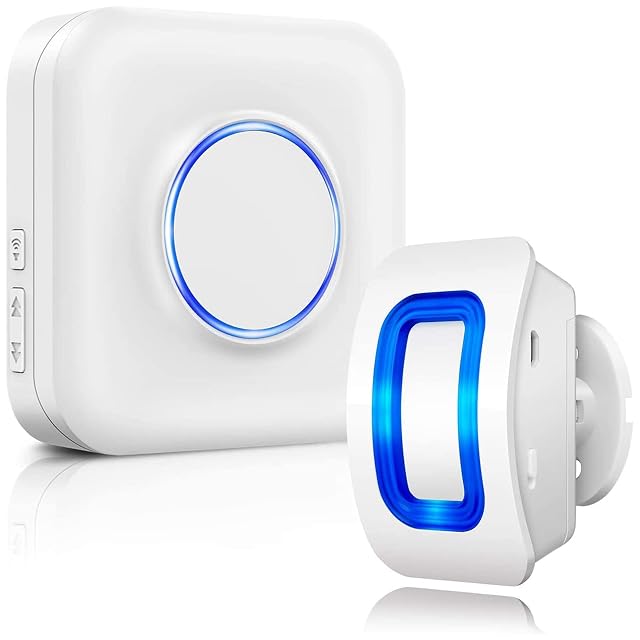
A driveway alarm expandable to twenty sensors on one receiver, with 58 melodies and five volume levels. BITIWEND states a 4 to 5 meter (13.1 to 16.4 ft) detection range across 110 degrees.
Best for: A property with several entrances that should each announce themselves differently.
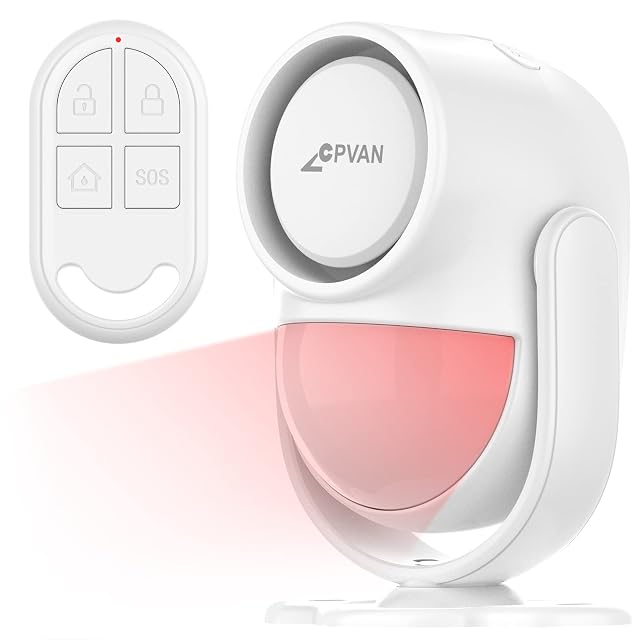
Standalone PIR · 125 dB · remote control · low-battery warning · not compatible with the CP8
A standalone PIR alarm with a remote, from a maker with a decade in detection. CPVAN states a low-battery warning that ticks periodically, and is explicit that the CP2 does not work with its Wi-Fi CP8.
Best for: A shed, garage or storeroom where the alarm should warn you before its battery dies.
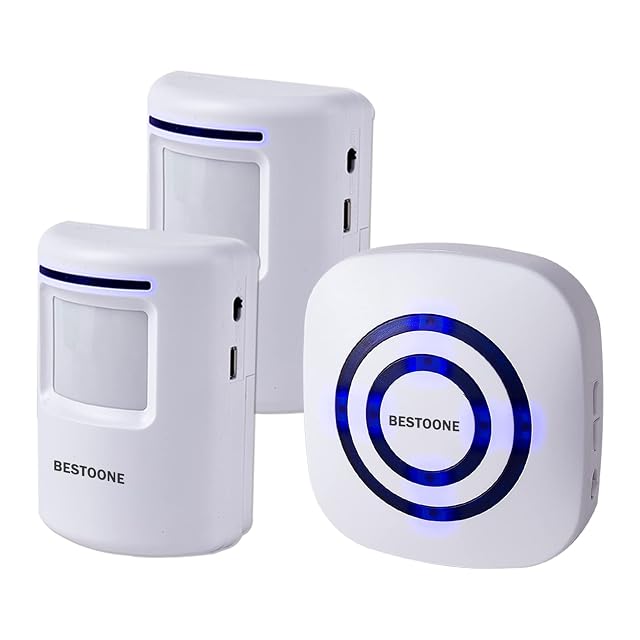
Two sensors and one alarm unit · 300 ft radio to the receiver, detection about 20 ft — both published, and labeled · 38 ringtones with 3 volumes AND A SILENT LED-ONLY MODE, the only silent option on this shelf · 2 sets of mounting screws · AAA not included · not waterproof
The only detector here with a silent mode — a light and no sound — and one of the few that separates its radio range from its detection range on the same page.
Best for: A household with a sleeping baby or a shift worker, where the alert must be visible and not audible