The only detector here with a silent mode — a light and no sound — and one of the few that separates its radio range from its detection range on the same page.
The conclusion Two detectors onto one receiver with thirty-eight tones, three volumes and — alone on this shelf — a silent LED-only mode, which is the right alert for a care alarm or a back gate in a house with a sleeping child. It is also one of the clearest pages here: twenty feet of detection and three hundred feet of radio, published together and distinguished, plus real placement advice about wind and branches. No angle, no pet immunity, and the cells are not supplied.
What the maker puts in writing
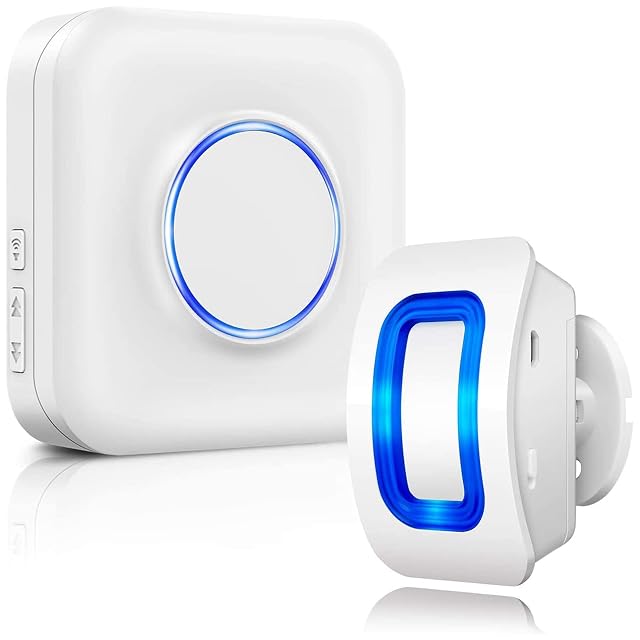
2 motion detectors, 1 alarm unit, 2 sets of mounting screws · AAA batteries not included
Signal to the receiver up to 300 feet · infrared detection distance about 20 feet
38 ringtones, three volume levels — low, medium, high — and a silent mode: LED warning only, no sound
Doorbell, garage alarm, intruder warning, wildlife warning, child or elderly care alarm
“Do not place the detector where the wind will make it active” · keep the detection range free of obstructions such as trees
Not waterproof
No field of view. No pet immunity. No battery life.
Silent, which nothing else here can be
And a lot of what these are used for is not security.
BESTOONE names it: a doorbell, a care alarm, a wildlife warning.
An LED that lights when the back gate opens tells a parent in the next room
without waking a baby. A hundred and twenty-five decibels does not.
Every other product on this shelf either makes a noise or is silent and reports
somewhere else. This is the only quiet local alert.
The three volume levels are still there when the use changes.
Twenty feet, and three hundred feet, in one sentence
Which is the clearest handling of those two figures on this shelf.
Twenty feet is what the sensor sees. Three hundred is how far the signal reaches
the receiver.
Three listings here put a radio distance in their titles. One publishes no
detection range at all.
Twenty feet is short for a room from a corner — thirty and thirty-two appear
elsewhere here. It is published, which is worth more.
Wind, and branches
Which is real, and which only two listings here mention.
A PIR sees moving warmth. A sunlit branch swaying in and out of shade is a moving
heat source. So is a curtain lifting over a radiator.
BESTOONE says to keep the field clear of obstructions such as trees, and not to
place it where wind will set it off.
This shelf’s buying tip agrees: placement fixes more false alarms than sensitivity
settings do.
Availability
On sale at around $25 on the American Amazon store at the time of checking.
Prices and availability are what Keepa reported on the date this page was updated; both move.
Prices quoted in this text were read on October 8, 2026. The live price is at the top of the page.
What reassures, and what does not
Strengths
A silent LED-only mode, which nothing else on this shelf offers
The detection range and the radio range given in the same breath, and distinguished
Two detectors onto one receiver
Three volume levels plus silent
Two sets of mounting screws supplied
Placement advice: wind and obstructions named
Compromises
No field of view angle
AAA cells needed, with no count given and none supplied
No battery life figure
No pet immunity in any form
Not waterproof
Twenty feet of detection, among the shorter ranges here
Specifications
Detection
About 20 ft of infrared detection distance — stated, and stated in the SAME bullet as the 300 ft radio range and distinguished from it. That is the clearest handling of the two figures on this shelf, where three listings lead with a radio distance and one publishes no detection range at all
Range
300 ft from the sensor to the receiver — stated as the signal transmission distance, not a sensing distance
Modes
38 ringtones, three volume levels — low, medium, high — and a SILENT MODE giving an LED warning with no sound. The silent option is unique on this shelf: every other product here either sounds or does nothing
Supplied
Two motion detectors, one alarm unit and two sets of mounting screws — stated. AAA cells are needed and not included
Applications
Named as a doorbell, garage alarm, intruder warning, burglar warning, wildlife warning and child or elderly care alarm, at front doors, window frames, driveways and walkways
Power
AAA cells per detector, stated NOT included. No cell count and no battery life appears
Ratings
Explicitly not waterproof: avoid the rain for installation, stated
Placement
BESTOONE names two causes of false alarms and what to do: do not place the detector where wind will set it off, and keep the detection field clear of obstructions such as trees. It is the only listing on this shelf besides the wired detector to give placement advice
Pet immunity
Not published, in any form. No weight, no sensitivity and no mention of animals
Field of view
Not published
Amazon reference
B09TPCL1ZJ
EAN
0768494423186
The questions we are asked
Why is a silent mode useful on an alarm?
Because a lot of what these detectors get used for is not security. BESTOONE names it: a doorbell, a child or elderly care alarm, a wildlife warning. An LED that lights when the back gate opens tells a parent in the next room without waking a baby; a 125 dB siren does not. Every other product on this shelf either makes a noise or is silent in itself and reports elsewhere, so this is the only one with a quiet local alert. The three volume levels are still there when the use changes.
Is twenty feet enough?
For a doorway, a hallway or a garage, yes. For a room you want covered from one corner, it is on the short side — thirty feet and thirty-two feet appear elsewhere on this shelf, and 7 meters (23 ft) on another. What makes the twenty-foot figure worth more than its size is that it is published, and published in the same sentence as the 300 ft radio range so the two cannot be confused. One listing on this shelf publishes no detection range at all, and three put a radio distance in their titles.
What should I do about the wind warning?
Take it seriously, because it describes a real failure. BESTOONE says not to place the detector where wind will make it active and to keep the field clear of obstructions such as trees — and this shelf's introduction explains why: a PIR sees moving warmth, so a sunlit branch swaying in and out of shade is a moving heat source, and so is a curtain lifting over a radiator. This shelf's buying tip agrees that placement fixes more false alarms than sensitivity settings do. Only two listings on this shelf offer any placement advice at all.
Against the rest of the motion detectors
Between security devices of the same category and nearby price. Shown: what they all state. A half-filled column says nothing.
Model
Price
Detection
Pet immunity
BESTOONE MSA-21 motion sensor alarm, 2 sensors and 1 receiver
$25
About 20 ft of infrared detection distance — stated, and stated in the SAME bullet as the 300 ft radio range and distinguished from it. That is the clearest handling of the two figures on this shelf, where three listings lead with a radio distance and one publishes no detection range at all
Not published, in any form. No weight, no sensitivity and no mention of animals
Up to 40 ft, with best performance typically within 10–26 ft — stated, and that qualification is the most useful sentence on this shelf. A PIR's rated maximum is a laboratory figure for a warm body crossing the field; the working range is always shorter, and CPVAN is the only listing here that publishes both numbers
Not published as a weight. CPVAN states PIR sensing that helps identify human movement and reduce unwanted triggers, which is an adjective
100° field of view up to 30 ft — stated as more than enough to secure an entire room. Thirty feet is the longest range among the app-based sensors on this shelf, and a hundred degrees is the narrowest angle published on this shelf, against the hundred and ten of the wired panel detector here and two others at a hundred and twenty
NOT published as a weight. eufy states adjustable sensitivity so that it only alerts when humans are in range rather than a playful pet dog or cat — which is a setting, not a limit. This shelf's introduction and this shelf's tag both say pet immunity is a stated weight, and only at least one of the thirteen detectors here gives one
Approximately 16–26 ft over a 120° field of view — stated, with the caveat that range varies with installation height, angle and environment. The body rotates 360° so the field can be aimed down a hallway without moving the mount
Not published as a weight. TECKNET states PIR sensing with intelligent signal analysis to distinguish human movement from environmental interference, which is an adjective where this shelf asks for a figure
What this one costs among motion detectors
Details checked on October 8, 2026.
The buyer this one serves, among security devices
A household with a sleeping baby or a shift worker, where the alert must be visible and not audible
What buyers actually choose
Amazon reports what buyers took in the month before this page was last checked: at least 50.
The figure is a floor, rounded by Amazon, and read through Keepa — it says what buyers picked, not what a maker claims.
Sources
Specifications: the manufacturer sheet for home security products and the matching Amazon product page. Prices and availability: Keepa. Every figure on this page names its source.
4–5 m (13 to 16 ft) × 110° PIR · 110 dB · 58 melodies, 5 volumes · 20 sensors per receiver
A driveway alarm expandable to twenty sensors on one receiver, with 58 melodies and five volume levels. BITIWEND states a 4 to 5 meter (13.1 to 16.4 ft) detection range across 110 degrees.
Best for: A property with several entrances that should each announce themselves differently.
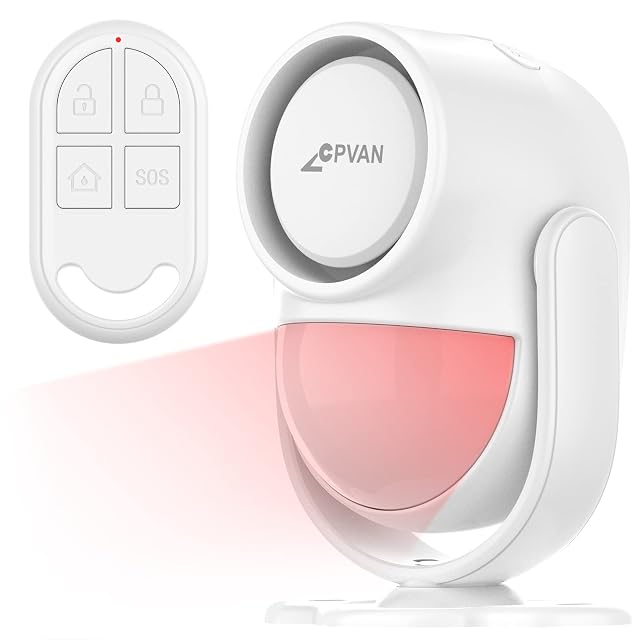
Standalone PIR · 125 dB · remote control · low-battery warning · not compatible with the CP8
A standalone PIR alarm with a remote, from a maker with a decade in detection. CPVAN states a low-battery warning that ticks periodically, and is explicit that the CP2 does not work with its Wi-Fi CP8.
Best for: A shed, garage or storeroom where the alarm should warn you before its battery dies.
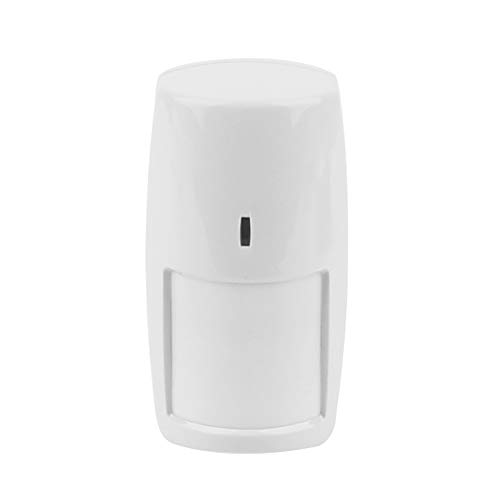
32 ft (10 m) × 110° · pet immune to 55 lb (25 kg), the only stated weight limit on this shelf · voltage-free NC/NO dry contact for a wired panel · DC 9–16 V, 12 V recommended · J1 pulse count, J2 contact mode, J3 LED · mount at 7.2 ft, the only mounting height on this shelf · 2.1 × 4.1 × 1.4 in · −10 to +50 °C (122 °F) · automatic temperature compensation
The only detector here that wires into an alarm panel — and the best-specified product on the shelf by a distance.
Best for: A wired alarm panel, where a voltage-free contact and a jumper for pulse counting are the whole requirement