The conclusion Ten dollars, and two things to its credit: the release groove is the one part the maker claims to have improved, which is the part your hands use, and absolutely flush is the correct fit standard that only this listing states plainly. Against it, this is the only listing on the shelf that does not say how many screws come in the box — on a shelf where the introduction calls the screws the decisive specification and nobody publishes their length.
What the maker puts in writing
Designed to withstand up to 800 lbs of force, 12 times stronger than a standard deadbolt
Heavy-duty metal construction
Upgraded groove design: pinch top and bottom, slide towards the hinges, pull out
Mount on the door frame in less than 5 minutes with a power screwdriver and drill
Only for inward-opening doors · the door has to be absolutely flush with the frame
Not for outward-opening, sliding, double, French or garage doors, gaps less than 0.08”, or misaligned frames
No screw count. No screw length. No alloy. No pack count.
It does not count its own screws
Which no other listing here fails to do.
Four of the five on this shelf state eight screws, four long and four short.
This shelf’s introduction says the length of the screws in the box is the single most
consequential specification in this family. The door fails where the timber
around short screws splits — not at the latch.
A listing that does not count them says nothing about the part doing the work.
Whatever arrives: fit 70 to 80 mm (2.76 to 3.15 in) screws that reach the stud.
Absolutely flush
Which is the right standard, stated firmly, and only here.
The latch bridges from the door face to the frame face. Those surfaces have to be
in the same plane.
A few millimeters out and the slide binds against the edge instead of sliding.
Recessed doors, doors that sit proud, raised weather seals. Older housing and fire
doors are the usual failures.
Lay a straight edge across the closed door onto the frame and look for daylight.
The groove is the one real claim
And it is about the part your hands use.
These latches are released by pinching the body top and bottom and sliding it
sideways. That is awkward with cold hands and hard with a weak grip — one listing
here admits it takes practice.
A deeper, better-shaped finger groove is a genuine improvement in that movement,
and naming it suggests the earlier version was worse.
Nothing on the page lets you verify the change.
And then two bullets of nothing
Customer service, and gift suggestions.
Of five bullets, two are about the company and the occasion.
That is the shape of this whole shelf: one commodity latch, five brands, and the
pages padded with everything except the screws.
Availability
On sale at around $10 on the American Amazon store at the time of checking.
Prices and availability are what Keepa reported on the date this page was updated; both move.
Prices quoted in this text were read on October 8, 2026. The live price is at the top of the page.
What reassures, and what does not
Strengths
The release groove is the one part this maker claims to have improved
Absolutely flush is the right standard to state, and only this listing states it
Ten dollars for a single lock
Misaligned frames excluded explicitly
A 0.08 in minimum gap published
Named for bedroom and balcony doors as well as entrances
Compromises
No screw count at all, where four other listings here state eight
No screw length, like everything on this shelf
No alloy and no thickness behind heavy-duty metal
No pack count published
Inward-opening doors only
One of five bullets is customer service, another is gift suggestions
Specifications
Type
A slide latch mounted on the door frame, released towards the hinges. Not a bar spanning the frame, not a long strike plate, not a hinge bolt — none of the three designs this shelf's introduction names
Operation
An upgraded groove design: pinch the lock top and bottom, slide horizontally along the door towards the hinges until it can be pulled out. Stated as unlocking in seconds even in an emergency, and the groove is the only part of the mechanism this listing claims to have changed
Material
Heavy-duty metal construction, stated, with no alloy named and no thickness
Function
Up to 800 lb of force, stated as twelve times stronger than a standard deadbolt — figures implying a deadbolt that fails at about 67 lb. No standard, no method, no laboratory
Fixings
NOT PUBLISHED. This is the only listing on this shelf that does not state a screw count: four others say eight screws, four long and four short. No length appears here either, and this shelf's introduction calls that length the single most consequential specification in this family
Installation
A power screwdriver and a drill, mounted on the door frame, stated at under five minutes as a DIY task
Fit
Inward-opening doors only — front, back, bedroom, balcony and apartment doors. The door has to be ABSOLUTELY FLUSH with the frame, stated in those terms. Excluded: outward-opening, sliding, double and French doors, garage doors, gaps under 0.08 in, and misaligned frames
Supplied
The pack count is not published, and the title describes a single lock
Stated for
Front doors, childproofing and bedroom doors, named for households with toddlers, pets that open doorknobs, and people living alone
Amazon reference
B07L1SV9FZ
EAN
0756790285669
The questions we are asked
Why is a missing screw count a problem?
Because the screws are the lock. Every other listing on this shelf states eight, four long and four short, and this shelf's introduction says the length of the screws in the box is the single most consequential specification in this family — the door fails where the timber around short screws splits, not at the latch. A listing that does not even count them tells you nothing about the fixing, which is the part doing the work. Whatever arrives, follow the buying tip: fit 70 to 80 mm (2.76 to 3.15 in) screws that reach the stud behind the frame.
What does "absolutely flush" rule out?
Recessed doors, doors that sit proud of the frame, and anything with a raised weather seal — and this is the only listing that states the condition that firmly. The latch bridges from the door face to the frame face, so those surfaces must be in the same plane; a few millimeters out and the slide binds against the edge rather than sliding. Older housing and fire doors are the common failures. Lay a straight edge across the closed door onto the frame and look for daylight under it before ordering.
Is the upgraded groove worth anything?
It is the one claim on this listing about the thing you will actually touch. These latches are released by pinching the body top and bottom and sliding it sideways, which is awkward with cold hands and genuinely difficult for someone with weak grip — one listing on this shelf admits it takes practice. A deeper or better-shaped finger groove is a real improvement in that movement, and the maker naming it suggests the earlier version was worse. There is no way to verify the change from the page.
Against the rest of the door reinforcement locks
Between security devices of the same category and nearby price. Shown: what they all state. A half-filled column says nothing.
Model
Price
Type
Operation
Material
Function
HIGHEVER DL4-01 door reinforcement lock
$10
A slide latch mounted on the door frame, released towards the hinges. Not a bar spanning the frame, not a long strike plate, not a hinge bolt — none of the three designs this shelf's introduction names
An upgraded groove design: pinch the lock top and bottom, slide horizontally along the door towards the hinges until it can be pulled out. Stated as unlocking in seconds even in an emergency, and the groove is the only part of the mechanism this listing claims to have changed
Heavy-duty metal construction, stated, with no alloy named and no thickness
Up to 800 lb of force, stated as twelve times stronger than a standard deadbolt — figures implying a deadbolt that fails at about 67 lb. No standard, no method, no laboratory
A slide latch mounted on the frame, released by sliding towards the hinges. Not a bar, not a long strike plate, not a hinge bolt — none of the three load-spreading designs this shelf's introduction names
Slide the lock towards the hinges and pull: a one-second release with no tools, stated as easier than a door guard or a chain lock
Premium rust-proof aluminum alloy, stated to resist corrosion
800 lb of force claimed, stated as twelve times stronger than a standard deadbolt. The two figures together imply a deadbolt failing at about 67 lb. No standard and no certifying body appears
A 3-inch stop in metal, stated — a slide latch on the frame. Not a bar, not a long strike plate, not a hinge bolt, which are the three designs this shelf's introduction recommends
With the door locked, press the upper and lower grooves and pull horizontally to the fully unlocked position — stated as a quick unlock in any situation
Metal, stated, with no alloy named
800 lb of force claimed, twelve times stronger than a normal deadbolt — two figures which together imply a deadbolt failing at about 67 lb. No standard, method or laboratory named
A 3-inch stop in metal construction, stated — a slide latch on the frame engaging a base plate on the door. Not a bar, not a long strike plate, not a hinge bolt
Index finger on top, thumb on the bottom, slide away from the base plate towards the hinges and pull outward. No tools, and the listing says it takes a little practice — the only listing here to say so
Metal construction, stated, with no alloy named. Two listings on this shelf name aluminum; this one names nothing, which leaves steel open and unconfirmed
800 lb of force claimed against being kicked in, stated as twelve times stronger than a normal deadbolt — figures which together imply a deadbolt failing at about 67 lb. No standard, no method, no laboratory
What separates the models, in security devices
If price decides: this model, at $10.
What this one costs among door reinforcement locks
Details checked on October 8, 2026.
The buyer this one serves, among security devices
A ten-dollar single lock where the release action matters more than the paperwork
What buyers actually choose
Amazon reports what buyers took in the month before this page was last checked: at least 1,000.
The figure is a floor, rounded by Amazon, and read through Keepa — it says what buyers picked, not what a maker claims.
Sources
Specifications: the manufacturer sheet for home security products and the matching Amazon product page. Prices and availability: Keepa. Every figure on this page names its source.
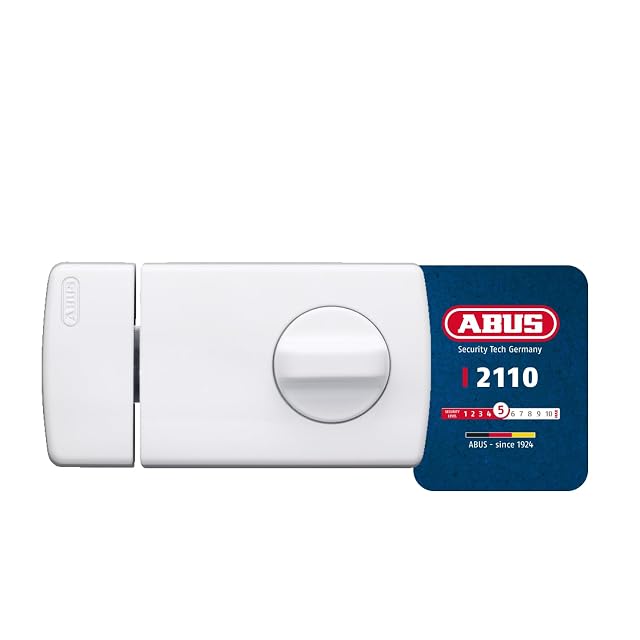
Rim lock with thumbturn inside · key outside · 5-pin cylinder · doors 35–50 mm (1.38 to 1.97 in) · 32 mm (1.26 in) bore
ABUS's additional rim lock: a thumbturn inside, a key outside, and a five-pin cylinder. Stated for doors 35 to 50 mm (1.38 to 1.97 in) thick with recesses up to 21 mm (0.83 in), and needing a 32 mm (1.26 in) round hole for the cylinder.
Best for: Securing the closing edge of a front door against levering, on a door of ordinary thickness.
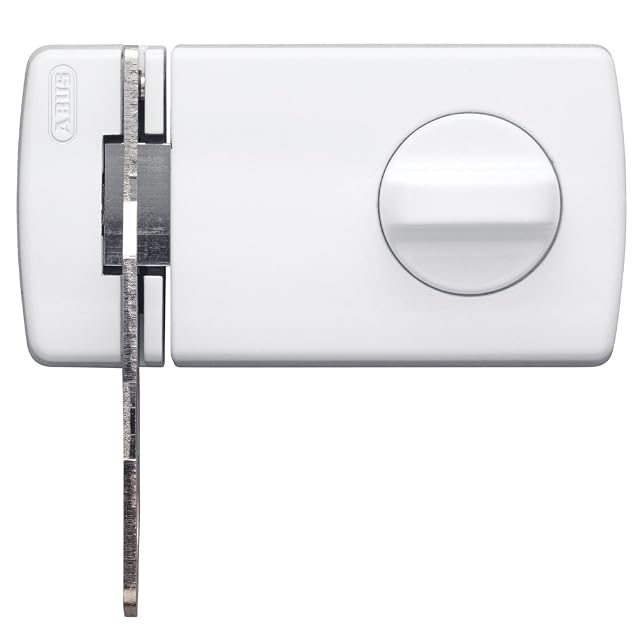
The 2130 is ABUS's entrance-door rim lock: a sturdy two-turn deadbolt, a thumbturn on the inside and a key from outside, supplied with two keys, in white.
Best for: The same job as the 2110 on an entrance door, where the inside hardware should stay white.
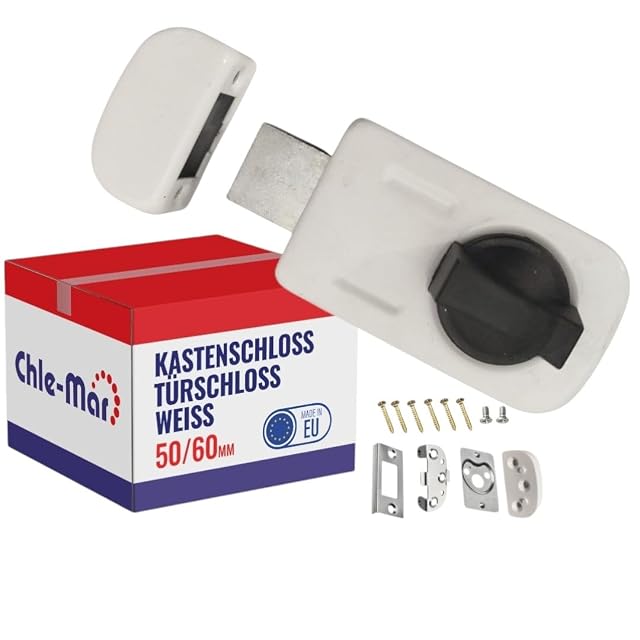
Powder-coated metal · 50 or 60 mm (2.36 in) backset · surface-mounted rim lock
A surface-mounted additional lock in powder-coated metal, with a universal 50 or 60 mm (2.36 in) backset, adding a second locking point to an apartment or house door.
Best for: An apartment door that has one lock and needs a second, without touching the existing one.