The conclusion Nineteen dollars for four, with the batteries in the box, 120 decibels, a chime mode for the daytime, and the one thing nothing else on this shelf offers: a button that tells you the battery still works. For an alarm that gets fitted and then ignored for a year, that button is the most practical feature here. It publishes no battery life, no gap tolerance and no tamper detection, and like five of the seven it alerts nobody but whoever is in earshot.
What the maker puts in writing
120-decibel alarm triggered by a high-quality magnetic sensor, or a chime when windows or doors are opened and closed
An OFF / chime / alarm switch on the side of the alarm
Set of four · double-sided tape included, everything you need is in the box
Four included LR44 button batteries · battery test button · low battery indicator LED
No battery life figure. No gap tolerance. No tamper detection. Nothing about metal
frames.
A button that proves it still works
Which nothing else on this shelf has.
A door alarm is a device nobody looks at for a year. A flat cell is a silent
failure.
A low-battery LED helps only if someone sees it blink. A test button lets you walk
round four units in a minute.
At least two of the twelve sensors here publish a battery life. On the rest, the only way to
know a sensor is alive is to open the window and listen.
Chime, for the daytime
Which makes the same unit useful twice.
Chime mode is a shop-door bell: a tone when the door opens and when it closes,
rather than a hundred and twenty decibels.
That is the setting for a back door in the day — you hear a child going out
without the household jumping.
The switch has three positions. At night it goes to alarm.
A thousand times the power of 90 dB
Which is what 120 against 90 means.
Every ten decibels is a tenfold increase in sound power. Thirty is a thousand.
Ninety decibels warns you. A hundred and twenty is meant to make the person at
the window leave.
Which is also why there is an OFF position.
And still no gap figure
The one the shelf says decides everything.
This shelf’s introduction: gap tolerance is how far the magnet can sit from the
switch before the contact drops, typically 10 to 25 mm (0.39 to 0.98 in).
One listing on this shelf gives a number. This is not it, and neither are five
others.
Availability
On sale at around $19 on the American Amazon store at the time of checking.
Prices and availability are what Keepa reported on the date this page was updated; both move.
Prices quoted in this text were read on October 8, 2026. The live price is at the top of the page.
What reassures, and what does not
Strengths
A battery test button, which nothing else on this shelf has
A low-battery indicator LED as well
Four LR44 cells supplied
120 dB, second loudest here
A chime mode that sounds on closing as well as opening
Nineteen dollars for four, from a maker with a service route
Compromises
No battery life figure, despite the test button
No gap tolerance
LR44 cells rather than AAA
It alerts nobody remotely
No tamper detection and nothing about metal frames
One bullet of five is reassurance rather than specification
Specifications
Modes
A three-position switch on the side of the unit: OFF, chime, or alarm — stated. Chime sounds when the window or door is opened AND when it is closed, which alarm mode does not
Volume
120 dB in alarm mode, stated, triggered by the magnetic sensor. Second loudest on this shelf behind a 125 dB unit, and thirty decibels above the three 90 dB sirens here
Power
Four LR44 button cells, SUPPLIED, with a battery test button and a low-battery indicator LED — stated. The test button is unique on this shelf, and no battery life figure is published
Type
A standalone alarm with a magnetic sensor: it sounds where it is fitted and reports nothing remotely. No app, no radio, no base station
Mounting
Double-sided tape included, stated as completely wire and hassle-free, with everything needed in the box
Applications
Windows and doors, stated. Four units per pack for extra coverage
Gap tolerance
Not published. One listing on this shelf publishes a figure, and this shelf's introduction calls it the specification that decides whether a sensor works on your window
Tamper
Not published, as on every listing on this shelf
Metal frames
Not published. No listing on this shelf addresses steel or aluminum frames
Amazon reference
B08FXX18WZ
EAN
0030878497329
The questions we are asked
Why is a battery test button worth anything?
Because a door alarm is a device nobody looks at for a year, and a flat cell is a silent failure. A low-battery LED only helps if someone sees it blink; a test button lets you walk round four units in a minute and confirm each one still works. No other sensor on this shelf offers it, and only two publish a battery life at all — so on most of this shelf the only way to know a sensor is alive is to open the window and listen. For an alarm bought and then forgotten, this is the most useful feature here.
What does chime mode actually do?
It turns the alarm into a shop-door bell: a pleasant tone when the door or window is opened and closed, rather than 120 decibels. That is the right setting for a back door in the daytime — you hear a child going out or a delivery coming in without the household jumping. The switch has three positions, so the same unit goes to alarm mode at night. The SanJie units on this shelf also offer a chime; the four 90 dB sirens have one setting and no choice.
How loud is 120 dB really?
Loud enough to be unpleasant in the same room and to be heard clearly across a house and into a garden — roughly a thousand times the sound power of the three 90 dB units on this shelf, since every ten decibels is a tenfold increase. For a deterrent that is the purpose: the point of a 120 dB alarm is not to warn you, it is to make the person at the window leave. The trade is that nobody wants it going off indoors by mistake, which is what the off position on the switch is for.
Against the rest of the door and window sensors
Between security devices of the same category and nearby price. Shown: what they all state. A half-filled column says nothing.
Model
Price
Type
Applications
Philips LRM3320W/27 window and door alarm, 4-pack, 120 dB with chime mode
$19
A standalone alarm with a magnetic sensor: it sounds where it is fitted and reports nothing remotely. No app, no radio, no base station
Windows and doors, stated. Four units per pack for extra coverage
A standalone alarm: the magnetic switch detects the opening, the unit sounds at 90 dB where it is stuck, and nothing is reported anywhere else. No app, no radio, no base station
Homes, apartments, offices, hotel rooms and garages, stated, with child safety named: preventing children and babies leaving the house
A standalone alarm: the magnetic sensor triggers a 90 dB siren in the unit itself, and nothing is reported remotely. No app, no radio, no base station — Wireless in the title means no cable to run
Home, apartment, office, garage and hotel, stated, and named for monitoring children and pets or preventing access to dangerous areas as well as burglary. Stated to attach to door knobs, window frames or be carried
What separates the models, in security devices
If price decides: HENDUN SZSF03R, at $10.
What this one costs among door and window sensors
Details checked on October 8, 2026.
The buyer this one serves, among security devices
A household that wants a chime for the back door in the day and an alarm on it at night
What buyers actually choose
Amazon reports what buyers took in the month before this page was last checked: at least 1,000.
The figure is a floor, rounded by Amazon, and read through Keepa — it says what buyers picked, not what a maker claims.
Sources
Specifications: the manufacturer sheet for home security products and the matching Amazon product page. Prices and availability: Keepa. Every figure on this page names its source.
For Smartvest Pro · wireless opening detector · triggers configured scenarios · doors and windows
The opening detector for ABUS's Smartvest Pro alarm. It reports unauthorized opening of doors, windows and patio doors, and triggers whatever scenarios have been configured on the panel.
Best for: An ABUS Smartvest Pro system being extended door by door.
90 dB standalone siren · 3.54 × 1.18 × 0.79 in and about 0.08 lb, both published · 2 AAA, NOT included · a three-step install written out · five units for ten dollars · no gap figure, no battery life, no tamper detection
Five alarms for ten dollars with their dimensions and weight published — two figures the cheapest sirens here usually leave out.
Best for: Five openings on a tight budget, where the body has to be measured against a shallow frame first
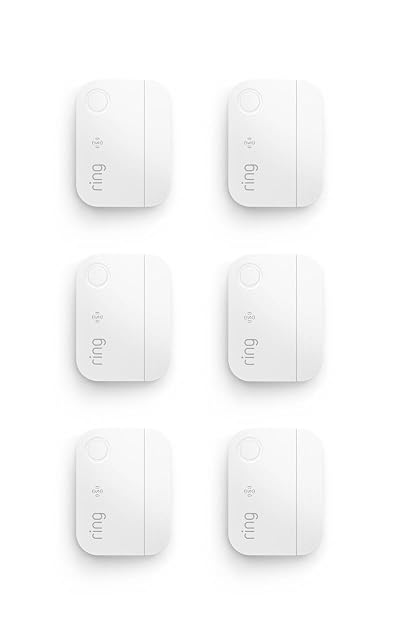
NO BASE STATION REQUIRED — connects over Amazon Sidewalk, the only named network on this shelf · six sensors · 24/7 professional monitoring on a subscription · no battery type, no battery life, no gap figure, no tamper detection
The only sensor on this shelf that needs no hub at all — and the only one that names the network it talks to.
Best for: A house with no alarm system that wants phone alerts on six openings and nothing else to buy