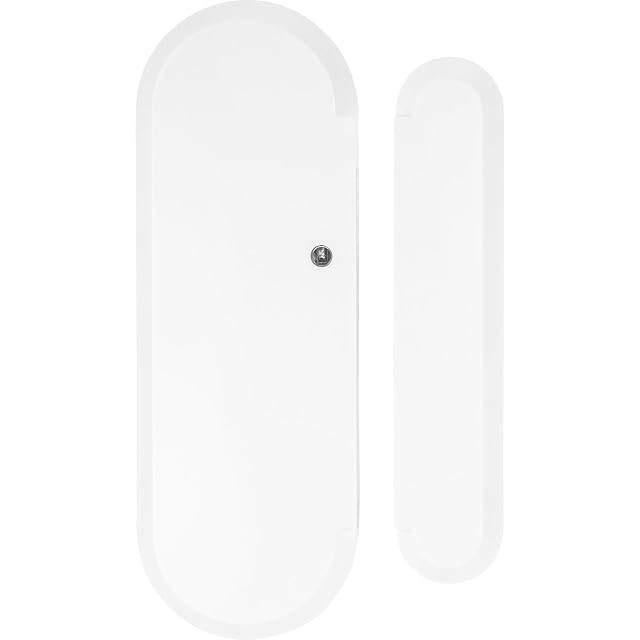
The conclusion Ten dollars, and the only listing on this shelf that publishes the one number the shelf says decides everything: the magnet must sit within 0.6 inches — 15.2 mm (0.60 in) — of the alarm. Measure your window recess and you can tell whether this works before buying it, which is true of nothing else here. Full dimensions too, and a real environmental statement. It is a standalone 90 dB screamer with no app, the cells are not included, and the pack count is never stated.
What the maker puts in writing
90dB alarm, high-quality magnetic sensor
“The distance between the magnet and the alarm should not exceed 0.6in”
2 AAA batteries, not included in the box
3.4” × 1.1” × 0.6”, ultra-thin
Peel off the double-sided tape and paste it on the door
Dust-proof design, stable in extreme temperatures, high humidity or dusty areas
No pack count. No battery life. No tamper detection. Nothing about metal frames.
Nought point six inches
Fifteen point two millimeters, and the only gap figure on this shelf.
This shelf’s introduction calls gap tolerance the specification that decides whether
a sensor works on your window — how far the magnet can sit from the switch before
the contact drops, typically 10 to 25 mm (0.39 to 0.98 in).
Fifteen millimeters sits in the lower half of that range.
The buying tip is exact about what goes wrong: a vinyl window closing onto a 20 mm (0.79 in)
recess will not hold a sensor rated for less, and the failure only shows up on a
windy night.
Measure the recess. Then read this figure. Six other listings here will not let
you do either.
Wireless means no cable
Not radio.
The magnet separates, the unit screams at 90 dB on the frame where it is stuck,
and that is the entire mechanism.
No app. No phone. No base station. No link to anything.
At least five of the twelve sensors on this shelf work exactly this way, and all five say
Wireless in their titles.
And no count
Which the others all state.
Four, five, six, fifteen — the other listings put it in the title.
Nine dollars seventy-eight is consistent with a multipack, and that is an
inference, not a figure.
Ask before ordering if you have five windows.
Availability
On sale at around $10 on the American Amazon store at the time of checking.
Prices and availability are what Keepa reported on the date this page was updated; both move.
Prices quoted in this text were read on October 8, 2026. The live price is at the top of the page.
What reassures, and what does not
Strengths
A published gap: 0.6 in, which nothing else on this shelf gives
Full dimensions published, so you can check it clears the sash
Ten dollars
Stated for humidity, dust and extreme temperatures
Point-six inches of body depth, which fits a shallow reveal
An on/off switch, so it can be disarmed without peeling it off
Compromises
The pack count is not published
Two AAA cells are not included
No battery life figure
90 dB, the quietest tier on this shelf
It alerts nobody remotely: there is no app, no phone and no system
Adhesive only, with no screw fixing offered
Specifications
Gap tolerance
The distance between the magnet and the alarm must not exceed 0.6 in — 15.2 mm (0.60 in) — stated. It is the ONLY gap figure published on this shelf, and this shelf's introduction calls gap tolerance the specification that decides whether a sensor works on your window at all. Fifteen millimeters sits in the lower half of the 10–25 mm (0.39 to 0.98 in) range the shelf describes as typical
Type
A standalone alarm, not a system sensor: the two parts separate, the unit screams at 90 dB where it is fitted, and nothing is reported anywhere else. The word Wireless in the title means no cable to run, not a radio link
Volume
90 dB, stated. Loud enough to be heard through a closed internal door and well below the 120 and 125 dB units on this shelf
Power
Two AAA cells, stated NOT included. No battery life figure is published, where two listings on this shelf publish one
Dimensions
3.4 × 1.1 × 0.6 in — stated, ultra-thin. Published dimensions matter here because the body has to sit on the frame without fouling the closing window
Mounting
Peel-and-stick double-sided tape, with an on/off switch pressed before the cells go in — stated. No screw option
Durability
A dust-proof design stated to maintain stable performance in extreme temperatures, high humidity and dusty areas — the only environmental statement on this shelf
Tamper
Not published. No tamper detection appears on any listing on this shelf, although this shelf's introduction compares it
Metal frames
Not published. No listing on this shelf says anything about steel or aluminum frames, which this shelf's introduction warns complicate the gap
Amazon reference
B0CKLBRX63
EAN
0770642268488
The questions we are asked
Why does the 0.6 inch figure matter so much?
Because this shelf's introduction says it is the specification that decides whether a sensor works on your window, and this is the only listing on the shelf that gives it. Fifteen point two millimeters is the maximum the magnet can sit from the switch before the contact drops, which rules out any window that closes onto a deep recess — and the buying tip is exact about the consequence: a vinyl window closing onto a 20 mm (0.79 in) recess will not hold a sensor rated for less, and the failure only shows up on a windy night. Measure your recess, then read this figure.
Does it tell anyone the door opened?
Only whoever is in earshot. This is a standalone alarm: the magnet separates, the unit sounds at 90 dB on the frame where it is stuck, and that is the whole mechanism. There is no radio, no app, no phone alert and no base station — and the word Wireless in the title means there is no cable to run, which is a different claim entirely. At least five of the twelve sensors on this shelf work this way. The two Ring sensors are the ones that report to a system and a phone, and they cost more and need more.
How many are in the box?
The listing does not say, and on this shelf that is unusual: the others state four, five, six or fifteen in their titles. At nine dollars seventy-eight the price is consistent with a multipack of the same commodity alarm sold at ten dollars for five elsewhere on this shelf, and the parcel weight suggests more than one — but neither of those is a published figure and neither should decide a purchase. Ask the seller before ordering if the count matters, which it does if you have five windows.
Against the rest of the door and window sensors
Between security devices of the same category and nearby price. Shown: what they all state. A half-filled column says nothing.
Model
Price
Type
PLOJOP Door and window alarm, 90 dB, 3.4 × 1.1 × 0.6 in
$10
A standalone alarm, not a system sensor: the two parts separate, the unit screams at 90 dB where it is fitted, and nothing is reported anywhere else. The word Wireless in the title means no cable to run, not a radio link
A standalone alarm: the magnetic sensor triggers a 90 dB siren in the unit itself, and nothing is reported remotely. No app, no radio, no base station — Wireless in the title means no cable to run
A standalone alarm with a magnetic sensor: it sounds where it is fitted and reports nothing remotely. No app, no radio, no base station
What separates the models, in security devices
If price decides: this model, at $10.
What this one costs among door and window sensors
Details checked on October 8, 2026.
The buyer this one serves, among security devices
Any window whose recess you have measured — this is the only sensor here you can check against it
What buyers actually choose
Amazon reports what buyers took in the month before this page was last checked: at least 500.
The figure is a floor, rounded by Amazon, and read through Keepa — it says what buyers picked, not what a maker claims.
Sources
Specifications: the manufacturer sheet for home security products and the matching Amazon product page. Prices and availability: Keepa. Every figure on this page names its source.
For Smartvest Pro · wireless opening detector · triggers configured scenarios · doors and windows
The opening detector for ABUS's Smartvest Pro alarm. It reports unauthorized opening of doors, windows and patio doors, and triggers whatever scenarios have been configured on the panel.
Best for: An ABUS Smartvest Pro system being extended door by door.
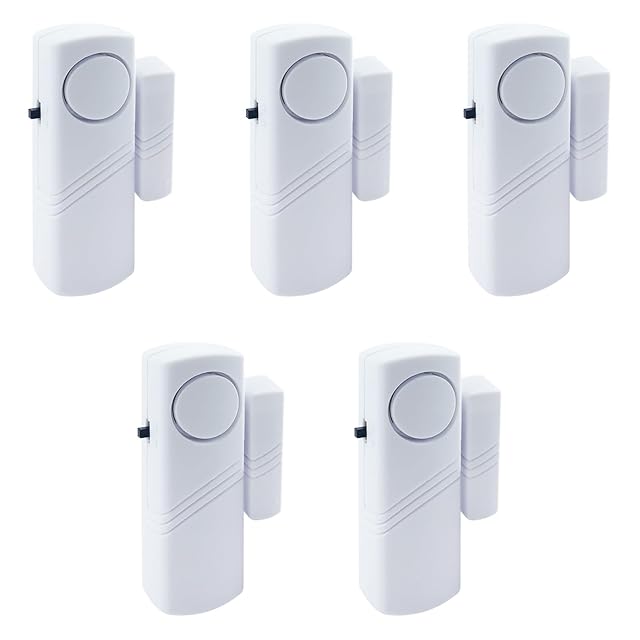
90 dB standalone siren · 3.54 × 1.18 × 0.79 in and about 0.08 lb, both published · 2 AAA, NOT included · a three-step install written out · five units for ten dollars · no gap figure, no battery life, no tamper detection
Five alarms for ten dollars with their dimensions and weight published — two figures the cheapest sirens here usually leave out.
Best for: Five openings on a tight budget, where the body has to be measured against a shallow frame first
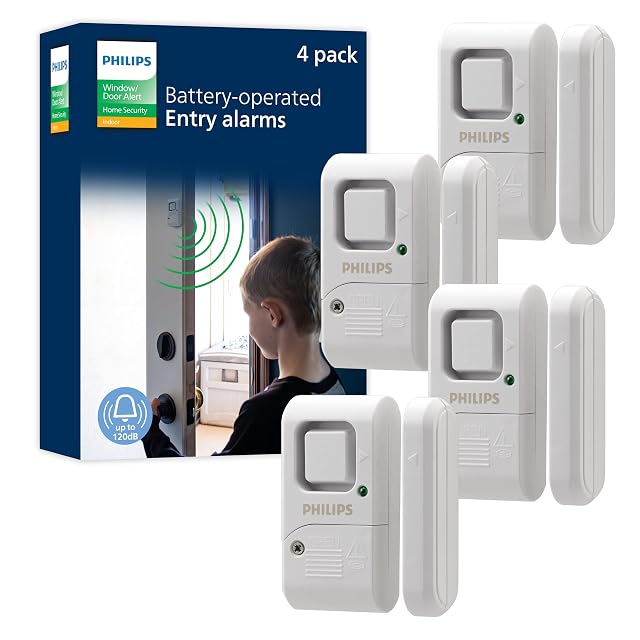
120 dB alarm or chime, switched on the side: OFF / chime / alarm · 4 LR44 cells SUPPLIED · a battery TEST BUTTON and a low-battery LED, the only test button on this shelf · double-sided tape included · no gap figure, no battery life, no tamper detection
The only sensor here with a button that tells you the battery is still good — which on an alarm nobody checks is worth more than it sounds.
Best for: A household that wants a chime for the back door in the day and an alarm on it at night