What it does when the Wi-Fi drops is the specification that counts · review
Goliath Basic AirShield Starter Set review
Goliath uses 868 MHz two-way radio rather than Wi-Fi for its sensors, and includes a motion detector with a camera that takes a snapshot when triggered.
The conclusion The only two-way 868 MHz radio stated in this hub, with a camera that answers the question every false alarm asks.
Most consumer alarm kits put their sensors on Wi-Fi or on cheap 433 MHz radio.
This one uses 868 MHz, two-way, and that is the reason to look at it.
What the radio buys
The 868 MHz band is reserved in Europe for short-range devices with limited transmit time, so a sensor at the far end
of a house is not competing with every router and doorbell in the street. It
also travels further through masonry than 2.4 GHz.
Two-way is the more important half. The hub and each sensor confirm one
another, so a sensor with a dead battery, a sensor that has been removed, or a
sensor being jammed is reported. One-way systems treat silence as normal,
which is exactly the state an intruder wants to produce.
The snapshot camera
A motion detector that photographs what triggered it. Every alarm eventually
raises the same question — was that a person or the cat — and this answers it
without you driving home.
It is also a camera in a room in your house, taking pictures when the system
decides. Choose the room deliberately, and read what your own data protection
authority says if anybody else lives there.
The cost
A proprietary radio means expansion comes from Goliath. That is the standard
trade for a system that works reliably out of the box.
Who it suits
A house where false alarms have already become a problem.
Availability
Not found on the American Amazon store, where the buy link falls back to a local search rather than to a page that does not exist.
Prices and availability are what Keepa reported on the date this page was updated; both move.
What reassures, and what does not
Strengths
868 MHz two-way radio: longer range and less congested than 2.4 GHz
Motion detector with a camera — you see what triggered it
Two-way technology means the hub confirms each sensor rather than assuming
App control with cloud, arming and status
Compromises
Proprietary radio: expansion means Goliath sensors
A camera in a sensor raises the same privacy questions as any camera indoors
Starter set — one detector and one contact
Cloud dependency for remote features
Specifications
Radio
868 MHz AirShield, two-way
Contents
Hub, motion camera with snapshot, door/window contact, indoor siren, remote, RFID keypad
Expansion
Up to 150 devices, stated by Goliath
Monitoring
Optional link to a monitoring center over the SIA protocol
Control
App, iOS and Android, with cloud
Amazon reference
B0GQBK59RK
EAN
4251909211974
The questions we are asked
Why 868 MHz rather than Wi-Fi?
Range and congestion. The 868 MHz band is reserved in Europe for short-range devices with limited transmit time, so it is not competing with every router, doorbell and microwave in the street, and it travels further through walls. The trade is that sensors must come from the same maker.
What does two-way radio add?
The hub and the sensor confirm each other, so a sensor that has gone flat, been removed or been jammed is noticed rather than silently absent. One-way systems assume silence means nothing happened, which is the assumption an intruder relies on.
Is a camera in a motion detector a good idea?
It answers the question every alarm raises — what actually triggered it — and it means a camera inside your house that takes pictures when the system decides to. Place it accordingly, and think about which rooms it should not be in.
Our score
7.8/ 10
The only two-way 868 MHz radio stated in this hub, with a camera that answers the question every false alarm asks.
What this one costs among alarm kits
A reference exists on these Amazon stores: France, Germany, Italy, Spain. Listed is not the same as in stock — availability changes daily.
Details checked on September 2, 2026.
The buyer this one serves, among security devices
A house where false alarms need to be verifiable rather than guessed at.
Specifications: the manufacturer sheet for home security products and the matching Amazon product page. Prices and availability: Keepa. Every figure on this page names its source.
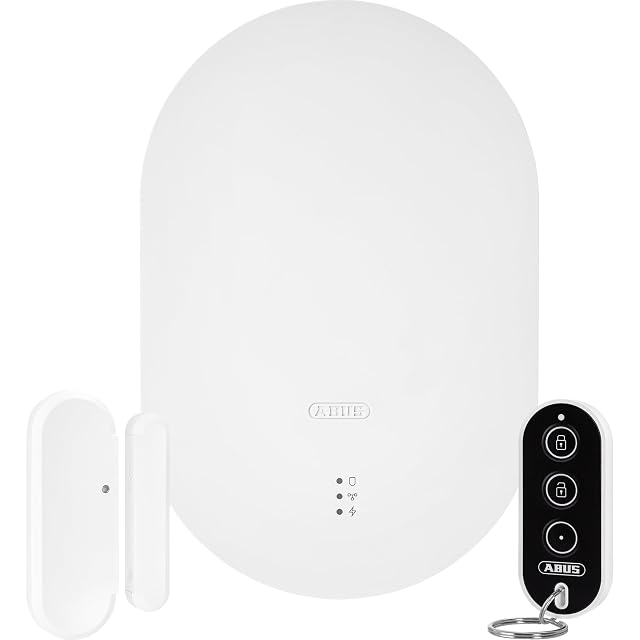
Hub and siren · expandable · DIY installation · app control · voice assistant compatible
ABUS's Smartvest Pro starter set: the hub and siren of a system designed to be expanded, installable without prior knowledge and operated by app, from a manufacturer whose main business is physical security.
Best for: Someone building a system over time who wants the sensors and the door hardware to come from the same maker.
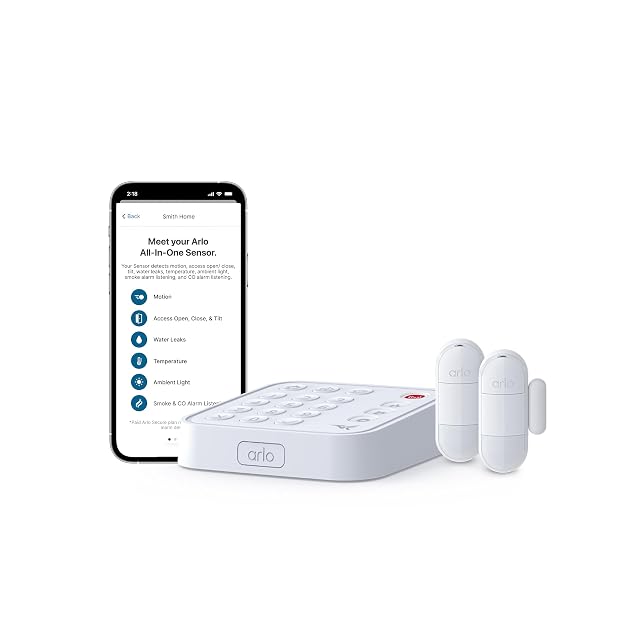
Wired plug-in keypad sensor hub plus 2 all-in-one sensors · 8 detection functions per sensor: motion, open/close, water leak, freeze, smoke/CO listening, tilt, ambient light · one tap emergency response · SecureLink named with no protocol or range
Two sensors that each do eight jobs — which is a genuinely different answer to a shelf that counts pieces.
Best for: An apartment where two well-placed sensors beat eight single-purpose ones, and leaks matter as much as doors
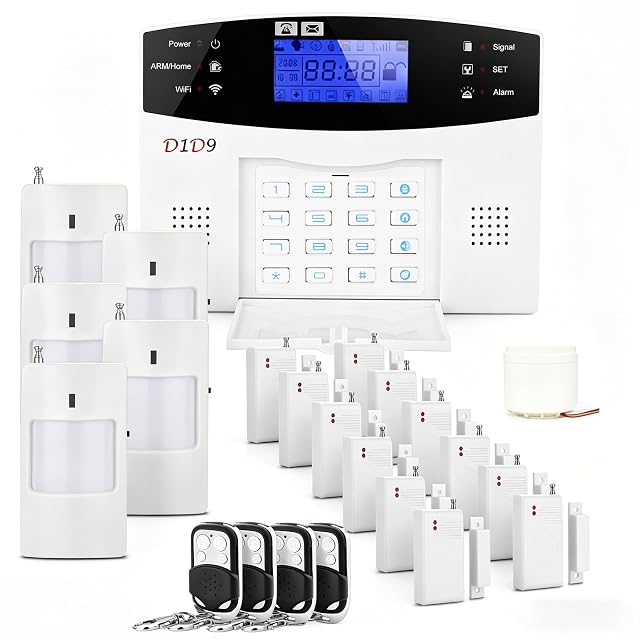
24 pieces · 4G and Wi-Fi, with a mobile fallback that needs no subscription · SIM card or Wi-Fi required · no monthly fee · batteries described as gifts, not warranted · no siren level, no radio frequency, no sensor breakdown
The only kit here with a mobile fallback that costs nothing monthly — and the only one that disclaims its own batteries.
Best for: A second property or a vacation rental, where nobody will be paying a subscription and 4G is the only reliable link