The conclusion Boron carbide is the shackle material this shelf's introduction above actually asks for, and this is the only lock on the shelf that has it — with four bodies, bump resistance, key retention, and the ability to re-key all four to a new key in seconds with the tool supplied. For anything where the keyholders change, that last point is worth the fifty-six dollars on its own. It publishes no shackle diameter, offers no shrouding, and the laminated plated body is not the brass the shelf recommends outdoors.
What the maker puts in writing
Boron-carbide shackle: premium, super-hard material for significantly improved cut and saw resistance vs hardened steel
SmartKey: re-key the lock yourself in seconds with the included learning tool, no locksmith required
Robust laminated steel body, for weather-exposed environments
Bump-resistant design and higher pick resistance · key retention
4-pack, key-alike multiple padlocks on site
No shackle diameter. No shrouding. No cut strength figure.
Boron, which the shelf asks for by name
And nothing else here has it.
This shelf’s introduction names three shackle facts worth having: diameter in
millimeters, whether it is hardened or boron alloy, and how much is exposed.
Boron alloys are substantially harder than case-hardened steel. A bolt cutter
bites instead of shearing; a hacksaw blade blunts.
The shackle still fails with the right tool and enough minutes. It takes several
times as long.
The other six padlocks here are hardened steel, brass, or unspecified.
And no diameter
Which is half the specification missing.
Hardness without a section figure tells you the metal and not the metal’s
thickness.
At least one of the fourteen padlocks on this shelf publishes a shackle diameter. This is not
it.
Re-keyable beats keyed alike
Because keyed alike is permanent.
A keyed-alike set shares one key forever. A tenant leaves, a contractor is let
go, a key is lost — and every lock in the set is compromised.
SmartKey takes the existing lock, the learning tool and a new key, and the old
keys stop working.
Three locks on this shelf are keyed alike. This is the one that can be changed.
For a rental portfolio or a crew, that is the difference between one purchase and
a recurring one.
An open shackle, in a hard metal
Which is a real trade, not a flaw.
This shelf’s introduction calls a closed shackle the single biggest step up in this
family. Kwikset does not offer one here.
Three locks on this shelf claim shrouding, and all three use ordinary hardened
steel.
Boron exposed, or hardened steel shielded. Two different defenses.
And this shelf’s buying tip matters more than either: match the lock to the hasp.
Availability
On sale at around $56 on the American Amazon store at the time of checking.
Prices and availability are what Keepa reported on the date this page was updated; both move.
Prices quoted in this text were read on October 8, 2026. The live price is at the top of the page.
What reassures, and what does not
Strengths
A boron-carbide shackle, the only boron alloy on this shelf
Re-keyable in seconds with the tool in the box
Four locks, which can all be matched to one key on site
Key retention, so it cannot be left unlocked with the key out
A laminated steel body rather than a die-casting
Bump resistance stated as well as pick resistance
Compromises
No shackle diameter, which the shelf calls the first specification
No shrouding and no closed shackle, so the shackle is exposed
Fifty-six dollars, the most expensive set on this shelf
Laminated plated steel on an outdoor gate will corrode before brass
No cut strength figure
Re-keying is a Kwikset ecosystem, so the keys are Kwikset keys
Specifications
Shackle
Boron carbide, stated as premium super-hard material for significantly improved cut and saw resistance against hardened steel. This shelf's introduction names boron alloy as one of three things the shackle specification should tell you, and this is the only lock on this shelf that offers it — the other six are hardened steel, brass or unspecified
Diameter
NOT PUBLISHED. This shelf's introduction calls diameter in millimeters the first specification that matters, and only at least one of the fourteen padlocks on this shelf gives one. A boron shackle of unknown diameter is a better material in an unknown section
Body
Laminated steel, stated for strength and longevity in weather-exposed environments. Laminated means stacked and riveted steel plates rather than a single casting, which is the stronger of the two common constructions on this shelf
Cylinder
SmartKey: re-key the lock yourself in seconds with the included learning tool, no locksmith required — stated, with a bump-resistant design and higher pick resistance
Keys
Key retention, stated — the key cannot be removed except in the locked position, which stops a lock being left hanging open with the key in a pocket. At least two of the fourteen padlocks on this shelf have it
Supplied
Four padlocks, stated, key-alike-able on site for gates, trailers and storage
Shrouding
Not published. No closed shackle and no shield is claimed, so the shackle is exposed to a cutter — and this shelf's introduction calls a closed-shackle design the single biggest step up available in this family
Weather
Laminated steel stated for weather-exposed environments. Laminated steel is plated, not brass or stainless, and this shelf's introduction warns that a plated steel body on a weather-facing gate will seize by spring
Cut strength
Not published as a figure. One lock on this shelf publishes one
Amazon reference
B0GR1V4RZM
EAN
0199394002308
The questions we are asked
What does boron carbide buy over hardened steel?
Time against a cutter and a hacksaw, which is the whole point of the shackle. Boron alloys are substantially harder than case-hardened steel, so a bolt cutter bites rather than shears and a hacksaw blade blunts — the shackle still fails eventually, with the right tool and enough minutes, and it takes several times as long. This shelf's introduction names boron alloy as one of three shackle facts worth having, and this is the only lock on this shelf that has it. What is missing is the diameter: hardness without a section figure is half a specification.
Why does re-keying matter more than keyed-alike?
Because keyed-alike is permanent and re-keyable is not. A keyed-alike set shares one key forever, so when a tenant leaves, a contractor is let go or a key is lost, every lock in the set is compromised and the whole set is replaced. SmartKey lets you take the existing locks, insert the learning tool and the new key, and the old keys stop working in seconds. For a rental portfolio or a crew that changes, that is the difference between a fifty-six dollar purchase and a recurring one. Three locks on this shelf are keyed alike; this is the one that can be changed.
Is an exposed shackle a problem at this price?
It is the thing to weigh. This shelf's introduction is unambiguous that a closed-shackle design — one leaving only a few millimeters visible — is the single biggest step up available in this family, and Kwikset does not offer it here: this is an open shackle in a hard material. Three locks on this shelf claim shrouding or a D-profile and all three use ordinary hardened steel. The honest reading is that boron on an exposed shackle and hardened steel behind a shroud are two different defenses, and this shelf's buying tip matters more than either: match the lock to the hasp.
Against the rest of the padlocks
Between security devices of the same category and nearby price. Shown: what they all state. A half-filled column says nothing.
Boron carbide, stated as premium super-hard material for significantly improved cut and saw resistance against hardened steel. This shelf's introduction names boron alloy as one of three things the shackle specification should tell you, and this is the only lock on this shelf that offers it — the other six are hardened steel, brass or unspecified
A freely rotating hardened steel shackle with heel-and-toe locking, in a D-shaped body stated to grant very little access for bolt cutters or saws. Heel-and-toe means the shackle is secured at both ends, so cutting one side does not open the lock — both legs must be cut. It is the strongest shackle arrangement on this shelf
If price decides: BURG-WÄCHTER Alutitan 770 HB 40 65, at $32.
What this one costs among padlocks
Details checked on October 8, 2026.
The buyer this one serves, among security devices
A crew, a rental portfolio or a smallholding where four locks must share one key and that key will change
What buyers actually choose
Amazon reports what buyers took in the month before this page was last checked: at least 100.
The figure is a floor, rounded by Amazon, and read through Keepa — it says what buyers picked, not what a maker claims.
Sources
Specifications: the manufacturer sheet for home security products and the matching Amazon product page. Prices and availability: Keepa. Every figure on this page names its source.
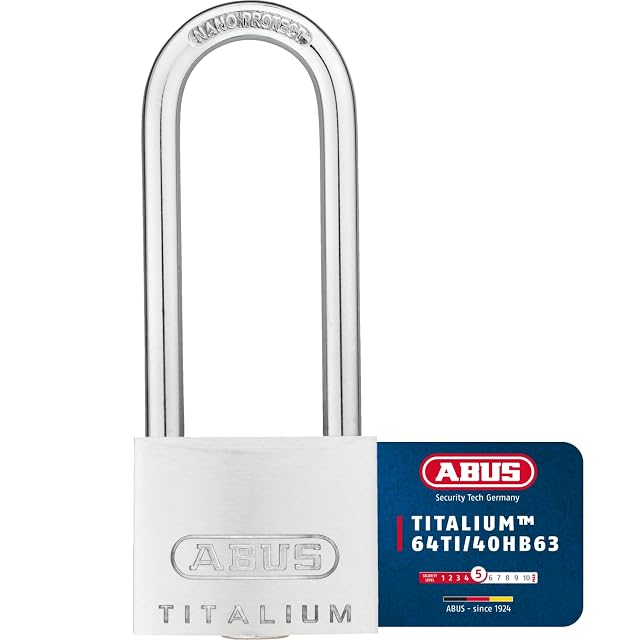
6.5 mm (0.26 in) shackle · 63 mm (2.48 in) high shackle · Titalium body, 107 g (3.8 oz) · paracentric key · ABUS level 5
ABUS's everyday Titalium padlock with a high 63 mm (2.48 in) shackle: a special-aluminum body at 107 grams, a hardened steel shackle, a paracentric keyway against manipulation, and double shackle locking.
Best for: Doors, lockers and tool boxes where the lock is carried, opened often, and left outdoors between times.
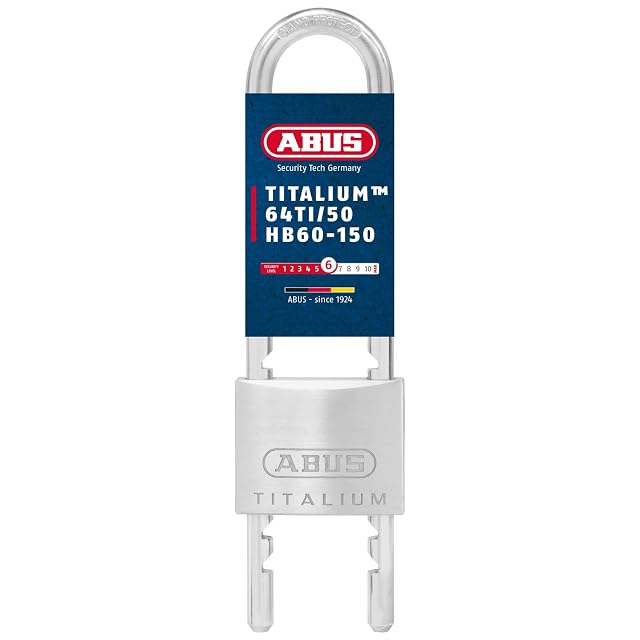
8 mm (0.31 in) shackle · extendable 60–150 mm (2.36 to 5.91 in) shackle · 281 g (9.9 oz) · paracentric key · ABUS level 6
ABUS's cellar padlock: an 8 mm (0.31 in) hardened shackle that extends from 60 to 150 mm (2.36 to 5.91 in), in a 281 g (9.9 oz) Titalium body, with a paracentric keyway and double shackle locking.
Best for: A hasp or a bracket where nothing standard reaches — cellar doors, old gates, awkward ironwork.
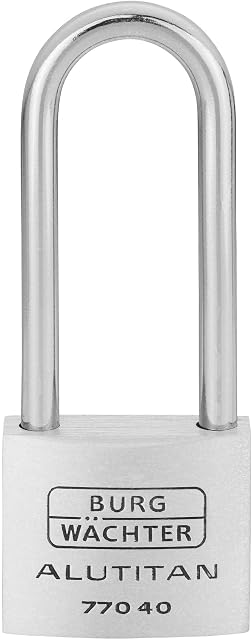
6.9 mm (0.27 in) shackle · aluminum body · high shackle, 22.3 mm (0.88 in) wide · double locking · 2 keys
A light aluminum-bodied padlock with a 6.9 mm (0.27 in) hardened shackle and a high shackle 22.3 mm (0.88 in) wide. BURG-WÄCHTER states double shackle locking and two keys.
Best for: A gate latch or a barrier where the shackle must reach through something thick, and the value behind it is modest.