The conclusion Aluminum at a plastic price, which is the right trade. IP65 and detection up to 12 m (39 ft) stated.
Cheap floodlights do not usually fail because the LEDs wear out. They fail
because the LEDs cook.
Heat is what kills them
An LED emitter has a life measured in tens of thousands of hours at its rated
temperature and a small fraction of that when it runs hot. A die-cast
aluminum body conducts heat away from the emitters and into the air; a
plastic one holds it in.
That is why the housing material predicts the life of a cheap floodlight
better than any figure on the box, and why this one is worth its money.
72 emitters
More, smaller LEDs spread the light across the beam rather than producing a
hot center with dark edges, and they share the heat between them. It is sound
design at this price.
What the listing publishes
An IP65 rating, detection up to 12 m (39 ft) across an adjustable 180°, and three controls: TIME (on for 7 s to 9 min), SENS (range from 6 to 12 m) and LUX (light threshold). The beam is stated at 120° and the LED life at over 20,000 hours. An eave is still good practice: rain on the lens and water at the cable entry are what end floodlights.
The color, again
6500 K. Effective, harsh, and the reason neighbors complain. Warmer lights
show an approach just as well.
Who it suits
An exposed position where the light will run hot, under some shelter.
Availability
Not found on the American Amazon store, where the buy link falls back to a local search rather than to a page that does not exist.
Prices and availability are what Keepa reported on the date this page was updated; both move.
What reassures, and what does not
Strengths
Die-cast aluminum housing, which is what sheds heat and keeps LEDs alive
72 emitters spread the light more evenly than a few large ones
Adjustable PIR modes
Cheap for an aluminum-bodied light
Compromises
6500 K, the same harsh color as the GRIFEMA
2,000 lm from 20 W is slightly less efficient than its rivals here
No ambient light: it comes on at detection, then goes off
Detection limited to 12 m (39 ft), against 21 m (69 ft) for the Philips
Specifications
Power
20 W
Output
2,000 lumens, stated by Realky
Emitters
72 LEDs
Color temperature
6500 K cool white
Housing
Die-cast aluminum
Sensor
PIR, up to 12 m (39 ft) across 180°; TIME (7 s to 9 min), SENS (6 to 12 m) and LUX controls
Beam
120°, stated by Realky
Weather rating
IP65, stated by Realky
Amazon reference
B0D5MF962W
EAN
6976304906031
The questions we are asked
Why does the housing material matter?
Because LEDs die of heat, not of use. A die-cast aluminum body conducts heat away from the emitters; a plastic one holds it in, and the light dims and then fails years early. It is the single best predictor of how long a cheap floodlight lasts.
Are 72 small LEDs better than a few big ones?
Usually, for even coverage — many small emitters spread light across the beam rather than producing a bright center and dark edges. They also share the heat, which helps. It is a reasonable design at this price.
What is the IP rating?
IP65, stated by Realky: dust-tight and protected against water jets. An eave is still good practice for any floodlight, because rain on the lens and water at the cable entry are what end them.
Our score
8.1/ 10
Aluminum at a plastic price, which is the right trade. IP65 and detection up to 12 m (39 ft) stated.
What this one costs among security lights
A reference exists on these Amazon stores: Germany, Spain. Listed is not the same as in stock — availability changes daily.
Details checked on September 2, 2026.
The buyer this one serves, among security devices
A position where heat is a concern — die-cast aluminum is what makes a floodlight last.
What buyers actually choose
Amazon reports what buyers took in the month before this page was last checked: at least 600.
The figure is a floor, rounded by Amazon, and read through Keepa — it says what buyers picked, not what a maker claims.
Sources
Specifications: the manufacturer sheet for home security products and the matching Amazon product page. Prices and availability: Keepa. Every figure on this page names its source.
20 W · 10 m (33 ft) detection, adjustable sensitivity · Everlight SMD LEDs · tool-free spring terminals
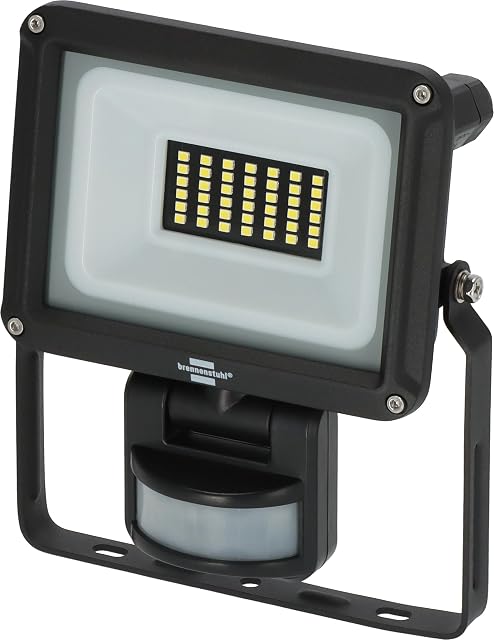
Brennenstuhl states 2,300 lumens, a 10 meter (32.8 ft) detection range with adjustable sensitivity, named Everlight SMD emitters, and spring terminals that need no tools to wire.
Best for: Anybody wiring the light themselves — the tool-free terminals genuinely change the job.
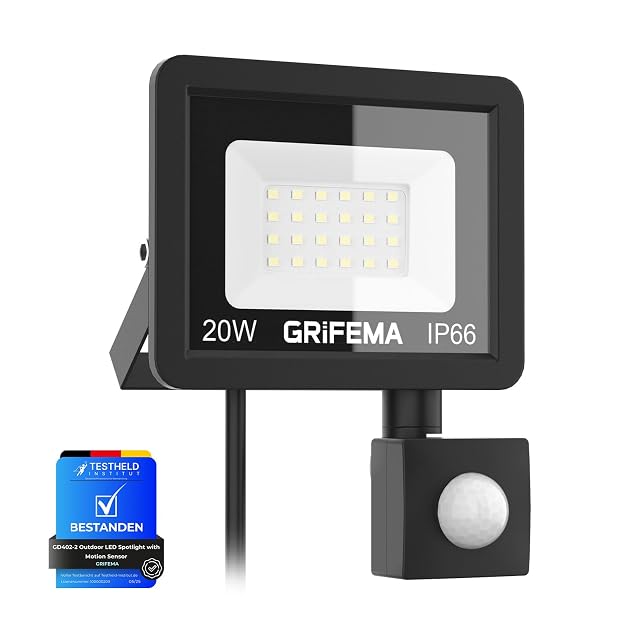
20 W · 2,200 lm · 6500 K · IP66 · adjustable SENS, TIME and LUX
A 20 W motion floodlight at 2,200 lumens and 6500 K, rated IP66, with three separate adjustments: sensitivity, on-time and the ambient light level below which it will trigger.
Best for: A first security light where the three adjustment dials matter more than the brand.