The conclusion A rim and mortise cylinder rather than a euro profile one, which is the first thing to establish: these are two incompatible shapes and this shelf holds one of each. Within its own kind it is well chosen — solid brass with the word properly glossed, a dimple keyway that resists both picking and casual copying, five keys, a published 32 mm (1.26 in) length and a maker who tells you to check it. No grade of any kind, and nothing about snapping, drilling or picking resistance.
What the maker puts in writing
Mortise / rim single cylinder, 1-1/4” (32mm (1.26 in)) overall length
“The cylinder and keys are made of high quality copper (solid brass)”
Fits most rim and mortise locks on the market — wooden, aluminum, storm and patio sliding doors
“Please carefully compare the dimensions shown in the product images before purchase”
No EN 1303 grade. No anti-snap. No anti-drill. No anti-pick.
Rim, not euro
Which is the first thing to settle, and the two are easy to tell apart.
A euro profile cylinder is a flat barrel shaped like a figure of eight, held in
the lock case by one long screw from the door edge.
A rim or mortise cylinder is a round threaded barrel that screws into the door
face from outside, driving the lock behind with a tailpiece or a cam.
They are not interchangeable in any way. This shelf holds one of each.
Jeriup says which this is. So does the size chart it points you to.
A dimple keyway
The only keyway named on this shelf.
Dimple keys are cut as round depressions on the flat faces of the blade rather
than notches along the edge.
That needs a different machine, and most high-street kiosks do not have one — so
a borrowed key is harder to copy quietly.
The pins also approach from two or more directions, which makes picking harder.
Five keys supplied, so the copying question is less likely to come up.
Copper, glossed
Which the other cylinder on this shelf does not do.
“High quality copper (solid brass)” — one phrase, and the ambiguity is gone.
Brass is right for a cylinder. Brass keys wear faster than nickel silver and cut
more cleanly.
Measure first, says the maker
Which is unusual and correct.
The critical figure on a rim cylinder is the overall length. Thirty-two
millimeters here.
Too short and the tailpiece does not reach the lock. Too long and the barrel
stands proud of the door face — which is exactly what gets gripped.
This shelf’s buying tip gives the same advice about euro cylinders from the other
direction.
Availability
On sale at around $31 on the American Amazon store at the time of checking.
Prices and availability are what Keepa reported on the date this page was updated; both move.
Prices quoted in this text were read on October 8, 2026. The live price is at the top of the page.
What reassures, and what does not
Strengths
A dimple keyway, the only keyway named on this shelf
Five keys supplied
Solid brass, and the word glossed rather than left ambiguous
The overall length published, with a size chart
The maker tells you to check the dimensions before buying
Fits rim and mortise locks, which the euro cylinder here cannot
Compromises
Not a euro profile cylinder, despite being on a cylinder shelf
No grade of any kind: no EN 1303, no ANSI
No anti-drill, anti-pick or anti-snap claim
Thirty-one dollars, the most expensive item on this shelf
Brass keys wear faster than nickel silver
Two of the seven bullets are the maker thanking you for your custom
Specifications
Type
A rim and mortise cylinder, not a euro profile cylinder — stated to fit most rim and mortise locks on the market. That distinction decides the whole purchase: a euro cylinder is a flat oval barrel held by one screw through the lock case, and a rim cylinder is a round threaded barrel with a tailpiece. They are not interchangeable and the two cylinders on this shelf are the two different kinds
Size
1-1/4 in (32 mm) overall length, stated, with a size chart referenced. There is no split dimension because a rim cylinder has none — this shelf's buying tip asks for a 35/45-style split, which applies to the euro cylinder on this shelf and not to this one
Material
High quality copper (solid brass) for both the cylinder and the keys — stated, and the gloss is the useful part: it resolves the word the other cylinder on this shelf leaves ambiguous. Brass keys wear faster than nickel silver and cut more cleanly
Keyway
A dimple keyway with a key thickness of 2.5 mm (0.10 in) — stated. It is the only keyway type named on this shelf, and it matters: dimple keys are cut on the flat faces rather than the edge, which is harder to pick and much harder to copy at a kiosk
Supplied
One cylinder and five keys, stated — the most keys supplied with any lock product on this shelf
Snap resistance
NOT PUBLISHED. Neither cylinder on this shelf publishes one, and this shelf's tag says snap resistance is the property that gets tested in practice. A rim cylinder is attacked differently from a euro one — it is usually pulled or twisted out of the door face rather than snapped — and the page addresses neither
Grade
No EN 1303 grade, no ANSI grade, and no anti-drill or anti-pick claim of any kind
Finish
Satin brass, stated
Fitting note
Jeriup writes: please carefully compare the dimensions shown in the product images before purchase and confirm whether they meet your requirements. It is the only fitting warning on this shelf, and it agrees with this shelf's buying tip — measure first
Amazon reference
B0CM6WXB7F
EAN
6975200570766
The questions we are asked
Is a rim cylinder what I need?
Only if that is what came out of your lock, and the two are easy to tell apart. A euro profile cylinder is a flat barrel shaped like a figure of eight, held in the lock case by one long screw from the door edge. A rim or mortise cylinder is a round threaded barrel that screws into the door face from outside, with a flat tailpiece or a cam at the back driving the lock. They are not interchangeable in any way. Jeriup is clear about which this is, and the other cylinder on this shelf is the other kind.
What does a dimple keyway buy?
Resistance to picking and, more practically, resistance to copying. Dimple keys are cut as small round depressions on the flat faces of the blade rather than as notches along the edge, which needs a different machine — most high-street key-cutting kiosks cannot do them, so a borrowed key is harder to duplicate quietly. The pins also approach from two or more directions, which makes a pick harder to work. It is the only keyway type named on this shelf, and with five keys supplied the copying question is less likely to arise.
Why does the maker tell me to measure?
Because a cylinder that is a few millimeters wrong does not fit, and Jeriup would rather say so than take the return. The warning reads: carefully compare the dimensions shown in the product images before purchase. That is the same advice this shelf's buying tip gives from the other direction, and on a rim cylinder the critical figure is the overall length — 32 mm (1.26 in) here — because it has to pass through the door and leave the tailpiece engaging the lock behind. Too short and it does not reach; too long and it stands proud, which is what gets gripped.
What this one costs among security cylinders
Details checked on October 8, 2026.
The buyer this one serves, among security devices
Replacing the cylinder in an existing rim or mortise lock on a wooden, aluminum, storm or patio door
Sources
Specifications: the manufacturer sheet for home security products and the matching Amazon product page. Prices and availability: Keepa. Every figure on this page names its source.
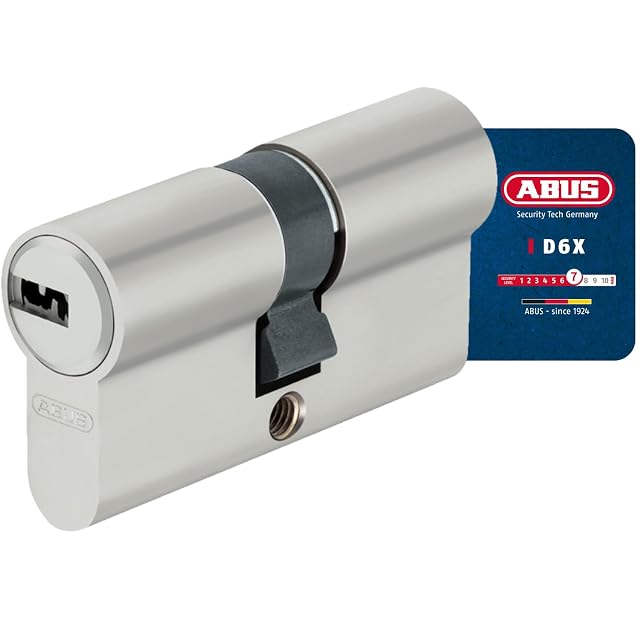
30/30 mm (1.18 in) · anti-pick pins · emergency function · 5 reversible keys · code card
ABUS's everyday euro cylinder: special pins for pick and manipulation resistance, an emergency function that works with a key in the other side, and five reversible keys with a code card for reordering.
Best for: Replacing a builder's cylinder on a front door, at the smallest sensible price.
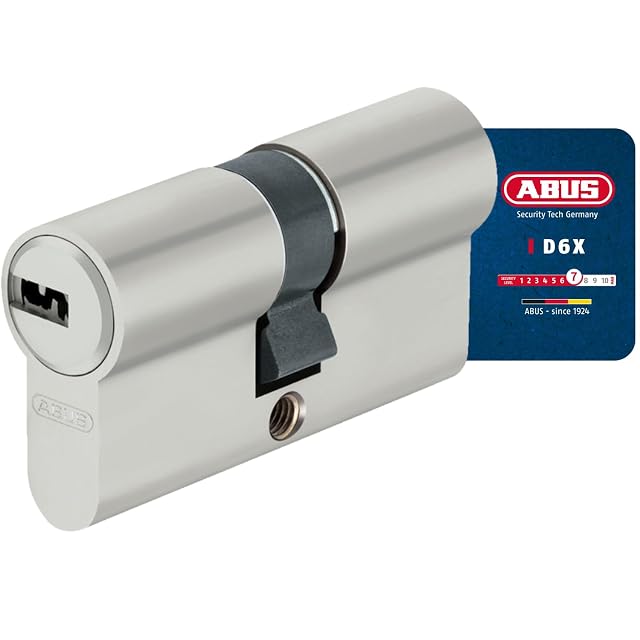
40/50 mm (1.97 in) · usable in either orientation · anti-pick pins · emergency function · 5 keys
The same D6XNP cylinder in 40/50, for a thicker door or a door with a heavier handle set. ABUS states it can be fitted in either orientation, with the same emergency function, pins and code card.
Best for: A thicker door, or one where the 30/30 measured short.
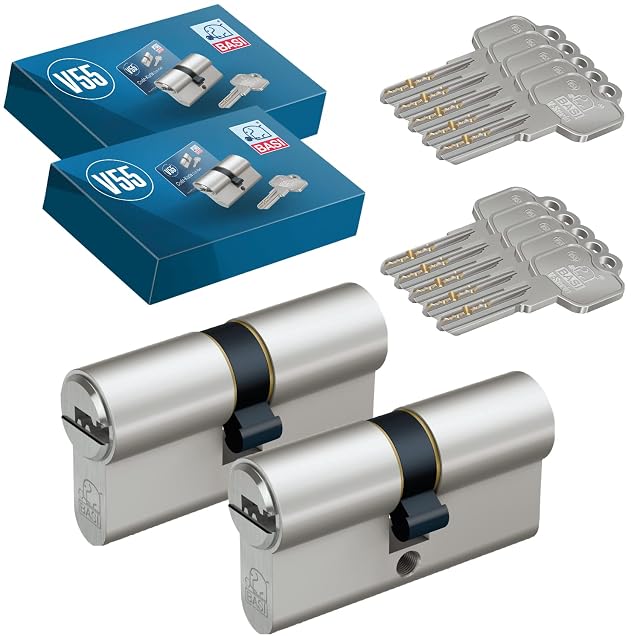
Two 30/30 cylinders keyed alike · 10 keys · emergency function · tested to EN 1303:2015
Two cylinders that take the same key, with ten keys between them. BASI states the V55 range is tested to EN 1303:2015 and supplied direct from the manufacturer, with an emergency function on both.
Best for: A front and back door, or a house and a garage, that should share one key.