The conclusion The only cylinder on this shelf that publishes the split dimension this shelf's buying tip asks for — 30/30 at 60 mm (2.36 in), symmetric, so it cannot go in backwards — with spool pins, a hardened drill insert and a 100,000-cycle figure. What it does not have is the one thing this shelf exists to compare: no sacrificial front section and no snap resistance claim, on a shelf whose tag says snapping is what gets tested in practice. No EN 1303 grade either.
What the maker puts in writing
L = 60mm (2.36 in), 30/30 · compatible with standard Euro profile cylinders
Pin tumbler mechanism with spool pins that prevent lock picking
Hardened steel insert provides drill resistance
“Premium copper construction” · high-grade copper
Three keys and all mounting hardware · for wooden or aluminum doors
NO anti-snap section. NO EN 1303 grade. “Single Open” is undefined.
Three attacks armored, and not the fourth
Which is the finding.
Zopsc claims resistance to picking, to bumping and to drilling.
This shelf’s tag reads: snap resistance is the property that gets tested in
practice.
This shelf’s introduction says why — the barrel is gripped and snapped at its
weakest cross-section. Seconds, and no skill. Picking is specialist, bumping is
specialist, drilling is noisy. Snapping needs a mole grip.
Nothing on this page describes a sacrificial front section.
Ask the seller.
Thirty, thirty
Which is the figure the buying tip asks for, and nothing else here publishes.
Measure from the center screw hole to each face separately. A cylinder is 35/45,
not simply 80 mm (3.15 in).
A 30/30 cylinder is symmetric, so there is no wrong way round — and the error the
buying tip warns about, a long half left outside, cannot happen.
That is a quiet advantage of this size and it is worth knowing.
A hundred thousand cycles
Which is a real figure wearing the wrong clothes.
One hundred thousand cycles is what the top durability class of EN 1303
corresponds to.
Zopsc gives the number and does not cite the standard. This shelf’s introduction
asks for the grade.
Take the number. It is more than most of this category publishes.
Copper, which means brass
Because nothing else would work.
Pure copper deforms under a key, let alone a grip. No cylinder is made from it;
the word is a routine translation of the character for brass.
The other cylinder on this shelf writes “high quality copper (solid brass)”,
glossing exactly this.
Brass is right for a cylinder body: it machines precisely and does not rust. The
hardened steel insert is what resists the drill.
Availability
On sale at around $27 on the American Amazon store at the time of checking.
Prices and availability are what Keepa reported on the date this page was updated; both move.
Prices quoted in this text were read on October 8, 2026. The live price is at the top of the page.
What reassures, and what does not
Strengths
A published 30/30 split, which nothing else on this shelf gives
Symmetric, so it cannot be fitted the wrong way round
Spool pins against picking, named as such
A hardened steel insert against drilling
A 100,000-cycle durability figure
Three keys and the fixing hardware included
Compromises
No anti-snap section, which is the attack this shelf is about
No EN 1303 grade
"Copper" is left unglossed where the other cylinder here glosses it
"Single Open" is in the title and defined nowhere
Sixty millimeters only: no other length is offered on this listing
Specifications
Size
60 mm (2.36 in) overall in a 30/30 configuration — stated, and the only split dimension published on this shelf. This shelf's buying tip asks for exactly this: a cylinder is 35/45, not simply 80 mm (3.15 in), because fitting it the wrong way round leaves the long half outside. A 30/30 cylinder is symmetric, so there is no wrong way round — which is the quiet advantage of this size
Snap resistance
NOT PUBLISHED. This shelf's own tag reads snap resistance is the property that gets tested in practice, and this shelf's introduction says cylinders that address it carry a sacrificial front section designed to break away and leave the mechanism intact. Nothing on this page describes one. Zopsc claims resistance to picking, bumping and drilling — the three attacks that are not the usual one
Grade
No EN 1303 grade. This shelf's introduction says manufacturers state resistance as an EN 1303 grade and that it is a declared figure rather than a measurement made here; neither cylinder on this shelf declares one
Durability
A 100,000-cycle rating, stated, with powder metallurgy components for minimal friction. One hundred thousand cycles is the figure the top durability class of EN 1303 corresponds to, and Zopsc gives the number without citing the standard
Cylinder
A pin tumbler mechanism with spool pins against picking, and a hardened steel insert for drill resistance — both stated. Spool pins are a real anti-pick measure: their waisted shape causes false sets
Material
"High-grade copper" and "premium copper construction", stated, with no alloy named. Pure copper is too soft for a cylinder body, and the other cylinder on this shelf writes "copper (solid brass)" — glossing the same word. Read this as brass and ask the seller if it matters
Supplied
Three keys and the mounting hardware, stated, for wooden or aluminum doors
Function
"Single Open", stated in the title and defined nowhere on the page. On a symmetric 30/30 cylinder this most likely describes whether the key can be turned from one side while a key sits in the other
Stated for
Exterior doors in residential and light commercial use, wooden or aluminum
Amazon reference
B07SZLX61N
EAN
0765613540182
The questions we are asked
Why does the missing anti-snap matter more than the rest?
Because it is the attack. This shelf's tag says snap resistance is the property that gets tested in practice, and this shelf's introduction explains why: the barrel is gripped and snapped at its weakest cross-section, which takes seconds and no skill. Picking and bumping are specialist techniques and drilling is noisy; snapping needs a mole grip. A cylinder that lists anti-pick, anti-bump and anti-drill measures and says nothing about snapping has armored three doors and left the fourth open. Ask the seller whether there is a sacrificial front section.
Is 30/30 the size I need?
Only if that is what your door measures, and this shelf's buying tip tells you how to find out: measure from the center screw hole to each face separately. A door is 30/30 when the handle plate sits 30 mm (1.18 in) from the screw hole on each side — a typical vinyl or aluminum door, but by no means all of them. The useful property of a symmetric cylinder is that it cannot be fitted the wrong way round, which is the error the buying tip warns about: a 35/45 fitted backwards leaves 45 mm (1.77 in) outside, which is exactly where you did not want it.
Copper or brass?
Almost certainly brass, and the page will not say so. Pure copper is soft enough to deform under a key, let alone a grip, and no cylinder is made from it — the word is a routine translation of the character that means brass. The other cylinder on this shelf writes "high quality copper (solid brass)", glossing exactly this. Brass is the right material for a cylinder body: it machines precisely, it does not rust, and it is soft enough that the hardened steel insert mentioned here is doing the drill resistance rather than the body.
What this one costs among security cylinders
Details checked on October 8, 2026.
The buyer this one serves, among security devices
A wooden or aluminum door already measured at 30/30, where picking and drilling are the concern
Sources
Specifications: the manufacturer sheet for home security products and the matching Amazon product page. Prices and availability: Keepa. Every figure on this page names its source.
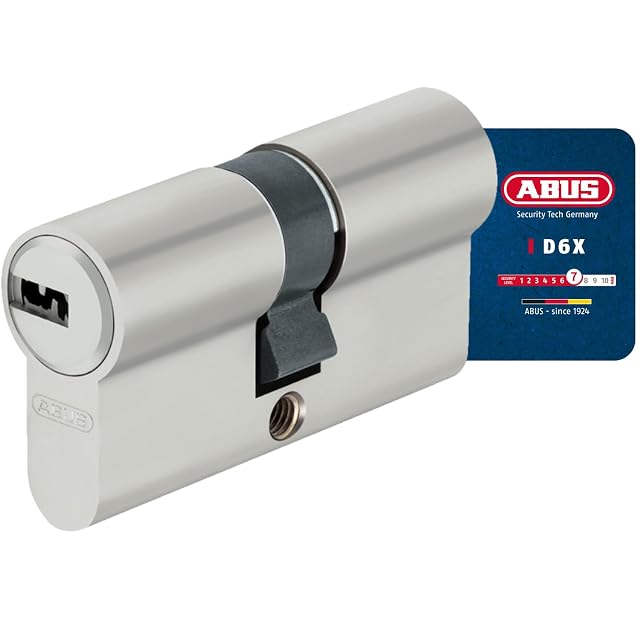
30/30 mm (1.18 in) · anti-pick pins · emergency function · 5 reversible keys · code card
ABUS's everyday euro cylinder: special pins for pick and manipulation resistance, an emergency function that works with a key in the other side, and five reversible keys with a code card for reordering.
Best for: Replacing a builder's cylinder on a front door, at the smallest sensible price.
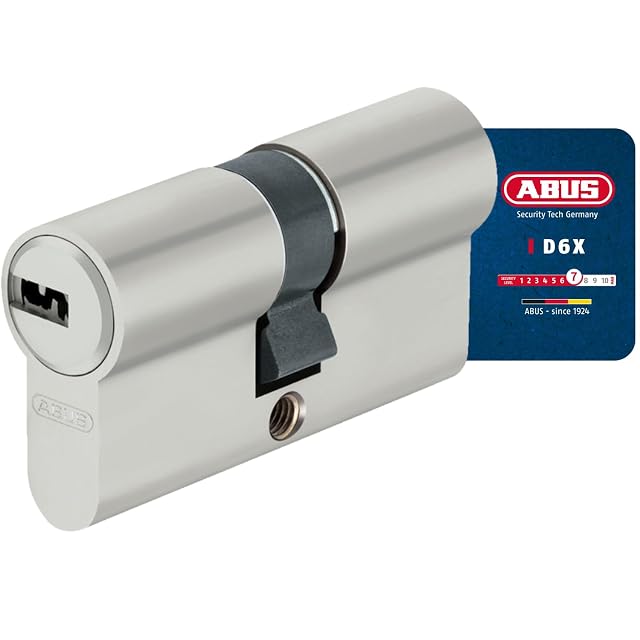
40/50 mm (1.97 in) · usable in either orientation · anti-pick pins · emergency function · 5 keys
The same D6XNP cylinder in 40/50, for a thicker door or a door with a heavier handle set. ABUS states it can be fitted in either orientation, with the same emergency function, pins and code card.
Best for: A thicker door, or one where the 30/30 measured short.
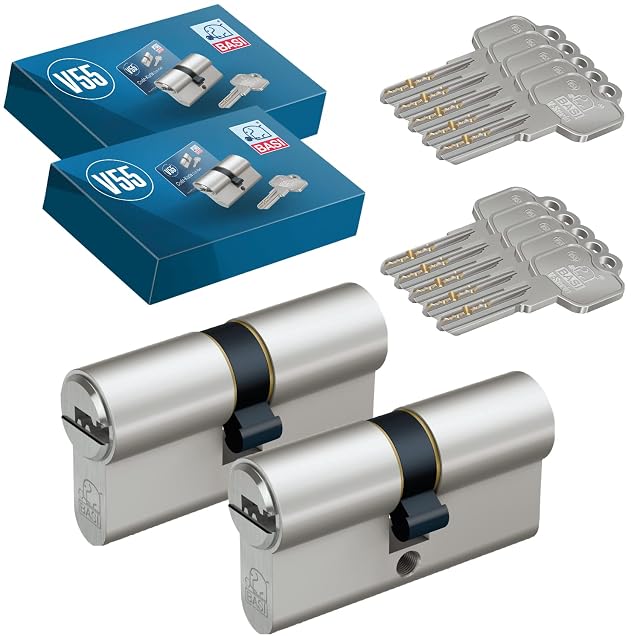
Two 30/30 cylinders keyed alike · 10 keys · emergency function · tested to EN 1303:2015
Two cylinders that take the same key, with ten keys between them. BASI states the V55 range is tested to EN 1303:2015 and supplied direct from the manufacturer, with an emergency function on both.
Best for: A front and back door, or a house and a garage, that should share one key.