The conclusion Buy it for the two things nothing else here has: an angle you can aim, which matters once it is mounted high under an eave, and two selectable sounds chosen by which wire pair you connect. The decibel claim should be ignored — 150 dB is a thousand times the power of the 120 dB horn on this shelf, from a stated 300 mA at 12 V that is actually less power than its rivals. Its own page also gives 30 W against 3.6, and millimeters for centimeters.
Two optional sounds: red and white wires for one, yellow and white for the other
Adjustable angle — loosen the nut and tilt the horn vertically
100% pure nickel alloy wire · flame retardant ABS shell
“Size: 19.511.922.5mm (0.89 in)” · net weight 1.98 pounds
For home security and building intercoms, with wired alarm hosts
No tamper switch. No backup battery. No strobe. No IP rating.
A hundred and fifty decibels is not possible
And the page disproves itself.
Decibels are logarithmic. Every ten is ten times the acoustic power, so 150 is a
thousand times 120.
The other sirens on this shelf claim 110, 118 and 120 dB at stated fifteen and
twenty watts.
FTGear’s own data sheet gives 300 mA at 12 V — three point six watts. Less
electrical power than either of them, and a thousand times the sound.
A hundred and fifty decibels at one meter is also about twenty above the threshold
of pain, and causes immediate permanent hearing damage.
Read it as a 110 to 120 dB horn.
Thirty watts, or three point six
Three consecutive lines, two of which disagree.
Rated Power: DC12V — which is a voltage. Rated Current: 300mA. Rated Power: 30W.
Twelve volts at 300 mA is 3.6 W. Thirty watts at 12 V needs 2.5 A, eight times
the stated current.
The current is the figure installation needs, and 300 mA sits comfortably within
almost any panel output.
Another siren on this shelf has the same contradiction, at a factor of four.
Two centimeters, or two pounds
Pick one.
“Size: 19.511.922.5mm (0.89 in)” with a net weight of 1.98 pounds.
Two centimeters by one by two cannot weigh two pounds. These are centimeters
labeled millimeters — roughly 195 × 119 × 225 mm (7.68 × 4.69 × 8.86 in), which is a horn-sized horn.
And two things worth having
Neither of which depends on the decibel claim.
An angle you can aim. Loosen the nut and tilt it. This shelf’s buying tip says to
mount an outdoor siren high on a visible gable — and a horn mounted high and
pointed at the soffit is a loud roof. Aim is the third variable after height and
visibility, and this is the only siren here that has it.
Two sounds, on a third wire. Red and white for one, yellow and white for the
other. Two sirens on one system can then sound differently, so you know which
one triggered.
Also: the coil is named as pure nickel alloy wire. On an outdoor horn the coil is
what corrodes first, and nobody else on this shelf says what theirs is made of.
Availability
On sale at around $26 on the American Amazon store at the time of checking.
Prices and availability are what Keepa reported on the date this page was updated; both move.
Prices quoted in this text were read on October 8, 2026. The live price is at the top of the page.
What reassures, and what does not
Strengths
Two selectable sounds, chosen by which wire pair you use
An adjustable angle, the only aimable siren on this shelf
The coil material named, which is what corrodes outdoors
A flame-retardant ABS shell
Sold explicitly for outdoor use and building intercoms
100% factory tested with free returns on defects, stated
Compromises
The 150 dB claim is impossible at its own stated power
30 W and 300 mA at 12 V cannot both be true
The size is given in millimeters for an object that must be centimeters
No tamper switch, on the one siren here sold as outdoor
No backup battery and no strobe
No IP rating, despite the outdoor claim
Specifications
Sound level
150 dB claimed. Read it against the rest of this shelf: a 20 W horn here claims 118 dB and a 15 W horn claims 120 dB, and thirty decibels is one THOUSAND times the acoustic power. FTGear's own data sheet gives 300 mA at 12 V, which is 3.6 W — less electrical power than either of them. The figure cannot be right, and no measuring distance is given
Power
The page gives "Rated Power: DC12V", "Rated Current: 300mA" and "Rated Power: 30W" in three consecutive lines. Twelve volts at 300 mA is 3.6 W. Thirty watts at 12 V would draw 2.5 amps, eight times the stated current. The two figures cannot both be true
Tones
TWO selectable sounds, chosen by wiring: red and white for one, yellow and white for the other — stated. It is the only siren on this shelf with a choice of sound, and the mechanism is the simplest possible: a third wire
Mounting
An adjustable angle: loosen the nut and the horn tilts vertically within a small range to optimize the direction. It is the only aimable siren on this shelf, and under an eave that is worth real decibels at ground level — this shelf's buying tip is about height and visibility, and aim is the third variable
Material
A flame-retardant ABS shell with a coil of 100% pure nickel alloy wire, stated for oxidation resistance, conductivity and corrosion resistance. Naming the coil material is unusual, and on an outdoor horn the coil is what corrodes first
Dimensions
The data sheet reads "Size: 19.5*11.9*22.5mm (0.89 in)" for an object whose stated net weight is 1.98 lb. Two centimeters by one by two cannot weigh two pounds: these are centimeters labeled millimeters, giving roughly 195 × 119 × 225 mm (7.68 × 4.69 × 8.86 in)
Tamper
None. This shelf's introduction calls tamper protection what stops a siren being silenced first, and no siren on this shelf has one
Backup battery
None, and no strobe — despite being the only one of the four sold explicitly as an outdoor siren
Stated for
Home security and building intercoms, with wired alarm hosts named. The intercom use is specific and plausible: a 12 V horn on an entry panel
Amazon reference
B0CR47KR53
EAN
0717225472634
The questions we are asked
Can a horn like this really do 150 dB?
No, and the arithmetic is on its own page. Decibels are logarithmic: every ten is a tenfold increase in acoustic power, so 150 dB is a thousand times the power of 120 dB. The other sirens on this shelf claim 110, 118 and 120 dB at stated 15 and 20 watts, and FTGear's own data sheet gives 300 mA at 12 V — 3.6 watts, less than either. A hundred and fifty decibels at one meter is also roughly twenty above the threshold of pain and would cause immediate permanent hearing damage. Treat it as a horn in the 110 to 120 dB class and buy it for the other features.
Is thirty watts or three point six?
Three point six, on the figures given. The data sheet lists rated power twice — once as DC12V, which is a voltage rather than a power, and once as 30 W — and lists rated current as 300 mA. Twelve volts at 300 mA is 3.6 W; 30 W at 12 V would need 2.5 A. The current is the figure that matters for installation, because it decides whether a panel's siren output can carry it, and 300 mA is comfortably within almost any. Another siren on this shelf has the same contradiction at a factor of four.
What is actually worth buying here?
Two things the rest of this shelf does not offer. The adjustable angle means a horn mounted high under an eave can be aimed down rather than throwing its sound at the soffit — and this shelf's buying tip says to mount outdoor sirens high on a visible gable, which makes aim the difference between a loud roof and a loud street. The two selectable sounds, chosen by which pair of wires you connect, let two sirens on one system sound differently so you can tell which triggered. Neither claim depends on the decibel figure.
Against the rest of the security sirens
Between security devices of the same category and nearby price. Shown: what they all state. A half-filled column says nothing.
Model
Price
Sound level
Power
Tamper
Backup battery
FTGear W3Y-DYV-WWO634 outdoor siren speaker, 12 V, two selectable sounds
$26
150 dB claimed. Read it against the rest of this shelf: a 20 W horn here claims 118 dB and a 15 W horn claims 120 dB, and thirty decibels is one THOUSAND times the acoustic power. FTGear's own data sheet gives 300 mA at 12 V, which is 3.6 W — less electrical power than either of them. The figure cannot be right, and no measuring distance is given
The page gives "Rated Power: DC12V", "Rated Current: 300mA" and "Rated Power: 30W" in three consecutive lines. Twelve volts at 300 mA is 3.6 W. Thirty watts at 12 V would draw 2.5 amps, eight times the stated current. The two figures cannot both be true
None. This shelf's introduction calls tamper protection what stops a siren being silenced first, and no siren on this shelf has one
None, and no strobe — despite being the only one of the four sold explicitly as an outdoor siren
110 dB, dual tone — stated. It is the lowest figure on this shelf and the only dual-tone horn here: two alternating tones carry further through a house than one steady note, because a changing pitch is harder to ignore and harder to mistake for a vehicle
15 W rated at DC 6 to 12 V, stated, with low power consumption claimed. No current figure is given, so the 15 W cannot be checked against it — two sirens on this shelf publish a current that contradicts their own wattage
None. This shelf's introduction calls tamper protection what stops a siren being silenced first; no siren on this shelf has one
None, and no strobe. Nothing to pair: these are wired horns for an existing panel
118 dB, stated. No measuring distance appears, and this shelf's introduction says the stated level is quoted at one meter and falls quickly with distance. It is also quoted without a voltage, where one siren on this shelf ties its figure to 12 V and warns that a lower supply gives fewer decibels
20 W at DC 12 V, stated — the highest wattage on this shelf, and the only one no other figure on its own page contradicts. Two sirens here publish a current that disagrees with their stated watts; HQRP publishes no current, so the 20 W stands uncontested and unverified
None. This shelf's introduction calls tamper protection what stops a siren being silenced first, and no siren on this shelf has it
None. No strobe either, and nothing to pair: this is a wired horn for an existing system
120 dB at 12 V DC — stated, with the qualification "low voltage would be low Db". It is the ONLY listing on this shelf to tie its decibel figure to a supply voltage and to say that the figure falls when the voltage does, which matters because all four sirens here accept 6 V upwards. No measuring distance is given, and this shelf's introduction says the stated level is quoted at one meter and falls quickly with distance
15 W rated, stated — against the 3.84 W its own current and voltage figures give. Both numbers are on the same page
NONE. This shelf's introduction calls tamper protection — a switch that fires the alarm when the cover is opened or the unit is prised off the wall — what stops a siren being silenced first. No siren on this shelf has one
None, and no strobe. All four sirens on this shelf are bare horns fed from the panel
What separates the models, in security devices
If price decides: HQRP Electronic alarm siren, 20 W DC 12 V, 118 dB, with bracket, at $12.
Highest Sound level in the table: this model (150 dB claimed. Read it against the rest of this shelf: a 20 W horn here claims 118 dB and a 15 W horn claims 120 dB, and thirty decibels is one THOUSAND times the acoustic power. FTGear's own data sheet gives 300 mA at 12 V, which is 3.6 W — less electrical power than either of them. The figure cannot be right, and no measuring distance is given).
This model holds the table’s highest figure for Sound level.
What this one costs among security sirens
Details checked on October 8, 2026.
The buyer this one serves, among security devices
An outdoor horn that has to be aimed down a drive, bought on its features rather than its decibel claim
Sources
Specifications: the manufacturer sheet for home security products and the matching Amazon product page. Prices and availability: Keepa. Every figure on this page names its source.
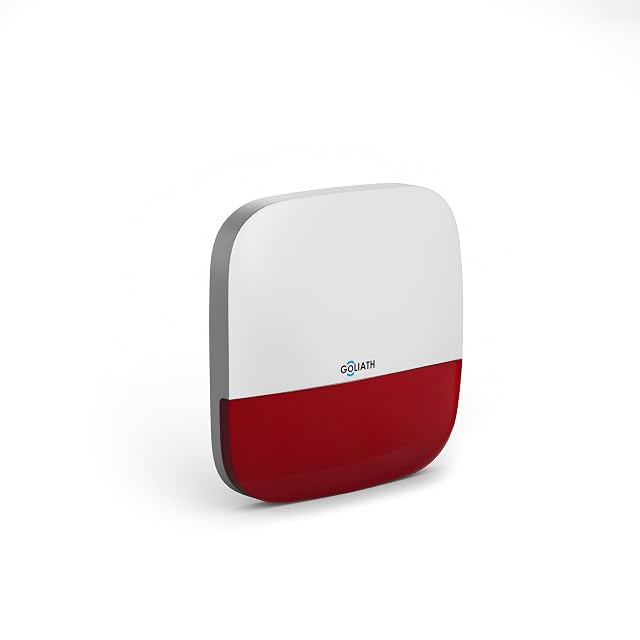
85–110 dB · 868 MHz AirShield, to 1,200 m (4 ft) open field · warning light · burglary, fire and panic tones
The outdoor siren for Goliath's AirShield system: 85 to 110 dB with a warning light, three distinct alarm tones, and 868 MHz radio quoted at up to 1,200 m (4 ft) in open field.
Best for: A Goliath system on a property large enough that the hub and the siren are far apart.
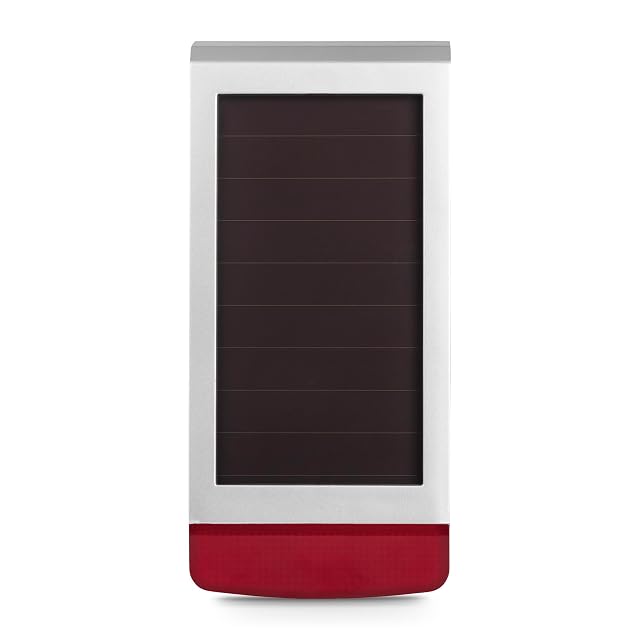
100 dB from two piezo speakers · solar with replaceable NiMH pack · outdoor · needs an Access Point
A solar-powered outdoor siren with two piezo speakers at 100 dB and an optical signal, running on a replaceable NiMH pack charged by its own cell. It requires a Homematic IP Access Point and the app.
Best for: A Homematic IP installation where running a cable to the siren is not practical.
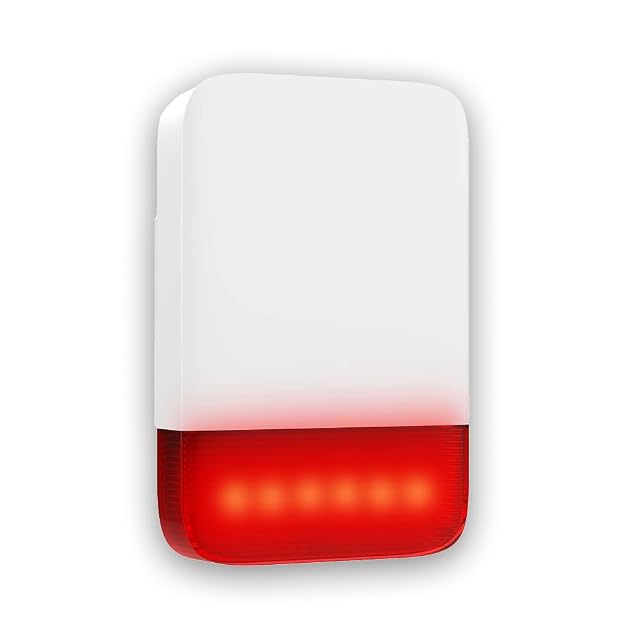
120 dB adjustable · strobe · 5000 mAh backup · 433 MHz to 10 hosts, 80 m (262 ft) · tamper protection
HUXGO's larger outdoor siren: 120 dB with adjustable volume and a strobe, a 5000 mAh backup battery, tamper protection, and pairing with up to ten HUXGO hubs.
Best for: A HUXGO system where the siren must survive a long power cut, or where several hubs share one siren.