The conclusion The most carefully written listing on this shelf — four code types, a published 33-foot Wi-Fi limit nobody else gives, a 0.3-second fingerprint, a handle set in the box and named support hours — and it never answers the one question the hub above says should decide the purchase. No key override, no emergency terminal, nothing. Get that in writing from the seller. Batteries are not included and rechargeables are forbidden.
What the maker puts in writing
Built-in 2.4GHz WiFi, no hub · “keep the smart lock within 33 ft (10 m) of your Wi-Fi router”
Permanent, one-time, periodic and recurring PIN codes · 0.3s fingerprint
Auto-lock 0–180 seconds via the app. “Auto-Lock Feature OFF by Default.”
Up to 6 months battery. “Batteries Not Included.” “Do not use rechargeable or high-power lithium batteries.”
Complete handle set included · doors 1-3/8” to 1-3/4” (38mm (1.50 in) to 50mm (1.97 in))
“Designed for right-opening doors by default.”
NO KEY OVERRIDE. NO EMERGENCY TERMINAL. No BHMA grade. No IP rating.
The one question it never answers
Which is the question this shelf is built on.
The tag above: the interesting question is what happens when the battery dies.
This shelf’s introduction: a key override, an emergency terminal that takes a power
bank, or nothing at all.
Ten bullets. One of them entirely about the battery and which cells are
forbidden. Not one word about a key or a USB-C port.
At least ten of the fifteen locks on this shelf answer it. Get this one in writing from the
seller before ordering.
And follow the buying tip regardless: keep a physical key somewhere that is not
inside the locked house.
Why the battery rules are strict
Because the voltage is wrong, both ways.
A rechargeable NiMH AA gives about 1.2 V. Eight of them make 9.6 where eight
alkalines make 12 — enough to stall a motor or fire a low-battery warning early.
High-power lithium AAs run the other way, 1.7 to 1.8 V off the shelf, which can
overheat a driver.
Philips is the only maker on this shelf to say so. It also means the running cost
is eight disposable cells twice a year, and none in the box.
Thirty-three feet
The only radio distance on this shelf.
A smart lock sits in a metal door frame at the end of a hallway — one of the worst
radio positions in a house.
Every other lock here says built-in Wi-Fi, no hub needed, and lets you find the
limit yourself.
If the router is upstairs at the back, plan on a mesh node near the door.
And auto-lock is off
Until you turn it on.
Nought to a hundred and eighty seconds, in the app, and off by default.
The feature most people buy a smart lock for does nothing out of the box.
Availability
On sale at around $170 on the American Amazon store at the time of checking.
Prices and availability are what Keepa reported on the date this page was updated; both move.
Prices quoted in this text were read on October 8, 2026. The live price is at the top of the page.
What reassures, and what does not
Strengths
Four code types: permanent, one-time, periodic and recurring
A handle set included, so nothing else to buy
The 33 ft Wi-Fi distance limit published, which nobody else states
Fingerprint in 0.3 seconds
Auto-lock adjustable from 0 to 180 seconds
Named support hours with a US phone team
Compromises
No key override and no emergency terminal published at all
Batteries not included, and rechargeable or lithium cells forbidden
Auto-lock is off by default
Right-opening doors only unless the lock is reset
No BHMA grade and no IP rating
A hundred and seventy dollars, the second most expensive here
Specifications
Failure path
NOT PUBLISHED. Ten bullets, one of them devoted entirely to the battery and its prohibitions, and not one word about a physical key or an emergency power terminal. This shelf's tag reads: the interesting question is what happens when the battery dies. This shelf's introduction says the answer is a key override, an emergency terminal that takes a power bank, or nothing at all — and at least ten of the fifteen locks here answer it
Battery
Up to 6 months with an intelligent low-battery alert — stated, with two conditions: BATTERIES ARE NOT INCLUDED, and only standard 1.5 V alkaline cells may be used, with rechargeable and high-power lithium cells explicitly forbidden to prevent damage. That prohibition is unique on this shelf and it narrows the options at replacement time
Credentials
Keypad codes — permanent, one-time, periodic and recurring — plus fingerprints unlocking in 0.3 seconds, the app, and Alexa or Google voice. Four code types is the most flexible code scheme on this shelf
Connection
Built-in 2.4 GHz Wi-Fi with no hub or bridge, with a stated limit: keep the lock within 33 ft (10 m) of the router and minimize walls, metal and interference. It is the only distance figure published on this shelf, and it is the one that decides whether remote control actually works
Auto-lock
Settable from 0 to 180 seconds through the app, and OFF BY DEFAULT — stated, which means the feature most people buy a smart lock for does nothing until it is switched on
Fitting
Doors 1-3/8 in to 1-3/4 in (38–50 mm) thick, installable with a screwdriver, and designed for RIGHT-OPENING doors by default: a left-opening door needs the lock reset for the direction. Philips also warns against overtightening the screws, which can make it hard to lock
Supplied
A matching handle set, so no extra hardware is needed — one of three locks on this shelf that includes a handle rather than a deadbolt alone
Grade
Not published. No BHMA grade and no IP rating, where four locks on this shelf publish a grade and five publish an ingress rating
Support
A US-based phone team Monday to Friday 9am–9pm and Saturday 10am–6pm Pacific, plus email around the clock — the most specific support statement on this shelf
Amazon reference
B0F61WG9F2
EAN
0850071183290
The questions we are asked
What happens if the battery dies?
This page does not say, and it is the question the shelf exists to ask — the tag above reads: the interesting question is what happens when the battery dies. Ten bullets, including one entirely about the battery and which cells are forbidden, contain no mention of a physical key or a USB-C emergency terminal. At least ten of the fifteen locks on this shelf publish one or both. Before buying, get the answer from the seller in writing, and follow this shelf's buying tip regardless: keep a physical key somewhere that is not inside the locked house.
Why forbid rechargeable batteries?
Because the voltage is wrong and the lock's electronics are built around 1.5 volts. A rechargeable NiMH AA delivers about 1.2 V, so eight of them give roughly 9.6 V where eight alkalines give 12 — enough to make a motor stall or a low-battery warning fire early. High-power lithium AAs run the other way, at 1.7 to 1.8 V off the shelf, which can overheat a driver. Philips is the only maker on this shelf to say so, and the warning is worth respecting: it also means the running cost is eight disposable cells twice a year.
Does the 33 foot Wi-Fi limit matter?
Yes, and it is the most useful thing on this page. A smart lock sits in a metal door frame at the far end of a hallway, which is one of the worst radio positions in a house, and Philips is the only maker on this shelf to publish a distance — within 33 feet of the router, minimizing walls, metal and interference. Every other lock here says built-in Wi-Fi, no hub needed, and leaves you to discover the limit. If the router is upstairs at the back, plan on a mesh node near the door.
Against the rest of the smart locks
Between security devices of the same category and nearby price. Shown: what they all state. A half-filled column says nothing.
Model
Price
Failure path
Credentials
Fitting
Philips DDL242X-1HW-L 4200 Series Wi-Fi keypad deadbolt with handle set
$170
NOT PUBLISHED. Ten bullets, one of them devoted entirely to the battery and its prohibitions, and not one word about a physical key or an emergency power terminal. This shelf's tag reads: the interesting question is what happens when the battery dies. This shelf's introduction says the answer is a key override, an emergency terminal that takes a power bank, or nothing at all — and at least ten of the fifteen locks here answer it
Keypad codes — permanent, one-time, periodic and recurring — plus fingerprints unlocking in 0.3 seconds, the app, and Alexa or Google voice. Four code types is the most flexible code scheme on this shelf
Doors 1-3/8 in to 1-3/4 in (38–50 mm) thick, installable with a screwdriver, and designed for RIGHT-OPENING doors by default: a left-opening door needs the lock reset for the direction. Philips also warns against overtightening the screws, which can make it hard to lock
Both layers: a mechanical key among the seven unlocking methods, and USB Type-C emergency power. On a lock needing recharging every three to four months, the emergency port is not a last resort but a routine part of ownership
Seven ways in: face recognition, fingerprint, passcode, IC card, mechanical key, the Tuya app and a temporary password. Up to 100 total users, with fingerprint and card capacities stated to be in the specifications rather than on the page
Doors from 40 to 120 mm (1.57 to 4.72 in), with a 6068 mortise plate measuring 24 × 240 mm (0.94 × 9.45 in) — both stated. It is by far the widest door thickness range on this shelf, where the next widest is 38 to 50 mm (1.50 to 1.97 in), and publishing the plate dimensions lets you check the mortise before ordering. 6068 is a standard mortise designation, which also means replacement bodies exist
Four layers, stated: a 6-month main battery, a 2-week secondary battery that takes over when it drains, an integrated USB-C port that accepts any power bank for an emergency charge, and a mechanical key behind a sliding damping cover. This shelf's introduction says the question that should decide the purchase is what happens at zero battery; nothing else on this shelf answers it in four stages
Palm vein, keypad code, app, Alexa or Google voice, the live feed of a Wyze video doorbell, and a mechanical key. Up to 50 unique or one-time guest codes
Not published. No door thickness range and no bore size appears, where five locks on this shelf publish one
Both layers: a built-in USB-C port for recharging, and included backup keys. On a rechargeable lock the port serves double duty — it is the normal charging route and the emergency one, so a power bank at the door will open it
Six ways in: fingerprint, custom keypad passcodes, Wi-Fi from anywhere, close-range Bluetooth, a smart home assistant, and the included backup keys
Not published. No bore size and no door thickness range, where the maker's own DL100 names both standard bore sizes
What separates the models, in security devices
If price decides: Tapo DL110 smart Wi-Fi deadbolt with fingerprint recognition, at $109.
What this one costs among smart locks
Details checked on October 8, 2026.
The buyer this one serves, among security devices
A complete front door set from one box, bought only after the seller confirms the failure path in writing
What buyers actually choose
Amazon reports what buyers took in the month before this page was last checked: at least 4,000.
The figure is a floor, rounded by Amazon, and read through Keepa — it says what buyers picked, not what a maker claims.
Sources
Specifications: the manufacturer sheet for home security products and the matching Amazon product page. Prices and availability: Keepa. Every figure on this page names its source.
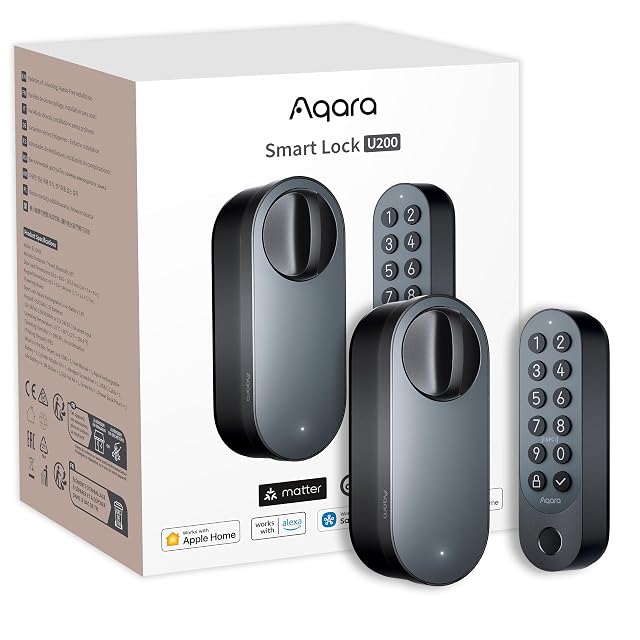
Matter over Thread · Apple Home Key · rechargeable Li-ion, 6 months stated · no drilling
A retrofit lock with native Matter over Thread, so it joins Apple Home, Google Home and Alexa without a vendor bridge. Aqara states Apple Home Key support, a rechargeable battery quoted at up to six months, and a quiet unlocking mode.
Best for: A household already running Matter or Apple Home, that wants the lock to be part of it rather than another app.
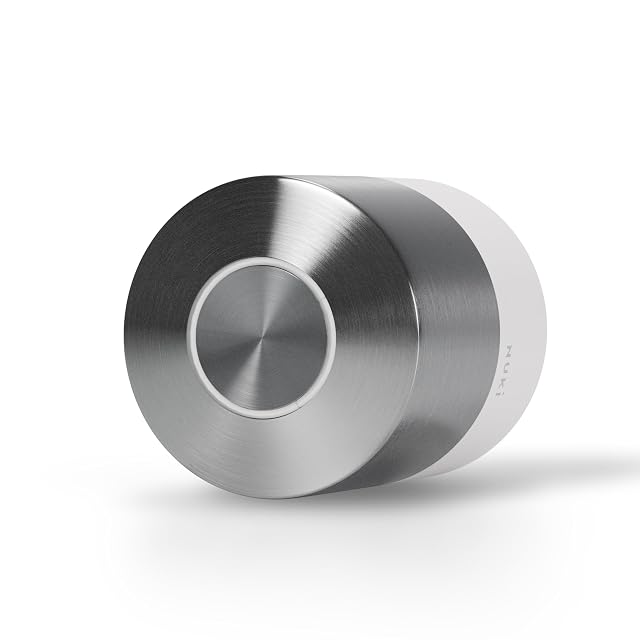
Retrofit · built-in Wi-Fi, no bridge · Matter over Thread · charged at the door · months per charge
Nuki's fifth-generation lock puts Wi-Fi inside the unit, so remote access needs no bridge or hub, and adds Matter alongside Bluetooth. The battery charges at the door with the supplied cable rather than coming off it.
Best for: A household that wants remote access without adding another box to the hallway.
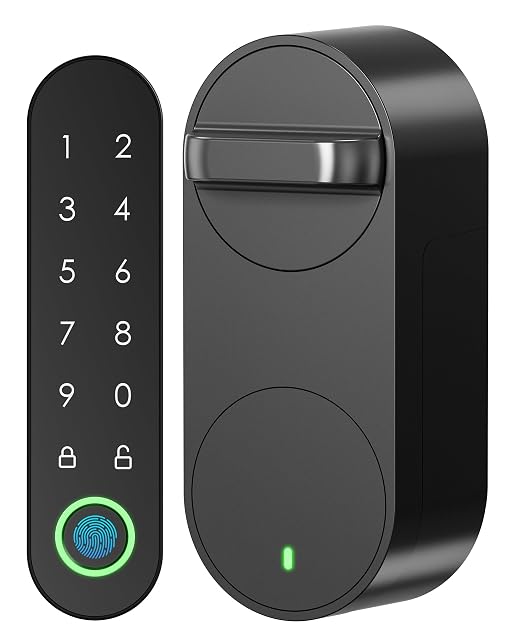
Retrofit · fingerprint, app and Bluetooth · magnetic auto-lock · 6 cells · no drilling
A retrofit lock that mounts over an existing cylinder with no drilling and no cylinder change. Signstek states fingerprint, app and Bluetooth access, magnetic auto-locking, and six batteries; the existing key still works from outside.
Best for: A first smart lock, and particularly a rented apartment where nothing may be altered.