Memory cards
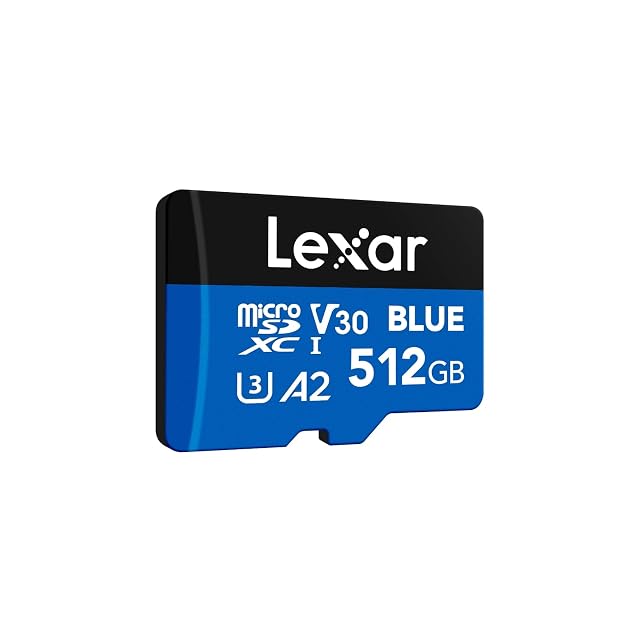
Lexar Blue microSDXC 512 GB
The only 512 GB card on this shelf, for the cameras that state 512 GB as their limit. Lexar lists up to 160 MB/s read, A2 and IPX7; it had no US seller when we checked.
This is the largest microSD card on this shelf, and the check before buying it
is the camera rather than the card.
Which cameras take it
Several cameras in this catalog state 512 GB explicitly: the Tapo C500,
the Reolink RLC-510WA, the Reolink TrackMix
and the Tapo D235 among them. Others stop lower: the Tapo C200
at 128 GB, the Reolink Video Doorbell at 256 GB. The figure lives in the camera’s
specification.
A card larger than the camera’s stated maximum may not be recognized, or may need a
format the camera does not support. The maker’s stated limit is the only safe guide.
What the capacity buys
A longer recording window. As a rough guide, a camera streaming at 2 Mbps fills about
0.9 GB an hour, so 512 GB holds roughly three weeks of continuous recording; at 4 Mbps,
about 12 days. A camera recording only on events lasts much longer. For anybody who has
looked for footage from ten days ago and found it overwritten, that is the whole argument.
What Lexar states
Up to 160 MB/s read, UHS-I and A2, with IPX7 waterproofing, temperature and X-ray
resistance, and shock resistance from 1.5 m. Lexar does not state a write speed and does
not sell the Blue line as an endurance card: it is pitched at phones, consoles, drones,
IP cameras and dash cams alike.
The one risk of a large card
Everything is on it. A card that fails takes far more footage with it than a small one,
which is an argument for a camera that also writes to a recorder or an FTP server if the
footage matters.
Availability
Listed on Amazon.com, but with no seller when we checked on October 19, 2026. If your
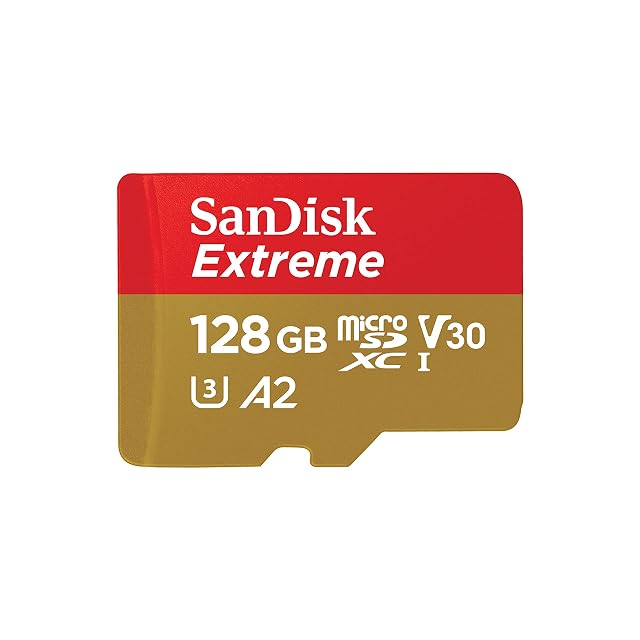
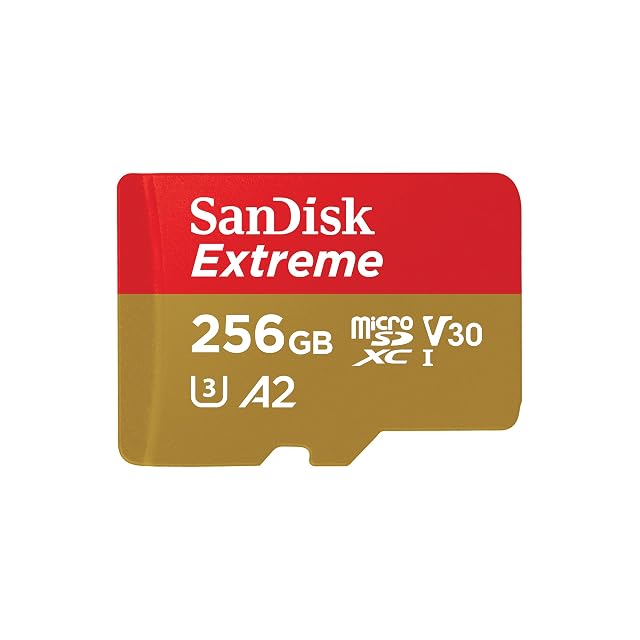
camera stops at 256 GB, the SanDisk Extreme 256 GB
is on sale in the US; the memory cards shelf compares the rest.
Prices and availability are what we found on the date this page was updated; both move.
The questions we are asked
Will a 512 GB microSD card work in my security camera?
Only if the manufacturer states it. In this catalog, the Tapo C500, Reolink RLC-510WA, Reolink TrackMix and Tapo D235 all publish 512 GB as their maximum; the Tapo C200 stops at 128 GB and the Reolink Video Doorbell at 256 GB. The number is in the camera's specification, not on the card.
How much footage does 512 GB hold?
It depends on the camera's bitrate. A stream at 2 Mbps uses about 0.9 GB an hour, so 512 GB holds roughly three weeks of continuous recording; at 4 Mbps it is closer to 12 days. Recording only on motion stretches that much further.
Is the lower read speed a problem?
No. Read speed matters when you copy footage off the card, and 160 MB/s is fast for that. A camera only writes, and at a few megabits per second it is nowhere near the limit of any card on this shelf.
Is this an endurance card?
No. Lexar sells the Blue line as a general-purpose card for phones, consoles, drones and cameras, and publishes no endurance rating. In a camera that records around the clock, plan to check the card now and then rather than forget it.