Skip to content

Trackers: four, and what none of them does

A tracker has a range of a few tens of meters, and that figure is irrelevant. What locates a lost bag is the finding network: every stranger's phone that quietly reports having seen it. Which network, and how common those phones are where you live, is the entire specification.

Trackers are compared on range and decided by network.

Why the network is everything

The radio reaches a few tens of meters. What finds a bag left on a train is every passing phone that reports having seen the tag, and the density of those phones in your town is the entire capability.

The features that matter daily

A loud ringer, because a frequent use is finding keys under a cushion. Reverse finding — pressing the tag to ring your phone — because many people lose their phone as often as their keys. And a replaceable battery, unless you want a disposable object.

The feature that matters most

Left-behind alerts. Your phone notices it has walked away from the tag as you leave the café, which is the only feature in this category that prevents the loss rather than helping afterwards.

And the limit, stated plainly

Lost, not stolen.

Which device does your home need?

You lose keys and wallets at home
A tracker is genuinely useful, which is its best case.
You want to recover stolen property
That is a different and far less reliable use, and it has real safety implications.
You travel with luggage
Trackers have become popular for exactly this and work reasonably well.
You are tracking a vehicle or bike
Dedicated trackers exist and behave differently from consumer tags.

Picking by what you are protecting

Finding things at home

The best case. A tag on keys or a wallet with a local chime solves the everyday problem completely.

Luggage

Where knowing a bag is at another airport is genuinely useful, if not immediately actionable.

Stolen property

Where a tracker may show a location, and where what you do with that is the important part.

Bikes and vehicles

Where dedicated trackers with their own connectivity work far better than consumer tags.

What actually protects, and what is noise

How it finds itself
Consumer tags rely on other people's phones passing nearby. That works well in cities and poorly in empty places.
Battery type and life
A replaceable coin cell lasting a long time is better than a sealed unit you must replace entirely.
The local finding feature
A chime and a directional indicator solve the actual everyday problem, which is losing things at home.
Anti-stalking features
Modern tags warn people who are being followed by an unknown tag. That is a feature, not a limitation.
What you would do with a location
The answer is inform the police. Planning that in advance shapes how useful the tracker really is.

Which figure for which entrance

Your useThe deviceThe limit
Keys at homeA consumer tagWorks perfectly
LuggageA consumer tagLocation, not retrieval
A bikeA dedicated trackerBattery and subscription
Stolen goodsEitherNever retrieve it yourself

Where this is usually botched

Going to recover stolen property yourself
A location is information for the police. Attending in person is dangerous and is not what these devices are for.
Expecting coverage everywhere
Consumer tags depend on nearby phones. In rural areas they may simply not report for long periods.
Attaching one visibly
A tag a thief can see is a tag a thief removes. Concealment matters as much as it does with any tracker.
Using a tracker on a person without consent
That is not what they are for, and in many places it is unlawful. The anti-stalking warnings exist for good reason.

By the home you have

The forgetful householder
Gets the most value, since finding keys at home is what these do best.
The traveler
Puts one in each bag and accepts that knowing where it is does not mean getting it back quickly.
The cyclist
Uses a dedicated hidden tracker rather than a consumer tag, and still relies on a good lock.

Batteries, updates and working life

Trackers are forgotten until needed, and by then the battery is often flat. A tag that has been silently dead for months gives exactly the same result as no tracker at all, which is the whole failure mode of the category.

  • Replace coin cells when the app warns, not months afterwards.
  • Check occasionally that each tag is still reporting.
  • Keep spare batteries; they are cheap and always needed at once.
  • Confirm the attachment is still secure; tags fall off key rings.

Safety

Location data cuts both ways.

  • Never attempt to recover property yourself; give the location to the police.
  • Do not place a tracker on another person or their belongings without consent.
  • Understand that a tag broadcasts, and treat anti-stalking alerts seriously if you receive one.
  • Secure the account the tracker is linked to; it shows where your things are.

The choices, and what settled them

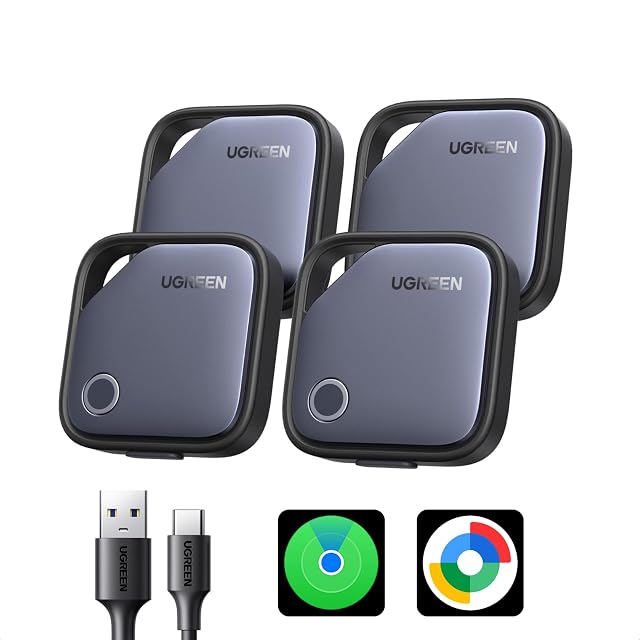
  1. UGREEN FineTrack Duo (4-pack)

    Apple Find My and Google Find Hub · USB-C rechargeable · 100 dB buzzer · four per pack

    A dual-certified tracker that works on both Apple's Find My and Google's Find Hub, rechargeable by USB-C rather than running on a coin cell, with a stated 100 dB buzzer. Four in a pack.

    Best for: A mixed household — some iPhones, some Android — that wants one kind of tag for everybody.

    7.8/10

    ≈ $37

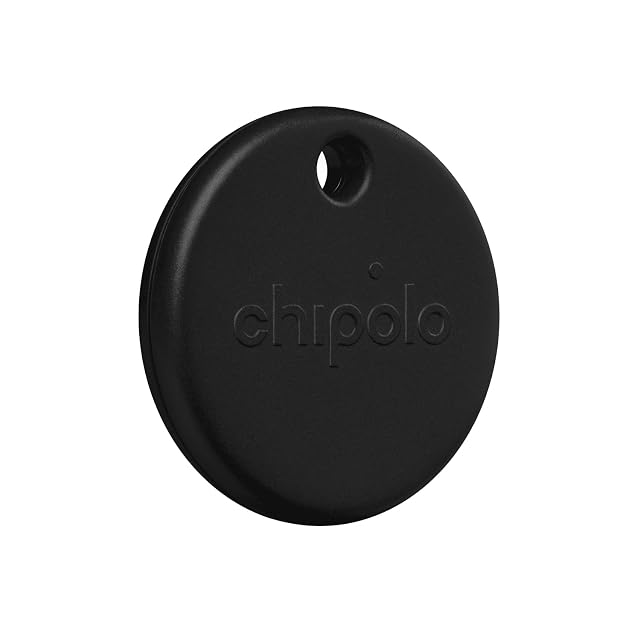
  2. Chipolo POP

    Apple Find My and Google Find My Device · ringer up to 120 dB · rings your phone back · colorful

    Chipolo's dual-network tag: it works with both Apple's Find My and Google's network, rings loudly, and can ring your phone back from the tag itself.

    Best for: Someone who loses their phone as often as their keys.

    7.8/10

    ≈ $23

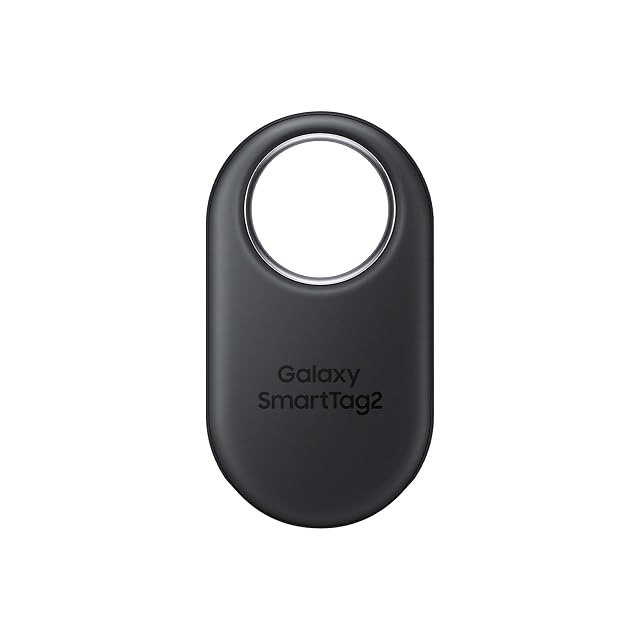
  3. Samsung Galaxy SmartTag2

    Up to 500 days · IP67 · compass view · NFC lost mode · Samsung Find network

    Samsung's tracker for the Galaxy Find network: up to 500 days of battery, IP67 dust and water protection, a compass view for the last few meters, and an NFC lost mode a finder can tap.

    Best for: A household on Samsung phones, in a country where Galaxy devices are common.

    7.2/10

The questions we are asked

Can I recover something stolen with a tracker?

No, and no page here will suggest trying. Anti-stalking rules mean an unknown tag alerts the phone it is traveling with, so whoever has it is told — and following a tag to an address is dangerous. Trackers find things you mislaid.

Which network should I choose?

The one most common around you and among the people you live with. Apple's is very widespread in the United States; Samsung's is strong where Galaxy phones are common. Dual-network tags remove the question in a mixed household.

What are trackers actually good at?

Finding things you have mislaid, particularly at home. That is the everyday problem they solve best.

Do they work everywhere?

Consumer tags depend on other people's phones passing nearby, so they work well in cities and poorly in empty areas.

How long does the battery last?

Often a long time on a coin cell, but a flat tracker is no tracker. Replacing at the first warning is the whole maintenance.

Can someone track me with one?

Modern tags warn people who appear to be followed by an unknown tag. Take such an alert seriously if you receive one.

Tag or dedicated tracker?

Tags suit keys and bags. Bikes and vehicles are better served by dedicated trackers with their own connectivity and power.

Each device, and the door it watches

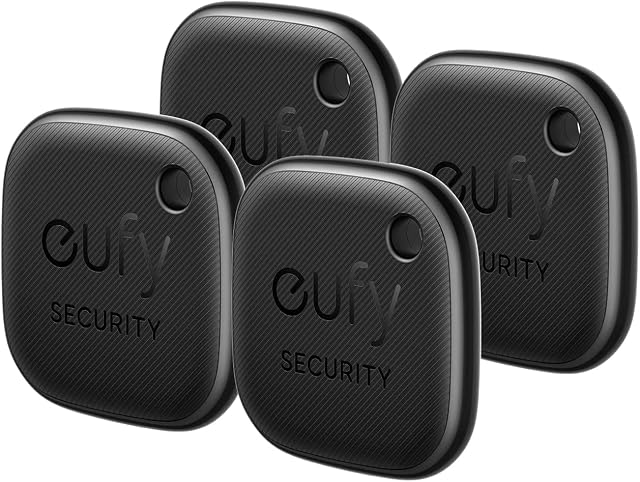
eufy Security SmartTrack Link (4-pack) · $39

Designed for: Someone who leaves things behind rather than loses them — a bag in a café, a coat on a chair.

Its main asset: Left-behind alerts, stated as free — the feature that prevents the loss rather than fixing it

Its main gap: Apple Find My — check platform before buying for an Android household

Read the full review →

UGREEN FineTrack Duo (4-pack) · $37

Designed for: A mixed household — some iPhones, some Android — that wants one kind of tag for everybody.

Its main asset: Both networks: Apple Find My and Google Find Hub

Its main gap: Rechargeable means remembering to charge four of them

Read the full review →

Chipolo POP · $23

Designed for: Someone who loses their phone as often as their keys.

Its main asset: Works with both major finding networks

Its main gap: A specialist tracker brand rather than a phone maker — no ecosystem integration beyond the networks

Read the full review →

Samsung Galaxy SmartTag2

Designed for: A household on Samsung phones, in a country where Galaxy devices are common.

Its main asset: Up to 500 days of runtime, extended a further 40% in power saving mode

Its main gap: Samsung Find network only — coverage depends on Galaxy phones being nearby

Read the full review →

The short decision

What this comparison is built on

The devices listed are drawn from the catalog of this site. Specifications are those the maker and the Amazon listing publish; prices are what Keepa recorded on the date shown, and both move. The order follows declared specifications, the balance between stated strengths and stated limits, and price. No device here has been installed or tested by us, and no page claims it was.

Last checked on

Prices quoted in these summaries are dated readings. The live price is shown next to each product.

The tool we use ourselves

Chosen your tool? Now buy it at the right price.

Cameras, alarm kits and safes swing by thirty dollars or more across the year, and the biggest "discounts" often land at prices the same model sold for six weeks earlier. UniverTrack tracks the real price history across retailers, spots fake reductions, and alerts you when it is genuinely the moment to buy.

Real price historyBuy-now alertsAI buying assistant
Try free for 14 days →
No commitment · Cancel in one click · 5 languages