Skip to content

A front door: four changes in order of effect

Doors are rarely picked. They are more often levered at the edge opposite the hinges, and the timber around two short screws is what gives way. The order below is by effect: the cylinder, a second locking point, bolts let into the edge so nothing protrudes, and the screws that make all three worth having.

Everything on a front door is judged against one question: what happens when somebody applies a lever near the lock.

The cylinder

It is the part that gets attacked, and the attack is snapping — the barrel gripped and broken at its weakest section. A cylinder sized to finish flush gives nothing to grip.

A second locking point

Two locks at different heights spread the load across more of the frame, and a door forced at one point still holds at the other. It is the same reasoning as a multipoint lock, arrived at cheaply.

The edge

Bolts let into the edge of the door, flush, so there is nothing to grip and nothing to lever against. They also address the half of the door that is rarely reinforced — a leaf secured only at the lock still swings on whatever the hinges are screwed into.

The screws

Underneath all of it. The best cylinder in the world is bolted to a keep held by two short screws in a soft jamb.

Which device does your home need?

Your door has an older cylinder lock
Upgrading the cylinder is the single most effective change most homes can make.
The door itself is weak
A strong lock in a weak door or frame achieves very little.
You rent
A cylinder swap is often permitted where a new door is not, and it is reversible.
You have glass beside the door
A thumbturn reachable through broken glass is a known weakness worth thinking about.

Picking by what you are protecting

Resisting forced entry

Where the frame, the hinges and the lock all matter together, and the weakest of the three decides the outcome.

Resisting lock attacks

Where the cylinder's resistance to snapping and picking is the specific question.

Everyday use

Where a door that is awkward to lock gets left unlocked, which defeats everything else.

Insurance

Where policies frequently specify a lock standard, and where meeting it is worth confirming.

What actually protects, and what is noise

The cylinder standard
Independent standards exist and insurers reference them. A cylinder rated against snapping addresses the commonest attack directly.
The frame and hinges
A door is only as strong as what it is fixed to. Reinforcing the frame is often more valuable than a better lock.
The door itself
A hollow door with a strong lock is a hollow door. Material and construction set the ceiling.
Glass near the lock
A thumbturn within reach of breakable glass can be operated from outside. There are specific solutions for that.
Whether it is easy to use
A lock that everyone finds fiddly is a lock that stops being engaged. Usability is a security feature.

Which figure for which entrance

Your weaknessThe fixThe note
Older cylinderAn anti-snap cylinderThe commonest attack
Weak frameFrame reinforcementOften more valuable than the lock
Hollow doorA solid doorSets the ceiling
Glass by the doorRethink the thumbturnReachable from outside

Where this is usually botched

Fitting a strong lock to a weak frame
The door is forced at the frame rather than the lock. Reinforcing the frame is frequently the better spend.
Ignoring the cylinder standard
Lock snapping is a known and common technique, and cylinders rated against it exist specifically to defeat it.
Leaving a thumbturn reachable through glass
It converts a broken pane into an open door. It is a well-known weakness with well-known solutions.
Choosing something inconvenient
A lock nobody wants to use gets left unlocked. That is worse than a modest lock that is always engaged.

By the home you have

The owner of an older house
Usually gains most from a cylinder upgrade and frame reinforcement together.
The renter
Can often change the cylinder with permission, which is reversible and effective.
The insurance-conscious owner
Should check what standard the policy names before buying anything.

Batteries, updates and working life

Door locks fail from misalignment far more than from wear. As a door settles or swells, the bolt starts to catch, people stop fully locking it, and the security is lost long before anything breaks.

  • Adjust the keep or hinges when the bolt starts to catch, rather than forcing it.
  • Lubricate the cylinder with a suitable lock lubricant, never general oil.
  • Check hinge screws periodically; long screws into the frame matter.
  • Replace a key that has begun to bend before it snaps in the lock.

Safety

The front door is also an escape route.

  • Make sure everyone can unlock the door quickly from inside in an emergency.
  • Do not remove interior handles for security without considering fire escape.
  • Keep a spare key somewhere sensible, not under a mat or a stone.
  • Check any lock change against the lease first.

The choices, and what settled them

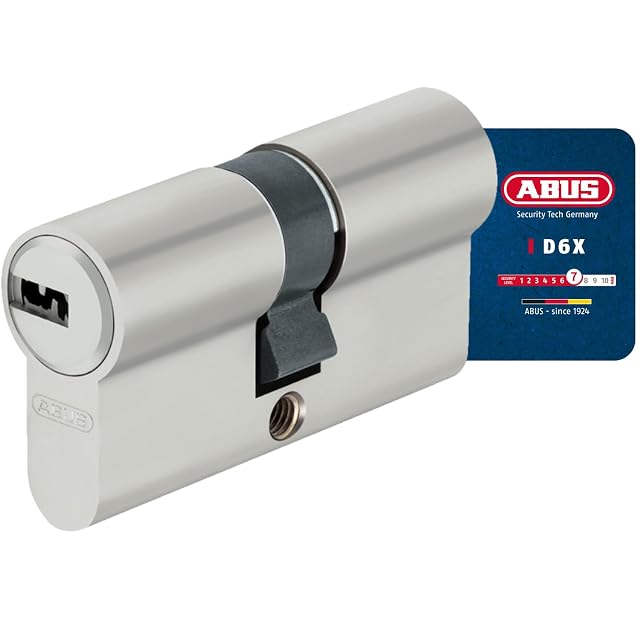
  1. ABUS D6XNP 30/30

    30/30 mm (1.18 in) · anti-pick pins · emergency function · 5 reversible keys · code card

    ABUS's everyday euro cylinder: special pins for pick and manipulation resistance, an emergency function that works with a key in the other side, and five reversible keys with a code card for reordering.

    Best for: Replacing a builder's cylinder on a front door, at the smallest sensible price.

    7.2/10

    ≈ $54

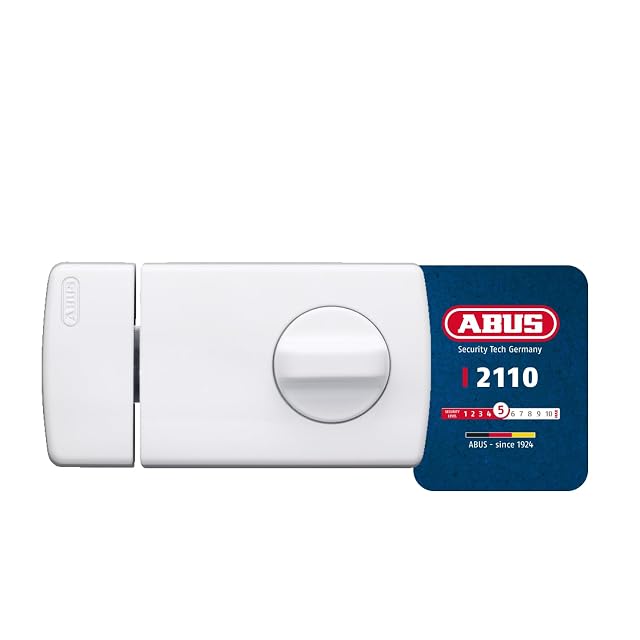
  2. ABUS 2110

    Rim lock with thumbturn inside · key outside · 5-pin cylinder · doors 35–50 mm (1.38 to 1.97 in) · 32 mm (1.26 in) bore

    ABUS's additional rim lock: a thumbturn inside, a key outside, and a five-pin cylinder. Stated for doors 35 to 50 mm (1.38 to 1.97 in) thick with recesses up to 21 mm (0.83 in), and needing a 32 mm (1.26 in) round hole for the cylinder.

    Best for: Securing the closing edge of a front door against levering, on a door of ordinary thickness.

    7.8/10

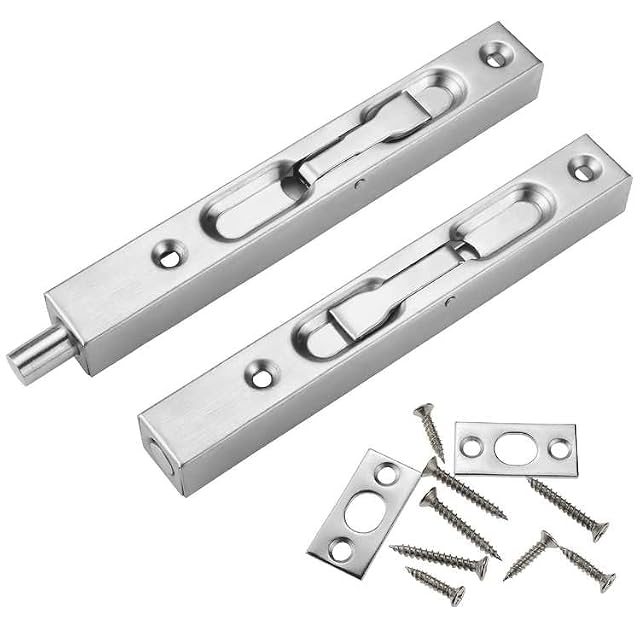
  3. Prmape Concealed Bolt (pair)

    Two concealed flush bolts · 150 mm (5.91 in) · 304 stainless · brushed finish · fits into the door edge

    A pair of concealed flush bolts in 304 stainless steel, let into the edge of the door so that nothing protrudes. Prmape states bolts 150 mm (5.91 in) long overall, a brushed finish and stainless fixings.

    Best for: A double door or a French door, where the passive leaf must be held top and bottom.

    7.8/10

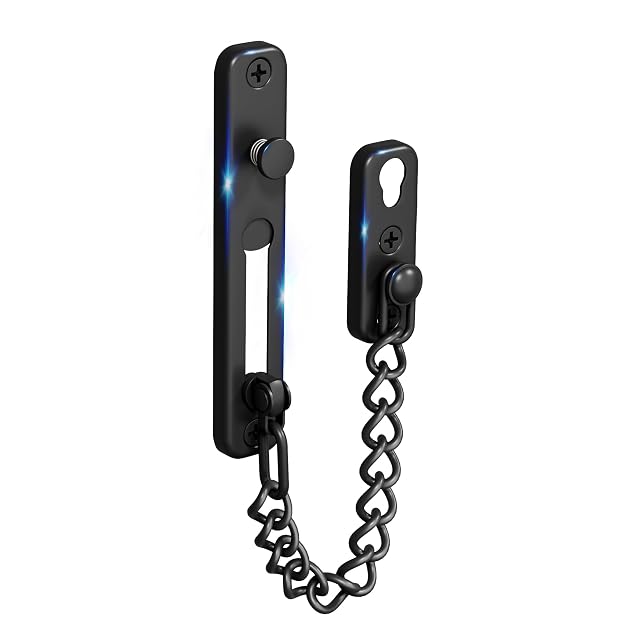
  4. SAYAYO EFD9000-B

    Stainless door chain · 200 mm (7.87 in) chain · spring button · fits timber and metal · inside only

    A stainless steel door chain with a reinforced link and a spring button, operated only from inside. SAYAYO states 200 mm (7.87 in) of chain, a 123 mm (4.84 in) main plate, and a complete screw set.

    Best for: Opening a door to an unknown caller without opening it fully — and nothing more than that.

    7.2/10

The questions we are asked

Which single change matters most?

Longer screws in the existing strike plate, and it costs almost nothing. The frame splits around two 25 mm (0.98 in) screws long before any lock fails; 70 to 80 mm (2.76 to 3.15 in) screws through the jamb into the framing change the outcome and take ten minutes.

How do I measure a cylinder?

From the center screw hole to each face separately — 30/30, 40/50, never simply "80 mm (3.15 in)". Fit it so the short half is outside and nothing protrudes past the handle plate, because what protrudes is what gets gripped.

Is a better lock enough?

Not if the frame or the door is weak. Attackers go for the weakest of the three, and a strong lock in a soft frame changes little.

Can I change the lock as a tenant?

Often yes with permission, and a cylinder swap is reversible. The lease usually addresses it directly.

What about glass next to the door?

If a thumbturn can be reached through it, a broken pane becomes an open door. There are specific solutions and it is worth addressing.

Does my insurer care which lock I fit?

Frequently yes, and policies often name a standard. Confirming before buying is easier than arguing after a claim.

Why has my door become hard to lock?

Usually the door or frame has moved with the seasons. Adjusting the keep is the fix, and forcing the key is how cylinders break.

Each device, and the door it watches

ABUS D6XNP 30/30 · $54

Designed for: Replacing a builder's cylinder on a front door, at the smallest sensible price.

Its main asset: Emergency function: it operates from outside with a key left in the inside

Its main gap: 30/30 is a short cylinder — it fits a thin door and not a thick one

Read the full review →

ABUS 2110

Designed for: Securing the closing edge of a front door against levering, on a door of ordinary thickness.

Its main asset: Protects the closing edge specifically — the side a lever is applied to

Its main gap: Requires a 32 mm (1.26 in) hole bored through the door

Read the full review →

Prmape Concealed Bolt (pair)

Designed for: A double door or a French door, where the passive leaf must be held top and bottom.

Its main asset: Concealed: nothing protrudes, and there is no visible hardware to grip

Its main gap: Requires a mortice cut into the edge of the door — this is joinery, not a screwdriver job

Read the full review →

SAYAYO EFD9000-B

Designed for: Opening a door to an unknown caller without opening it fully — and nothing more than that.

Its main asset: Stainless steel, so it does not rust in a damp hallway

Its main gap: A chain is a talking device, not a security device — it yields to a shoulder

Read the full review →

What each level of spending protects

The short decision

Comparisons that matter here

Device against device, already covered, inside this guide or this aisle.

What this comparison is built on

The devices listed are drawn from the catalog of this site. Specifications are those the maker and the Amazon listing publish; prices are what Keepa recorded on the date shown, and both move. The order follows declared specifications, the balance between stated strengths and stated limits, and price. No device here has been installed or tested by us, and no page claims it was.

Last checked on

Prices quoted in these summaries are dated readings. The live price is shown next to each product.

The tool we use ourselves

Chosen your tool? Now buy it at the right price.

Cameras, alarm kits and safes swing by thirty dollars or more across the year, and the biggest "discounts" often land at prices the same model sold for six weeks earlier. UniverTrack tracks the real price history across retailers, spots fake reductions, and alerts you when it is genuinely the moment to buy.

Real price historyBuy-now alertsAI buying assistant
Try free for 14 days →
No commitment · Cancel in one click · 5 languages