The conclusion The one genuinely different idea on this shelf: the alarm hub is the Wi-Fi router, so the alarm is not a guest on a network that can fail without it. That is the right answer to the question this shelf's introduction asks, and the published Wi-Fi 6 figures — 900 Mbps, 1,500 sq ft — are the only network numbers here. The mobile fallback is still a subscription, and the sensor radio is still undeclared. Three hundred dollars, less whatever a router was going to cost.
What the maker puts in writing
8 pieces: 1 Alarm Pro base station, 1 keypad, 4 contact sensors, 1 motion detector, 1 range extender
Built-in eero Wi-Fi 6 router · up to 900 Mbps · covers up to 1,500 sq. ft.
30-day free Ring Protect Home subscription
Compatible: glass break, smoke and CO listener, flood and freeze, cameras, doorbells, smart lighting, eero 6 extenders
Ring Protect Plan (sold separately) to keep your system online if the Wi-Fi goes down
No sensor radio frequency. No protocol. No siren decibels. No battery hours.
The hub is the router
Which is the one structural idea here.
Every other kit on this shelf is a client on a network it does not control. The
router reboots, the ISP drops, someone changes the Wi-Fi password — and the alarm
is offline without knowing why.
Making the hub the router deletes that layer. This shelf’s introduction asks what
survives a failure; this collapses two failure points into one.
And the mirror image is true: one box failing now takes the alarm and the internet
together.
The subscription is not removed
Only the Wi-Fi problem is.
Ring’s wording here is the same as on its cheaper kits: subscribe to keep your
system online if the Wi-Fi goes down.
A built-in router cannot manufacture a connection when the line to the street is
cut. That is what the mobile fallback is for, and it is on the plan.
Thirty days of Ring Protect Home is included, stated in the title — the only
trial length published on this shelf.
Fifteen hundred square feet
One floor, generously measured.
Mesh node ratings are open-condition figures. A brick-walled two-story house will
want an extender, which Ring names.
It is still the only coverage number on this shelf, where most kits do not say
what radio they use at all.
Availability
On sale at around $300 on the American Amazon store at the time of checking.
Prices and availability are what Keepa reported on the date this page was updated; both move.
Prices quoted in this text were read on October 8, 2026. The live price is at the top of the page.
What reassures, and what does not
Strengths
The hub is the router, so the alarm does not depend on a separate network
Wi-Fi 6 at up to 900 Mbps over up to 1,500 sq ft, the only network figures here
The same eight pieces as the standard kit
A thirty-day monitoring subscription included and stated
The longest named compatibility list: glass break, smoke and CO, flood and freeze
Replaces a router, which offsets part of the three hundred dollars
Compromises
Three hundred dollars, the most expensive kit in this group
The mobile fallback still requires a Ring Protect Plan
No sensor radio frequency or protocol published
No siren decibel figure and no battery duration
Fifteen hundred square feet is one floor of a house, not a house
Making the alarm hub the router means one failure takes out both
Specifications
Contents
One Alarm Pro base station, one keypad, four contact sensors, one motion detector, one alarm range extender — stated, the same eight pieces as the standard kit with a different base station
Panel
The base station contains an eero Wi-Fi 6 router. It is the only kit in this group where the alarm hub and the home network are one device, so the alarm is not a client on a network that can fail independently of it
Connectivity
Wi-Fi 6 at speeds up to 900 Mbps, covering up to 1,500 sq ft — the only bandwidth and coverage figures published on this shelf. Keeping the system online when the broadband drops still requires a Ring Protect Plan
Monitoring
A 30-day Ring Protect Home subscription is included — the only kit here that states a trial length in its own title. 24/7 professional monitoring continues on a paid plan
Expansion
Glass break sensor, smoke and CO listener, flood and freeze sensor, cameras, doorbells and smart lighting are named as compatible, plus eero 6 extenders for the network side — the fullest named expansion list in this group
Radio
Not published for the sensors. Wi-Fi 6 is named for the network side; the link between the sensors and the base station has no stated frequency or protocol
Siren
Not published. No decibel figure
Backup power
Not published as a duration
Installation
Everything needed is in the box: plug in the base station, set up through the Ring and eero apps, place the sensors — stated
Amazon reference
B08HSTJPM5
EAN
0840080508863
The questions we are asked
Does the router actually help the alarm?
Yes, structurally, and it is the most interesting design on this shelf. Every other kit here is a client on a network it does not control: the router reboots, the ISP drops, the Wi-Fi password changes, and the alarm is offline without knowing why. Making the hub the router removes that whole layer. This shelf's introduction asks what survives a failure, and this collapses two failure points into one. The trade is the mirror image: one box failing now takes out the alarm and the internet together.
Is the subscription still needed?
For the mobile fallback, yes — Ring's wording here is the same as on its other kits: subscribe to keep your system online if the Wi-Fi goes down. The router does not change that, because a built-in router cannot manufacture a connection when the line to the street is cut. What the kit does include is thirty days of Ring Protect Home, stated in the title, which is the only trial length published on this shelf and long enough to decide whether the monitoring is worth paying for.
Is 1,500 square feet enough coverage?
For an apartment or one floor of a house. Eero rates mesh nodes generously and 1,500 sq ft is a single-node figure measured in open conditions, so a brick-walled two-story house will want an extender — which Ring names as available separately. Read the figure as the reason this is sold as a mesh system rather than as a complete answer. It is still the only coverage number on this shelf, and most of the kits here do not even say what radio they use.
Against the rest of the alarm kits
Between security devices of the same category and nearby price. Shown: what they all state. A half-filled column says nothing.
Model
Price
Contents
Connectivity
Expansion
Radio
Ring Alarm Pro 8-Piece Kit with built-in eero Wi-Fi 6 router
$300
One Alarm Pro base station, one keypad, four contact sensors, one motion detector, one alarm range extender — stated, the same eight pieces as the standard kit with a different base station
Wi-Fi 6 at speeds up to 900 Mbps, covering up to 1,500 sq ft — the only bandwidth and coverage figures published on this shelf. Keeping the system online when the broadband drops still requires a Ring Protect Plan
Glass break sensor, smoke and CO listener, flood and freeze sensor, cameras, doorbells and smart lighting are named as compatible, plus eero 6 extenders for the network side — the fullest named expansion list in this group
Not published for the sensors. Wi-Fi 6 is named for the network side; the link between the sensors and the base station has no stated frequency or protocol
One base station, one keypad, four contact sensors, one motion detector, one range extender — stated, and the clearest contents list of the three Ring kits here
Wi-Fi to the base station. Keeping the system online when the Wi-Fi drops requires a Ring Protect Plan, stated explicitly — and this shelf's introduction makes exactly that failure its central test
Additional alarm sensors and accessories are sold separately and can be added at any time — stated, with no stated device limit
Not published. No frequency and no protocol name appears for the link between the sensors and the base station, although the kit ships a range extender whose only purpose is to lengthen that link
A VISTA-20P control panel, a 6160 custom alpha keypad and a 712BNP backup battery — three pieces, and no sensors and no siren. Every other kit on this shelf includes sensors; this one includes the thing they report to
IP and cellular alarm reporting with upload and download capability — stated. Cellular reporting as a panel capability rather than a monthly feature, which is what separates a professional panel from a consumer kit
Supports four graphic touchscreen keypads, stated, and Z-Wave devices including thermostats, lights, locks, water shut-off valves, garage doors, window shades and audio systems
Z-Wave is named for smart home devices. No frequency or protocol is published for wireless security sensors, which on a panel of this class are added with a separate receiver
One base station, one keypad, one contact sensor, one motion detector, one range extender — stated. One contact sensor covers one door or one window
Wi-Fi. Keeping the system online when the Wi-Fi drops requires a Ring Protect Plan — the same wording as the eight-piece kit, and the same gap against what this shelf's introduction asks
More sensors and accessories sold separately, addable at any time — which on a five-piece kit is less an option than a plan
Not published — no frequency, no protocol, no range, on a kit that ships a range extender
What separates the models, in security devices
If price decides: Ring Alarm 5-Piece Kit, base station, keypad, 1 contact, motion detector, range extender, at $200.
What this one costs among alarm kits
Details checked on October 8, 2026.
The buyer this one serves, among security devices
A household replacing its router anyway, where one box doing both is worth three hundred dollars
What buyers actually choose
Amazon reports what buyers took in the month before this page was last checked: at least 200.
The figure is a floor, rounded by Amazon, and read through Keepa — it says what buyers picked, not what a maker claims.
Sources
Specifications: the manufacturer sheet for home security products and the matching Amazon product page. Prices and availability: Keepa. Every figure on this page names its source.
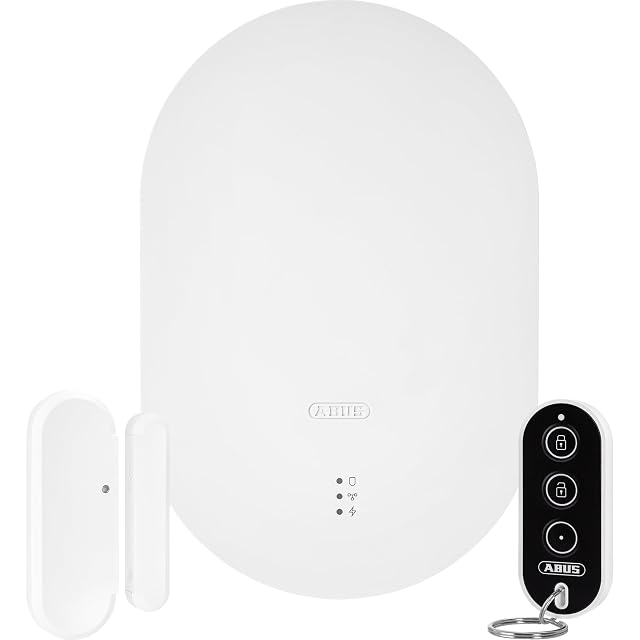
Hub and siren · expandable · DIY installation · app control · voice assistant compatible
ABUS's Smartvest Pro starter set: the hub and siren of a system designed to be expanded, installable without prior knowledge and operated by app, from a manufacturer whose main business is physical security.
Best for: Someone building a system over time who wants the sensors and the door hardware to come from the same maker.
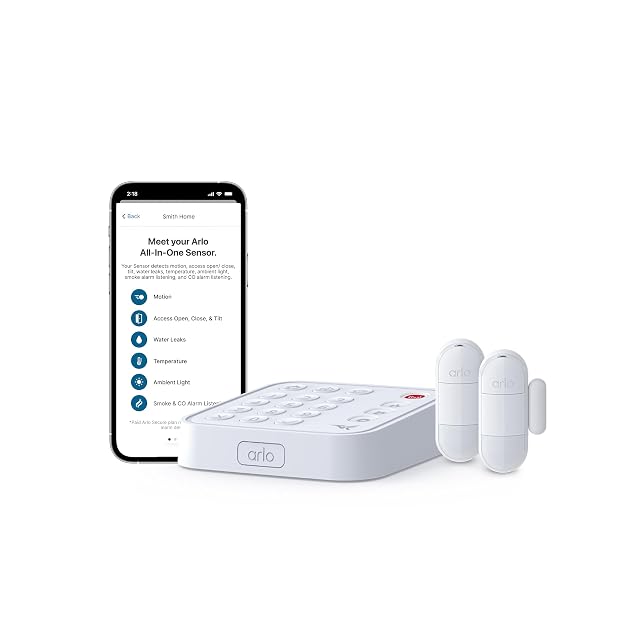
Wired plug-in keypad sensor hub plus 2 all-in-one sensors · 8 detection functions per sensor: motion, open/close, water leak, freeze, smoke/CO listening, tilt, ambient light · one tap emergency response · SecureLink named with no protocol or range
Two sensors that each do eight jobs — which is a genuinely different answer to a shelf that counts pieces.
Best for: An apartment where two well-placed sensors beat eight single-purpose ones, and leaks matter as much as doors
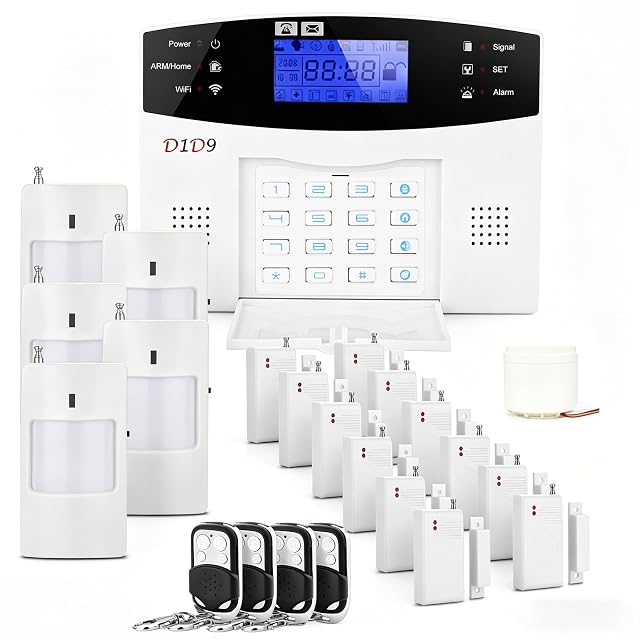
24 pieces · 4G and Wi-Fi, with a mobile fallback that needs no subscription · SIM card or Wi-Fi required · no monthly fee · batteries described as gifts, not warranted · no siren level, no radio frequency, no sensor breakdown
The only kit here with a mobile fallback that costs nothing monthly — and the only one that disclaims its own batteries.
Best for: A second property or a vacation rental, where nobody will be paying a subscription and 4G is the only reliable link