The conclusion Four contacts, a motion detector, a keypad and a range extender for two hundred and fifty dollars is a sensible eight pieces, and buying them together beats adding sensors one at a time. But read the subscription line carefully: this shelf's introduction says a kit is judged on what survives a failure, and on this kit the mobile fallback for a dropped broadband line — and arming from away at all — are the paid plan. Nothing is published about the radio, the siren level or the battery.
What the maker puts in writing
8 pieces: 1 base station, 1 keypad, 4 contact sensors, 1 motion detector, 1 range extender
A great fit for 1-2 bedroom homes
Mobile notifications when the system is triggered
Ring Protect Plan (sold separately): arm from anywhere, keep your system online if the Wi-Fi goes down, 24/7 professional monitoring
Alexa arming and disarming with a subscription
No radio frequency. No protocol. No siren decibels. No battery hours. No detector
range.
The failure response is the paid tier
Which is the whole test this shelf applies.
This shelf’s introduction: the differences between kits are in what survives a
failure — a battery when the mains goes, a mobile fallback when the broadband
drops.
Ring states plainly that keeping the system online when the Wi-Fi goes down
requires a Ring Protect Plan. So does arming it from away.
Without the plan: sensors trigger, siren sounds, phone gets a notification. That
is a local alarm, and it is a reasonable thing to own. It is not what the
introduction is asking about.
A range extender, and no range
In the box, and nowhere on the page.
Both this kit and the five-piece ship one. Nothing states a frequency, a protocol
name or a distance.
The extender is itself the admission: the link is finite, and a sensor at the far
end of a house may not reach.
Against the five-piece
Three contacts, fifty dollars.
Same base station, same keypad, same motion detector, same extender.
Five of the six bullets on the two listings are word for word identical. The
contents line is the only difference.
Seventeen dollars a sensor, which is less than adding them later.
Availability
On sale at around $250 on the American Amazon store at the time of checking.
Prices and availability are what Keepa reported on the date this page was updated; both move.
Prices quoted in this text were read on October 8, 2026. The live price is at the top of the page.
What reassures, and what does not
Strengths
Four contact sensors, enough for a front door, a back door and two windows
A range extender in the box, which no other kit here includes
A physical keypad rather than the app alone
Expandable with sensors and cameras at any time
Alexa arming and disarming, with a plan
A clear, itemized contents list — eight pieces named
Compromises
Mobile fallback for a dropped Wi-Fi link is a subscription, not hardware
Arming from away requires the plan, so the unsubscribed kit is keypad-only
No radio frequency or protocol published, on a kit that ships a range extender
No siren decibel figure
No battery duration for the base station
No detector range or field of view for the motion sensor
Specifications
Contents
One base station, one keypad, four contact sensors, one motion detector, one range extender — stated, and the clearest contents list of the three Ring kits here
Control
A keypad to arm and disarm, plus the Ring app. Alexa voice control requires a Ring Protect subscription — stated
Connectivity
Wi-Fi to the base station. Keeping the system online when the Wi-Fi drops requires a Ring Protect Plan, stated explicitly — and this shelf's introduction makes exactly that failure its central test
Monitoring
24/7 professional monitoring is optional and subscription-based. Arming the alarm from away also requires the plan, which means the unsubscribed kit is armed from the keypad only
Radio
Not published. No frequency and no protocol name appears for the link between the sensors and the base station, although the kit ships a range extender whose only purpose is to lengthen that link
Siren
Not published. No decibel figure and no statement of where the siren is — in the base station or separate
Backup power
Not published as a duration. No battery hours are stated for the base station
Expansion
Additional alarm sensors and accessories are sold separately and can be added at any time — stated, with no stated device limit
Stated for
One to two bedroom homes, stated by Ring, and business use
Amazon reference
B07ZPMCW64
EAN
0842861111262
The questions we are asked
What works without the subscription?
The alarm itself: the sensors trigger, the siren sounds, and the app sends mobile notifications when the system is triggered — that last is stated without a plan requirement. What the plan adds is arming and disarming from away, keeping the system online when the broadband drops, Alexa control, and professional monitoring. This shelf's introduction says the differences between kits are in what survives a failure, and on this kit the failure response is the paid tier. Read the unsubscribed kit as a local alarm with phone alerts.
What is the range extender for?
Lengthening the radio link between the sensors and the base station, which is the thing this listing never describes. This shelf's introduction asks for radio protocol and range, and no Ring listing in this group publishes either — no frequency, no protocol name, no stated distance. The extender's presence is itself the admission that range is finite and that a sensor at the far end of a house may not reach. Ring includes one in the eight-piece and the five-piece alike, which suggests it is needed more often than not.
How does it compare with the five-piece?
Three extra contact sensors for fifty dollars, and otherwise the same kit. Both ship a base station, a keypad, a motion detector and a range extender; the eight-piece adds three contacts. Ring's own framing is that the five-piece suits condos and apartments and this one suits one to two bedroom homes. The five remaining bullets on the two listings are word-for-word identical, so the contents line is the only place the two pages differ — and at roughly seventeen dollars per extra sensor, buying the larger kit is cheaper than adding them later.
Against the rest of the alarm kits
Between security devices of the same category and nearby price. Shown: what they all state. A half-filled column says nothing.
Model
Price
Contents
Connectivity
Radio
Siren
Ring Alarm 8-Piece Kit, base station, keypad, 4 contacts, motion detector, range extender
$250
One base station, one keypad, four contact sensors, one motion detector, one range extender — stated, and the clearest contents list of the three Ring kits here
Wi-Fi to the base station. Keeping the system online when the Wi-Fi drops requires a Ring Protect Plan, stated explicitly — and this shelf's introduction makes exactly that failure its central test
Not published. No frequency and no protocol name appears for the link between the sensors and the base station, although the kit ships a range extender whose only purpose is to lengthen that link
Not published. No decibel figure and no statement of where the siren is — in the base station or separate
A VISTA-20P control panel, a 6160 custom alpha keypad and a 712BNP backup battery — three pieces, and no sensors and no siren. Every other kit on this shelf includes sensors; this one includes the thing they report to
IP and cellular alarm reporting with upload and download capability — stated. Cellular reporting as a panel capability rather than a monthly feature, which is what separates a professional panel from a consumer kit
Z-Wave is named for smart home devices. No frequency or protocol is published for wireless security sensors, which on a panel of this class are added with a separate receiver
Not included and not published. The panel drives external sounders, which are bought separately
One Alarm Pro base station, one keypad, four contact sensors, one motion detector, one alarm range extender — stated, the same eight pieces as the standard kit with a different base station
Wi-Fi 6 at speeds up to 900 Mbps, covering up to 1,500 sq ft — the only bandwidth and coverage figures published on this shelf. Keeping the system online when the broadband drops still requires a Ring Protect Plan
Not published for the sensors. Wi-Fi 6 is named for the network side; the link between the sensors and the base station has no stated frequency or protocol
One base station, one keypad, one contact sensor, one motion detector, one range extender — stated. One contact sensor covers one door or one window
Wi-Fi. Keeping the system online when the Wi-Fi drops requires a Ring Protect Plan — the same wording as the eight-piece kit, and the same gap against what this shelf's introduction asks
Not published — no frequency, no protocol, no range, on a kit that ships a range extender
Not published. No decibel figure
What separates the models, in security devices
If price decides: Ring Alarm 5-Piece Kit, base station, keypad, 1 contact, motion detector, range extender, at $200.
What this one costs among alarm kits
Details checked on October 8, 2026.
The buyer this one serves, among security devices
A one or two bedroom home already inside the Ring app, where a monthly plan is accepted as part of the price
Amazon reports what buyers took in the month before this page was last checked: at least 2,000.
The figure is a floor, rounded by Amazon, and read through Keepa — it says what buyers picked, not what a maker claims.
Sources
Specifications: the manufacturer sheet for home security products and the matching Amazon product page. Prices and availability: Keepa. Every figure on this page names its source.
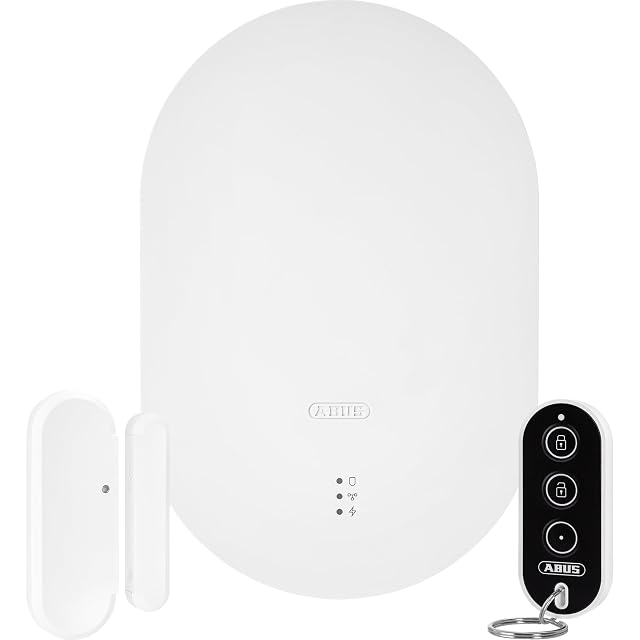
Hub and siren · expandable · DIY installation · app control · voice assistant compatible
ABUS's Smartvest Pro starter set: the hub and siren of a system designed to be expanded, installable without prior knowledge and operated by app, from a manufacturer whose main business is physical security.
Best for: Someone building a system over time who wants the sensors and the door hardware to come from the same maker.
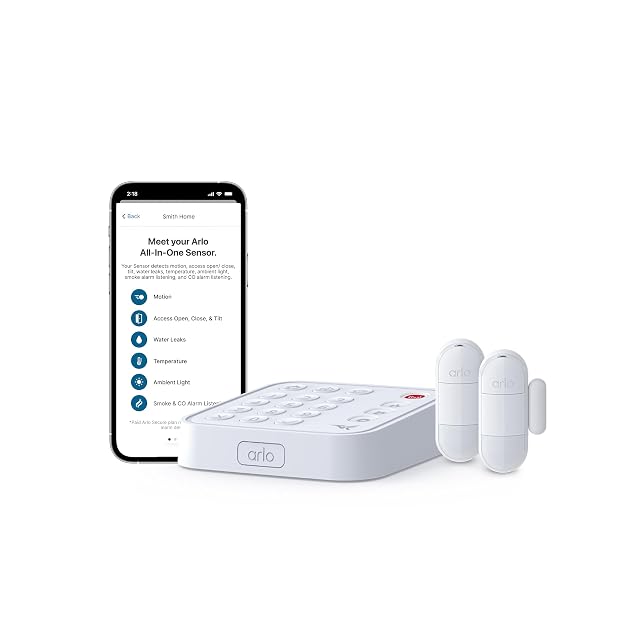
Wired plug-in keypad sensor hub plus 2 all-in-one sensors · 8 detection functions per sensor: motion, open/close, water leak, freeze, smoke/CO listening, tilt, ambient light · one tap emergency response · SecureLink named with no protocol or range
Two sensors that each do eight jobs — which is a genuinely different answer to a shelf that counts pieces.
Best for: An apartment where two well-placed sensors beat eight single-purpose ones, and leaks matter as much as doors
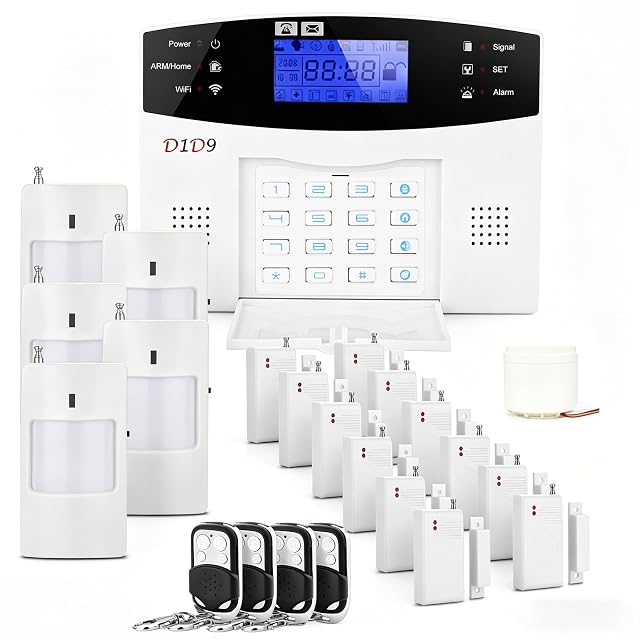
24 pieces · 4G and Wi-Fi, with a mobile fallback that needs no subscription · SIM card or Wi-Fi required · no monthly fee · batteries described as gifts, not warranted · no siren level, no radio frequency, no sensor breakdown
The only kit here with a mobile fallback that costs nothing monthly — and the only one that disclaims its own batteries.
Best for: A second property or a vacation rental, where nobody will be paying a subscription and 4G is the only reliable link