The conclusion The only kit on this shelf that publishes figures instead of adjectives: a 100 dB siren, a 24-hour hub battery, and a motion sensor specified at 35 feet, 90 degrees and sixty pounds of dog. For a hundred and thirty-two dollars with eight pieces and a panic button, that makes it the best-documented purchase here. The caveat is consistent with the rest of the shelf — the network backup is built in but needs the monitoring plan to do anything.
100 dB siren · base station battery lasts up to 24 hours
Built-in network backup for uninterrupted service during a power outage (requires a professional monitoring plan)
Motion sensors detect within 35 feet, 90° field of view, pets under 60 lbs
Monitoring from less than $1/day, no long-term contract, 1 free month
No wiring or drilling required · Alexa and Google Assistant
No radio frequency. No protocol.
Three numbers nobody else gives
A hundred decibels. Twenty-four hours. Thirty-five feet.
At least seven of the seventeen listings on this shelf describe a siren without saying how loud
it is, a hub without saying how long its battery lasts, and a motion detector
without saying what it covers.
This one gives all three, and that is the reason to read it first.
Twenty-four hours is the answer to the first question
The one this shelf’s introduction opens with.
An alarm whose hub dies with the mains is an alarm defeated by the fuse box, and a
burglary that starts with the power being cut is a known method.
Twenty-four hours covers an outage, a cut supply, and a night.
What it does not cover: sending the alert while the power is out. That is the
network backup, and that needs the plan.
Thirty-five feet at ninety degrees
Which tells you where to put it.
A ninety-degree field is a quarter circle. In a corner it covers a room with one
sensor; mid-wall it throws half its field at a wall.
Pets under sixty pounds will not set it off, stated. A large dog will.
The plan buys dispatch
Not the alarm.
Without it: siren, and a phone alert. With it: an agent watching, police
dispatched, the panic button live, and the system still reporting during a power
cut.
Under a dollar a day, no long contract, one month free. That is the clearest
commercial statement on this shelf.
Availability
On sale at around $132 on the American Amazon store at the time of checking.
Prices and availability are what Keepa reported on the date this page was updated; both move.
Prices quoted in this text were read on October 8, 2026. The live price is at the top of the page.
What reassures, and what does not
Strengths
A 100 dB siren figure, which nothing else on this shelf publishes
A 24-hour base station battery, the only duration stated here
The motion sensor is specified: 35 feet, 90 degrees, pets under 60 lb
A panic button, which no other kit in this group includes
Secret Alerts: a silent notification without sounding the alarm
A hundred and thirty-two dollars, the cheapest eight-piece kit here
Compromises
The network backup hardware is in the box but needs a monitoring plan to work
The panic button only dispatches police with a subscription
No radio frequency or protocol published
Products and monitoring are sold and supported in the US only, stated
Buying from unauthorized third parties may void the warranty, stated
A one-year warranty unless extended by a monitoring plan
Specifications
Contents
Base station, smash-safe keypad, four entry sensors, motion sensor and a panic button — eight pieces, stated
Siren
100 dB, built into the base station — stated. It is the only decibel figure published on this shelf, where seven of the eight listings describe a siren without saying how loud it is
Backup power
A base station battery that lasts up to 24 hours — stated. It is the only battery duration on this shelf, and the figure this shelf's introduction asks for first
Connectivity
A built-in network backup for uninterrupted service during a power outage — stated, and stated to require a professional monitoring plan. The hardware is in the box; the service is not
Control
A smash-safe wireless keypad with backlit buttons that light when needed and go dark when not, plus the SimpliSafe app for arming and disarming from away. Alexa and Google Assistant arm the system at home
Monitoring
Optional 24/7 professional monitoring, from less than a dollar a day with no long-term contract, one free month included. The panic button requires the subscription to dispatch police
Expansion
Entry sensors protect windows, doors and cabinets, and can send Secret Alerts — a silent notification when a private area is opened, without sounding the alarm. No stated device limit
Radio
Not published. No frequency and no protocol for the sensor link
Installation
No wiring and no drilling required, stated. Plug in the base station, place the sensors
Amazon reference
B07C38HT49
EAN
0815017029568
The questions we are asked
Why does the 24-hour battery matter?
Because it is the first question this shelf's introduction asks and the only kit here that answers it. An alarm whose hub dies with the mains is an alarm defeated by the fuse box, and a burglary that begins with the power being cut is a known method. Twenty-four hours covers an outage, a cut supply and a night. It is also worth reading what the battery does and does not do: it keeps the base station alive, and the network backup that sends the alert while the power is out needs the monitoring plan.
What do the motion sensor figures mean?
That you can plan where it goes before buying, which is unusual on this shelf. Thirty-five feet of range with a ninety-degree field of view describes a quarter-circle, which is why SimpliSafe tells you to put it in a corner — a corner placement covers a whole room with one sensor, a mid-wall placement wastes half the field. Pets under sixty pounds will not trigger it, stated, which rules it out for a large dog. At least seven of the seventeen listings here publish none of this.
What does the monitoring actually add?
Dispatch. Without it, the siren sounds and your phone gets an alert; with it, an agent is watching and can call the police, the panic button dispatches, and the network backup keeps the system reporting during a power cut. SimpliSafe prices it at under a dollar a day with no long-term contract and includes one free month, which is the clearest commercial statement on this shelf. This shelf's introduction is blunt that this is a commercial decision as much as a technical one.
Against the rest of the alarm kits
Between security devices of the same category and nearby price. Shown: what they all state. A half-filled column says nothing.
Model
Price
Contents
Siren
Backup power
Connectivity
SimpliSafe 8 Piece Wireless Home Security System
$132
Base station, smash-safe keypad, four entry sensors, motion sensor and a panic button — eight pieces, stated
100 dB, built into the base station — stated. It is the only decibel figure published on this shelf, where seven of the eight listings describe a siren without saying how loud it is
A base station battery that lasts up to 24 hours — stated. It is the only battery duration on this shelf, and the figure this shelf's introduction asks for first
A built-in network backup for uninterrupted service during a power outage — stated, and stated to require a professional monitoring plan. The hardware is in the box; the service is not
24 pieces, stated, with door and window sensors and motion sensors named and a remote. The individual counts are NOT broken down, which is the same omission as the other large-piece-count kit on this shelf
Not published as a decibel figure. The SOS is stated to trigger the siren instantly and no sound level appears anywhere, where two kits on this shelf publish 100 and 120 dB
Not published. No hub battery and no runtime is stated, which this shelf's introduction puts first
2.4 GHz Wi-Fi together with 2G/4G cellular, with 5G explicitly stated as not supported. A cellular radio in the hub with no subscription is the answer to the question this shelf's introduction puts second — what happens when the broadband drops — and two kits on this shelf have it
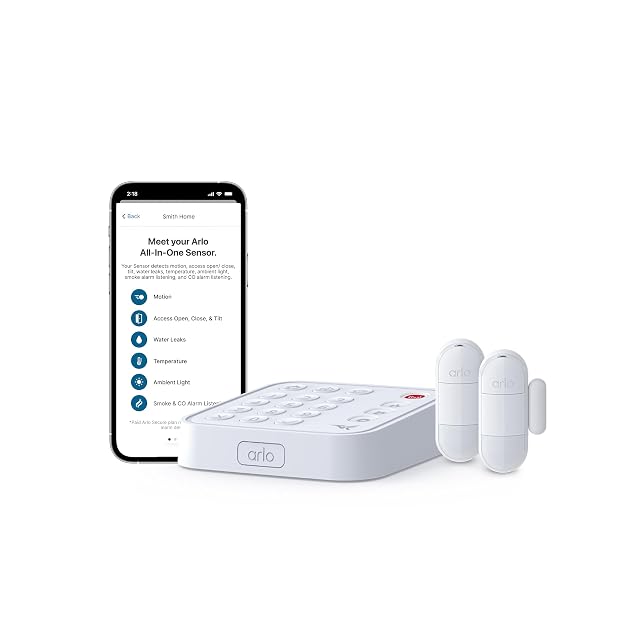
A wired plug-in keypad sensor hub and two wire-free all-in-one sensors — three pieces, which is the lowest count on this shelf and deliberately so
Built into the hub, stated. No decibel figure
Not published. The hub is a plug-in wired device and no battery duration appears, which on a mains-powered hub is the figure that matters most
SecureLink is named for longer range and a more secure connection to paired devices. No protocol, no frequency and no distance is given — the name is the whole specification
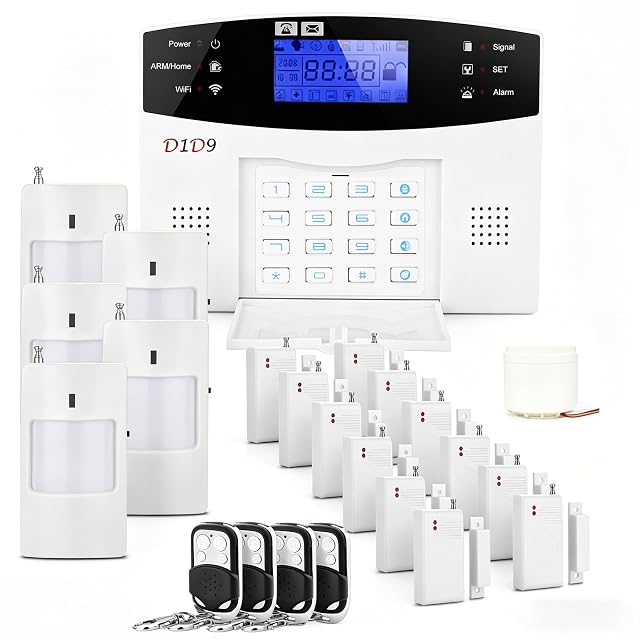
24 pieces, stated as door and window sensors, motion detectors, a remote control and a siren. The individual counts are not broken down, so what the twenty-four pieces are is unverifiable from the page
A siren is listed among the contents with no decibel figure and no location
Not published for the hub. The listing states instead that the batteries supplied with the sensors are gifts and are not to be replaced under warranty
4G and Wi-Fi, stated, with a SIM card or Wi-Fi required. This is the only kit in this group whose mobile fallback is hardware rather than a subscription feature — the figure this shelf's introduction puts second
What separates the models, in security devices
If price decides: D1D9 OCC1 24-piece wireless DIY alarm system, 4G, Wi-Fi and GSM, at $110.
What this one costs among alarm kits
Details checked on October 8, 2026.
The buyer this one serves, among security devices
Anyone who wants figures rather than adjectives, and will pay about a dollar a day for the monitoring
Amazon reports what buyers took in the month before this page was last checked: at least 1,000.
The figure is a floor, rounded by Amazon, and read through Keepa — it says what buyers picked, not what a maker claims.
Sources
Specifications: the manufacturer sheet for home security products and the matching Amazon product page. Prices and availability: Keepa. Every figure on this page names its source.
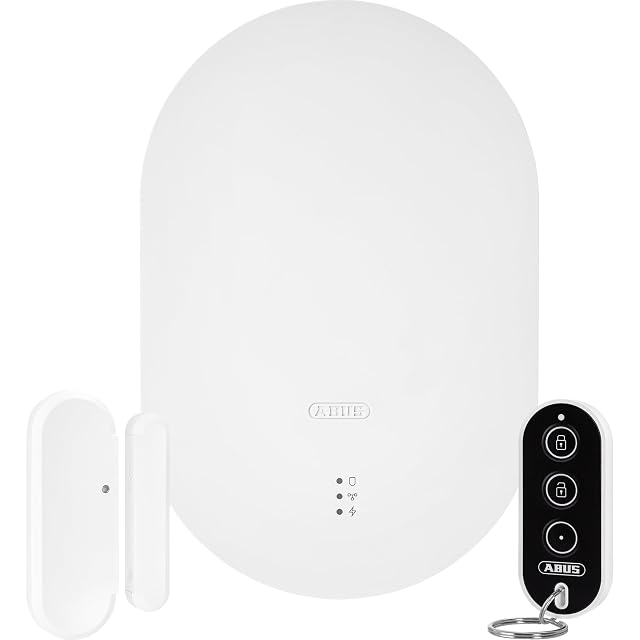
Hub and siren · expandable · DIY installation · app control · voice assistant compatible
ABUS's Smartvest Pro starter set: the hub and siren of a system designed to be expanded, installable without prior knowledge and operated by app, from a manufacturer whose main business is physical security.
Best for: Someone building a system over time who wants the sensors and the door hardware to come from the same maker.
Wired plug-in keypad sensor hub plus 2 all-in-one sensors · 8 detection functions per sensor: motion, open/close, water leak, freeze, smoke/CO listening, tilt, ambient light · one tap emergency response · SecureLink named with no protocol or range
Two sensors that each do eight jobs — which is a genuinely different answer to a shelf that counts pieces.
Best for: An apartment where two well-placed sensors beat eight single-purpose ones, and leaks matter as much as doors
24 pieces · 4G and Wi-Fi, with a mobile fallback that needs no subscription · SIM card or Wi-Fi required · no monthly fee · batteries described as gifts, not warranted · no siren level, no radio frequency, no sensor breakdown
The only kit here with a mobile fallback that costs nothing monthly — and the only one that disclaims its own batteries.
Best for: A second property or a vacation rental, where nobody will be paying a subscription and 4G is the only reliable link