Skip to content

Alarm kits: four, judged on what fails

Alarm kits are sold on sensor counts and decided by four other things: what happens when the power goes out, what happens when the internet goes down, whether the hub notices a sensor that has stopped reporting, and whether everybody in the house can arm it without installing an app. Here, SimpliSafe is the only one to publish a base station battery (up to 24 hours), with a keypad and a network backup that needs its monitoring plan; the D1D9 has a 4G path with no subscription; eufy has a keypad and no monthly fee; Ring has a keypad but keeps the system online without Wi-Fi only on a Ring Protect plan. None publishes sensor supervision. That is the order of this guide.

An alarm is judged by what it does when something goes wrong, not by how many contacts came in the box.

Backup power

A hub without a battery is silenced by pulling a fuse. This is the first question and it is rarely on the front of the box.

A second path

Wi-Fi and cellular are independent; Wi-Fi alone is not. If the router goes — deliberately or otherwise — a system with only one path reports nothing.

Supervision

Two-way radio means the hub confirms each sensor and notices when one stops reporting. One-way systems treat silence as normal, which is exactly the state somebody is trying to produce.

A keypad

Not a feature — the thing that decides whether the system stays armed. An alarm only one person can operate becomes an alarm nobody arms.

The sensor count

Last. Count your ground-floor openings and expect to add.

Which device does your home need?

You want a simple system
A self-contained kit you install yourself, which covers most homes.
You want a monitored response
A professionally monitored system, which is a subscription and a contract.
You have pets
Pet-tolerant sensors, or you will disable the system within two weeks.
You rent
Adhesive-mounted sensors and a kit that can move with you.

Picking by what you are protecting

Deterrence

Where the visible siren box and the noise itself do much of the work.

Alerting you

Where phone notifications matter, and where the response depends entirely on who is available to act.

Alerting others

Where a monitored plan or a keyholder arrangement is what turns an alert into an actual response.

Insurance

Where a specific type of alarm may affect a policy, and where asking your insurer first is worthwhile.

What actually protects, and what is noise

Self-monitored or professionally monitored
One sends you a notification; the other sends someone. That difference is the main thing you are choosing between.
Sensor coverage
Door contacts, motion sensors and glass-break detectors do different jobs. Covering entry points matters more than covering every room.
Pet tolerance
A sensor that triggers on a cat is a sensor that gets switched off. Pet-tolerant models exist and are worth specifying.
Backup power and signaling
What happens when the power or the internet goes down. A system that dies with the router is easily defeated.
How easy it is to arm and disarm
Everyone in the house has to manage it. A system that is annoying to use gets left disarmed.

Which figure for which entrance

Your situationThe systemThe catch
Owner, simple needsA self-install kitYou are the response
Wanting a responseMonitored planSubscription and contract
PetsPet-tolerant sensorsPlacement still matters
RentingAdhesive sensorsMust come off cleanly

Where this is usually botched

Placing motion sensors badly
Facing a window, a radiator or a route the cat uses guarantees false alarms. Placement causes more problems than sensor quality does.
Not planning who responds
An alert on a phone you cannot answer achieves nothing. Deciding in advance who acts is part of the system.
Leaving it disarmed
A system that is inconvenient gets left off. Ease of arming is a real specification rather than a nicety.
Assuming neighbors will react to a siren
Most people ignore alarms entirely. The siren deters; it rarely summons anyone.

By the home you have

The self-installer
Wants a straightforward kit, no contract, and accepts being the one who responds.
The one who travels
Wants monitoring or a keyholder, because a notification alone is not a response.
The pet owner
Needs pet-tolerant sensors and careful placement, or the system will end up switched off.

Batteries, updates and working life

Alarm systems fail at their batteries and their sensors, and both fail quietly. A sensor whose battery died months ago leaves a gap nobody sees until the system is tested or the day it mattered.

  • Replace sensor batteries on a schedule; low-battery warnings come late.
  • Test every sensor periodically rather than trusting the panel.
  • Clean PIR lenses; cobwebs are a leading cause of false alarms.
  • Check the backup battery in the panel, which ages whether used or not.

Safety

An alarm is a system people have to live with.

  • Make sure everyone in the house can disarm it, including anyone who might visit.
  • Do not let the alarm block or complicate a fire escape route.
  • Change default codes and passwords immediately.
  • Keep a note of what to do if it triggers while you are away.

The choices, and what settled them

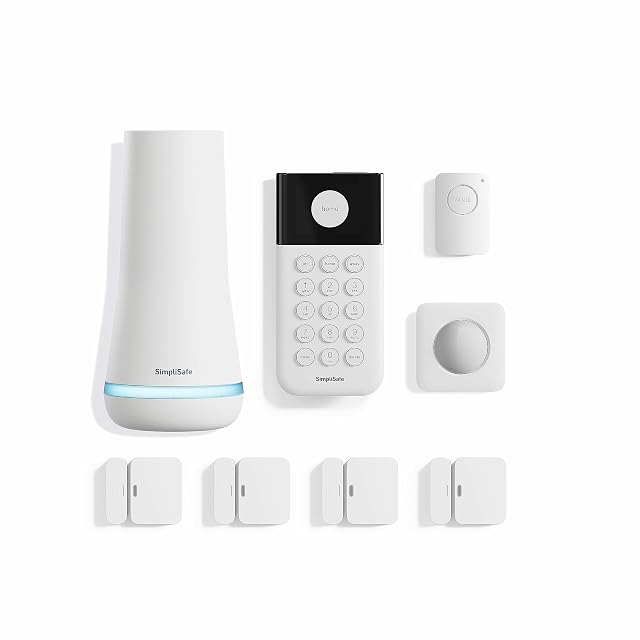
  1. SimpliSafe 8 Piece Wireless Home Security System

    8 pieces · 100 dB siren and a base station battery lasting up to 24 hours, the only siren level and the only battery duration on this shelf · motion sensor 35 ft, 90°, pets under 60 lb · network backup requires a monitoring plan

    The only kit here that publishes how loud its siren is, how long its battery lasts and how far its motion sensor sees.

    Best for: Anyone who wants figures rather than adjectives, and will pay about a dollar a day for the monitoring

    ≈ $132
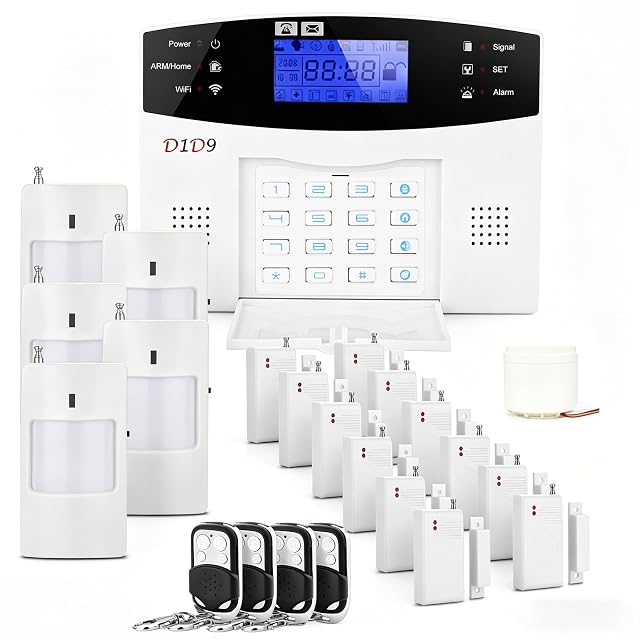
  2. D1D9 OCC1 24-piece wireless DIY alarm system, 4G, Wi-Fi and GSM

    24 pieces · 4G and Wi-Fi, with a mobile fallback that needs no subscription · SIM card or Wi-Fi required · no monthly fee · batteries described as gifts, not warranted · no siren level, no radio frequency, no sensor breakdown

    The only kit here with a mobile fallback that costs nothing monthly — and the only one that disclaims its own batteries.

    Best for: A second property or a vacation rental, where nobody will be paying a subscription and 4G is the only reliable link

    ≈ $110

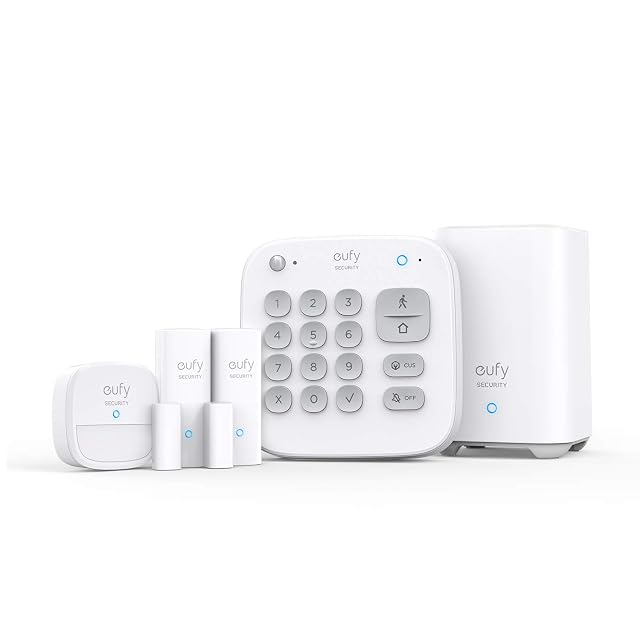
  3. eufy Security T8990121 5-Piece Home Alarm Kit

    5 pieces: HomeBase, keypad, motion sensor, 2 entry sensors · no monthly fees, stated as a one-time purchase · no siren level, no battery duration, no radio protocol, no detector range, no mains or network fallback stated

    The clearest no-subscription promise on this shelf, attached to the shortest specification on it.

    Best for: A small apartment where the monthly fee is the objection and local alerts are enough

    ≈ $160

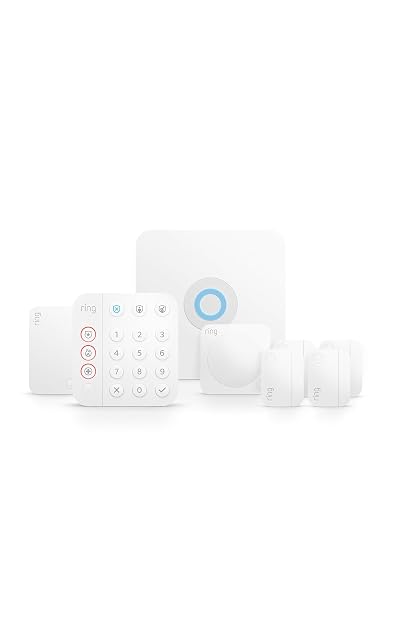
  4. Ring Alarm 8-Piece Kit, base station, keypad, 4 contacts, motion detector, range extender

    8 pieces: base station, keypad, 4 contact sensors, 1 motion detector, 1 range extender · mobile fallback and remote arming require a Ring Protect Plan · no radio protocol, no siren level, no battery duration, no detector range

    Four door contacts and a range extender in the box — and the two things this shelf says matter most are sold as a subscription.

    Best for: A one or two bedroom home already inside the Ring app, where a monthly plan is accepted as part of the price

    ≈ $250

The questions we are asked

Do I need a cellular fallback?

It is the difference between a system that survives an unplugged router and one that does not. Check which generation: the major American carriers have already shut 2G down, so a 2G fallback does nothing here and a 4G one does.

Where should the hub go?

Where it can be neither seen nor reached quickly from the entry. A hub in the hallway is the first thing found and unplugged, and the entry delay you configure is exactly the time available to do it.

Self-monitored or professionally monitored?

Self-monitored sends you an alert; professionally monitored sends someone. If you are often unreachable, that difference is the whole decision.

Will an alarm stop a burglary?

It deters, and the noise shortens the time an intruder is willing to stay. It does not prevent entry, and most passers-by ignore alarms.

How do I stop false alarms with a pet?

Pet-tolerant sensors and careful placement. A sensor that triggers on your cat is a sensor that ends up switched off.

What happens if the internet goes down?

It depends on the system. Some have a mobile backup; others simply stop working, which is worth knowing before buying.

Does an alarm affect my insurance?

It can, and some policies specify a type or standard. Asking your insurer before buying is more useful than guessing.

Can I take it with me if I move?

A self-install wireless kit generally yes, particularly with adhesive-mounted sensors. Hardwired systems generally no.

Each device, and the door it watches

SimpliSafe 8 Piece Wireless Home Security System · $132

Designed for: Anyone who wants figures rather than adjectives, and will pay about a dollar a day for the monitoring

Its main asset: A 100 dB siren figure, which nothing else on this shelf publishes

Its main gap: The network backup hardware is in the box but needs a monitoring plan to work

Read the full review →

What each level of spending protects

The short decision

Comparisons that matter here

Device against device, already covered, inside this guide or this aisle.

What this comparison is built on

The devices listed are drawn from the catalog of this site. Specifications are those the maker and the Amazon listing publish; prices are what Keepa recorded on the date shown, and both move. The order follows declared specifications, the balance between stated strengths and stated limits, and price. No device here has been installed or tested by us, and no page claims it was.

Last checked on

Prices quoted in these summaries are dated readings. The live price is shown next to each product.

The tool we use ourselves

Chosen your tool? Now buy it at the right price.

Cameras, alarm kits and safes swing by thirty dollars or more across the year, and the biggest "discounts" often land at prices the same model sold for six weeks earlier. UniverTrack tracks the real price history across retailers, spots fake reductions, and alerts you when it is genuinely the moment to buy.

Real price historyBuy-now alertsAI buying assistant
Try free for 14 days →
No commitment · Cancel in one click · 5 languages