The conclusion The one intercom on this shelf that publishes what this shelf's introduction actually asks for: a normally-open dry contact rated 30 V AC/DC at 1 A, on two shielded conductors with the cable named by part number and gauge. For a gate where the job is to speak and release, that specification is worth more than a picture. It has no screen, no camera, no recording, and push-to-talk rather than hands-free — and the strike is extra.
What the maker puts in writing
In the box: LE-D door station, LEM-1DL answering station, 1 × PT-1210N transformer
Communication: push-to-talk (simplex)
Door release contact: N/O dry contact, 30V AC/DC 1A
Wiring: 2-conductor with overall shield — Aiphone #822202 (22AWG) or #821802 (18AWG)
LEM-1DL 7-1/16” H × 5-5/8” W × 2-1/8” D · LE-D 4-3/4” H × 3-1/2” W × 1-1/8” D
No screen. No camera. No recording.
One contact rating on the whole shelf
And this is it.
Normally open, dry, 30 V AC/DC, 1 A.
This shelf’s introduction makes gate release its second decisive specification and
asks specifically on which contact. At least six of the thirteen products here say door
release, or unlock, and stop.
Dry means it closes a switch and supplies nothing. The strike brings its own
transformer. One amp at thirty volts covers virtually every 12 V and 24 V strike
made.
Two conductors, named by part number
Which is what this shelf’s buying tip is about.
Identify how many cores run to the gate before ordering. Two is the easiest case
there is — almost any existing bell cable has them.
Aiphone then specifies the shield and two gauges: 22AWG for short runs, 18AWG for
long ones.
An unshielded run alongside mains cable hums. No other maker on this shelf names
a cable at all.
And no screen
Which the shelf’s own introduction describes as the point of the family.
You hear that someone is there and you can ask who. You never see them.
For a side gate, a workshop, a tradesman’s entrance, or a building where no camera
is wanted, that is the entire requirement.
For a front door where the job is seeing a courier before opening, it is the wrong
purchase — and the 7-inch kits here start at eighty-two dollars.
Press to speak
Simplex, stated.
One direction at a time. Press to talk, release to listen.
Not hands-free, not duplex. That is the trade for a system with this few parts in
it.
Availability
On sale at around $150 on the American Amazon store at the time of checking.
Prices and availability are what Keepa reported on the date this page was updated; both move.
Prices quoted in this text were read on October 8, 2026. The live price is at the top of the page.
What reassures, and what does not
Strengths
The only published door-release contact rating on this shelf: N/O dry, 30 V AC/DC, 1 A
The cable named by part number and gauge, with a shield specified
Both units dimensioned, so you can plan the mounting
Two conductors, which almost any existing bell cable already has
An AC transformer included rather than sold separately
Aiphone is a professional line with parts available years later
Compromises
No screen and no camera: you hear the caller and never see them
Push-to-talk simplex, so no hands-free conversation
The electric strike is sold separately
One door and one master station, with no expansion named
No recording of any kind
A hundred and fifty dollars for audio, where eighty-two buys a 7-inch video kit here
Specifications
Access control
A normally-open dry contact rated 30 V AC/DC at 1 A — stated. This shelf's introduction makes gate release its second decisive specification and asks specifically on which contact; this is the only listing on this shelf that answers. A dry contact means the intercom closes a circuit and supplies no power, so the strike needs its own supply within that rating
Wiring
Two-conductor with an overall shield, from the door station to the answering station, with Aiphone #822202 (22AWG) or #821802 (18AWG) named by part number. It is the only listing on this shelf to name a cable, and the shield matters: an unshielded run alongside mains cable hums
Audio
Push-to-talk, simplex — stated. One direction at a time: press to speak, release to listen. It is not hands-free and it is not duplex, which is the trade for the simplicity
Monitor
NONE. There is no screen and no camera anywhere in this set. Every other product on this shelf has a 7-inch monitor, and this shelf's introduction describes the family as answering on a screen — this one answers on a wall-mounted station with a speaker and a release button
Supplied
An LE-D door station, an LEM-1DL answering station and one PT-1210N transformer — stated. The electric strike is sold separately
Dimensions
Answering station 7-1/16 in H × 5-5/8 in W × 2-1/8 in D; door station 4-3/4 in H × 3-1/2 in W × 1-1/8 in D — both published, which only this listing and its JV-series stablemate do
Expansion
One door, one master station, stated. No additional stations are named for this set
Recording
None. No card, no memory and no capture
Amazon reference
B000FO9XQI
EAN
0696969385069
The questions we are asked
What does a dry contact rated 30 V 1 A actually mean?
That the intercom closes a switch and supplies no power of its own, and that the switch will carry up to one amp at up to thirty volts. In practice that covers almost every 12 V or 24 V electric strike, which typically draw well under an amp — but the strike needs its own transformer, because a dry contact is a switch and not a supply. This shelf's introduction asks on which contact the release works, and this is the one listing on this shelf that answers it. Everything else here says door release or unlock and leaves you to find out.
Is an intercom without a screen worth buying in 2026?
For some jobs, yes, and this shelf is honest about which. A screen tells you who is there; an audio intercom tells you that someone is there and lets you ask. For a side gate, a workshop, a tradesman's entrance or a listed building where no camera is wanted, speaking and releasing is the entire requirement — and this set does it on two wires with a specified contact. For a front door where the point is seeing a courier before opening, it is the wrong purchase, and the 7-inch kits on this shelf start at eighty-two dollars.
Why does the named cable matter?
Because this shelf's buying tip is about exactly this: identify how many conductors run to your gate before ordering, since replacing an intercom on an existing two-core cable is an afternoon and finding you need four cores through a buried duct is a different project. Two conductors is the easiest case there is. Aiphone goes further and specifies the shield and two gauges — 22AWG for short runs, 18AWG for long ones — which is the difference between an installation that works and one that hums. No other maker on this shelf names a cable at all.
Against the rest of the door intercoms
Between security devices of the same category and nearby price. Shown: what they all state. A half-filled column says nothing.
A normally-open dry contact rated 30 V AC/DC at 1 A — stated. This shelf's introduction makes gate release its second decisive specification and asks specifically on which contact; this is the only listing on this shelf that answers. A dry contact means the intercom closes a circuit and supplies no power, so the strike needs its own supply within that rating
Two-conductor with an overall shield, from the door station to the answering station, with Aiphone #822202 (22AWG) or #821802 (18AWG) named by part number. It is the only listing on this shelf to name a cable, and the shield matters: an unshielded run alongside mains cable hums
Electric lock control from the monitor — and the listing states the limit plainly: an electric bolt lock, electric strike or electromagnetic lock needs an extra power supply controller between the intercom and the lock. It is one of only two listings on this shelf to admit this, and no contact rating is given
A four-wire setup, surface mounted, with a rain cover, connection terminals and screws supplied — stated. This shelf's introduction warns that a four-wire system usually cannot reuse an existing bell cable, so count the conductors to the gate before ordering
Door release from the monitors, the Tuya app or RFID tags — stated. No contact type, voltage or current rating appears, which this shelf's introduction asks for specifically
Two-wire, stated to use existing lines. This shelf's introduction calls this the installation detail that decides the job: a two-wire system reuses an existing bell cable and a four-wire one usually does not. Three listings on this shelf need four conductors
Snapshots or video to an included SD card, with no monthly fee and no cloud — stated. The card capacity is not given. It is one of two listings on this shelf that record to card at all
Electric lock control from the monitor, with the limit stated: only an electronic lock opens directly from the indoor monitor, and a strike lock, bolt lock or magnetic lock needs a power supply control to work with the system. No contact rating is published
A four-wire setup, surface mounted, with a rain cover, connection terminals, screws and materials supplied — stated. This shelf's introduction warns that a four-wire system usually cannot reuse an existing bell cable
None. No card slot, no memory and no capture
What separates the models, in security devices
If price decides: AMOCAM 70H-M4 wired video intercom kit, 7-inch 800 × 480 monitor, at $82.
What this one costs among door intercoms
Details checked on October 8, 2026.
The buyer this one serves, among security devices
A gate or an entrance where the job is to speak and release, and a specified strike contact matters more than a picture
What buyers actually choose
Amazon reports what buyers took in the month before this page was last checked: at least 50.
The figure is a floor, rounded by Amazon, and read through Keepa — it says what buyers picked, not what a maker claims.
Sources
Specifications: the manufacturer sheet for home security products and the matching Amazon product page. Prices and availability: Keepa. Every figure on this page names its source.
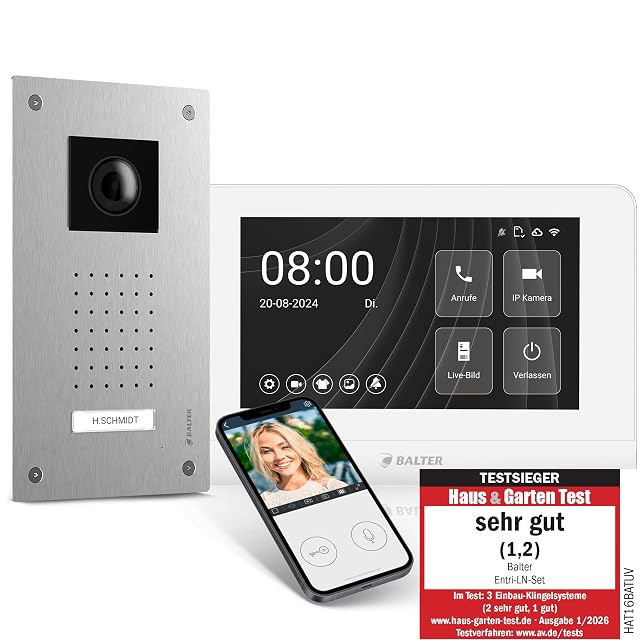
Flush-mounted outdoor unit · 150° Full HD · 7-inch monitor · app · IP54 and IK07 · tamper alarm
A complete single-family set with a flush-mounted outdoor station, a 150° Full HD camera, a 7-inch monitor and app access. Balter states IP54 and IK07 ratings and a tamper alarm on the outdoor unit.
Best for: A new or renovated entrance where a recess can be cut and the outdoor unit should sit flush in the wall.
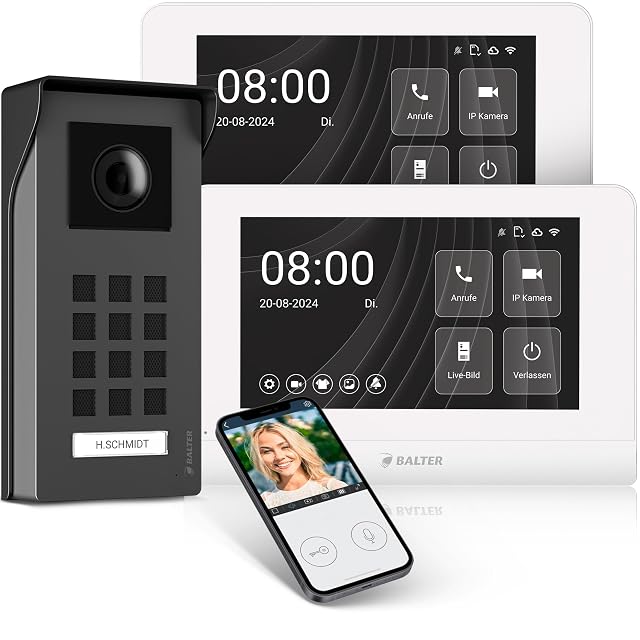
Surface-mounted outdoor unit · 150° Full HD · two 7-inch monitors · app · IP54 and IK07
The surface-mounted version of the ENTRI set, supplied with two 7-inch monitors. Same 150° Full HD camera, same IP54 and IK07 ratings, same tamper alarm — and no recess to cut.
Best for: An existing house with two floors, where cutting into the wall is not on the table.
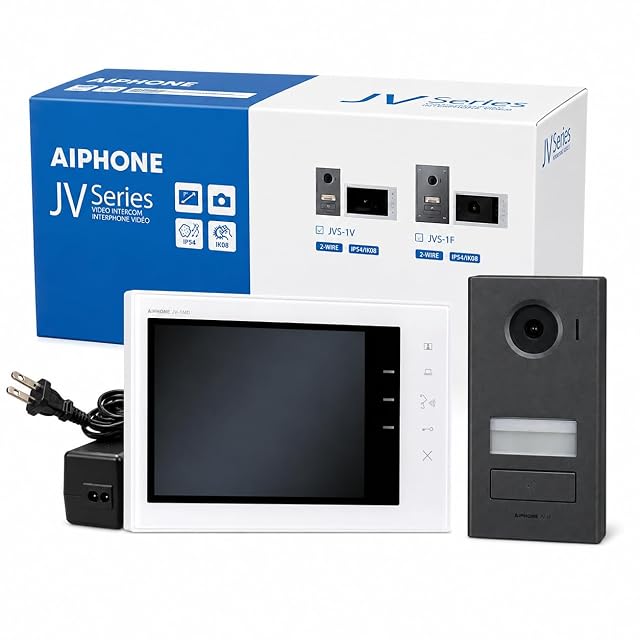
7-inch master station · die-cast aluminum vandal-resistant door station · 24 V DC · 165 ft on 22AWG, 330 ft on 18AWG — the only cable run length on this shelf · 30 stored still images · expandable to 1×2 only · the page lists JV-series parts in its bullets and JO-series parts in its description
The only listing here that tells you how far the cable can run — on a page that names two different product families for the same box.
Best for: A long cable run to a gate, where the distance figure and die-cast construction justify seven hundred dollars