The conclusion Eighteen dollars for the most honestly specified sensor on this shelf: a named radio protocol, a CR2450 in the box, up to two years with the assumption printed — under a hundred detections a day — and a range you can cut to three meters, which fixes the sunlit-floor false alarm at source. It needs a Tapo H100 hub and a 2.4 GHz network, publishes no pet weight and no mounting height, and makes no sound of its own.
What the maker puts in writing
120 degree angle, up to 23 feet (7 meters) · customisable detection range: 3 m (10 ft), 5 m (16 ft), 7 m (23 ft) · adjustable body
Sub-1G Low-Power Wireless protocol to the hub — extended battery life and wider coverage than Wi-Fi
One CR2450 battery (included), up to 2 years, “assuming that motion is detected less than 100 times per day”
REQUIRES a Tapo H100 hub (sold separately) and a secured 2.4 GHz Wi-Fi network
The H100 connects up to 64 sensors and includes a 90dB ringer with 19 tones
3M adhesive or magnetic base
No pet immunity weight. No mounting height.
One hundred times a day
Which is the only published assumption on this shelf.
Two detectors here claim up to two years. Only this one says what that depends
on.
A spare room sees a handful of detections a day. A hallway between a kitchen and a
living room sees several hundred, and the cell lasts a fraction of the time.
Every other two-year claim on this shelf is the same arithmetic with the
assumption removed.
The figure is not long. It is honest.
Three meters, by choice
Which cures a false alarm at source.
This shelf’s introduction explains why a PIR misfires: a radiator warming up,
sunlight tracking across a floor, a cat on a windowsill. Heat sources that move,
mostly at the far end of the field.
Cut the range to three meters and the detector is blind to the sunlit window
eight meters away and still covers the doorway.
The buying tip says placement fixes more false alarms than sensitivity. A range
selector is the same idea in software.
Sub-gigahertz, named
Which nothing else here does.
Sub-1G penetrates walls better than 2.4 GHz and costs less power. That is where
the two years comes from.
The hub holds sixty-four sensors and runs Smart Actions with the network down.
And a magnet
Which sounds trivial and is not.
The first placement is usually wrong. A magnetic base means re-aiming costs
nothing; 3M adhesive means peeling and losing the pad.
Both are supplied.
Availability
On sale at around $18 on the American Amazon store at the time of checking.
Prices and availability are what Keepa reported on the date this page was updated; both move.
Prices quoted in this text were read on October 8, 2026. The live price is at the top of the page.
What reassures, and what does not
Strengths
The only battery figure on this shelf with its assumption published
Selectable 3 m (10 ft), 5 m (16 ft) or 7 m (23 ft) range, which cures false alarms at source
Sub-1G radio named, with better wall penetration than Wi-Fi
A magnetic base, so re-aiming costs nothing
The CR2450 cell is in the box
Eighteen dollars, and the hub takes 64 sensors
Compromises
A Tapo H100 hub is required and not included
A secured 2.4 GHz Wi-Fi network is also required
No pet immunity weight published
No mounting height
120° over 7 m (23 ft) is the shortest full range on this shelf
The sensor is silent: the siren is in the hub
Specifications
Detection
120° up to 23 ft (7 m) — stated, with a customisable range of 3 m (10 ft), 5 m (16 ft) or 7 m (23 ft) and an adjustable body. Being able to shorten the range is the feature here: this shelf's introduction says heat sources move too, and a detector cut to 3 m (10 ft) stops seeing the sunlit window at the far end of the room
Protocol
Sub-1G low-power wireless to the hub — stated, and the only radio protocol named anywhere on this shelf. Sub-gigahertz penetrates walls better than 2.4 GHz and costs less power, which is where the two-year figure comes from
Battery
One CR2450 cell, included, for up to 2 years — stated, ASSUMING motion is detected fewer than 100 times per day. That assumption is published nowhere else on this shelf, and it is the difference between a figure and a claim: a detector in a hallway crossed three hundred times a day will not last two years
Requires
A Tapo H100 hub, sold separately, and a secured 2.4 GHz Wi-Fi network — stated. The hub connects up to 64 sensors, carries a 90 dB ringer with 19 tones, and runs Smart Actions even when the network is disconnected
Pet immunity
Not published as a weight. Sensitivity is adjustable, which is not the same thing — this shelf's introduction and this shelf's own tag both say pet immunity is a stated weight limit, and only at least one of the thirteen detectors here publishes one
Mounting
3M adhesive or a magnetic base, with an adjustable body — stated. The magnetic base is the practical detail: it lets you re-aim the detector after the first false alarm without peeling anything
System
Real-time notifications through the Tapo app within a custom time window, triggering the hub alarm. Smart Actions use the sensor as a precondition for lighting and other Tapo devices
Mounting height
Not published. One detector on this shelf publishes one
Type
A system sensor: it makes no noise of its own, and the hub's 90 dB ringer is the siren
Amazon reference
B0BYH66C3S
EAN
0840030707285
The questions we are asked
Why is the "100 times per day" line worth noticing?
Because it is the only published assumption behind a battery figure anywhere on this shelf. Two detectors here claim up to two years and only this one says what that depends on: fewer than a hundred detections a day. A sensor watching a spare room will see a handful; one in a hallway between a kitchen and a living room will see several hundred, and the cell will last a fraction of the time. Every other two-year claim on this shelf is the same arithmetic with the assumption left out. Read the figure as honest rather than as long.
What does shortening the range to 3 meters (10 ft) achieve?
It removes false alarms you would otherwise fight with sensitivity settings. This shelf's introduction explains why a PIR misfires: a radiator warming up, sunlight tracking across a floor, a cat on a windowsill — all of them heat sources that move, and most of them at the far end of the field. Cutting the range to three meters makes the detector blind to the sunlit window eight meters away while still covering the doorway. This shelf's buying tip says placement fixes more false alarms than sensitivity does; a range selector is the same idea in software.
How much does the hub change the price?
It roughly doubles or triples the entry cost, and then it amortizes. The T100 is eighteen dollars and useless alone; an H100 hub is a separate purchase, carries the 90 dB siren and 19 tones, and connects up to 64 sensors — so the second, fifth and twentieth sensor are eighteen dollars each. Compare the standalone sirens on this shelf at twenty-five dollars, which need nothing and tell nobody, and the wired panel detector here at fourteen fifty, which needs a panel rather than a hub and tells no phone at all.
Against the rest of the motion detectors
Between security devices of the same category and nearby price. Shown: what they all state. A half-filled column says nothing.
Model
Price
Detection
Pet immunity
Tapo T100 motion sensor, Sub-1G protocol, CR2450
$18
120° up to 23 ft (7 m) — stated, with a customisable range of 3 m (10 ft), 5 m (16 ft) or 7 m (23 ft) and an adjustable body. Being able to shorten the range is the feature here: this shelf's introduction says heat sources move too, and a detector cut to 3 m (10 ft) stops seeing the sunlit window at the far end of the room
Not published as a weight. Sensitivity is adjustable, which is not the same thing — this shelf's introduction and this shelf's own tag both say pet immunity is a stated weight limit, and only at least one of the thirteen detectors here publishes one
32 ft (10 m) over a 110° angle, from a dual pyroelectric infrared sensing element — stated. Note what dual means here: two sensing zones in one PIR element, which is how a PIR rejects whole-field temperature changes. It is NOT dual-technology sensing, and nothing on this shelf is
Designed to ignore pets up to 55 lb (25 kg) within the 32 ft area — stated as a weight. It is the ONLY published weight limit on this shelf, and this shelf's introduction is exact about the caveat: the figure assumes the animal stays on the floor, and a cat that climbs is outside the assumption
About 20 ft of infrared detection distance — stated, and stated in the SAME bullet as the 300 ft radio range and distinguished from it. That is the clearest handling of the two figures on this shelf, where three listings lead with a radio distance and one publishes no detection range at all
Not published, in any form. No weight, no sensitivity and no mention of animals
Up to 40 ft, with best performance typically within 10–26 ft — stated, and that qualification is the most useful sentence on this shelf. A PIR's rated maximum is a laboratory figure for a warm body crossing the field; the working range is always shorter, and CPVAN is the only listing here that publishes both numbers
Not published as a weight. CPVAN states PIR sensing that helps identify human movement and reduce unwanted triggers, which is an adjective
What separates the models, in security devices
If price decides: BROJEN BJ-960 wired PIR motion sensor, 12 V DC, NC/NO dry contact, at $14.
What this one costs among motion detectors
Details checked on October 8, 2026.
The buyer this one serves, among security devices
A Tapo household, or any room where the detector needs to see three meters and not seven
What buyers actually choose
Amazon reports what buyers took in the month before this page was last checked: at least 1,000.
The figure is a floor, rounded by Amazon, and read through Keepa — it says what buyers picked, not what a maker claims.
Sources
Specifications: the manufacturer sheet for home security products and the matching Amazon product page. Prices and availability: Keepa. Every figure on this page names its source.
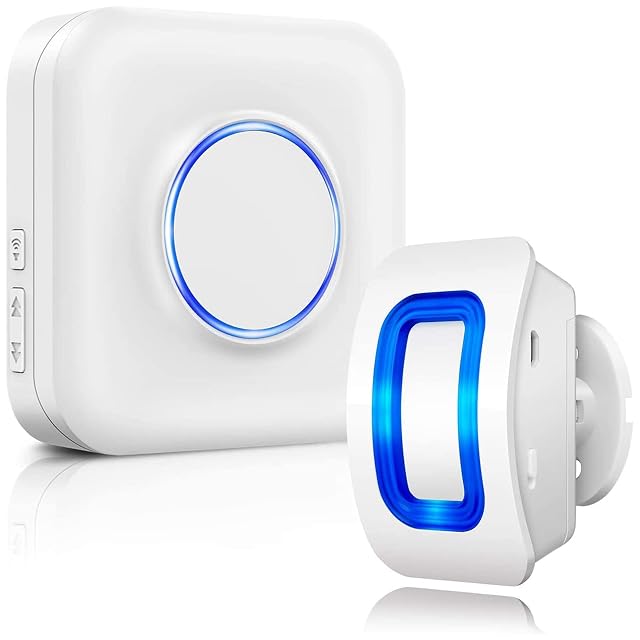
4–5 m (13 to 16 ft) × 110° PIR · 110 dB · 58 melodies, 5 volumes · 20 sensors per receiver
A driveway alarm expandable to twenty sensors on one receiver, with 58 melodies and five volume levels. BITIWEND states a 4 to 5 meter (13.1 to 16.4 ft) detection range across 110 degrees.
Best for: A property with several entrances that should each announce themselves differently.
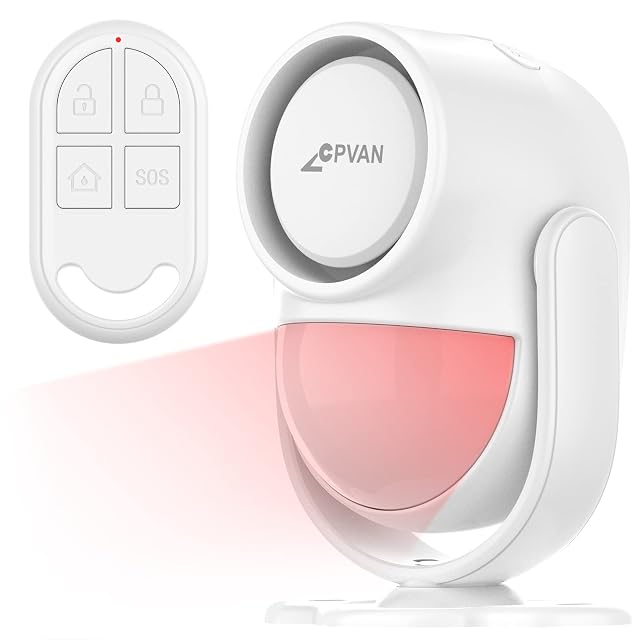
Standalone PIR · 125 dB · remote control · low-battery warning · not compatible with the CP8
A standalone PIR alarm with a remote, from a maker with a decade in detection. CPVAN states a low-battery warning that ticks periodically, and is explicit that the CP2 does not work with its Wi-Fi CP8.
Best for: A shed, garage or storeroom where the alarm should warn you before its battery dies.
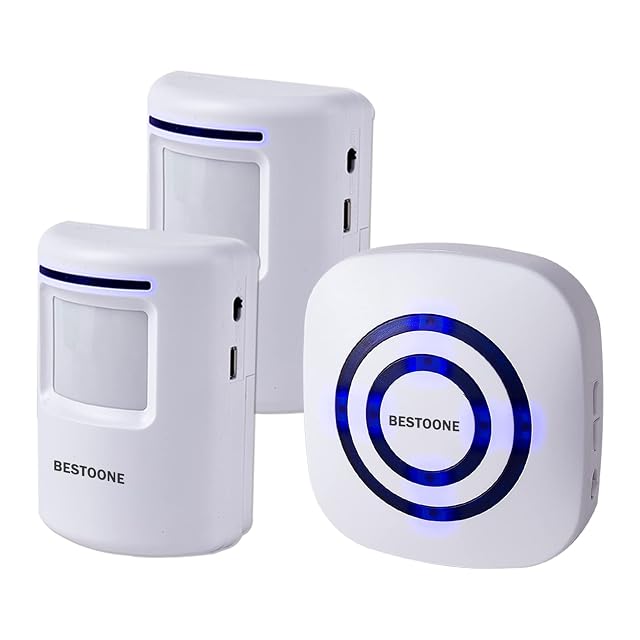
Two sensors and one alarm unit · 300 ft radio to the receiver, detection about 20 ft — both published, and labeled · 38 ringtones with 3 volumes AND A SILENT LED-ONLY MODE, the only silent option on this shelf · 2 sets of mounting screws · AAA not included · not waterproof
The only detector here with a silent mode — a light and no sound — and one of the few that separates its radio range from its detection range on the same page.
Best for: A household with a sleeping baby or a shift worker, where the alert must be visible and not audible