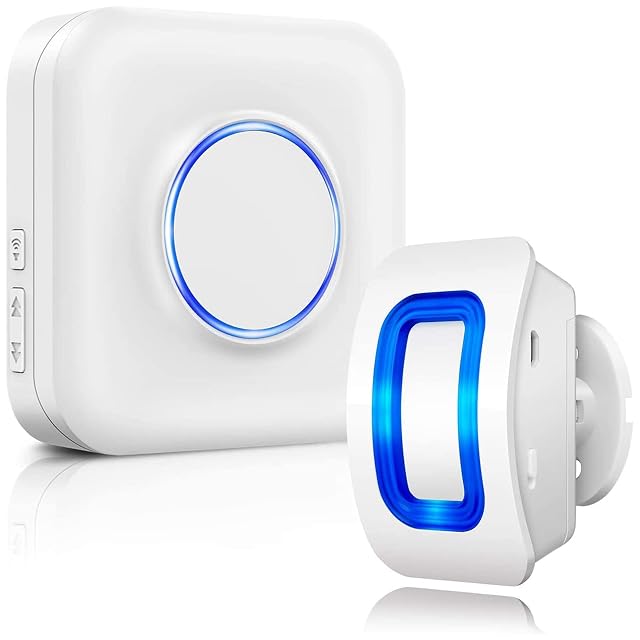
The conclusion Thirty feet over a hundred degrees is the longest reach among the app-based sensors here, with the cell in the box and up to two years claimed — a sound, plainly described sensor for a eufy HomeBase household. Two things to hold against it: the two-year figure carries no published assumption where a rival's does, and pet immunity is a sensitivity dial rather than the stated weight limit this shelf's own tag asks for.
What the maker puts in writing
Detects motion within a 100° field of view up to 30 feet away
The included battery provides up to 2 years of power
Adjustable sensitivity, so it only alerts when humans are in range rather than your playful pet dog or cat
App alerts through the eufy Security app, wherever you are
Optional 24/7 professional monitoring: police, fire and medical response
“This motion sensor is not waterproof.”
No pet weight. No battery type. No protocol. No mounting height.
A dial, where this shelf asks for a weight
Which is the one real gap.
A stated pet immunity weight describes the lens: lower zones masked or weighted so
an animal below a given mass at floor level does not register. It works without
tuning.
Adjustable sensitivity turns the whole detector down. That raises the threshold
for everything — including a person moving slowly, and a person walking straight
at it, which this shelf’s introduction says often fails to trigger even at full
sensitivity.
One detector on this shelf publishes a weight. This offers a dial.
Two years, unqualified
Which is not the same as wrong.
A PIR sleeps and wakes to transmit, so two years on a cell is ordinary for the
category. The question is how often it wakes.
The Tapo sensor on this shelf gives the same two years and adds the condition:
fewer than a hundred detections a day.
Hallway: expect much less. Spare room: plausible.
Thirty feet, which cuts both ways
The longest among the app-based sensors here.
Enough for an open-plan living room from one corner, which is the use eufy
states.
And this shelf’s introduction is the warning: a longer field sees more heat sources,
and sunlight tracking across a floor eight meters away is inside this range.
The Tapo sensor can be cut to three meters for exactly that reason. This one
cannot, so placement does the whole job.
Availability
On sale at around $25 on the American Amazon store at the time of checking.
Prices and availability are what Keepa reported on the date this page was updated; both move.
Prices quoted in this text were read on October 8, 2026. The live price is at the top of the page.
What reassures, and what does not
Strengths
Thirty feet, the longest range among the app-based sensors here
The battery is included and rated up to two years
A published field of view, which three detectors here omit entirely
Sensitivity is adjustable rather than fixed
Optional professional monitoring with police, fire and medical response
Part of a eufy system with no monthly fee for the basics
Compromises
No pet immunity weight: sensitivity is offered instead
The two-year figure has no published assumption behind it
The cell type is not named, so replacement is a guess
No radio protocol named
No mounting height
A eufy HomeBase is needed for it to do anything
Specifications
Detection
100° field of view up to 30 ft — stated as more than enough to secure an entire room. Thirty feet is the longest range among the app-based sensors on this shelf, and a hundred degrees is the narrowest angle published on this shelf, against the hundred and ten of the wired panel detector here and two others at a hundred and twenty
Battery
Included, with up to 2 years of power stated. The cell type is not named and no assumption is published — the Tapo sensor on this shelf gives the same two-year figure and states the condition it rests on, fewer than a hundred detections a day
Pet immunity
NOT published as a weight. eufy states adjustable sensitivity so that it only alerts when humans are in range rather than a playful pet dog or cat — which is a setting, not a limit. This shelf's introduction and this shelf's tag both say pet immunity is a stated weight, and only at least one of the thirteen detectors here gives one
System
App alerts through the eufy Security app as soon as motion is detected, wherever you are, with an optional 24/7 professional monitoring service for police, fire and medical response
Ratings
Explicitly not waterproof, stated in the same bullet as the range. At least four of the thirteen detectors on this shelf say so outright; this shelf is indoor
Protocol
Not published. The sensor talks to a eufy HomeBase over a radio eufy does not name, where one detector on this shelf names its protocol
Mounting height
Not published
Type
A system sensor: silent in itself, with the alert raised by the app and the HomeBase
Dual technology
Not published, and nothing on this shelf is dual-technology
Amazon reference
B083KHPB8R
EAN
0194644180782
The questions we are asked
Is adjustable sensitivity as good as a pet weight?
No, and the difference is worth understanding. A stated pet immunity weight describes the lens: the detector's lower zones are masked or weighted so an animal below a given mass at floor level does not register, which works without tuning. Adjustable sensitivity means turning the whole detector down, which raises the threshold for everything — including a person moving slowly, and including a person walking straight towards it, which this shelf's introduction says often fails to trigger even at full sensitivity. One detector on this shelf publishes a weight. This offers a dial.
Should I believe up to two years?
As a best case, yes. A PIR sleeps most of the time and wakes to transmit, so two years on one cell is ordinary for the category — the question is how often it wakes. The Tapo sensor on this shelf publishes the same two-year figure and adds the assumption: fewer than a hundred detections a day. eufy publishes the figure without the condition, which does not make it wrong, only unqualified. In a hallway, expect considerably less; in a spare room, two years is plausible.
What does 30 feet buy over 23?
The far wall of a larger room, and a false alarm you now have to think about. Thirty feet at a hundred degrees is a big field — enough for an open-plan living room from one corner, which is the use eufy states. This shelf's introduction is the warning: a longer field sees more heat sources, and sunlight tracking across a floor eight meters away is inside this detector's range. The Tapo sensor here can be cut to three meters for exactly that reason; this one cannot, so placement does the whole job.
Against the rest of the motion detectors
Between security devices of the same category and nearby price. Shown: what they all state. A half-filled column says nothing.
Model
Price
Detection
Pet immunity
eufy Security T8910021 motion sensor, 100° × 30 ft
$25
100° field of view up to 30 ft — stated as more than enough to secure an entire room. Thirty feet is the longest range among the app-based sensors on this shelf, and a hundred degrees is the narrowest angle published on this shelf, against the hundred and ten of the wired panel detector here and two others at a hundred and twenty
NOT published as a weight. eufy states adjustable sensitivity so that it only alerts when humans are in range rather than a playful pet dog or cat — which is a setting, not a limit. This shelf's introduction and this shelf's tag both say pet immunity is a stated weight, and only at least one of the thirteen detectors here gives one
About 20 ft of infrared detection distance — stated, and stated in the SAME bullet as the 300 ft radio range and distinguished from it. That is the clearest handling of the two figures on this shelf, where three listings lead with a radio distance and one publishes no detection range at all
Not published, in any form. No weight, no sensitivity and no mention of animals
Up to 40 ft, with best performance typically within 10–26 ft — stated, and that qualification is the most useful sentence on this shelf. A PIR's rated maximum is a laboratory figure for a warm body crossing the field; the working range is always shorter, and CPVAN is the only listing here that publishes both numbers
Not published as a weight. CPVAN states PIR sensing that helps identify human movement and reduce unwanted triggers, which is an adjective
Approximately 16–26 ft over a 120° field of view — stated, with the caveat that range varies with installation height, angle and environment. The body rotates 360° so the field can be aimed down a hallway without moving the mount
Not published as a weight. TECKNET states PIR sensing with intelligent signal analysis to distinguish human movement from environmental interference, which is an adjective where this shelf asks for a figure
What this one costs among motion detectors
Details checked on October 8, 2026.
The buyer this one serves, among security devices
A eufy HomeBase household wanting the longest range on this shelf among the app-based sensors
What buyers actually choose
Amazon reports what buyers took in the month before this page was last checked: at least 100.
The figure is a floor, rounded by Amazon, and read through Keepa — it says what buyers picked, not what a maker claims.
Sources
Specifications: the manufacturer sheet for home security products and the matching Amazon product page. Prices and availability: Keepa. Every figure on this page names its source.
4–5 m (13 to 16 ft) × 110° PIR · 110 dB · 58 melodies, 5 volumes · 20 sensors per receiver
A driveway alarm expandable to twenty sensors on one receiver, with 58 melodies and five volume levels. BITIWEND states a 4 to 5 meter (13.1 to 16.4 ft) detection range across 110 degrees.
Best for: A property with several entrances that should each announce themselves differently.
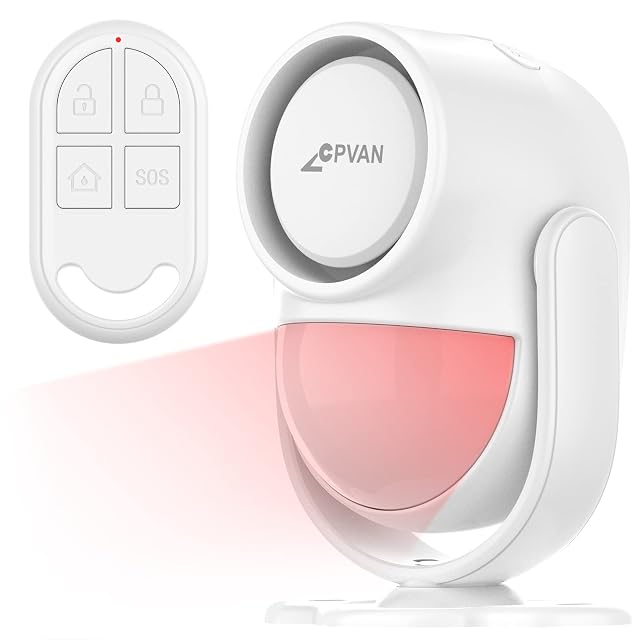
Standalone PIR · 125 dB · remote control · low-battery warning · not compatible with the CP8
A standalone PIR alarm with a remote, from a maker with a decade in detection. CPVAN states a low-battery warning that ticks periodically, and is explicit that the CP2 does not work with its Wi-Fi CP8.
Best for: A shed, garage or storeroom where the alarm should warn you before its battery dies.
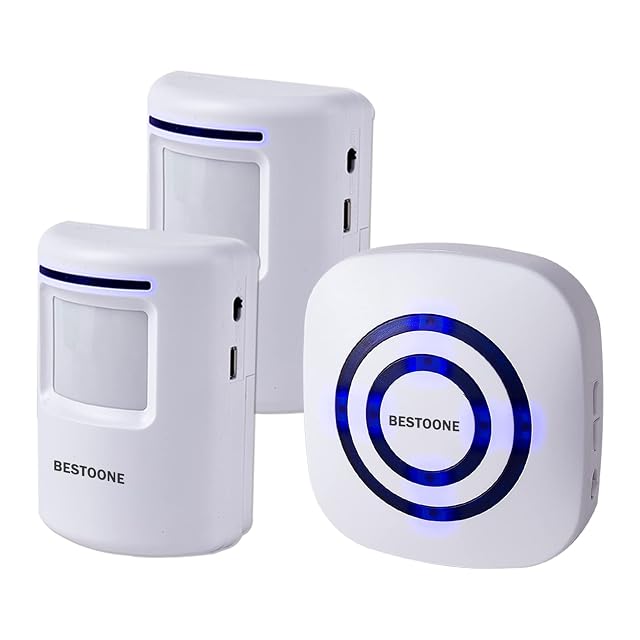
Two sensors and one alarm unit · 300 ft radio to the receiver, detection about 20 ft — both published, and labeled · 38 ringtones with 3 volumes AND A SILENT LED-ONLY MODE, the only silent option on this shelf · 2 sets of mounting screws · AAA not included · not waterproof
The only detector here with a silent mode — a light and no sound — and one of the few that separates its radio range from its detection range on the same page.
Best for: A household with a sleeping baby or a shift worker, where the alert must be visible and not audible