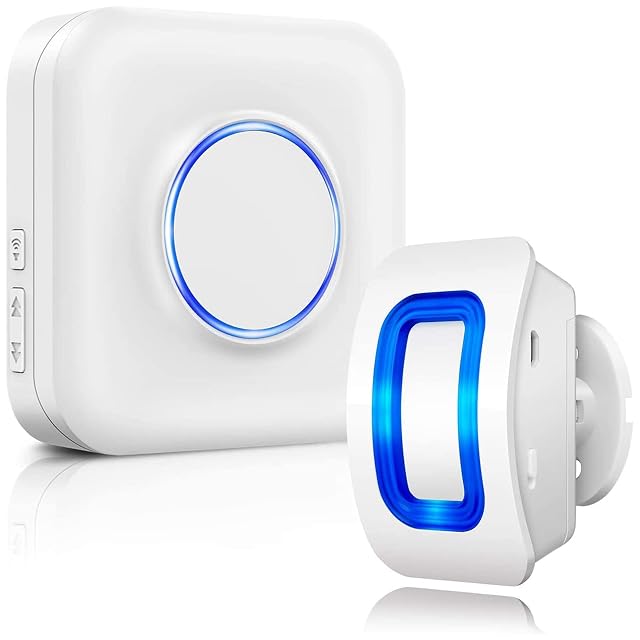
The conclusion Four sensors onto one plug-in chime for thirty-five dollars is the largest set on this shelf, and the 15 to 30 second re-arm delay is a real feature that stops a busy doorway chiming continuously. But the page never says how far a sensor sees — the 328 feet in the title is the radio link to the receiver — and no other listing here leaves that out. It is also explicitly not waterproof, on a product called a driveway alarm.
What the maker puts in writing
4 sensors and 1 receiver · the receiver pairs with multiple sensors, on different floors or rooms
Working range up to 328 feet (100 meters) between receiver and transmitter
38 ringtones with a bright LED light · sensor is wall mountable
Detection time delay between alerts configurable from 15 to 30 seconds
The sensor uses 3 AAA batteries (not included) · the receiver plugs into any standard outlet
“Please note that this not waterproof. Keep it away from rains or cover adequately.”
NO DETECTION RANGE. No field of view. No pet immunity.
Three hundred and twenty-eight feet is the radio
Not the sensing.
It is how far the plug-in chime can be from the sensor. The title says Long Range
Wireless Driveway Alarm, and that is the figure it means.
How far the sensor sees is published nowhere on the page.
Every other PIR on this shelf gives a number: sixteen to twenty-six feet,
twenty-three, thirty, thirty-two, forty.
Assume the same class of device — somewhere around twenty to thirty feet — and
get it from the seller before trusting it on a drive.
A driveway alarm that must stay dry
Which the listing says itself.
Not waterproof. Keep away from rain or cover adequately.
A porch, a carport, under a soffit, inside a closed garage: fine. A gatepost in
the open: not through a winter.
And mounting it indoors pointing out is not the workaround — another listing on
this shelf states plainly that a PIR cannot detect through glass.
Fifteen to thirty seconds
Which is the real feature, and the only one of its kind here.
Without a re-arm delay, every crossing chimes. A delivery driver walking back and
forth to a van produces a dozen chimes in a minute.
Fifteen to thirty seconds means one chime, then silence until it expires.
The two 125 dB sirens on this shelf publish a siren duration instead — how long it
sounds, not how long before it sounds again.
Twelve AAA cells
Three per sensor, four sensors, none supplied.
The receiver plugs in, so the chime needs nothing.
Buy the cells with it.
Availability
On sale at around $35 on the American Amazon store at the time of checking.
Prices and availability are what Keepa reported on the date this page was updated; both move.
Prices quoted in this text were read on October 8, 2026. The live price is at the top of the page.
What reassures, and what does not
Strengths
Four sensors and a receiver, the largest set here
The receiver plugs in, so only the sensors need cells
A 15–30 second re-arm delay, which stops continuous chiming
Sensors can be split across floors onto one chime
328 ft of radio range, enough to reach a back room from a gate
Thirty-eight tones, so different doors can sound different
Compromises
No detection range published at all
No field of view angle either
Twelve AAA cells needed and none supplied
Not waterproof, on a product called a driveway alarm
No pet immunity in any form
The headline 328 feet is the radio link, not the sensing distance
Specifications
Supplied
Four sensors and one receiver, stated, with the receiver able to pair with multiple sensors and the sensors installable on different floors or rooms. It is the largest set on this shelf: the next is two sensors and a receiver
Detection
NOT PUBLISHED. No detection range and no field of view appears anywhere on this listing, which is unique on this shelf — six of the seven publish a range and four publish an angle. The only distance given is the radio link
Range
328 ft (100 m) between receiver and transmitter — stated, and this is a RADIO range, not a sensing range. The title reads Long Range Wireless Driveway Alarm and the figure is how far the chime can be from the sensor, not how far the sensor can see
Trigger
The detection time delay between alerts is configurable from 15 to 30 seconds — stated. That is the re-arm interval: a second crossing within the delay does not chime again, which stops a doorway chiming continuously while a delivery is unloaded
Modes
38 ringtones with a bright LED light — stated. Volume levels are not specified on this listing
Power
Three AAA cells per sensor, stated NOT included — twelve cells across four sensors. The receiver plugs into a standard outlet, so only the sensors need cells
Mounting
Wall mountable, wire-free, stated. Named for front doors, window frames, driveways and walking paths
Ratings
Explicitly not waterproof: keep it away from rain or cover it adequately, stated — on a product named a driveway alarm, which is the tension on this listing
Pet immunity
Not published, in any form. No weight, no sensitivity setting and no mention of animals
Amazon reference
B07PLSDMT6
EAN
0680044748382
The questions we are asked
How far will it actually see?
The listing does not say, and that is the finding. The 328 feet in the title and the first bullet is the distance between the sensor and the plug-in receiver — a radio link — and no sensing distance or field of view appears anywhere on the page. Every other PIR on this shelf publishes something: 16 to 26 feet, 23 feet, 30 feet, 32 feet, 40 feet. Treat this one as the same class of device, which means somewhere around twenty to thirty feet in practice, and get the figure from the seller before relying on it to cover a drive.
Can I really use it on a driveway?
Only under cover, and the listing says so in its own third bullet: this is not waterproof, keep it away from rain or cover adequately. That sits awkwardly against the product name. A PIR in a porch, a carport, under a soffit or inside a window-less garage will work; one on a gatepost in the open will not last a winter. And the glass problem applies — another listing on this shelf states that a PIR cannot detect through windows, so mounting it indoors pointing out is not a workaround.
What does the 15 to 30 second delay do?
It stops a busy doorway becoming unbearable. Without a re-arm delay, every crossing chimes, so a delivery driver walking back and forth to a van produces a dozen chimes in a minute. Fifteen to thirty seconds means one chime, then silence until the interval expires. It is a configurable figure on this listing and it is the only re-arm interval published on this shelf — the two 125 dB sirens here publish a siren duration instead, which is a different thing: how long it sounds, not how long before it will sound again.
Against the rest of the motion detectors
Between security devices of the same category and nearby price. Shown: what they all state. A half-filled column says nothing.
Model
Price
Detection
Pet immunity
seanme Long range wireless driveway alarm, 4 sensors and 1 receiver
$35
NOT PUBLISHED. No detection range and no field of view appears anywhere on this listing, which is unique on this shelf — six of the seven publish a range and four publish an angle. The only distance given is the radio link
Not published, in any form. No weight, no sensitivity setting and no mention of animals
About 20 ft of infrared detection distance — stated, and stated in the SAME bullet as the 300 ft radio range and distinguished from it. That is the clearest handling of the two figures on this shelf, where three listings lead with a radio distance and one publishes no detection range at all
Not published, in any form. No weight, no sensitivity and no mention of animals
Up to 40 ft, with best performance typically within 10–26 ft — stated, and that qualification is the most useful sentence on this shelf. A PIR's rated maximum is a laboratory figure for a warm body crossing the field; the working range is always shorter, and CPVAN is the only listing here that publishes both numbers
Not published as a weight. CPVAN states PIR sensing that helps identify human movement and reduce unwanted triggers, which is an adjective
100° field of view up to 30 ft — stated as more than enough to secure an entire room. Thirty feet is the longest range among the app-based sensors on this shelf, and a hundred degrees is the narrowest angle published on this shelf, against the hundred and ten of the wired panel detector here and two others at a hundred and twenty
NOT published as a weight. eufy states adjustable sensitivity so that it only alerts when humans are in range rather than a playful pet dog or cat — which is a setting, not a limit. This shelf's introduction and this shelf's tag both say pet immunity is a stated weight, and only at least one of the thirteen detectors here gives one
What separates the models, in security devices
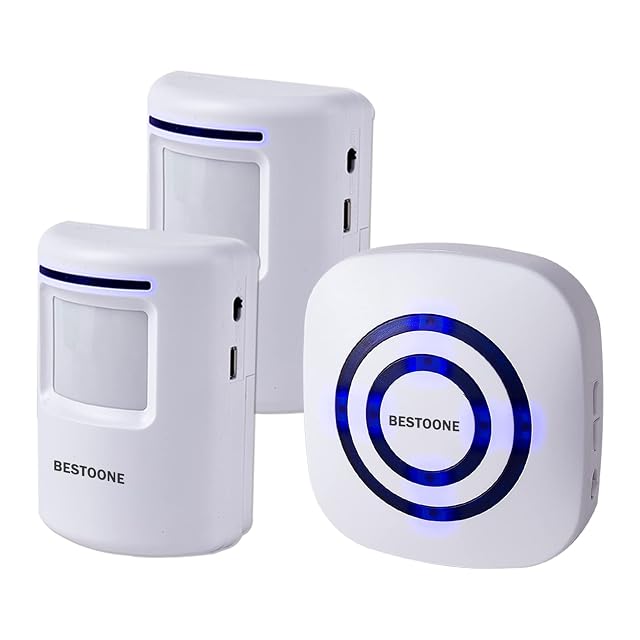
If price decides: BESTOONE MSA-21 motion sensor alarm, 2 sensors and 1 receiver, at $25.
What this one costs among motion detectors
Details checked on October 8, 2026.
The buyer this one serves, among security devices
A shop or a house where four doorways need to chime in one room, and the sensors sit close to what they watch
What buyers actually choose
Amazon reports what buyers took in the month before this page was last checked: at least 100.
The figure is a floor, rounded by Amazon, and read through Keepa — it says what buyers picked, not what a maker claims.
Sources
Specifications: the manufacturer sheet for home security products and the matching Amazon product page. Prices and availability: Keepa. Every figure on this page names its source.
4–5 m (13 to 16 ft) × 110° PIR · 110 dB · 58 melodies, 5 volumes · 20 sensors per receiver
A driveway alarm expandable to twenty sensors on one receiver, with 58 melodies and five volume levels. BITIWEND states a 4 to 5 meter (13.1 to 16.4 ft) detection range across 110 degrees.
Best for: A property with several entrances that should each announce themselves differently.
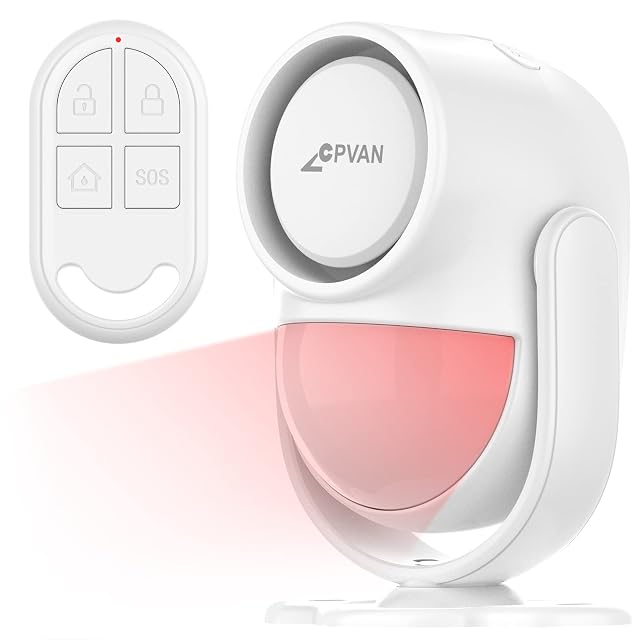
Standalone PIR · 125 dB · remote control · low-battery warning · not compatible with the CP8
A standalone PIR alarm with a remote, from a maker with a decade in detection. CPVAN states a low-battery warning that ticks periodically, and is explicit that the CP2 does not work with its Wi-Fi CP8.
Best for: A shed, garage or storeroom where the alarm should warn you before its battery dies.
Two sensors and one alarm unit · 300 ft radio to the receiver, detection about 20 ft — both published, and labeled · 38 ringtones with 3 volumes AND A SILENT LED-ONLY MODE, the only silent option on this shelf · 2 sets of mounting screws · AAA not included · not waterproof
The only detector here with a silent mode — a light and no sound — and one of the few that separates its radio range from its detection range on the same page.
Best for: A household with a sleeping baby or a shift worker, where the alert must be visible and not audible