The conclusion The only padlock on this shelf that publishes the figure this shelf's introduction puts first — a 7 mm (0.28 in) hardened shackle, 38 mm (1.50 in) long and 16 mm (0.63 in) wide — plus three bodies on two keys and a lifetime guarantee for twenty-one dollars. Seven millimeters is modest and the extended shackle is the most exposed here, so read the buying tip: this is the right lock for a hasp that needs reach, and the wrong one where a shroud would fit. One bullet is lifted from a deadbolt listing.
What the maker puts in writing
9/32 in. (7 mm) diameter shackle, 1-1/2 in. (38 mm) length, 5/8 in. (16 mm) width, hardened steel
1-9/16 in. (40 mm) wide laminated steel body
4-pin cylinder for pick resistance · dual ball bearing locking for pry resistance
“Extended shackle for application flexibility”
Three padlocks with two keys; both keys open all locks · lifetime guarantee
Bullet 1: “Measure your door’s backset, cross bore and thickness to ensure you find the right fit.”
No shrouding. No cut strength figure.
Seven millimeters, published
Which no other lock on this shelf does.
This shelf’s introduction calls diameter in millimeters the first specification that
matters. At least six of the fourteen padlocks here omit it.
Seven millimeters of hardened steel resists a hacksaw for a useful number of
minutes, and is within range of a mid-sized bolt cutter.
That is a judgment you can only make because the figure is on the page.
And then it advertises exposure
“Extended shackle for application flexibility.”
This shelf’s introduction lists how much of the shackle is exposed to a bolt cutter
as one of three things that matter, and calls a closed shackle the single biggest
step up in this family.
Thirty-eight millimeters is the most exposed shackle on this shelf.
It is also the only one that will pass through a thick hasp, a chain link or two
staples.
The buying tip settles it: match the padlock to the hasp. A hasp that needs
38 mm (1.50 in) needs 38 mm (1.50 in).
A bullet from a different product
Backset. Cross bore. Door thickness.
Those are the three measurements taken before fitting a deadbolt into a door.
A padlock has no backset, no cross bore, and goes through no door.
The sentence has been copied from a door lock listing. Worth noticing only
because the rest of this page is the most precise on the shelf.
Four pins
Which is the entry-level count.
Six is common on security-rated cylinders. Four resists a casual pick and not a
practiced one.
Dual ball bearing locking is the better half of this specification: it is what
resists prying and hammering at the shackle heel.
Availability
On sale at around $21 on the American Amazon store at the time of checking.
Prices and availability are what Keepa reported on the date this page was updated; both move.
Prices quoted in this text were read on October 8, 2026. The live price is at the top of the page.
What reassures, and what does not
Strengths
A published shackle diameter: 7 mm (0.28 in), which no other lock here gives
Shackle length and width published too
Three locks, two keys, all keyed alike
A laminated steel body rather than a die-casting
Dual ball bearing locking against prying
A lifetime guarantee, the only one on this shelf
Compromises
An extended shackle is the most exposed on this shelf
Seven millimeters is a modest section for a bolt cutter
A 4-pin cylinder, where six is common on security locks
A plated steel body on a weather-facing gate
The first bullet gives door lock measurements a padlock does not have
No cut strength figure and no shrouding
Specifications
Shackle
9/32 in (7 mm) diameter, 1-1/2 in (38 mm) long and 5/8 in (16 mm) wide, in hardened steel — stated. It is the ONLY shackle diameter published on this shelf, and this shelf's introduction calls diameter in millimeters the first specification that matters. Seven millimeters is a modest section: enough to resist a hacksaw for a while, within reach of a decent bolt cutter
Shrouding
NONE, and the opposite is advertised: an extended shackle for application flexibility, stated as a benefit. This shelf's introduction says how much of the shackle is exposed to a bolt cutter is one of three things that matter and calls a closed shackle the single biggest step up in this family. A 38 mm (1.50 in) extended shackle is the most exposed on this shelf
Body
1-9/16 in (40 mm) wide laminated steel — stacked and riveted plates rather than a casting, which resists a hammer better than die-cast zinc
Cylinder
A 4-pin cylinder for pick resistance, with dual ball bearing locking for pry resistance — stated. Four pins is the entry-level count; six is common on security-rated locks
Supplied
Three padlocks with two keys, and both keys open all three — stated. Keyed alike out of the box, which at least three of the fourteen padlocks on this shelf offer
Weather
Stated for indoor and outdoor use, with a laminated steel body. Laminated steel is plated, and this shelf's introduction warns that a plated steel body on a weather-facing gate will seize by spring. The brass lock on this shelf is the one that does not
Guarantee
A lifetime guarantee, stated — the only lifetime guarantee on this shelf
Fitting note
The first bullet reads: measure your door's backset, cross bore and thickness to ensure you find the right fit. Backset, cross bore and door thickness are DOOR LOCK measurements. A padlock has none of them, and the sentence belongs to a deadbolt listing
Cut strength
Not published as a figure. One lock on this shelf publishes one
Amazon reference
B0009V1WIY
EAN
0071649066177
The questions we are asked
Is a 7 mm (0.28 in) shackle enough?
For a shed, a toolbox or a gate where the lock is a deterrent, yes; against a determined attack with the right tool, no — and the value of this listing is that it lets you make that judgment at all. Seven millimeters of hardened steel resists a hacksaw for a useful number of minutes and is within range of a mid-sized bolt cutter. At least six of the fourteen padlocks on this shelf publish no diameter whatever, so with them you cannot even ask the question. This shelf's introduction puts diameter first for exactly this reason.
What is an extended shackle for, and what does it cost me?
Reach, at the price of exposure. A 38 mm (1.50 in) shackle passes through a thick hasp, a chain link or two staples that a short shackle will not span, which is what Master Lock means by application flexibility — and it is a real reason to buy this rather than a shrouded lock that will not fit. The cost is that this shelf's introduction names shackle exposure as one of three things that matter and calls a closed shackle the biggest available step up. The buying tip resolves it: match the padlock to the hasp. A hasp that needs 38 mm (1.50 in) needs 38 mm (1.50 in).
Why does the first bullet talk about door backsets?
Because it does not belong to this product. Backset, cross bore and door thickness are the three measurements you take before fitting a deadbolt into a door — a padlock has no backset, no cross bore and goes through no door. The sentence has been copied from a door lock listing and left in place on a padlock page. Nothing else on the listing is affected by it, and it is worth noticing because the rest of this page is unusually precise: it is the only lock here that dimensions its own shackle.
Against the rest of the padlocks
Between security devices of the same category and nearby price. Shown: what they all state. A half-filled column says nothing.
55 mm (2.2 in) — stated, and the largest body on this shelf, where the others run 40 to 80 mm (1.57 to 3.15 in) with most at 40. A bigger body means bigger dials and more metal around the mechanism
If price decides: SEPOX Large outdoor combination padlock, 2.2 in, 4 big resettable digits, 2-pack, at $19.
What this one costs among padlocks
Details checked on October 8, 2026.
The buyer this one serves, among security devices
Three gates, sheds or toolboxes on one key, where the hasp needs a long shackle to reach through
What buyers actually choose
Amazon reports what buyers took in the month before this page was last checked: at least 300.
The figure is a floor, rounded by Amazon, and read through Keepa — it says what buyers picked, not what a maker claims.
Sources
Specifications: the manufacturer sheet for home security products and the matching Amazon product page. Prices and availability: Keepa. Every figure on this page names its source.
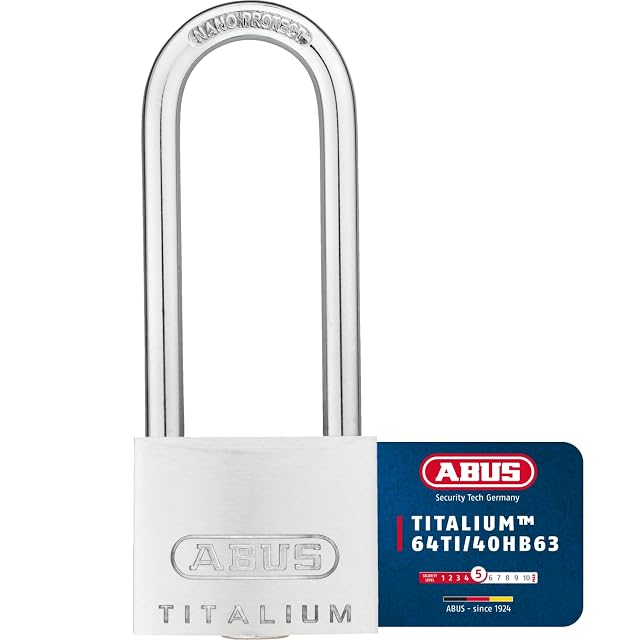
6.5 mm (0.26 in) shackle · 63 mm (2.48 in) high shackle · Titalium body, 107 g (3.8 oz) · paracentric key · ABUS level 5
ABUS's everyday Titalium padlock with a high 63 mm (2.48 in) shackle: a special-aluminum body at 107 grams, a hardened steel shackle, a paracentric keyway against manipulation, and double shackle locking.
Best for: Doors, lockers and tool boxes where the lock is carried, opened often, and left outdoors between times.
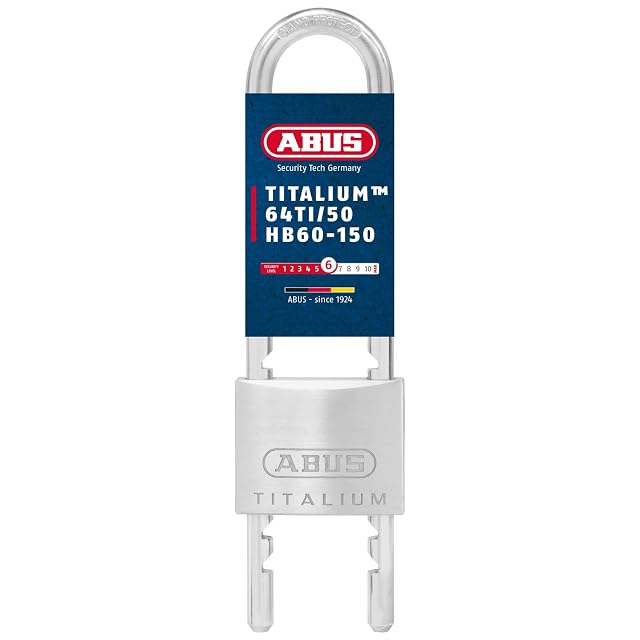
8 mm (0.31 in) shackle · extendable 60–150 mm (2.36 to 5.91 in) shackle · 281 g (9.9 oz) · paracentric key · ABUS level 6
ABUS's cellar padlock: an 8 mm (0.31 in) hardened shackle that extends from 60 to 150 mm (2.36 to 5.91 in), in a 281 g (9.9 oz) Titalium body, with a paracentric keyway and double shackle locking.
Best for: A hasp or a bracket where nothing standard reaches — cellar doors, old gates, awkward ironwork.
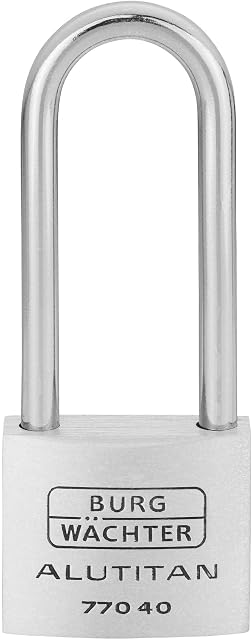
6.9 mm (0.27 in) shackle · aluminum body · high shackle, 22.3 mm (0.88 in) wide · double locking · 2 keys
A light aluminum-bodied padlock with a 6.9 mm (0.27 in) hardened shackle and a high shackle 22.3 mm (0.88 in) wide. BURG-WÄCHTER states double shackle locking and two keys.
Best for: A gate latch or a barrier where the shackle must reach through something thick, and the value behind it is modest.