The conclusion The biggest body and the biggest digits on this shelf, with a sealed core against grit — and those are the right features for a shared gate opened with cold hands, because a lock that is awkward to use gets left unlocked. The specification is the problem: the shackle is not described at all, no material, no diameter, no hardening, on a shelf whose whole premise is that the shackle is what gets cut. And "uncuttable" is both untrue and aimed at the wrong part.
What the maker puts in writing
Large outdoor combination padlock 2.2”, 2-pack
Resettable 4-digit combo, smooth big wheels, big easy-to-read digits
“Weatherproof & Water Resistant: a sealed core shrugs off rain dust snow and frost”
“Strong Uncuttable 55mm (2.17 in) Body”
For gates, fences, sheds, school lockers, toolboxes and storage
THE SHACKLE IS NOT DESCRIBED. No material. No diameter. No hardening. No
shrouding.
Uncuttable, and pointed at the wrong part
Twice unhelpful.
This shelf’s introduction opens on the premise: every padlock is attacked at the
shackle, because the shackle is the slim exposed loop a cutter can reach.
The body is a solid block. Nobody bothers with it.
So describing a 55 mm (2.17 in) body as uncuttable is a claim that is not true of any metal
given a grinder, about a part that was never the target.
What this page owes a reader is the shackle material and diameter. Neither
appears.
Big digits are a real argument
And not about security at all.
The commonest reason a combination lock gets replaced is that nobody can work it.
Small stiff wheels, with gloves, in the dark, in the rain, with older eyes. A gate
lock that is annoying to open gets left unlocked, which defeats it entirely.
Fifty-five millimeters gives room for large wheels and large numerals. The sealed
core keeps them from stiffening with grit.
For a shared gate, that is the purchase.
Against the other combination lock here
Which publishes more.
That one: 40 mm (1.57 in), a round shielded design stated to minimize shackle exposure, and
a stated cut strength up to 4000 lb, at twelve dollars fifty-nine.
This one: 55 mm (2.17 in), big digits, a sealed core, nine dollars forty-five in a pair, and
silence about the shackle.
Locker: the shielded one. Gate opened daily with cold hands: this one.
Availability
On sale at around $19 on the American Amazon store at the time of checking.
Prices and availability are what Keepa reported on the date this page was updated; both move.
Prices quoted in this text were read on October 8, 2026. The live price is at the top of the page.
What reassures, and what does not
Strengths
A 55 mm (2.17 in) body, the largest on this shelf
Big, easy-to-read digits on large wheels
A sealed core against rain, dust, snow and frost
A resettable code, so no key exists
Two locks for nineteen dollars
Keyless access for a gate several people use
Compromises
The shackle is not described at all: no material, no diameter, no hardening
"Uncuttable" is false, and it describes the wrong part
No shrouding and no closed shackle
A forgotten code is a cut-off lock
Nine dollars forty-five a lock, against six eighty for the brass pair here
Five bullets, none of which contains a shackle specification
Specifications
Body
55 mm (2.2 in) — stated, and the largest body on this shelf, where the others run 40 to 80 mm (1.57 to 3.15 in) with most at 40. A bigger body means bigger dials and more metal around the mechanism
Cylinder
None: four big resettable digits on smooth large wheels, with a code you set. Big digits are the practical argument — a combination read and turned with cold or wet hands is where a small-dialed lock fails
Weather
A sealed core stated to shrug off rain, dust, snow and frost and stay smooth all year outdoors. The seal is what matters on a combination lock, because the failure mode is a wheel pack that stiffens with grit rather than a corroded shackle
Shackle
NOT DESCRIBED. No material, no diameter, no length and no hardening claim appears anywhere on the page. This shelf's introduction says every padlock is attacked at the shackle and that the specifications that matter describe it; this listing describes the body instead
Claim
"Strong Uncuttable 55mm (2.17 in) Body", stated. No padlock is uncuttable, and the claim is about the BODY — which is not the part that gets cut. The entire premise of this shelf is that the attack lands on the shackle, and the shackle is the one thing this page does not mention
Shrouding
Not published. No closed shackle and no shield
Supplied
Two padlocks, stated, at eighteen dollars eighty-nine — about nine dollars forty-five each
Keys
Not applicable. A resettable code means nothing to lose and nothing to copy, and a forgotten code means a cut-off lock
Stated for
Gates, fences, sheds, school lockers, toolboxes, storage and travel bags
Amazon reference
B0DG4QJ99P
EAN
0607376358096
The questions we are asked
Is anything uncuttable?
No, and the claim is pointed at the wrong part. This shelf's introduction opens on the premise that every padlock is attacked at the shackle, because the shackle is the slim exposed loop a cutter can reach — the body is a solid block nobody bothers with. Describing a 55 mm (2.17 in) body as uncuttable is therefore doubly unhelpful: it is not true of any metal given a grinder, and the body was never the target. What a reader needs from this page is the shackle material and diameter, and neither appears.
Why are big digits worth something?
Because the commonest reason a combination lock gets replaced is that nobody can work it. A four-digit code on small, stiff wheels is awkward with gloves, in the dark, in the rain and with older eyes — and a gate lock that is annoying to open gets left unlocked, which defeats it entirely. A 55 mm (2.17 in) body gives room for large wheels and large numerals, and SEPOX pairs that with a sealed core so the wheels do not stiffen with grit. For a shared gate, that is a real argument and it is not about security.
What should I compare it against?
The other combination lock on this shelf, which publishes more. That one is 40 mm (1.57 in) with a round shielded design stated to minimize shackle exposure and a stated shackle cut strength up to 4000 pounds, at twelve dollars fifty-nine. This one is 55 mm (2.17 in) with big digits and a sealed core, at nine dollars forty-five a lock in a pair, and says nothing about its shackle. For a locker, the shielded one; for a gate opened daily with cold hands, this one, and read the uncuttable claim as copywriting.
Against the rest of the padlocks
Between security devices of the same category and nearby price. Shown: what they all state. A half-filled column says nothing.
Model
Price
Body
Cylinder
Weather
Shrouding
SEPOX Large outdoor combination padlock, 2.2 in, 4 big resettable digits, 2-pack
$19
55 mm (2.2 in) — stated, and the largest body on this shelf, where the others run 40 to 80 mm (1.57 to 3.15 in) with most at 40. A bigger body means bigger dials and more metal around the mechanism
None: four big resettable digits on smooth large wheels, with a code you set. Big digits are the practical argument — a combination read and turned with cold or wet hands is where a small-dialed lock fails
A sealed core stated to shrug off rain, dust, snow and frost and stay smooth all year outdoors. The seal is what matters on a combination lock, because the failure mode is a wheel pack that stiffens with grit rather than a corroded shackle
1-9/16 in (40 mm) wide laminated steel — stacked and riveted plates rather than a casting, which resists a hammer better than die-cast zinc
A 4-pin cylinder for pick resistance, with dual ball bearing locking for pry resistance — stated. Four pins is the entry-level count; six is common on security-rated locks
Stated for indoor and outdoor use, with a laminated steel body. Laminated steel is plated, and this shelf's introduction warns that a plated steel body on a weather-facing gate will seize by spring. The brass lock on this shelf is the one that does not
NONE, and the opposite is advertised: an extended shackle for application flexibility, stated as a benefit. This shelf's introduction says how much of the shackle is exposed to a bolt cutter is one of three things that matter and calls a closed shackle the single biggest step up in this family. A 38 mm (1.50 in) extended shackle is the most exposed on this shelf
40 mm (1.57 in), stated in the title. No material and no construction — not laminated, not die-cast, not brass
Not published. No pin count, no pick resistance claim, no mechanism
Stated rust and corrosion proof, ideal for indoor and outdoor use, with no material or coating named. This shelf's introduction asks for brass or stainless rather than plated steel, and this page names neither
Shrouded, stated in the title. It is one of three shielded designs on this shelf and this shelf's introduction calls a closed-shackle design the single biggest step up available in this family — which makes it the most valuable word on this page, and the only structural claim on it
Zinc alloy, stated. Die-cast zinc does not rust and is softer than steel
None: a resettable five-LETTER word combination, which is the only letter code on this shelf. Five letters allows a real word, which is why it is here — a memorable code is a code nobody writes on the gatepost
Not stated. The listing names outdoor uses — garden gates, motorcycles — and publishes no IP rating, no coating and no corrosion claim
Not applicable, and worth stating: there is no body to shroud a cable. The whole 14 in span is reachable
What separates the models, in security devices
If price decides: Mindy 40 mm shrouded hardened keyed padlock, 3 keys, at $14.
What this one costs among padlocks
Details checked on October 8, 2026.
The buyer this one serves, among security devices
Cold or wet hands on a gate, where big wheels and a sealed core matter more than the paperwork
What buyers actually choose
Amazon reports what buyers took in the month before this page was last checked: at least 50.
The figure is a floor, rounded by Amazon, and read through Keepa — it says what buyers picked, not what a maker claims.
Sources
Specifications: the manufacturer sheet for home security products and the matching Amazon product page. Prices and availability: Keepa. Every figure on this page names its source.
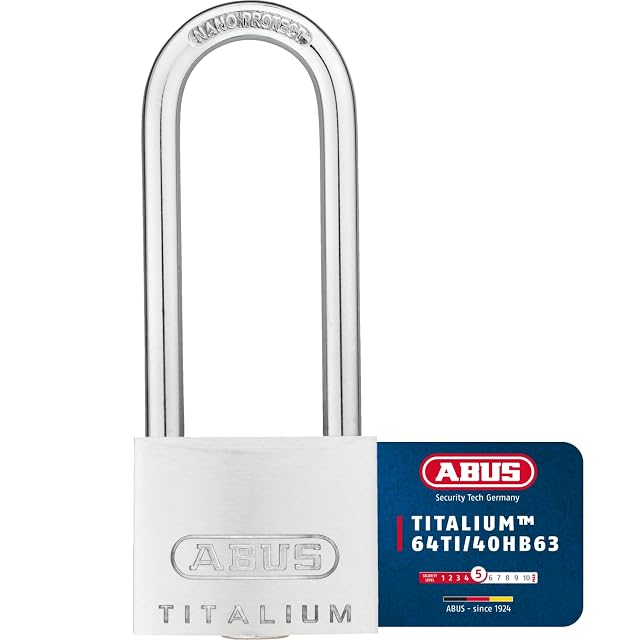
6.5 mm (0.26 in) shackle · 63 mm (2.48 in) high shackle · Titalium body, 107 g (3.8 oz) · paracentric key · ABUS level 5
ABUS's everyday Titalium padlock with a high 63 mm (2.48 in) shackle: a special-aluminum body at 107 grams, a hardened steel shackle, a paracentric keyway against manipulation, and double shackle locking.
Best for: Doors, lockers and tool boxes where the lock is carried, opened often, and left outdoors between times.
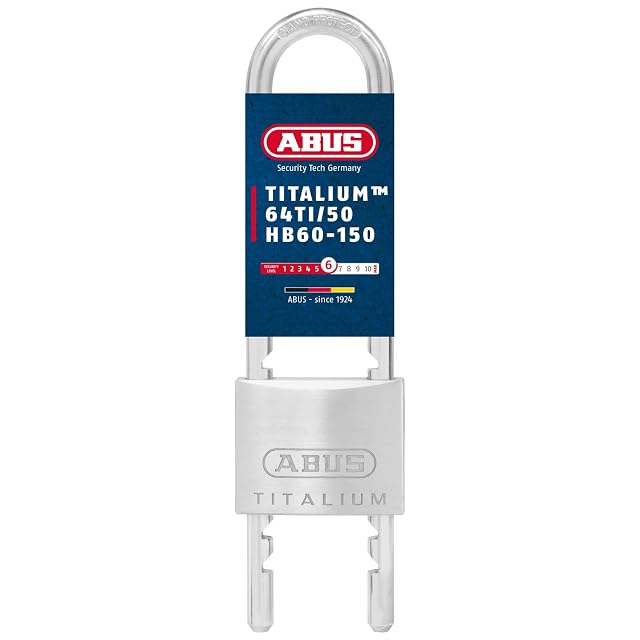
8 mm (0.31 in) shackle · extendable 60–150 mm (2.36 to 5.91 in) shackle · 281 g (9.9 oz) · paracentric key · ABUS level 6
ABUS's cellar padlock: an 8 mm (0.31 in) hardened shackle that extends from 60 to 150 mm (2.36 to 5.91 in), in a 281 g (9.9 oz) Titalium body, with a paracentric keyway and double shackle locking.
Best for: A hasp or a bracket where nothing standard reaches — cellar doors, old gates, awkward ironwork.
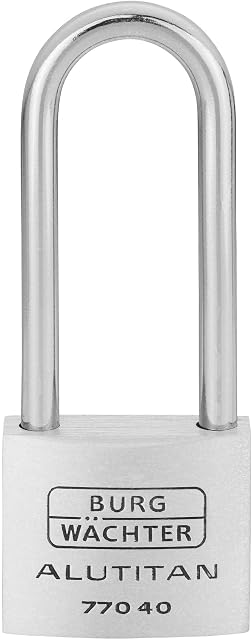
6.9 mm (0.27 in) shackle · aluminum body · high shackle, 22.3 mm (0.88 in) wide · double locking · 2 keys
A light aluminum-bodied padlock with a 6.9 mm (0.27 in) hardened shackle and a high shackle 22.3 mm (0.88 in) wide. BURG-WÄCHTER states double shackle locking and two keys.
Best for: A gate latch or a barrier where the shackle must reach through something thick, and the value behind it is modest.