The conclusion The kit for a household rather than for one phone. The keypad is the reason to choose it.
Alarm kits are usually reviewed on sensor counts. In daily use, the difference that matters most is whether there is a keypad, and this kit has one.
Why that decides how the system is used
An alarm controlled only by an app is controlled only by the people with the
app. A cleaner, a visitor, an older relative or a child cannot disarm it, so
the household stops arming it — and an alarm nobody arms protects nothing.
A keypad restores it to being the house’s system rather than one person’s.
Where to put it
Inside the entry path, not at the door. The entry delay you configure is the
window in which somebody can find and destroy the panel, and a keypad on the
wall beside the front door is where anybody looks first. Round a corner, or
in a hallway a few meters in, changes that.
The ratio
Eight contacts and two motion detectors. Contacts report an opening, which is
earlier and less ambiguous than motion; motion covers the volume between them.
Two to eight is a sensible balance for a normal house, and the reverse — many motion detectors and few contacts — is more exposed to false alarms, motion being more ambiguous.
What the listing adds
The base station sounds a 100 dB alarm and alerts your phone. The app offers Home, Away and Disarm modes with schedules; the keypad has a panic button and accepts several codes. The system only supports 2.4 GHz Wi-Fi, and everything mounts without tools, by the supplied adhesive or by screws.
Who it suits
A household with several people, at least one of whom will not install an app.
Availability
Not found on the American Amazon store, where the buy link falls back to a local search rather than to a page that does not exist.
Prices and availability are what Keepa reported on the date this page was updated; both move.
What reassures, and what does not
Strengths
Physical keypad, so anybody in the house can arm and disarm without an app
Eight contacts and two motion detectors — a sensible ratio
App monitoring and control alongside the keypad
Panic button on the keypad, several codes and schedules
Compromises
No published cellular fallback in this listing
A keypad by the door is the first thing found and attacked
Home, Away and Disarm, with schedules; keypad panic button, several codes
Wi-Fi
2.4 GHz only
Mounting
Tool-free: supplied adhesive tape or screws
Amazon reference
B0DTG9GPC1
EAN
0850070203241
The questions we are asked
Why does a keypad matter?
Because not everybody in a house wants an app. A keypad means a visitor, a cleaner, an older relative or a teenager can disarm the system without being added to an account. Systems without one quietly become one person's system, and then get left disarmed.
Where should the keypad go?
Inside the entry delay path but not immediately at the door. A keypad on the wall beside the front door is the first thing anybody sees and the first thing attacked — and the entry delay you set is precisely the time available to do it.
Is eight contacts enough?
For an apartment or a small house, yes. Count the openings reachable from the ground: front door, back door, and every ground-floor window. If the number exceeds eight, either expand the kit or prioritize the openings somebody would actually use.
Our score
7.8/ 10
The kit for a household rather than for one phone. The keypad is the reason to choose it.
What this one costs among alarm kits
A reference exists on these Amazon stores: France, Germany, Italy, Spain, United Kingdom. Listed is not the same as in stock — availability changes daily.
Details checked on September 2, 2026.
The buyer this one serves, among security devices
A household that wants a physical keypad by the door rather than only a phone.
Specifications: the manufacturer sheet for home security products and the matching Amazon product page. Prices and availability: Keepa. Every figure on this page names its source.
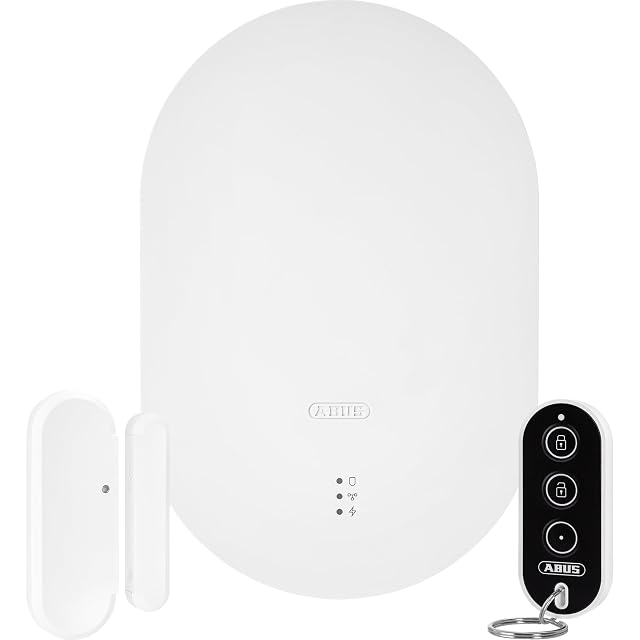
Hub and siren · expandable · DIY installation · app control · voice assistant compatible
ABUS's Smartvest Pro starter set: the hub and siren of a system designed to be expanded, installable without prior knowledge and operated by app, from a manufacturer whose main business is physical security.
Best for: Someone building a system over time who wants the sensors and the door hardware to come from the same maker.
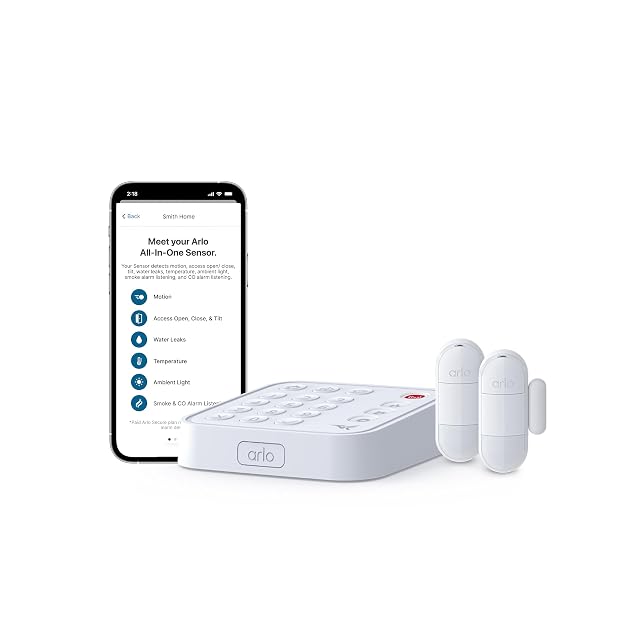
Wired plug-in keypad sensor hub plus 2 all-in-one sensors · 8 detection functions per sensor: motion, open/close, water leak, freeze, smoke/CO listening, tilt, ambient light · one tap emergency response · SecureLink named with no protocol or range
Two sensors that each do eight jobs — which is a genuinely different answer to a shelf that counts pieces.
Best for: An apartment where two well-placed sensors beat eight single-purpose ones, and leaks matter as much as doors
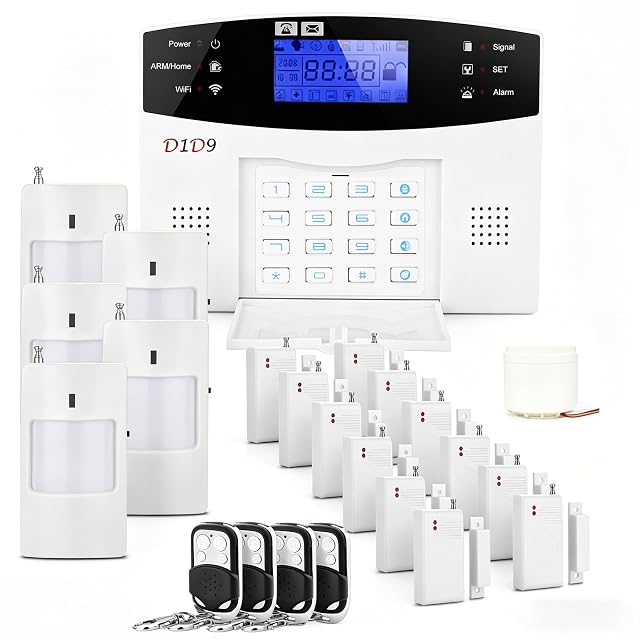
24 pieces · 4G and Wi-Fi, with a mobile fallback that needs no subscription · SIM card or Wi-Fi required · no monthly fee · batteries described as gifts, not warranted · no siren level, no radio frequency, no sensor breakdown
The only kit here with a mobile fallback that costs nothing monthly — and the only one that disclaims its own batteries.
Best for: A second property or a vacation rental, where nobody will be paying a subscription and 4G is the only reliable link