Skip to content

After a break-in: five things, in this order

The instinct after a break-in is to buy cameras. The order that helps is: repair the point of entry properly, add a second locking point, secure the side nobody reinforced, then add detection and recording. Cameras document; the first three change whether it happens again.

A forced entry tells you exactly where the weakness was, which is information most households never get.

Repair the point of entry properly

Not cosmetically. A door forced at the strike plate has split the jamb, and filling it leaves the same failure behind fresh paint. A longer strike plate and 80 mm (3.15 in) screws through the jamb into the framing stud are the repair.

Add a second locking point

Two locks at different heights spread the load. A door forced at one point still holds at the other.

Do the side nobody did

Hinge-side bolts on a door, hinge-side locks on a window. Reinforcing one edge moves the attack to the other.

Then detection

A contact sensor reports the moment something opens, which is earlier than a camera noticing somebody inside.

Then the camera

Because knowing is worth something, and because by now what it records is less likely to happen.

Which device does your home need?

It has just happened
Police first, and do not disturb anything until told you may.
The entry point is damaged
Securing it today matters more than any upgrade you plan later.
Keys were taken
Change the locks, because the keys work whether or not anyone returns.
You are deciding what to buy
Address how they got in first, before adding anything else.

Picking by what you are protecting

The immediate aftermath

Where making the property secure tonight outranks every longer-term decision.

The insurance claim

Where documentation, serial numbers and the crime reference number all matter.

Preventing a repeat

Where the entry point is the thing to fix, since repeat burglaries are not rare.

Peace of mind

Where the emotional impact is real and often underestimated, and where feeling secure matters as much as being secure.

What actually protects, and what is noise

The actual entry point
Fixing how they got in is worth more than anything else you buy. It is also what a repeat visit would use again.
Whether keys are compromised
If keys were taken, or could have been copied, the locks need changing regardless of how the entry happened.
What the insurer requires
Policies often specify lock standards and may require particular measures after a claim.
Layers rather than a single device
Locks, lighting, an alarm and a camera each do a different job. Buying only a camera repeats the original gap.
Recording what you own
Photographs and serial numbers make claims and recovery far more likely, and are worth doing now for what remains.

Which figure for which entrance

The stageThe actionWhy
ImmediatelyPolice, then secure the entry pointTonight matters most
If keys were takenChange the locksThe keys still work
Within daysFix how they got inRepeats are common
Longer termLayers, not one deviceA camera alone repeats the gap

Where this is usually botched

Buying a camera and nothing else
It records the next one. The entry point is what allowed the first, and that is what needs fixing.
Not changing locks when keys are missing
A key that has been taken opens the door whenever someone chooses. It is the clearest case for changing a cylinder.
Tidying before the police attend
It can destroy evidence. Wait until you are told it is fine to clear up.
Underestimating the emotional impact
Feeling unsafe in your own home is a real and common consequence. It is worth taking seriously rather than dismissing.

By the home you have

The householder in the immediate aftermath
Needs the police, a secured entry point and a locksmith, in that order.
The one making a claim
Needs the crime reference, photographs and any serial numbers they recorded.
The one preventing a repeat
Fixes the entry point first and adds layers afterwards.

Batteries, updates and working life

Security fitted in a hurry after a burglary often goes unmaintained afterwards, because it was bought under stress rather than planned. The alarm installed that week is the one whose sensor batteries nobody replaces two years later.

  • Diarize battery replacements and system tests when you install anything.
  • Photograph and record serial numbers of what remains.
  • Recheck that temporary repairs to the entry point were made permanent.
  • Review the whole setup once a year rather than only after an incident.

Safety

Your safety comes before your property.

  • If you believe someone is still inside, do not enter; call the police from outside.
  • Do not attempt to recover property yourself, even if a tracker shows a location.
  • Ask about victim support services; the impact is often greater than expected.
  • Keep the crime reference number, which insurers and services will ask for.

The choices, and what settled them

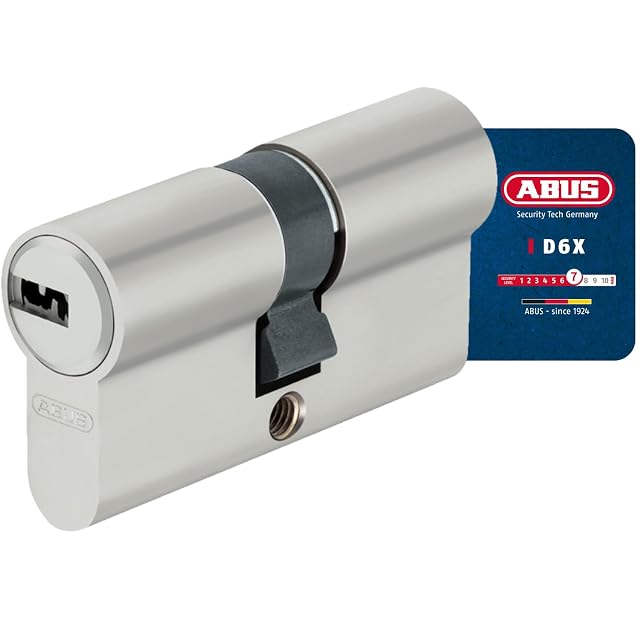
  1. ABUS D6XNP 30/30

    30/30 mm (1.18 in) · anti-pick pins · emergency function · 5 reversible keys · code card

    ABUS's everyday euro cylinder: special pins for pick and manipulation resistance, an emergency function that works with a key in the other side, and five reversible keys with a code card for reordering.

    Best for: Replacing a builder's cylinder on a front door, at the smallest sensible price.

    7.2/10

    ≈ $54

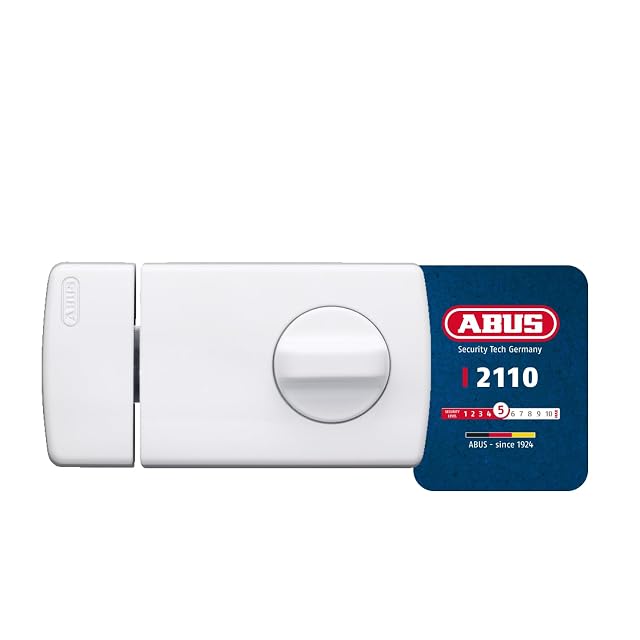
  2. ABUS 2110

    Rim lock with thumbturn inside · key outside · 5-pin cylinder · doors 35–50 mm (1.38 to 1.97 in) · 32 mm (1.26 in) bore

    ABUS's additional rim lock: a thumbturn inside, a key outside, and a five-pin cylinder. Stated for doors 35 to 50 mm (1.38 to 1.97 in) thick with recesses up to 21 mm (0.83 in), and needing a 32 mm (1.26 in) round hole for the cylinder.

    Best for: Securing the closing edge of a front door against levering, on a door of ordinary thickness.

    7.8/10

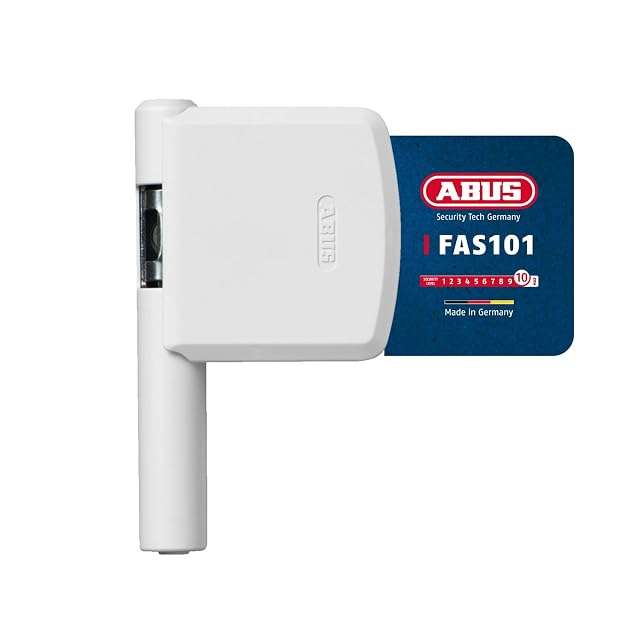
  3. ABUS FAS101

    Hinge-side lock · bolt rated to one metric ton of pressure · ABUS level 10 · 123 × 42 × 86 mm (4.84 × 1.65 × 3.39 in)

    A hinge-side security bolt for inward-opening windows — the side almost nobody reinforces. ABUS states the bolt protects up to one metric ton of pressure and rates it at security level 10 on its own scale.

    Best for: The half of the window that every other lock in this hub ignores.

    8.1/10

    ≈ $68

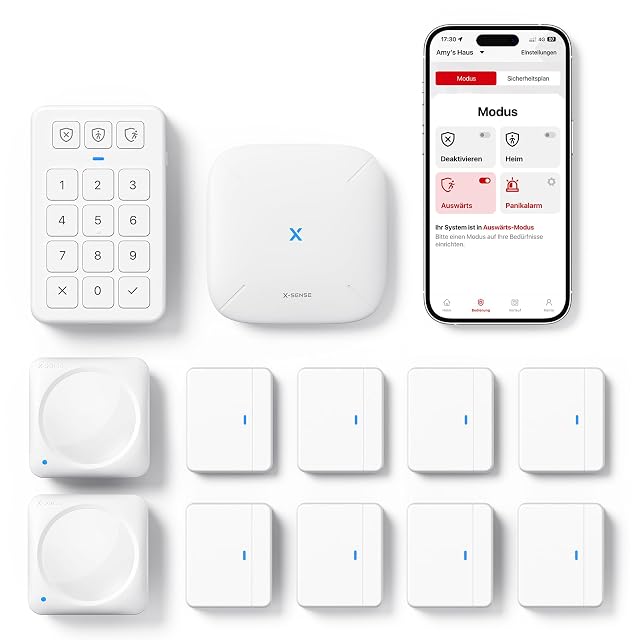
  4. X-Sense AS12

    8 contacts, 2 motion detectors, keypad · app control · arm and disarm by keypad or app

    An X-Sense alarm kit: eight door and window sensors, two motion detectors and a keypad, with app monitoring and control.

    Best for: A household that wants a physical keypad by the door rather than only a phone.

    7.8/10

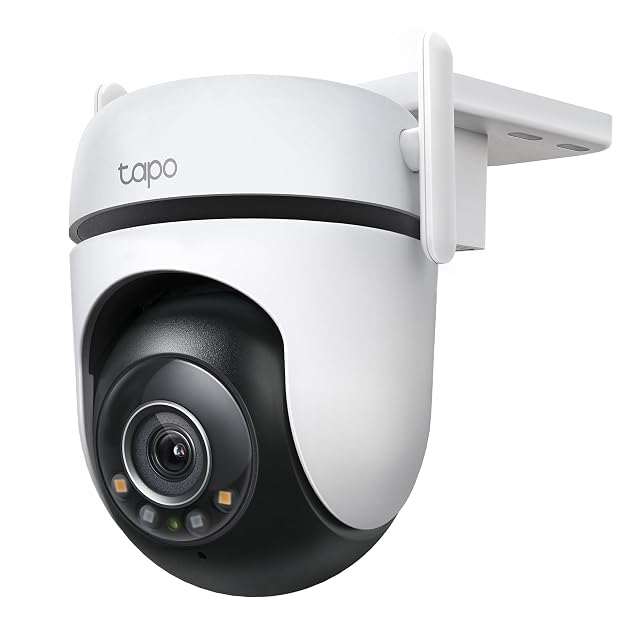
  5. Tapo C520WS

    2K 4MP · F1.6 Starlight · 360° pan · IP66 · Wi-Fi or Ethernet

    A 2560 × 1440 sensor behind an F1.6 lens gives more color in low light before it turns on its spotlights, and it can be wired to Ethernet instead of trusting Wi-Fi.

    Best for: An outdoor position where Wi-Fi is unreliable and a network cable can be run, or where color at night matters more than an unlit image.

    8.1/10

The questions we are asked

Should I buy cameras first?

Understandably, and it is not the most effective order. A camera records the next attempt; a cylinder, a second lock and long screws change whether the next attempt succeeds. Buy the cameras too — knowing matters — but not first.

What gets repaired badly after a forced entry?

The frame. A door forced at the strike plate splits the jamb, and a repair that fills and paints without reinforcing leaves the same weakness behind new paint. Long screws through the jamb into the framing stud, and a longer strike plate, are what actually fix it.

What should I do first?

Call the police, and do not disturb the scene until they say you may. Securing the entry point comes next, before any purchases.

Should I change the locks?

If keys were taken or may have been copied, yes without question. If entry was forced, fixing that point matters more.

What should I buy afterwards?

Address how they got in first. Then layers: locks, lighting, an alarm and a camera each do different jobs.

Are repeat burglaries common?

Common enough that fixing the entry point promptly matters. The same weakness works twice unless it is closed.

What does my insurer need?

Typically a crime reference number, a list of what was taken, and any receipts, photographs or serial numbers you have.

Is it normal to feel unsafe afterwards?

Entirely, and it is often the hardest part. Support services exist, and it is worth using them rather than assuming it will pass.

Each device, and the door it watches

ABUS D6XNP 30/30 · $54

Designed for: Replacing a builder's cylinder on a front door, at the smallest sensible price.

Its main asset: Emergency function: it operates from outside with a key left in the inside

Its main gap: 30/30 is a short cylinder — it fits a thin door and not a thick one

Read the full review →

ABUS 2110

Designed for: Securing the closing edge of a front door against levering, on a door of ordinary thickness.

Its main asset: Protects the closing edge specifically — the side a lever is applied to

Its main gap: Requires a 32 mm (1.26 in) hole bored through the door

Read the full review →

ABUS FAS101 · $68

Designed for: The half of the window that every other lock in this hub ignores.

Its main asset: Secures the hinge side, which is where an unreinforced window is levered off

Its main gap: Only useful in addition to a handle-side lock, not instead of one

Read the full review →

X-Sense AS12

Designed for: A household that wants a physical keypad by the door rather than only a phone.

Its main asset: Physical keypad, so anybody in the house can arm and disarm without an app

Its main gap: No published cellular fallback in this listing

Read the full review →

Tapo C520WS

Designed for: An outdoor position where Wi-Fi is unreliable and a network cable can be run, or where color at night matters more than an unlit image.

Its main asset: Ethernet as well as Wi-Fi — the only camera in this hub to state it

Its main gap: Color at night still needs some ambient light — it is a sensitive sensor, not night sight

Read the full review →

What each level of spending protects

What to add to it

Accessories and spares from the same aisle, at the price we read. Confirm they suit the device you choose before ordering: it turns on the model and the part number, which the listing gives.

The short decision

Comparisons that matter here

Device against device, already covered, inside this guide or this aisle.

What this comparison is built on

The devices listed are drawn from the catalog of this site. Specifications are those the maker and the Amazon listing publish; prices are what Keepa recorded on the date shown, and both move. The order follows declared specifications, the balance between stated strengths and stated limits, and price. No device here has been installed or tested by us, and no page claims it was.

Last checked on

Prices quoted in these summaries are dated readings. The live price is shown next to each product.

The tool we use ourselves

Chosen your tool? Now buy it at the right price.

Cameras, alarm kits and safes swing by thirty dollars or more across the year, and the biggest "discounts" often land at prices the same model sold for six weeks earlier. UniverTrack tracks the real price history across retailers, spots fake reductions, and alerts you when it is genuinely the moment to buy.

Real price historyBuy-now alertsAI buying assistant
Try free for 14 days →
No commitment · Cancel in one click · 5 languages