The cheapest sensor in the house guards the most expensive damage · review
ABUS HSWM10000 review
A standalone water alarm that stands on the floor with two probes underneath. ABUS states an 85 dB tone that sounds as long as the probes are in contact with water or another conductive liquid.
The conclusion Among the least expensive useful insurance in this category, and it needs no network at all. Put it where the water arrives, not where you would see it.
This is one of the least expensive detectors in this category, and it guards against
the most expensive damage most households will ever have.
What a leak actually costs
A washing machine hose failing behind a kitchen unit, unnoticed for an hour,
takes out a floor. A slow leak from a cylinder in a cupboard takes out a
ceiling. Neither is a security matter and both cost more than everything else
in this catalog put together.
Placement is the entire installation
Where water arrives, not where you would see it. Under the washing machine.
Behind the dishwasher. Beside the cylinder. At the lowest point of a cellar
floor. A sensor placed where you would notice water anyway is a sensor
reporting a leak that has already spread.
What it can and cannot do
ABUS states 85 dB sounding continuously while the probes are wet, which is the
correct behavior — a leak does not stop, and a detector that beeps for thirty
seconds and gives up has told an empty house nothing.
It is local. Nobody hears it when the house is empty, and an empty house is
where a leak does its worst work. For a holiday home or a property you leave
for weeks, the connected detector further up this hub is the right one.
Who it suits
Every household, in the two or three places water can appear.
Availability
Not found on the American Amazon store, where the buy link falls back to a local search rather than to a page that does not exist.
Prices and availability are what Keepa reported on the date this page was updated; both move.
What reassures, and what does not
Strengths
Nothing to configure — put it down and it works
Two probes on the base detect a thin film, not a puddle
Sounds continuously while water is present, not for a fixed period
From a manufacturer whose business is security hardware
Compromises
Local only — nobody hears it when the house is empty, which is when leaks matter
85 dB is modest behind a closed utility room door
Battery with no stated low-battery behavior
Detects at floor level, so it reports water that has already spread
Where water arrives, not where you would notice it: under the washing machine, behind the dishwasher, beside the water heater, at the lowest point of a cellar floor. A sensor in the middle of a room reports a leak that has already reached the middle of the room.
Is a local alarm any use?
Only when somebody is home. That is a real limitation, and it is also true that most washing machine failures happen during a cycle, with somebody in the house. For an empty holiday home or a second property, a connected sensor is the right answer.
Why does it sound continuously?
Because a leak does not stop. An alarm that beeps for thirty seconds and gives up has told nobody anything if the household was out at the shops. Continuous sounding while the probes are wet is the correct behavior and not all detectors do it.
Our score
6.9/ 10
Among the least expensive useful insurance in this category, and it needs no network at all. Put it where the water arrives, not where you would see it.
What this one costs among water leak detectors
A reference exists on these Amazon stores: France, Germany, Italy, Spain, United Kingdom. Listed is not the same as in stock — availability changes daily.
Details checked on September 2, 2026.
The buyer this one serves, among security devices
The floor beside a washing machine, a dishwasher or a water heater.
Specifications: the manufacturer sheet for home security products and the matching Amazon product page. Prices and availability: Keepa. Every figure on this page names its source.
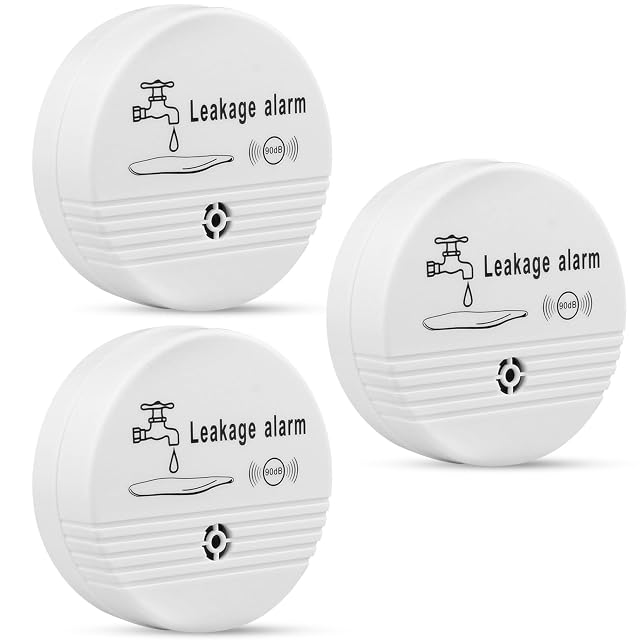
90 dB · three units · two electrodes on the base · wall or floor · ABS
Three water alarms at 90 dB with two electrodes on the base, which GOMETY states trigger immediately on contact with water. Wall or floor mounting, in ABS plastic, with no wiring or programming.
Best for: Covering three risks at once — the usual number in a house with a basement.
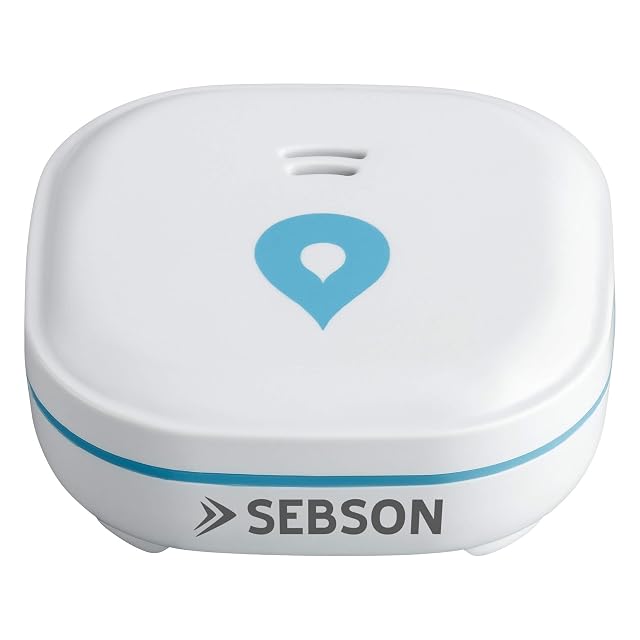
A miniature floor sensor with a sealed lithium battery that SEBSON states lasts ten years. No battery to change, and no battery compartment to corrode.
Best for: A place you will not revisit — under a bath, behind a built-in appliance, beside a boxed-in water heater.
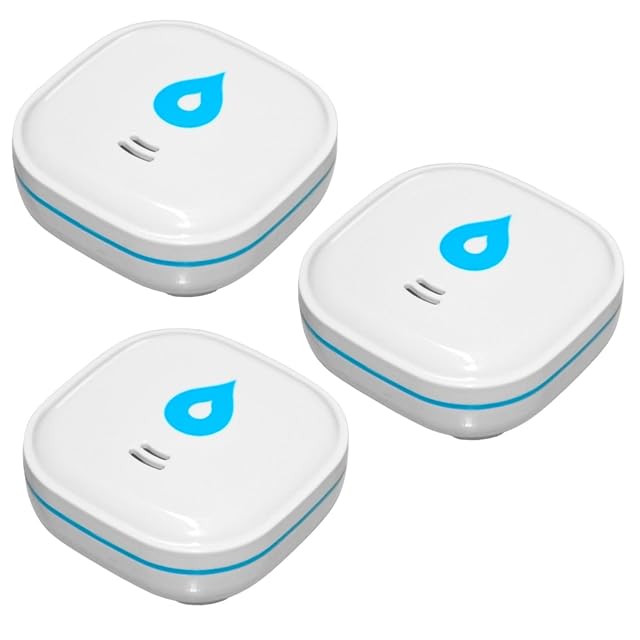
85 dB · three units · 60 × 60 × 24.2 mm (2.36 × 2.36 × 0.95 in) · 3 V lithium cell · rising-water detection
Three compact detectors with published dimensions and a 3 V lithium cell, which Summit Digital states detect ingress, rising water and flooding through two contact points on the underside.
Best for: A cellar or a basement where rising water rather than a burst hose is the risk.