Skip to content

Water damage: four sensors and where they go

A leak detector costs a few dollars and guards against water damage, one of the most common home insurance claims. Placement is the whole product: under the washing machine, behind the dishwasher, beside the water heater or at the lowest point of a basement — not where you would notice water anyway.

It is one of the cheapest useful purchases in this catalog.

The three places

Under the washing machine. Behind the dishwasher or under the sink unit. Beside the water heater, or at the lowest point of a basement floor. Those are three common sources of leaks in a house.

One detector per place: which is why the GOMETY three-pack is the right quantity.

Where they should not go

The middle of a floor. A sensor there reports a leak that has already spread — which is the same news you would have had from your own feet.

The sealed-battery option

For places you will never reach again: under a bath, behind a built-in appliance. Write the year on it with a marker, because in ten years nobody remembers.

The connected one

For an empty house. Arrange the key holder before relying on it.

Which device does your home need?

You have ever had a leak
Water detectors cost little and warn before damage becomes serious.
You leave the house empty
A leak with nobody home is where the real damage happens.
You have an older water heater or old plumbing
Those are the classic failure points and worth covering first.
You want automatic protection
A shut-off valve acts rather than alerts, which is the difference that matters when nobody is home.

Picking by what you are protecting

Under appliances

Washing machines and dishwashers are among the most common sources, and a sensor underneath costs almost nothing.

Bathrooms and pipework

Where slow leaks do damage over weeks before anyone notices.

Empty properties

Where nobody is there to hear anything and where damage accumulates unchecked.

Attics and basements

Where a tank or an inlet fails out of sight and the first sign is a ceiling.

What actually protects, and what is noise

Alert or shut-off
A detector tells you; a valve stops the water. If nobody is home, only the second one helps.
How it alerts
A local siren is useless in an empty house. A connected sensor that reaches your phone is what matters when away.
Sensor placement
At the lowest point where water would collect, under appliances and beside tanks. Placement decides whether it catches anything.
Battery life and warnings
These devices sit untouched for years. A sensor whose battery died silently is not protecting anything.
What your insurer says
Some policies recognize leak detection, and water damage is among the most common home insurance claims.

Which figure for which entrance

Your situationThe deviceWhy
At home most daysWater detectorsYou can act on the alert
Away oftenAn automatic shut-off valveIt acts without you
Under appliancesA cheap sensorThe commonest source
Loft tankA sensor beside itFailures are silent until the ceiling

Where this is usually botched

Relying on a local siren while away
Nobody hears it, and the water keeps running. Connected sensors or a shut-off valve are what protect an empty house.
Placing sensors too high
Water finds the lowest point. A sensor a few centimeters up may never be reached until the damage is done.
Forgetting the batteries
Devices left untouched for years fail silently. A yearly check costs nothing and is the whole maintenance.
Not knowing where the stopcock is
The detector tells you there is water. Knowing how to stop it in seconds is the other half.

By the home you have

The householder
Puts cheap sensors under appliances and beside the tank, and knows where the stopcock is.
The frequent traveler
Wants an automatic shut-off valve, since an alert alone achieves nothing from abroad.
The owner of an older property
Covers the water heater and older pipework first.

Batteries, updates and working life

Leak detectors are the definition of devices nobody thinks about, which is why they fail unnoticed. A dead battery, a sensor knocked out of position while cleaning behind an appliance, or a lost connection all leave you unprotected without any sign.

  • Test sensors annually by wetting the contacts; it takes seconds.
  • Replace batteries on a schedule rather than waiting for a warning.
  • Check sensors are still in position after any appliance is moved.
  • Exercise the stopcock occasionally so it still turns when needed.

Safety

Water and electricity together.

  • Know where the stopcock is and make sure everyone in the house does.
  • Turn off electricity at the consumer unit before entering standing water.
  • Turn the water off at the stopcock before long absences.
  • Do not use electrical appliances that have been in contact with water.

The choices, and what settled them

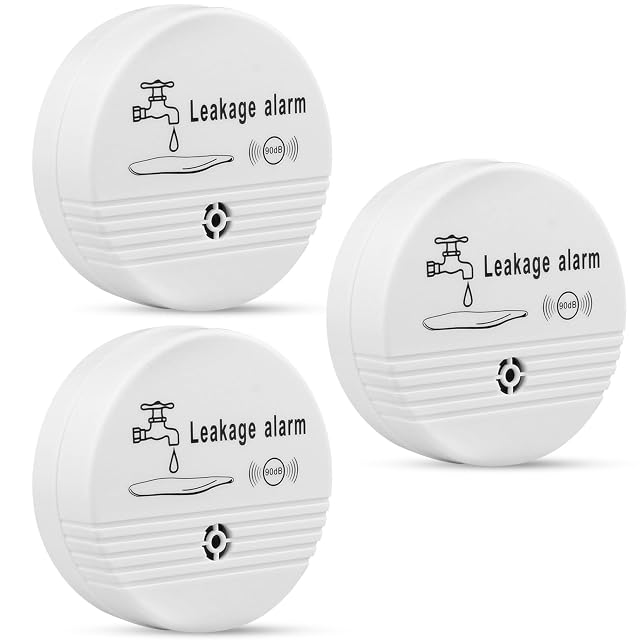
  1. GOMETY XL002 (3-pack)

    90 dB · three units · two electrodes on the base · wall or floor · ABS

    Three water alarms at 90 dB with two electrodes on the base, which GOMETY states trigger immediately on contact with water. Wall or floor mounting, in ABS plastic, with no wiring or programming.

    Best for: Covering three risks at once — the usual number in a house with a basement.
    8.1/10

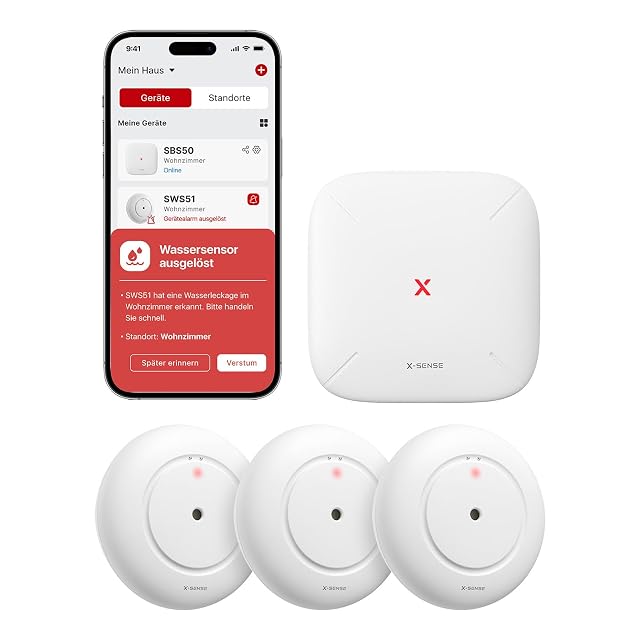
  2. X-Sense SWS54

    Wi-Fi · push notifications · 2 upper and 4 lower sensors · sounds locally and on the base

    A connected leak detector: X-Sense states six sensing points — two upper and four lower — with a push notification to a phone as well as a local alarm and a tone from the base station.

    Best for: A property you leave — a holiday home, a second home, or any house whose owners work away.

    8.1/10

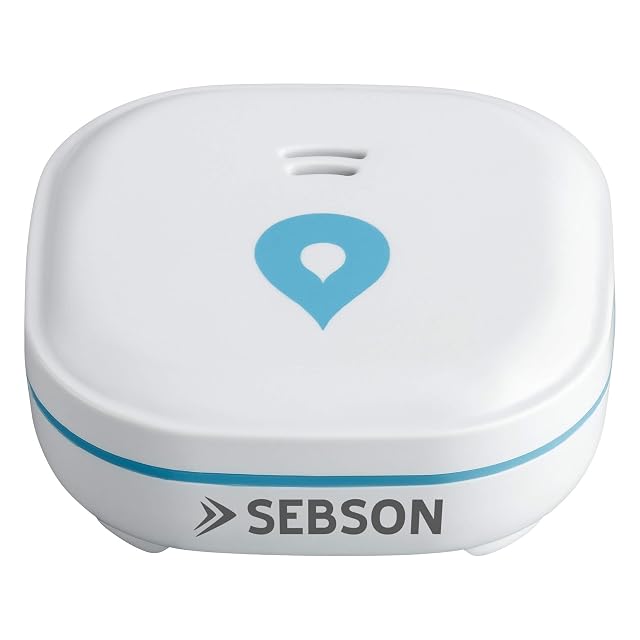
  3. SEBSON WD_GS153

    85 dB · sealed 10-year lithium battery · miniature floor sensor

    A miniature floor sensor with a sealed lithium battery that SEBSON states lasts ten years. No battery to change, and no battery compartment to corrode.

    Best for: A place you will not revisit — under a bath, behind a built-in appliance, beside a boxed-in water heater.

    7.5/10

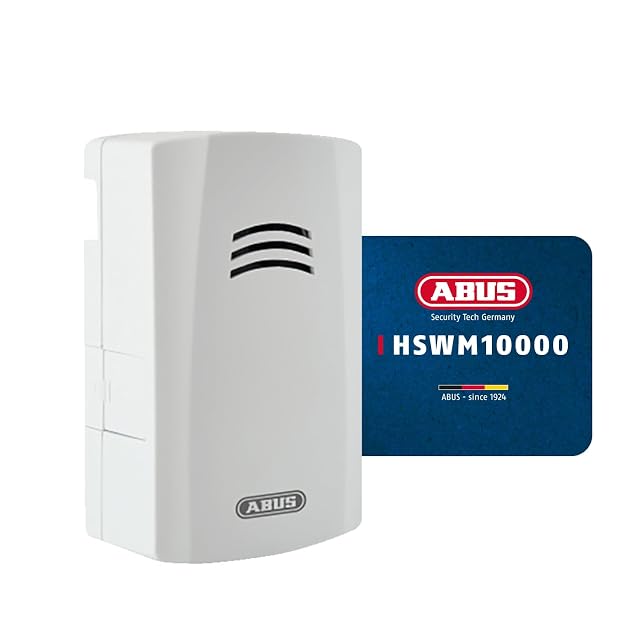
  4. ABUS HSWM10000

    85 dB · two floor probes · stands on the floor · basement, laundry, kitchen, utility room

    A standalone water alarm that stands on the floor with two probes underneath. ABUS states an 85 dB tone that sounds as long as the probes are in contact with water or another conductive liquid.

    Best for: The floor beside a washing machine, a dishwasher or a water heater.

    6.9/10

The questions we are asked

Local alarm or connected?

Local if the house is usually occupied, because a washing machine fails during a cycle with somebody in. Connected if the house is regularly empty — a noise in an empty building is a tree falling in a forest, and an empty house is where a leak does its worst work.

How do I test one?

A wet finger across the electrodes on the base. Do it when you fit it and once a year afterwards, because a local alarm usually does not tell you its battery has died — it simply stops being a detector and goes on looking like one.

Are water detectors worth it?

They cost very little and water damage is among the most common home insurance claims. Under appliances alone, they earn their place.

Detector or automatic shut-off?

A detector tells you; a valve stops the water. If you are often away, only the valve actually helps.

Where should sensors go?

At the lowest point water would reach: under appliances, beside tanks, in the bottom of a cupboard containing pipework.

Should I turn the water off when away?

For anything more than a couple of days it is sensible, and it is free. A leak in an empty house does remarkable damage.

Each device, and the door it watches

GOMETY XL002 (3-pack)

Designed for: Covering three risks at once — the usual number in a house with a basement.
Its main asset: Three units, which is the number most houses actually need

Its main gap: 90 dB is modest through a closed door

Read the full review →

X-Sense SWS54

Designed for: A property you leave — a holiday home, a second home, or any house whose owners work away.

Its main asset: Push notification to a phone: it works when the house is empty

Its main gap: Requires the X-Sense base station and Wi-Fi

Read the full review →

SEBSON WD_GS153

Designed for: A place you will not revisit — under a bath, behind a built-in appliance, beside a boxed-in water heater.

Its main asset: Ten-year sealed lithium battery — nothing to change

Its main gap: Sealed battery means the whole unit is disposable when it dies

Read the full review →

ABUS HSWM10000

Designed for: The floor beside a washing machine, a dishwasher or a water heater.

Its main asset: Nothing to configure — put it down and it works

Its main gap: Local only — nobody hears it when the house is empty, which is when leaks matter

Read the full review →

What each level of spending protects

The short decision

Comparisons that matter here

Device against device, already covered, inside this guide or this aisle.

What this comparison is built on

The devices listed are drawn from the catalog of this site. Specifications are those the maker and the Amazon listing publish; prices are what Keepa recorded on the date shown, and both move. The order follows declared specifications, the balance between stated strengths and stated limits, and price. No device here has been installed or tested by us, and no page claims it was.

Last checked on

Prices quoted in these summaries are dated readings. The live price is shown next to each product.

The tool we use ourselves

Chosen your tool? Now buy it at the right price.

Cameras, alarm kits and safes swing by thirty dollars or more across the year, and the biggest "discounts" often land at prices the same model sold for six weeks earlier. UniverTrack tracks the real price history across retailers, spots fake reductions, and alerts you when it is genuinely the moment to buy.

Real price historyBuy-now alertsAI buying assistant
Try free for 14 days →
No commitment · Cancel in one click · 5 languages