Ground-floor windows are the entry a locked door redirects people to · review
SCHMIDT security tools 123837 review
A telescopic bar clamped into the window reveal rather than screwed to the frame — vertically, horizontally or diagonally. SCHMIDT states 101 to 175 cm (39.8 to 68.9 in) of adjustment, rubberized pressure pads, and a deliberately visible orange finish.
The conclusion The tenant's answer, and the most visible deterrent here. Test the reveal before relying on it.
The bolts in this hub screw to a window frame; this one is not screwed to anything. For an inward-opening window, that makes it the option for the substantial number of people who are not allowed to drill — on a sliding window, the hub’s clamp locks are the other no-drill choice.
How it works
A telescopic bar, extended until it clamps between the two sides of the window
reveal — vertically, horizontally, or diagonally, with swiveling contact
faces so it seats on an uneven surface. Rubberized pads spread the load and leave no mark. SCHMIDT intends it for inward-opening windows, French doors, patio doors and basement windows: it clamps behind the sash.
Force applied to the window then goes into the masonry, which is where you
want it. The window frame is no longer what takes the load.
What it depends on
The reveal being solid. A rendered masonry return is ideal. A plasterboard
return, a dry-lined reveal, or crumbling stucco is not, and the bar will pull
through it. Press hard with a thumb before deciding.
The color is a feature
Orange, visibly so, and SCHMIDT states it is meant to be seen from outside.
That is the correct thinking: a window that obviously cannot be opened is a
window nobody chooses. Fitted close to the glass, it does most of its work
before anybody touches anything.
The obvious limitation
The window cannot be opened while it is in place, and it is conspicuous
indoors. For a room used every day, that becomes tiresome. For a ground-floor
window in an apartment you are away from, it is exactly right.
Who it suits
Tenants, vacation rentals, and anybody whose landlord says no holes.
Availability
Not found on the American Amazon store, where the buy link falls back to a local search rather than to a page that does not exist.
Prices and availability are what Keepa reported on the date this page was updated; both move.
What reassures, and what does not
Strengths
No drilling at all — it clamps into the reveal
Adjustable 101 to 175 cm (39.8 to 68.9 in), and fits vertically, horizontally or diagonally
Deliberately visible from outside, which is where deterrence works
Rubberized pads that do not mark the reveal
Compromises
A clamped bar depends entirely on the reveal being sound
Highly visible inside as well as out — it is not discreet
Must be removed to open the window
Orange is the point and will not suit every room
Specifications
Type
Telescopic security bar, clamped into the reveal
Length
101 to 175 cm (39.8 to 68.9 in), adjustable
Orientation
Vertical, horizontal or diagonal, with contact faces swiveling from −45° to +45°
Inward-opening windows, French doors, patio doors and basement windows
Tube diameter
28 mm (1.1 in)
Amazon reference
B07MC146VX
EAN
4250831632567
The questions we are asked
Is a clamped bar strong enough?
It transfers force into the masonry reveal rather than into a window frame, which is structurally the right direction. What it depends on is the reveal being solid — a plasterboard return or crumbling stucco gives way, and the bar comes with it. Press the reveal before trusting it.
Why orange?
Deliberately. SCHMIDT states the bar is meant to be seen from outside, and the closer it is fitted to the glass the more visible it is. A window that visibly cannot be opened is a window nobody starts on, which is the cheapest form of security there is.
Can a tenant use this?
That is the main reason it exists. Nothing is drilled, nothing is altered, and it comes away when you leave. For a rented apartment, a student room or a vacation rental, it is the no-drill answer for an inward-opening window; the clamp locks in this hub do the same job on sliding windows.
Our score
8.1/ 10
The tenant's answer, and the most visible deterrent here. Test the reveal before relying on it.
What this one costs among window locks
Details checked on September 2, 2026.
The buyer this one serves, among security devices
A rented apartment, a vacation rental, or any window where nothing may be drilled.
Specifications: the manufacturer sheet for home security products and the matching Amazon product page. Prices and availability: Keepa. Every figure on this page names its source.
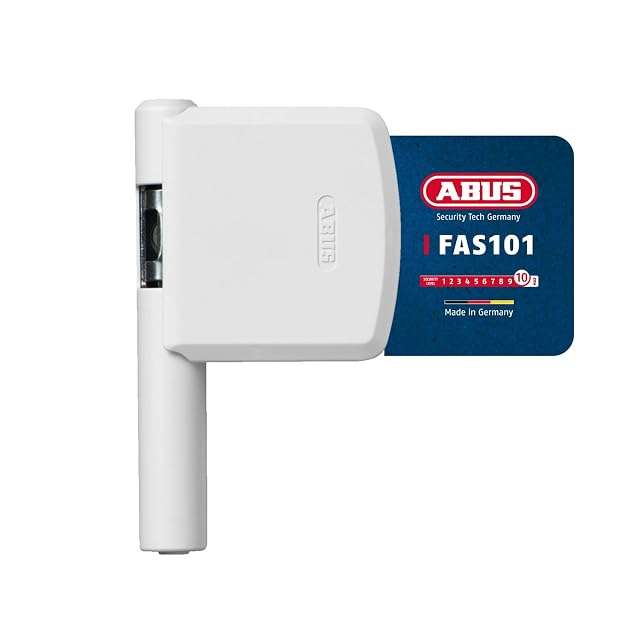
Hinge-side lock · bolt rated to one metric ton of pressure · ABUS level 10 · 123 × 42 × 86 mm (4.84 × 1.65 × 3.39 in)
A hinge-side security bolt for inward-opening windows — the side almost nobody reinforces. ABUS states the bolt protects up to one metric ton of pressure and rates it at security level 10 on its own scale.
Best for: The half of the window that every other lock in this hub ignores.
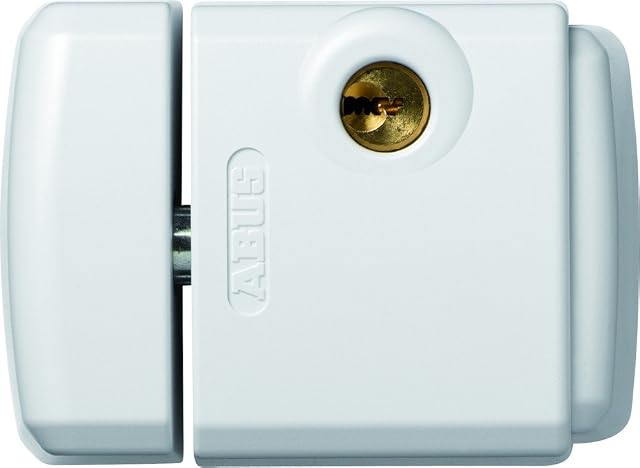
Bolt lock, inward-opening windows · 4-pin cylinder · keyed alike · ABUS level 5 · key to open only
A bolt-action window lock for inward-opening windows and French windows. ABUS states a four-pin cylinder, keyed-alike operation, and a mechanism that locks by pushing — the key is needed only to open it.
Best for: Ground-floor windows that get locked every night, where hunting for a key each time would end the habit.
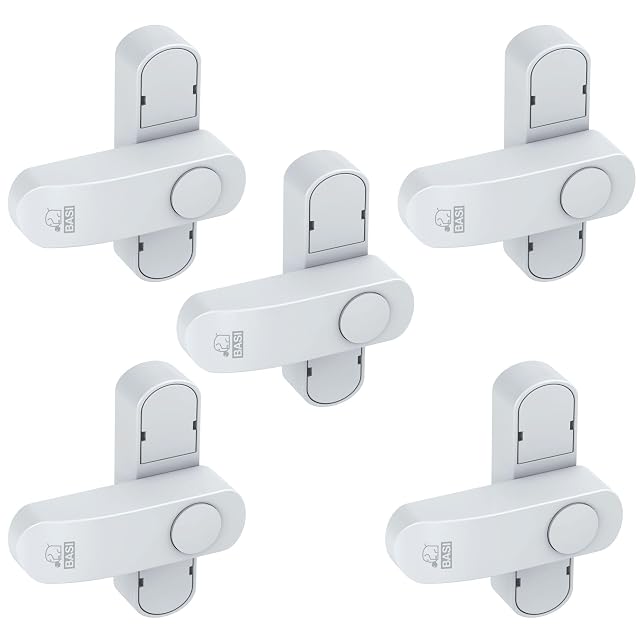
Five window locks · push-button, no key · M5×50 screws supplied · white
The five-unit box of BASI's keyless window bolt, for a house with more accessible windows than a three-pack covers. Same push-button mechanism and same 50 mm (1.97 in) screws.
Best for: A house with five or more reachable windows — usually a front, a back and a side.