Skip to content

Ground floor windows: four locks and where each belongs

Securing a door often moves the problem to the windows beside it. Four products cover it: a push-to-lock bolt that stays in use, a lock that fits top or bottom rather than only at the handle, a hinge-side bolt for the edge that is rarely reinforced, and a clamped bar for a window that may not be drilled.

Window locks fail for a reason that has nothing to do with strength: they stop being used.

The behavioral specification

A lock that closes by pushing, like the BASI in this guide, stays in use every night. A lock that needs a key to close, like the BURG-WÄCHTER, risks being given up within a few weeks: keep it for windows that are not opened every day. That difference matters as much as the materials.

Where the lock goes

Not always the handle. A tall casement flexes in the middle, a balcony door is levered near the bottom. Push a corner with your hand — wherever it moves is where the lock belongs.

The side people often skip

The hinge side. One product here addresses it, and a window secured on one edge only has simply moved the attack to the other.

On vinyl

Every window lock holds only if the screws find the steel reinforcement inside the frame. That is the installation, and no packaging solves it.

Which device does your home need?

Your windows have older handles
Lockable handles are an inexpensive and effective upgrade.
You leave windows ajar in summer
Restrictors let you ventilate without leaving an opening.
A window is hidden from the street
That is the one to secure first, because cover matters more than glazing.
You rent
Many window measures are non-permanent, and the rest need permission.

Picking by what you are protecting

Everyday security

Where a locked handle removes the simplest entry method entirely.

Summer ventilation

Where restrictors allow air without an opening a person can use.

Concealed windows

Where cover from view is what makes a window attractive, more than the window itself.

Insurance requirements

Where policies often specify locks on accessible windows, and where compliance matters at claim time.

What actually protects, and what is noise

Lockable handles
The cheapest meaningful upgrade for most windows.
Restrictors
They allow ventilation while limiting the opening. They are also a child safety measure in their own right.
Where the window is
A window behind a fence or hedge is worth more attention than one facing the street.
Laminated or secondary glazing
Glass that resists breaking changes the equation, though it is a larger project than handles.
Fire escape
At least one window in a room used for sleeping usually needs to open as an escape route. Security must not defeat that.

Which figure for which entrance

The windowThe measureThe caution
Accessible, on viewLockable handlesCheap and effective
Hidden by a fenceLocks plus lightingCover is the risk
Used for ventilationRestrictorsAir without an opening
Bedroom escape windowCarefulMust still open in a fire

Where this is usually botched

Leaving keys in window locks
It makes the lock decorative. Keys should be near enough for an emergency and not visible or reachable from outside.
Securing every window including escape routes
Fire escape matters more than burglary. A bedroom window that cannot be opened quickly is a serious hazard.
Ignoring the concealed window
Cover from view is what makes a window attractive to an intruder. The hidden one is the one to address first.
Leaving windows ajar while out
A small opening is often enough to reach a handle. Restrictors exist so ventilation does not mean vulnerability.

By the home you have

The ground floor householder
Fits lockable handles, addresses the concealed window, and adds lighting where there is cover.
The summer ventilator
Uses restrictors so windows can be open without being an opening.
The renter
Uses non-permanent measures and asks before changing handles.

Batteries, updates and working life

Window locks are used rarely and seize accordingly, and a lock that will not turn is a lock that stops being used. Hinges and friction stays also wear, and a window that no longer closes squarely cannot be locked properly at all.

  • Operate window locks periodically so they do not seize.
  • Lubricate mechanisms with a suitable product, sparingly.
  • Check that windows still close squarely; a dropped sash cannot lock properly.
  • Keep a labeled spare set of window keys somewhere sensible.

Safety

Fire escape outranks burglary prevention.

  • Ensure escape windows can be opened quickly from inside without hunting for a key.
  • Keep window keys accessible to occupants but not visible from outside.
  • Do not fit bars or grilles to escape windows without checking regulations.
  • Tell everyone in the house where window keys are kept.

The choices, and what settled them

  1. BASI 1100-0050 (3-pack)

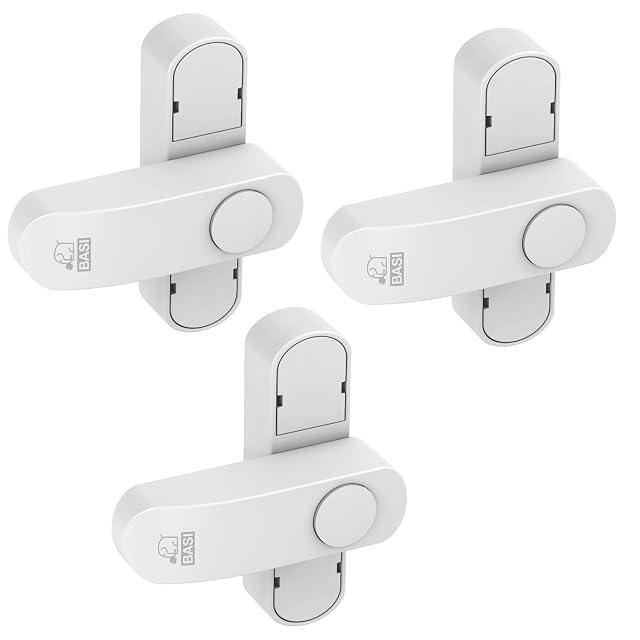
    Three window locks · push-button locking, no key · M5×50 self-tapping screws supplied · white

    Three window security bolts operated by push button rather than by key, which BASI states lock by hand and release quickly. Each comes with four M5 × 50 mm (0.20 × 1.97 in) self-tapping screws.

    Best for: Doing every ground-floor window at once, without a key for each.
    7.5/10

  2. BURG-WÄCHTER WinSafe WS 11 W

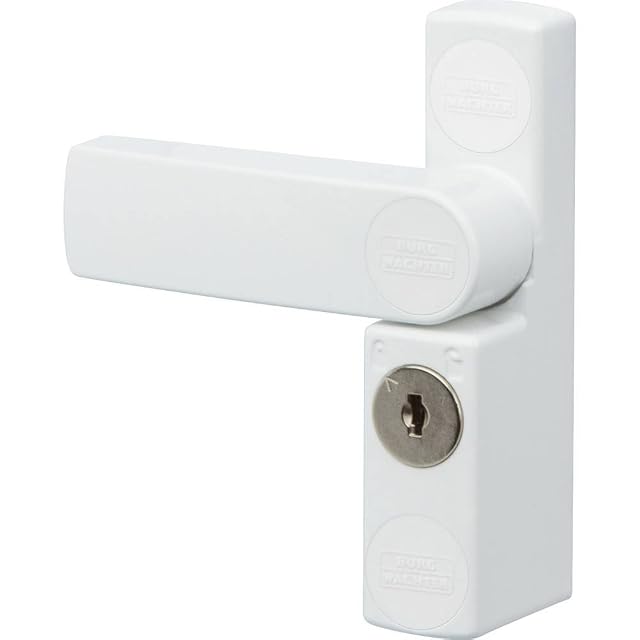
    Zinc die-cast body · lockable · fits top, bottom or handle side · 2 keys · retrofit

    A lockable window security bolt in a zinc die-cast housing, which BURG-WÄCHTER states can be fitted on the top, bottom or handle side of a window or balcony door with a few holes.

    Best for: A window where the best fixing point is not the handle side — a tall casement, or a balcony door.

    7.5/10

    ≈ $69

  3. ABUS FAS101

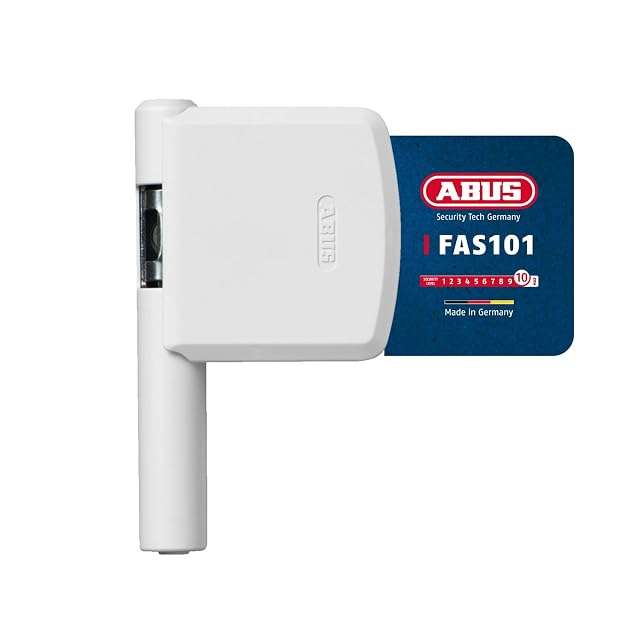
    Hinge-side lock · bolt rated to one metric ton of pressure · ABUS level 10 · 123 × 42 × 86 mm (4.84 × 1.65 × 3.39 in)

    A hinge-side security bolt for inward-opening windows — the side almost nobody reinforces. ABUS states the bolt protects up to one metric ton of pressure and rates it at security level 10 on its own scale.

    Best for: The half of the window that every other lock in this hub ignores.

    8.1/10

    ≈ $68

  4. SCHMIDT security tools 123837

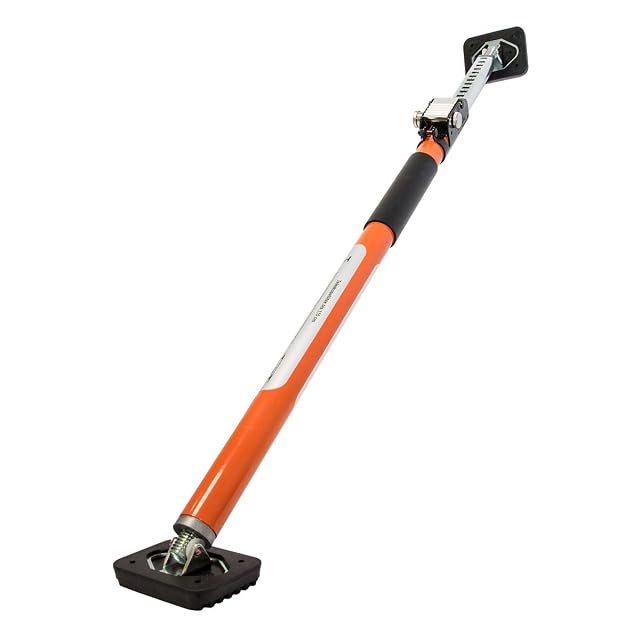
    Telescopic security bar · 101–175 cm (39.8 to 68.9 in) · orange, visible from outside · rubberized pads · no drilling

    A telescopic bar clamped into the window reveal rather than screwed to the frame — vertically, horizontally or diagonally. SCHMIDT states 101 to 175 cm (39.8 to 68.9 in) of adjustment, rubberized pressure pads, and a deliberately visible orange finish.

    Best for: A rented apartment, a vacation rental, or any window where nothing may be drilled.

    8.1/10

The questions we are asked

Why does the hinge side need a lock?

Because a window levered on the hinge side leaves the frame with its hinges attached, and every handle-side lock is still engaged when it does. Reinforcing one side moves the attack rather than stopping it.

Keyed or keyless?

Keyless where the window is an escape route and no child could open it, because a lock that needs a key at bedtime stops being used. Keyed where glass is close enough that a hand could reach the catch, or where a child might open it.

What is the cheapest useful upgrade?

Lockable handles on accessible windows. They remove the simplest entry method.

Should I leave the key in the lock?

No, that makes the lock decorative. Keep keys nearby for emergencies but out of sight and out of reach from outside.

Can I ventilate securely?

Restrictors let a window open a limited amount, which allows air without leaving an opening a person can use.

Which window should I secure first?

The one hidden from view. Cover from the street is what makes a window attractive, more than its size or type.

Are window bars a good idea?

They are effective and they raise serious fire escape questions. Check what regulations apply before fitting them to any escape window.

Does my insurer require window locks?

Some policies specify locks on accessible windows. It is worth checking the wording rather than discovering it during a claim.

Each device, and the door it watches

BASI 1100-0050 (3-pack)

Designed for: Doing every ground-floor window at once, without a key for each.
Its main asset: Push-button locking with no key — the habit survives

Its main gap: No key means anybody inside can release it — including a child

Read the full review →

BURG-WÄCHTER WinSafe WS 11 W · $69

Designed for: A window where the best fixing point is not the handle side — a tall casement, or a balcony door.

Its main asset: Fits top, bottom or handle side, so the fixing follows the frame rather than the fashion

Its main gap: Needs a key to lock as well as to open

Read the full review →

ABUS FAS101 · $68

Designed for: The half of the window that every other lock in this hub ignores.

Its main asset: Secures the hinge side, which is where an unreinforced window is levered off

Its main gap: Only useful in addition to a handle-side lock, not instead of one

Read the full review →

SCHMIDT security tools 123837

Designed for: A rented apartment, a vacation rental, or any window where nothing may be drilled.

Its main asset: No drilling at all — it clamps into the reveal

Its main gap: A clamped bar depends entirely on the reveal being sound

Read the full review →

What each level of spending protects

The short decision

Comparisons that matter here

Device against device, already covered, inside this guide or this aisle.

What this comparison is built on

The devices listed are drawn from the catalog of this site. Specifications are those the maker and the Amazon listing publish; prices are what Keepa recorded on the date shown, and both move. The order follows declared specifications, the balance between stated strengths and stated limits, and price. No device here has been installed or tested by us, and no page claims it was.

Last checked on

Prices quoted in these summaries are dated readings. The live price is shown next to each product.

The tool we use ourselves

Chosen your tool? Now buy it at the right price.

Cameras, alarm kits and safes swing by thirty dollars or more across the year, and the biggest "discounts" often land at prices the same model sold for six weeks earlier. UniverTrack tracks the real price history across retailers, spots fake reductions, and alerts you when it is genuinely the moment to buy.

Real price historyBuy-now alertsAI buying assistant
Try free for 14 days →
No commitment · Cancel in one click · 5 languages