They report an opening, which is earlier than reporting a presence · review
Sone Smart One SB589 review
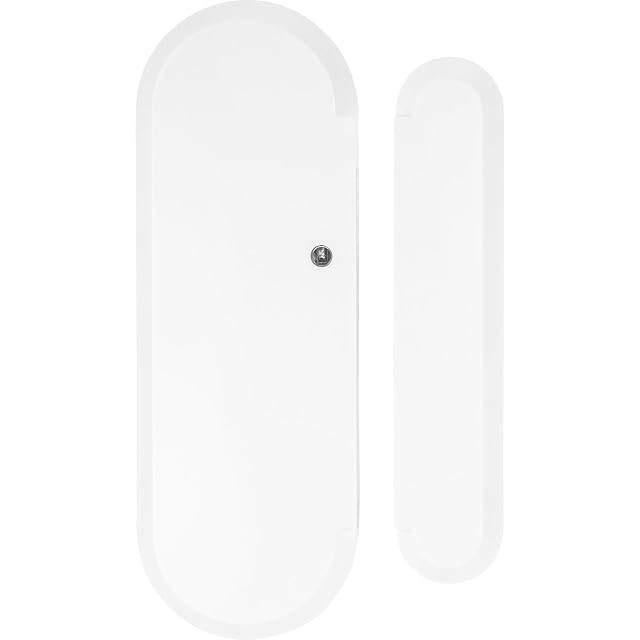
A Wi-Fi door sensor that connects straight to the router with no bridge or hub, on the Tuya platform. Sone publishes both module sizes and states adhesive mounting on two AAA cells.
The conclusion The right sensor for two doors and no hub. Past four sensors, buy a Zigbee hub instead.
This sensor exists for the household that wants one thing to work without
buying two things.
No bridge
It joins your Wi-Fi directly. There is no hub to buy, no coordinator to
configure, and no extra box in the hallway. For one door — a back door, a
garage door, a gate — that is exactly the right amount of complexity.
Where the approach stops working
At about three or four sensors. Wi-Fi radios use far more power than Zigbee
ones, so batteries go in months rather than years, and each sensor takes a slot
on the router. A household covering eight openings on Wi-Fi is a household
changing batteries constantly.
If you can see yourself wanting more than a few, buy a Zigbee hub now and use
the cheaper Zigbee sensors in this hub.
The published dimensions
70 × 25 mm (2.76 × 0.98 in) for the main module, 11 × 44 mm (0.43 × 1.73 in) for the magnet. That is more
information than most sensors provide and it is genuinely useful: a slim vinyl
glazing bead has less flat surface than it looks, and a magnet that does not
fit is a sensor that does not go on that window.
Tuya
A large third-party platform many small manufacturers build on. The app
exists, works and will keep working; the manufacturer does not control it.
That is a reasonable trade on a sensor.
Who it suits
One or two doors, in a house with no hub.
Availability
Not found on the American Amazon store, where the buy link falls back to a local search rather than to a page that does not exist.
Prices and availability are what Keepa reported on the date this page was updated; both move.
What reassures, and what does not
Strengths
No hub or bridge — it joins the router directly
Dimensions published for both halves, which few sensors do
Adhesive mounting, no drilling
Tuya scenes and scheduling
Compromises
Wi-Fi sensors have far shorter battery life than Zigbee ones
2.4 GHz only
Every sensor is another device on the network
Tuya is a third-party platform rather than the maker's own
Specifications
Protocol
Wi-Fi 2.4 GHz, direct — no bridge required
Platform
Tuya
Dimensions
Main module 70 × 25 mm (2.76 × 0.98 in), magnet 11 × 44 mm (0.43 × 1.73 in)
Power
2 × AAA, not included
Mounting
Double-sided adhesive
Gap
Sensor and magnet no more than 7 mm (0.28 in) apart
Alerts
Push notification about 5 s after opening or closing; reminder after 10 minutes if left open
Environment
Not for damp locations, stated by Sone
Amazon reference
B0CQ56T4M4
EAN
5905745463682
The questions we are asked
Is a Wi-Fi sensor a bad idea?
For one or two, no — it is the simplest thing that works, with nothing else to buy. For a dozen, yes: Wi-Fi sensors drain batteries far faster than Zigbee ones and each occupies a slot on your router. The crossover is around three or four sensors, and past that a hub pays for itself.
Why do the published dimensions matter?
Because the magnet has to fit where you intend to put it, and window frames rarely have as much flat surface as they appear to. A magnet 11 mm (0.43 in) wide fits a slim vinyl bead where a 20 mm (0.79 in) one does not. Very few listings tell you.
What is Tuya?
A large third-party smart home platform that many small manufacturers build on. It means the app exists and works, and it means the manufacturer does not control it. For a sensor that is a reasonable trade; for something you depend on, weigh it.
Our score
8.1/ 10
The right sensor for two doors and no hub. Past four sensors, buy a Zigbee hub instead.
What this one costs among door and window sensors
A reference exists on these Amazon stores: France, Germany, Italy, Spain. Listed is not the same as in stock — availability changes daily.
Details checked on September 2, 2026.
The buyer this one serves, among security devices
One or two doors, in a house with no hub and no intention of getting one.
Amazon reports what buyers took in the month before this page was last checked: at least 100.
The figure is a floor, rounded by Amazon, and read through Keepa — it says what buyers picked, not what a maker claims.
Sources
Specifications: the manufacturer sheet for home security products and the matching Amazon product page. Prices and availability: Keepa. Every figure on this page names its source.
For Smartvest Pro · wireless opening detector · triggers configured scenarios · doors and windows
The opening detector for ABUS's Smartvest Pro alarm. It reports unauthorized opening of doors, windows and patio doors, and triggers whatever scenarios have been configured on the panel.
Best for: An ABUS Smartvest Pro system being extended door by door.
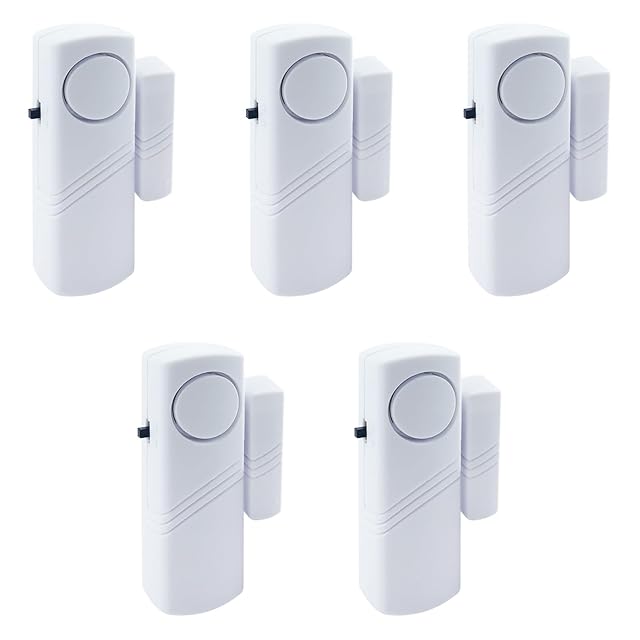
90 dB standalone siren · 3.54 × 1.18 × 0.79 in and about 0.08 lb, both published · 2 AAA, NOT included · a three-step install written out · five units for ten dollars · no gap figure, no battery life, no tamper detection
Five alarms for ten dollars with their dimensions and weight published — two figures the cheapest sirens here usually leave out.
Best for: Five openings on a tight budget, where the body has to be measured against a shallow frame first
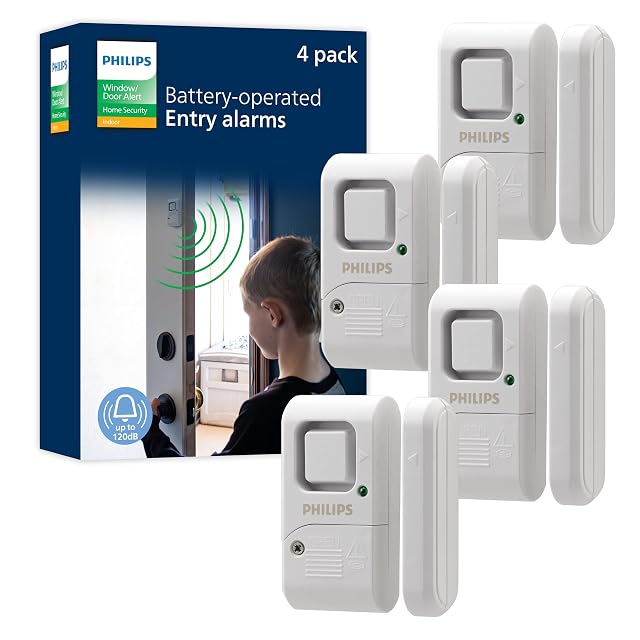
120 dB alarm or chime, switched on the side: OFF / chime / alarm · 4 LR44 cells SUPPLIED · a battery TEST BUTTON and a low-battery LED, the only test button on this shelf · double-sided tape included · no gap figure, no battery life, no tamper detection
The only sensor here with a button that tells you the battery is still good — which on an alarm nobody checks is worth more than it sounds.
Best for: A household that wants a chime for the back door in the day and an alarm on it at night