Skip to content

A holiday absence: five things worth doing first

An empty house announces itself with a dark window every evening, a mailbox filling up and parcels on a step — and those three are fixed with timers and boxes rather than with electronics. What the electronics are for is the two weeks itself: knowing an opening moved, seeing who called, and being told about water before it becomes a ceiling.

Two weeks away is the most predictable vulnerability a house has, and the fixes are cheap.

The thing that is not security at all

A leak. Twelve days of water from a failed washing machine hose can cost a great deal, and a connected sensor is the only product here that would tell you — provided somebody has a key and can reach the stopcock. Arrange that before you rely on it.

Knowing, at a distance

A contact sensor on a door reports the moment it starts to move, which is earlier and less ambiguous than a camera noticing somebody already inside. A camera then answers the question the sensor raises.

The pattern, not the brightness

A single lamp on a timer is a pattern. Two lamps in different rooms, switching at different times, with the second going off later, describes somebody moving through a house. Randomize both, and use plug-in timers rather than anything that needs the broadband to stay up.

The accumulation

Two weeks of mail in an overflowing mailbox, and parcels on a step, are among the clearest signals. A larger mailbox and a parcel box remove both, and neither needs power.

What not to do

Post about the holiday. No product on this site addresses that.

Which device does your home need?

You are away for a week or more
The aim is a house that looks lived in rather than one that looks defended.
You have neighbors you trust
That is worth more than any device, and it costs nothing.
You post about travel online
Announcing an empty house is the easiest mistake to avoid.
You are leaving a car
A car on the drive helps the appearance of occupancy considerably.

Picking by what you are protecting

Appearing occupied

The most effective measure. Lights, curtains and post all signal whether anyone is home.

Deterrence

Where visible security and an occupied appearance work together.

Detection

Where an alarm or camera matters most, because nobody is there to notice anything.

Response

Where a keyholder is what turns an alert into someone actually checking.

What actually protects, and what is noise

Lighting on timers
Random or varied timing looks lived in; a light on at the same hour every evening does not.
Post and deliveries
Mail piling up is the clearest signal a house is empty. Pausing deliveries or having someone collect matters.
A trusted keyholder
Someone who can check, move a car and respond to an alert. No device replaces this.
What you post online
Announcing dates publicly tells more people than you think. Posting afterwards costs nothing.
The obvious things
Ladders put away, side gate locked, valuables out of window view. These matter more than any purchase.

Which figure for which entrance

The signalThe fixThe effect
Post piling upPause it or have it collectedThe clearest empty-house signal
Dark house every nightVaried lighting timersLooks occupied
Empty driveA car left or a neighbor parkingStrong occupancy signal
Holiday posts onlinePost after you returnCosts nothing

Where this is usually botched

Announcing the trip publicly
Social media posts reach further than intended, and an announced absence is an invitation. Posting afterwards loses nothing.
Leaving post to accumulate
It is the single clearest sign nobody is home, visible from the street through most mailboxes and porches.
Lights on the same schedule every night
A rigid pattern reads as a timer. Varied timing is what makes it convincing.
Leaving ladders and tools outside
They provide both a target and a means of entry, and they are the easiest thing to put away.

By the home you have

The occasional traveler
Uses timers, pauses post and asks a neighbor to keep an eye out.
The frequent traveler
Wants an alarm with a keyholder or monitoring, since notifications alone achieve little abroad.
The long absence
Needs someone genuinely checking the property, not just its appearance from the street.

Batteries, updates and working life

The measures that protect an empty house are the ones nobody tests. A timer that has lost its programming after a power cut, a camera that stopped uploading, an alarm sensor with a dead battery: each fails silently and precisely while you are away.

  • Test timers, alarms and cameras before leaving rather than after arriving.
  • Replace sensor batteries before a long absence rather than during it.
  • Check remote access works from your phone before you travel.
  • Leave a keyholder with clear instructions and a working key.

Safety

Empty houses raise other risks too.

  • Turn off water at the stopcock for long absences; leaks do more damage than burglaries.
  • Do not leave a key hidden outside; the usual hiding places are all known.
  • Tell only people you trust, and be careful what is said publicly.
  • Leave contact details with your keyholder and check in occasionally.

The choices, and what settled them

  1. X-Sense SWS54

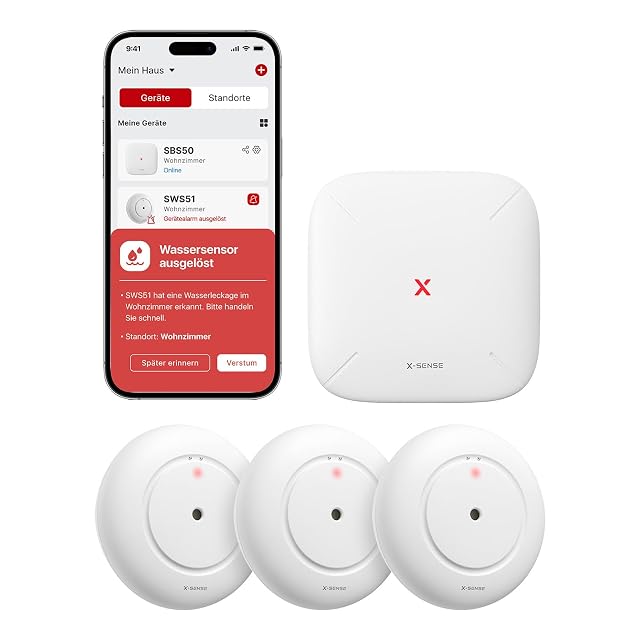
    Wi-Fi · push notifications · 2 upper and 4 lower sensors · sounds locally and on the base

    A connected leak detector: X-Sense states six sensing points — two upper and four lower — with a push notification to a phone as well as a local alarm and a tone from the base station.

    Best for: A property you leave — a holiday home, a second home, or any house whose owners work away.
    8.1/10

  2. Sone Smart One SB589

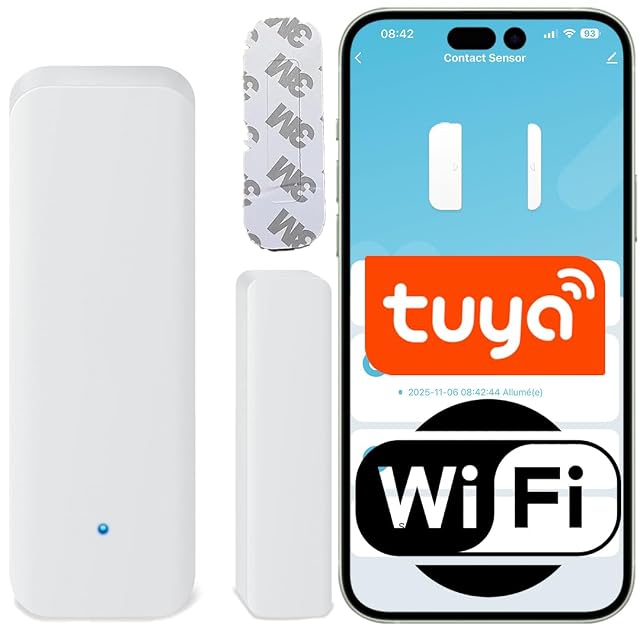
    Wi-Fi 2.4 GHz direct, no bridge · Tuya · 70 × 25 mm (2.76 × 0.98 in) and 11 × 44 mm (0.43 × 1.73 in) · 2 × AAA · adhesive

    A Wi-Fi door sensor that connects straight to the router with no bridge or hub, on the Tuya platform. Sone publishes both module sizes and states adhesive mounting on two AAA cells.

    Best for: One or two doors, in a house with no hub and no intention of getting one.

    8.1/10

  3. Tapo C500

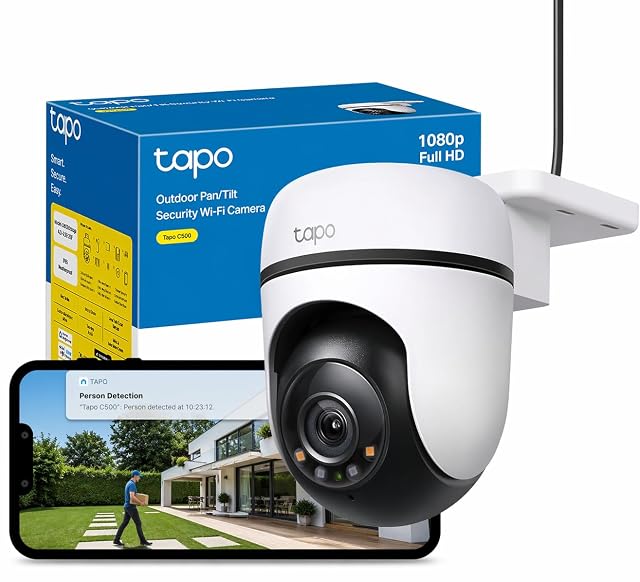
    1080p · 360° pan, 130° tilt · 30 m (98 ft) IR · microSD to 512 GB · IP65

    An entry-level pan-and-tilt outdoor camera that records to its own card. TP-Link states 1080p, a 360° horizontal sweep and night vision to 30 m (98 ft), and the listing is unusually frank about what the model is not.

    Best for: A first outdoor camera on a wall that already has a socket nearby, where 1080p is enough and the card matters more than the picture.

    7.5/10

    ≈ $78

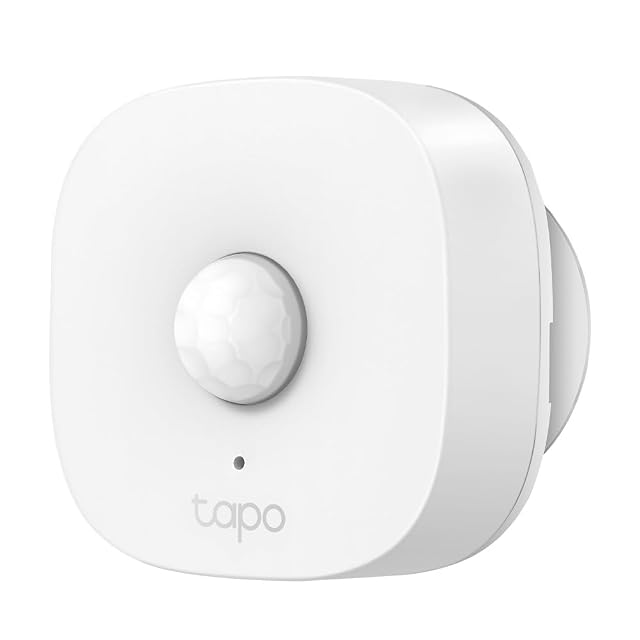
  4. Tapo T100

    PIR sensor · 7 m (23 ft) over 120° · adhesive or magnetic mounting · requires Tapo H100 hub

    TP-Link's motion sensor for the Tapo ecosystem: wide-area PIR detection, mounted with the supplied adhesive or by its built-in magnets, and requiring the Tapo H100 hub to work at all.

    Best for: A household already using Tapo cameras and plugs, adding motion to the same app.

    6.9/10

  5. BASI 1000-0305

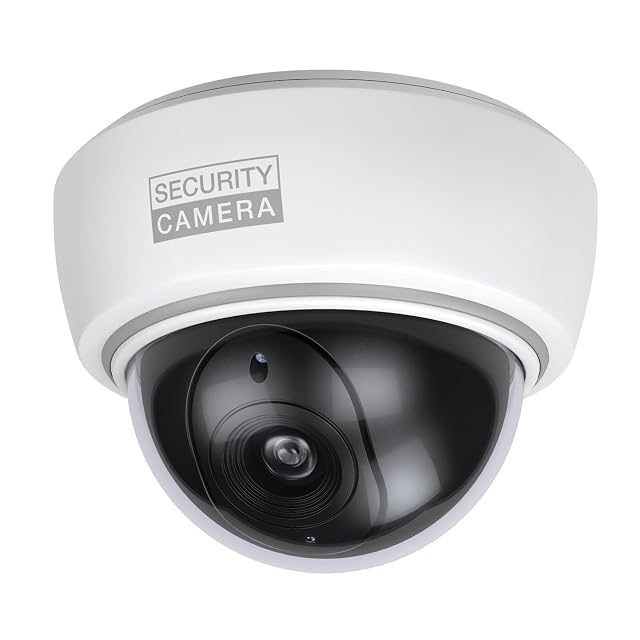
    Dome shell · blinking LED · indoor or outdoor · fixings included · records nothing

    A dome-shaped shell with a blinking LED and a molded lens, sold by a German lock and security hardware maker. It records nothing at all, and this page will not suggest otherwise.

    Best for: A low-value approach already covered by a real camera elsewhere, where a second housing costs nine euros instead of ninety.

    7.2/10

The questions we are asked

Do timers on lamps actually help?

Only if they are random. A lamp switching at 19:00 exactly, every evening for two weeks, tells a watcher the house is on a timer and therefore empty. Randomize the time, use two lamps in different rooms, and switch something seen as a glow rather than a fully lit room behind a curtain.

What is the most overlooked risk of two weeks away?

Water. A washing machine hose or a water heater failing on day two, unnoticed for twelve days, can do serious damage — and a connected leak sensor is the only product here that would tell you.

What is the most effective thing I can do?

Make the house look occupied. Varied lighting, no mail piling up and a car on the drive do more than most equipment.

Should I tell people I am away?

Tell the neighbors you trust. Do not announce it publicly online, and save the photographs until you are back.

What about mail?

Mail piling up is the clearest sign nobody is home. Pausing deliveries or having someone collect it is a genuinely important step.

Do I need monitoring while away?

A notification you cannot act on achieves little abroad. A keyholder or a monitored plan is what turns an alert into a response.

What about water?

Turning off the stopcock for long absences is sensible. A leak in an empty house can cause serious damage.

Each device, and the door it watches

X-Sense SWS54

Designed for: A property you leave — a holiday home, a second home, or any house whose owners work away.
Its main asset: Push notification to a phone: it works when the house is empty

Its main gap: Requires the X-Sense base station and Wi-Fi

Read the full review →

Sone Smart One SB589

Designed for: One or two doors, in a house with no hub and no intention of getting one.

Its main asset: No hub or bridge — it joins the router directly

Its main gap: Wi-Fi sensors have far shorter battery life than Zigbee ones

Read the full review →

Tapo C500 · $78

Designed for: A first outdoor camera on a wall that already has a socket nearby, where 1080p is enough and the card matters more than the picture.

Its main asset: Records to a microSD card up to 512 GB with no subscription required, per TP-Link

Its main gap: 1080p only: TP-Link itself points buyers at the C510W or C520WS for 2K

Read the full review →

Tapo T100

Designed for: A household already using Tapo cameras and plugs, adding motion to the same app.

Its main asset: A low-cost way to add motion to a Tapo home

Its main gap: Requires the Tapo H100 hub — useless without it

Read the full review →

BASI 1000-0305

Designed for: A low-value approach already covered by a real camera elsewhere, where a second housing costs nine euros instead of ninety.

Its main asset: Housing molded to resemble a real dome camera, with a lens dummy behind the bubble

Its main gap: It records nothing — there is no camera, no card, no image, ever

Read the full review →

What each level of spending protects

What to add to it

Accessories and spares from the same aisle, at the price we read. Confirm they suit the device you choose before ordering: it turns on the model and the part number, which the listing gives.

The short decision

Comparisons that matter here

Device against device, already covered, inside this guide or this aisle.

What this comparison is built on

The devices listed are drawn from the catalog of this site. Specifications are those the maker and the Amazon listing publish; prices are what Keepa recorded on the date shown, and both move. The order follows declared specifications, the balance between stated strengths and stated limits, and price. No device here has been installed or tested by us, and no page claims it was.

Last checked on

Prices quoted in these summaries are dated readings. The live price is shown next to each product.

The tool we use ourselves

Chosen your tool? Now buy it at the right price.

Cameras, alarm kits and safes swing by thirty dollars or more across the year, and the biggest "discounts" often land at prices the same model sold for six weeks earlier. UniverTrack tracks the real price history across retailers, spots fake reductions, and alerts you when it is genuinely the moment to buy.

Real price historyBuy-now alertsAI buying assistant
Try free for 14 days →
No commitment · Cancel in one click · 5 languages