A first security setup: four things, in this order
Most people start with a camera, and it is the last of the four worth buying. The order that actually helps: make the door harder to force, be able to open it a crack to a stranger, know when something opens, and only then record what happens. Where parcels are left at the door, a lockable box comes before all of it.
There is a natural order to securing a house, and almost nobody follows it.
One: stop the parcel theft
Where parcels are left at the door, a lockable box on the step ends it: it is one of the few risks a single object removes. This catalog does not carry one, and in a building where a doorman or mailroom takes deliveries the step does not apply.
Two: fix the door
Not with a new lock — with the cylinder, which is what gets attacked, and with screws long enough to go through the jamb into the framing. A strike plate held by two 25 mm (0.98 in) screws is what actually fails, and 80 mm (3.15 in) screws cost nothing. A door chain comes next, to open the door to a stranger without opening it wide: it is not a security device, and it gives to a shoulder.
Three: know when something opens
A contact sensor reports the moment a door or window starts to move, which is earlier and less ambiguous than a camera noticing somebody already inside. The SONE Smart One does it over direct Wi-Fi, with no hub to buy separately.
Four: then the camera
Now it is worth having, because everything it records is already less likely to happen. Start outdoors, at the approach people actually use.
What each step assumes
That the previous one is done. A camera on a door with a builder’s cylinder records the door being opened.
Which device does your home need?
You are starting from nothing
Locks and lighting first, because they prevent rather than record.
You want to know what happened
A camera, which documents but does not stop anything on its own.
You want to be warned
An alarm, whose value lies in the noise and the response it triggers.
You rent
Everything you fit has to come off again, which rules out a good deal and leaves plenty.
Picking by what you are protecting
Deterrence
Where lighting, visible cameras and good locks do most of the work, because most opportunists move on to an easier target.
Detection
Where sensors and alarms tell you something is happening, which is a different job from preventing it.
Evidence
Where cameras earn their place, provided the footage is actually usable and actually kept.
Peace of mind
Where the honest answer is that a system you understand and use beats a better one you ignore.
What actually protects, and what is noise
Start with the physical
A door that resists and a window that locks do more than any camera. Physical security is the layer everything else sits on.
Whether you will maintain it
Batteries, app updates and false alarms all need attention. A system nobody maintains stops working quietly.
Subscription or not
Some devices are far less useful without a paid plan. Knowing that before buying avoids an unwelcome discovery.
Where the recordings live
Local storage or cloud, and who can reach them. It matters for privacy and for whether footage survives a theft of the device.
What you can legally do
Cameras pointing beyond your property raise real obligations in many countries, and it is easier to check first than to argue later.
Which figure for which entrance
Your goal
The first purchase
Why
Prevent entry
Better locks and lighting
It stops rather than records
Know what happened
A camera
Evidence, not prevention
Be alerted
An alarm with sensors
Noise and response
Rented home
Non-permanent devices
Everything must come off
Where this is usually botched
Buying cameras before fixing the locks
A camera records an entry that a better lock would have prevented. The physical layer comes first for good reason.
Assuming a camera stops a burglary
A visible camera deters some people. It does not prevent entry, and expecting it to is a common and costly assumption.
Ignoring the running costs
Subscriptions, batteries and replacement parts continue after the purchase. They are easy to overlook and hard to escape.
Never testing the system
A sensor with a dead battery and a camera that stopped uploading both fail silently. Periodic testing is what catches that.
By the home you have
The first-time householder
Fixes the locks, adds lighting, then considers a camera at the front door.
The renter
Chooses removable devices and checks the lease before drilling anything.
The one who travels
Values remote alerts and the appearance of occupancy more than recording quality.
Batteries, updates and working life
Security equipment fails quietly, which is the worst way for it to fail. Batteries go dead, lenses fog, apps lose their connection and nobody notices until the day it mattered.
Test sensors and cameras on a set schedule rather than assuming they work.
Replace batteries before they are flat; many devices warn late.
Clean camera lenses and PIR windows; spiders and dust cause most false alerts.
Keep firmware current, since security devices are network devices too.
Safety
Security equipment carries obligations as well as benefits.
Check what your country requires of cameras that see beyond your own property.
Change default passwords on every connected device, without exception.
Do not block fire escape routes with security measures.
Tell household members how to disarm the alarm before it becomes an emergency.
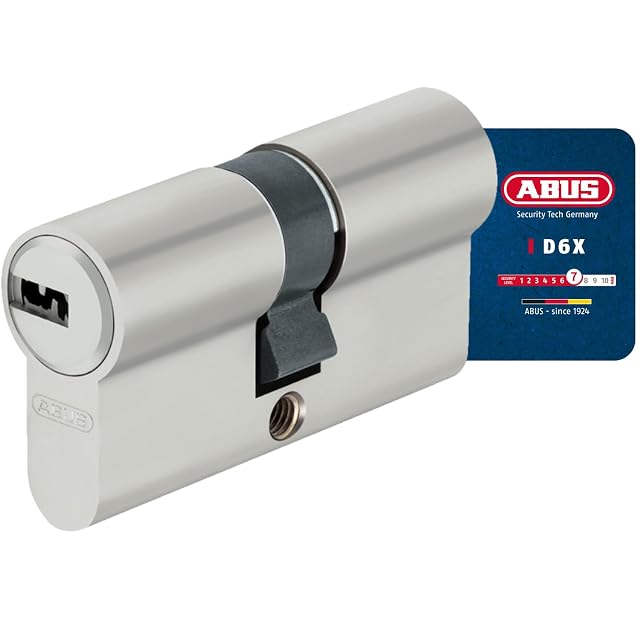
30/30 mm (1.18 in) · anti-pick pins · emergency function · 5 reversible keys · code card
ABUS's everyday euro cylinder: special pins for pick and manipulation resistance, an emergency function that works with a key in the other side, and five reversible keys with a code card for reordering.
Best for: Replacing a builder's cylinder on a front door, at the smallest sensible price.
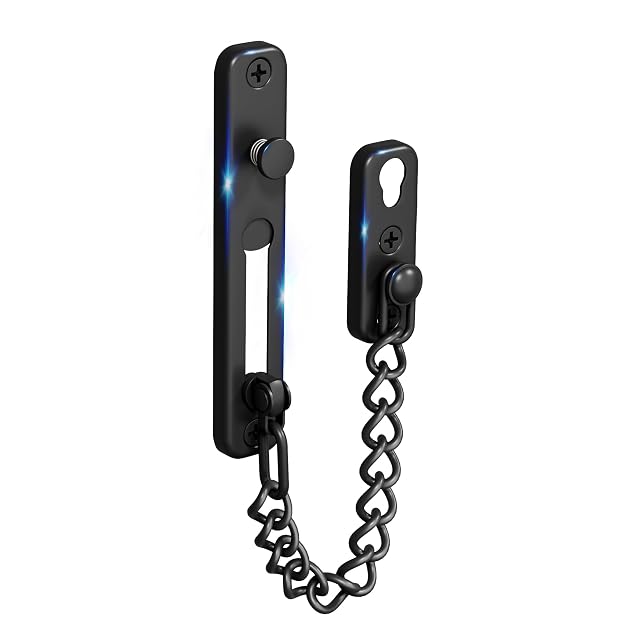
Stainless door chain · 200 mm (7.87 in) chain · spring button · fits timber and metal · inside only
A stainless steel door chain with a reinforced link and a spring button, operated only from inside. SAYAYO states 200 mm (7.87 in) of chain, a 123 mm (4.84 in) main plate, and a complete screw set.
Best for: Opening a door to an unknown caller without opening it fully — and nothing more than that.
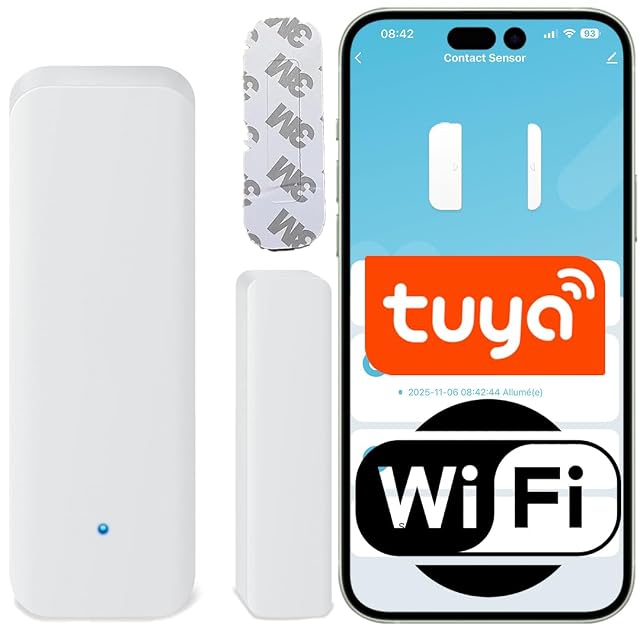
Wi-Fi 2.4 GHz direct, no bridge · Tuya · 70 × 25 mm (2.76 × 0.98 in) and 11 × 44 mm (0.43 × 1.73 in) · 2 × AAA · adhesive
A Wi-Fi door sensor that connects straight to the router with no bridge or hub, on the Tuya platform. Sone publishes both module sizes and states adhesive mounting on two AAA cells.
Best for: One or two doors, in a house with no hub and no intention of getting one.
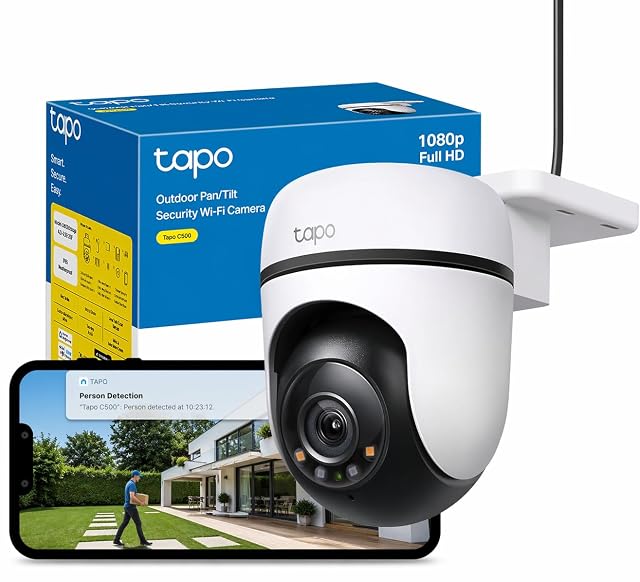
1080p · 360° pan, 130° tilt · 30 m (98 ft) IR · microSD to 512 GB · IP65
An entry-level pan-and-tilt outdoor camera that records to its own card. TP-Link states 1080p, a 360° horizontal sweep and night vision to 30 m (98 ft), and the listing is unusually frank about what the model is not.
Best for: A first outdoor camera on a wall that already has a socket nearby, where 1080p is enough and the card matters more than the picture.
Because a camera records what has already happened. A better cylinder, a parcel box and longer screws in a strike plate change whether it happens. Buy the things that prevent before the things that document — and then buy the camera, because knowing is worth something too.
How much does a sensible first setup cost?
Under a hundred dollars for a cylinder, a camera and a sensor, plus a box of long screws that costs almost nothing and does more than any of them. The expensive parts of home security are rarely the effective ones.
What should I buy first?
Better locks and lighting. They prevent entry, while cameras record it. Physical security is the layer everything else depends on.
Does a camera deter burglars?
A visible camera deters some people, particularly opportunists. It does not physically prevent entry, and treating it as prevention is a common mistake.
Do I need a subscription?
Some devices lose most of their usefulness without one. Check what a device does with no plan before buying it, not after.
Can I put a camera anywhere I like?
Cameras that see beyond your own property raise real legal obligations in many countries. It is worth checking what applies where you live.
How often should I test the system?
On a schedule you actually keep. Security equipment fails silently, and the day you discover it is usually the worst possible day.
What if I rent?
Choose devices that fit without drilling and come off cleanly. Plenty of useful equipment works that way, and the lease decides the rest.
Accessories and spares from the same aisle, at the price we read. Confirm they suit the device you choose before ordering: it turns on the model and the part number, which the listing gives.
Amazon Basics 128 GB microSDXC · Camera memory cards — 128 GB · up to 200 MB/s read · adapter included · general purpose · $45
Amazon Basics 256 GB microSDXC · Camera memory cards — 256 GB · up to 200 MB/s read · adapter included · general purpose · $72
The devices listed are drawn from the catalog of this site. Specifications are those the maker and the Amazon listing publish; prices are what Keepa recorded on the date shown, and both move. The order follows declared specifications, the balance between stated strengths and stated limits, and price. No device here has been installed or tested by us, and no page claims it was.
Last checked on
Prices quoted in these summaries are dated readings. The live price is shown next to each product.
The tool we use ourselves
Chosen your tool? Now buy it at the right price.
Cameras, alarm kits and safes swing by thirty dollars or more
across the
year, and the biggest "discounts" often land at prices the same model sold for six weeks
earlier.
UniverTrack tracks the real price history across retailers, spots fake
reductions, and alerts you when it is genuinely the moment to buy.
Real price historyBuy-now alertsAI buying assistant