The conclusion The no-monthly-fee promise is the clearest here and worth about a thousand dollars over three years against a dollar-a-day plan — that is a real argument and eufy makes it in one line. What comes with it is the thinnest listing on the shelf: five pieces named, mounts included, and nothing whatever about the siren, the hub battery, the broadband fallback or the radio. This shelf's introduction calls those the specification that counts, and this page does not contain it.
What the maker puts in writing
What’s in the box: HomeBase, keypad, motion sensor, 2 × entry sensors, manual, Happy Card
No monthly fees: eufy Security products are one-time purchases
Easy setup: install in minutes, mounts included
Instant alerts through the eufy Security app
No siren decibels. No battery. No connectivity. No radio. No expansion limit.
The fee argument is real
And it is the whole argument.
A subscription kit sells a response: an agent, a dispatch, a cellular link that
works when yours does not.
This sells hardware that alerts a phone, once, for a hundred and sixty dollars.
Against a dollar a day, three years is about a thousand dollars of difference.
That is not a small point.
And the power question is unanswered
Which this shelf’s introduction asks first.
Whether the hub has a battery when the mains goes.
SimpliSafe states twenty-four hours. Honeywell ships a twelve-volt lead-acid
battery in the box. This says nothing at all.
Plan on the alarm being out while the power is, and ask the seller if that
decides it.
Four claims, three adjectives
Easy. Instant. One-time.
The fourth is the contents of the box, which is a fact.
Of the four things this shelf compares, the page answers one partially and one
completely. The middle two — radio protocol and range, backup power and
connectivity — are absent.
Availability
On sale at around $160 on the American Amazon store at the time of checking.
Prices and availability are what Keepa reported on the date this page was updated; both move.
Prices quoted in this text were read on October 8, 2026. The live price is at the top of the page.
What reassures, and what does not
Strengths
No monthly fee, stated flatly, with no feature held behind a plan
Wall mounts included for the keypad and the motion sensor
Instant app alerts on motion or a breach
Two entry sensors, so a front and a back door
A hundred and sixty dollars with nothing further to pay
Part of a larger eufy ecosystem of cameras and doorbells
Compromises
The entire listing is one paragraph of bullet text
No siren level, no battery, no connectivity and no radio published
Nothing about what happens when the mains or the broadband fails
No expansion limit and no compatible sensor list
Two entry sensors covers two openings
The only specification offered is the contents of the box
Specifications
Contents
HomeBase, keypad, motion sensor, two entry sensors, owner's manual and a Happy Card — stated, five functional pieces
Monitoring
No monthly fees, stated: eufy Security products are one-time purchases. It is the plainest commercial statement on this shelf, and the opposite of the four subscription-gated kits here
Control
A wall-mountable keypad, plus instant alerts through the eufy Security app as soon as motion or a breach is detected
Installation
Entry sensors attach to doors and windows; the motion sensor and keypad mount to walls with the included mounts — stated, and the mounts being included is worth noting
Siren
Not published. No decibel figure, and the listing does not say whether the siren is in the HomeBase or separate
Backup power
Not published. No battery is mentioned for the HomeBase, and this shelf's introduction puts mains failure first
Connectivity
Not published beyond the app. No Wi-Fi band, no Ethernet, and no mobile fallback for a dropped broadband line
Radio
Not published — no frequency, no protocol, no range
Expansion
Not published. No device limit and no compatible sensor list appears
Amazon reference
B083KC44TG
EAN
0194644180744
The questions we are asked
Is no monthly fee worth the missing figures?
It depends which of the two things on this shelf you are buying. A subscription kit sells you a response — an agent, a dispatch, a cellular link that works when yours does not — and charges monthly for it. This sells you hardware that alerts your phone, once, for a hundred and sixty dollars. Over three years the difference against a dollar-a-day plan is about a thousand dollars, which is real money. What you give up is everything this shelf's introduction calls the specification that counts: no stated battery, no stated fallback.
What happens when the power goes out?
The listing does not say, and on this shelf that is the omission that matters. This shelf's introduction opens on it: whether the hub has a battery when the mains goes. SimpliSafe states twenty-four hours; Honeywell ships a twelve-volt lead-acid battery in the box; this says nothing. HomeBase units in eufy's range have generally been mains-powered devices without a user-stated battery runtime, so plan on the alarm being out while the power is. Ask the seller before buying if that is the deciding factor.
How much does it actually tell you?
The contents of the box, that installation is easy, that there are no fees, and that alerts are instant — four claims, three of which are adjectives. Of the four axes this shelf's introduction says this shelf compares — sensor count and expansion, radio protocol and range, backup power and connectivity, monitoring options — this listing answers the first partially and the last completely, and the middle two not at all. It is the shortest page on the shelf by a wide margin.
Against the rest of the alarm kits
Between security devices of the same category and nearby price. Shown: what they all state. A half-filled column says nothing.
Model
Price
Contents
Monitoring
Siren
Backup power
eufy Security T8990121 5-Piece Home Alarm Kit
$160
HomeBase, keypad, motion sensor, two entry sensors, owner's manual and a Happy Card — stated, five functional pieces
No monthly fees, stated: eufy Security products are one-time purchases. It is the plainest commercial statement on this shelf, and the opposite of the four subscription-gated kits here
Not published. No decibel figure, and the listing does not say whether the siren is in the HomeBase or separate
Not published. No battery is mentioned for the HomeBase, and this shelf's introduction puts mains failure first
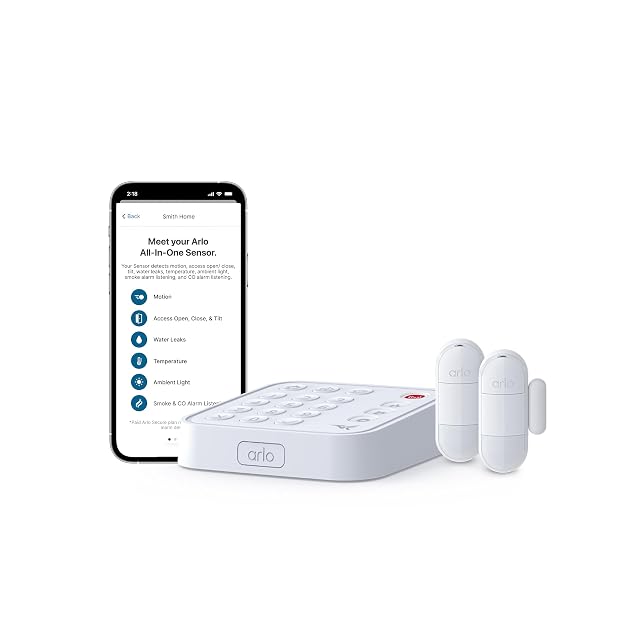
A wired plug-in keypad sensor hub and two wire-free all-in-one sensors — three pieces, which is the lowest count on this shelf and deliberately so
24/7 professional monitoring with live security experts, video and image verification, and priority dispatch — optional and requiring a paid plan after a trial. Verification is stated to reduce false alarms and gain dispatch priority
Built into the hub, stated. No decibel figure
Not published. The hub is a plug-in wired device and no battery duration appears, which on a mains-powered hub is the figure that matters most
Base station, smash-safe keypad, four entry sensors, motion sensor and a panic button — eight pieces, stated
Optional 24/7 professional monitoring, from less than a dollar a day with no long-term contract, one free month included. The panic button requires the subscription to dispatch police
100 dB, built into the base station — stated. It is the only decibel figure published on this shelf, where seven of the eight listings describe a siren without saying how loud it is
A base station battery that lasts up to 24 hours — stated. It is the only battery duration on this shelf, and the figure this shelf's introduction asks for first
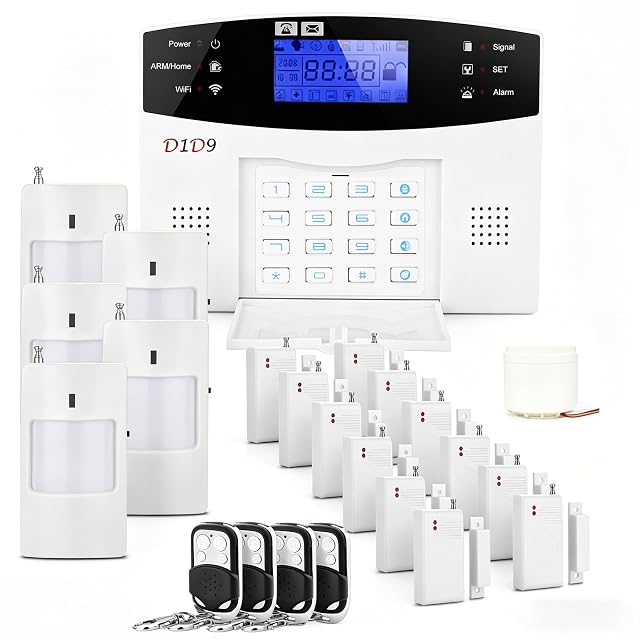
24 pieces, stated, with door and window sensors and motion sensors named and a remote. The individual counts are NOT broken down, which is the same omission as the other large-piece-count kit on this shelf
No subscriptions and no hidden fees, stated. There is no agent and no dispatch: the alerts go to you by app, SMS or call
Not published as a decibel figure. The SOS is stated to trigger the siren instantly and no sound level appears anywhere, where two kits on this shelf publish 100 and 120 dB
Not published. No hub battery and no runtime is stated, which this shelf's introduction puts first
What separates the models, in security devices
If price decides: RenseCum A107F home alarm system, GSM/4G and Wi-Fi, 24 pieces, at $129.
What this one costs among alarm kits
Details checked on October 8, 2026.
The buyer this one serves, among security devices
A small apartment where the monthly fee is the objection and local alerts are enough
Amazon reports what buyers took in the month before this page was last checked: at least 200.
The figure is a floor, rounded by Amazon, and read through Keepa — it says what buyers picked, not what a maker claims.
Sources
Specifications: the manufacturer sheet for home security products and the matching Amazon product page. Prices and availability: Keepa. Every figure on this page names its source.
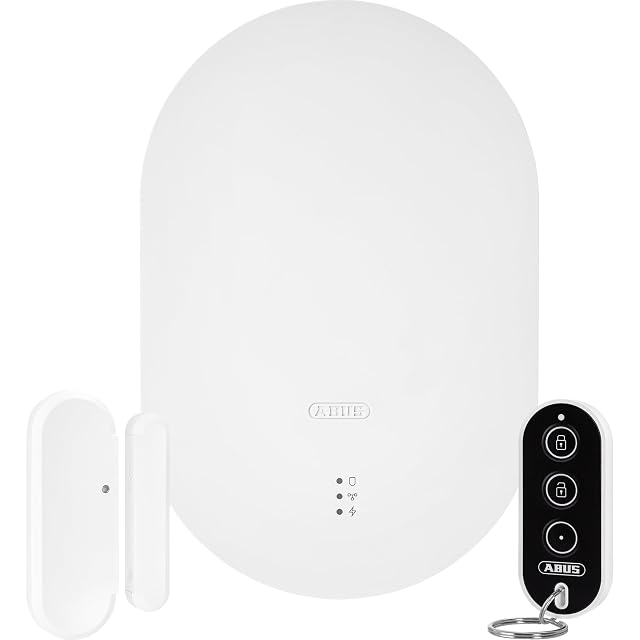
Hub and siren · expandable · DIY installation · app control · voice assistant compatible
ABUS's Smartvest Pro starter set: the hub and siren of a system designed to be expanded, installable without prior knowledge and operated by app, from a manufacturer whose main business is physical security.
Best for: Someone building a system over time who wants the sensors and the door hardware to come from the same maker.
Wired plug-in keypad sensor hub plus 2 all-in-one sensors · 8 detection functions per sensor: motion, open/close, water leak, freeze, smoke/CO listening, tilt, ambient light · one tap emergency response · SecureLink named with no protocol or range
Two sensors that each do eight jobs — which is a genuinely different answer to a shelf that counts pieces.
Best for: An apartment where two well-placed sensors beat eight single-purpose ones, and leaks matter as much as doors
24 pieces · 4G and Wi-Fi, with a mobile fallback that needs no subscription · SIM card or Wi-Fi required · no monthly fee · batteries described as gifts, not warranted · no siren level, no radio frequency, no sensor breakdown
The only kit here with a mobile fallback that costs nothing monthly — and the only one that disclaims its own batteries.
Best for: A second property or a vacation rental, where nobody will be paying a subscription and 4G is the only reliable link