Night image depends on the illuminator, not on the sensor count · review
Tapo C520WS review
A 2560 × 1440 sensor behind an F1.6 lens gives more color in low light before it turns on its spotlights, and it can be wired to Ethernet instead of trusting Wi-Fi.
The conclusion The one to buy in this hub if the camera is going anywhere Wi-Fi is marginal. The Ethernet port is worth more than the extra megapixels.
TP-Link recommends this camera on the listing of its own cheaper model, which
tells you where it sits: the C520WS is what the C500 buyer upgrades to for
2K, for color at night and for the ability to plug in a network cable.
The two features that justify the price
The first is the sensor. TP-Link states an F1.6 aperture with a Starlight
sensor, producing color in light where an ordinary camera has already
switched to infrared. That matters because a monochrome image of a person in
a dark coat tells you a person was there, while a color image tells you what they were wearing. TP-Link offers three night modes: full color around the clock, a smart mode that turns the spotlights on only when an event is detected, and infrared.
The second is the Ethernet port, and it is the more important of the two. On
an outside wall at the far end of a house, Wi-Fi drops intermittently rather
than completely, which produces a camera that appears to work and has gaps in
its recording. A cable ends that argument. It carries no power on this model,
so a socket is still required — this is not a PoE camera.
What the specification does not say
Color at night is a function of available light. A Starlight sensor gathers
more of what there is; it does not manufacture any. On a lane with no street
lighting, the camera will be using infrared like everything else, or its own
spotlight, which announces its position.
IP66 is declared by TP-Link and describes dust and jetting water. It says
nothing about how long a gasket lasts in ultraviolet light.
Who it suits
Anyone whose first camera dropped off the network, and anyone who wants to
see color rather than shapes after dark. It shares this hub’s top rating, 8.1/10, with the Imou S21FEP and the Reolink RLC-510WA, for a position with outlet power.
Availability
Not found on the American Amazon store, where the buy link falls back to a local search rather than to a page that does not exist.
Prices and availability are what Keepa reported on the date this page was updated; both move.
What reassures, and what does not
Strengths
Ethernet as well as Wi-Fi — the only camera in this hub to state it
Starlight sensor and F1.6 lens: more color in low light, and three night modes to choose from
2K (2560 × 1440), stated by TP-Link as 1.7× the pixels of 1080p
Person, pet and vehicle detection at no extra cost, per the manufacturer
Compromises
Color at night still needs some ambient light — it is a sensitive sensor, not night sight
IP66 is a declared rating, not a test result from here
Mains powered, so the socket decides the position
Cloud retention beyond the card remains a Tapo Care subscription
Specifications
Resolution
2K QHD, 4 MP (2560 × 1440), stated by TP-Link
Lens
F1.6 aperture with a Starlight sensor
Coverage
360° horizontal, 130° vertical
Night vision
Starlight color, with an adjustable spotlight and audible alarm
Storage
microSD, or Tapo Care cloud subscription
Weather rating
IP66, stated by the manufacturer
Connection
Wi-Fi or Ethernet
Night modes
Full color, smart (spotlights on events) or infrared
Detection
Person, pet and vehicle AI, free, stated by TP-Link
Antennas
Two external antennas
Amazon reference
B0CCW8GHT8
EAN
4895252501599
The questions we are asked
What does Starlight actually mean?
It is a marketing name for a sensor and lens combination tuned for low light — here an F1.6 aperture, which admits more light than a lens at F2.0. TP-Link states it produces color in poorer light. It is sensitivity, not night vision: in genuine darkness the camera still falls back on infrared or on its spotlight.
Is the Ethernet port worth paying for?
On an outside wall, usually yes. Wi-Fi is the part of an outdoor camera installation most likely to fail, and it fails intermittently, which is worse than failing outright. A cable removes the variable — and on this camera it also carries no power, so a socket is still needed.
How does it compare with the C500?
TP-Link answers this on its own C500 listing: it recommends the C520WS to anyone wanting 2K, full-color night vision or an Ethernet connection. The C500 is the 1080p wireless-only entry point; this is the model above it.
Our score
8.1/ 10
The one to buy in this hub if the camera is going anywhere Wi-Fi is marginal. The Ethernet port is worth more than the extra megapixels.
What this one costs among outdoor security cameras
A reference exists on these Amazon stores: France, Germany, Italy, Spain, United Kingdom. Listed is not the same as in stock — availability changes daily.
Details checked on September 2, 2026.
The buyer this one serves, among security devices
An outdoor position where Wi-Fi is unreliable and a network cable can be run, or where color at night matters more than an unlit image.
Specifications: the manufacturer sheet for home security products and the matching Amazon product page. Prices and availability: Keepa. Every figure on this page names its source.
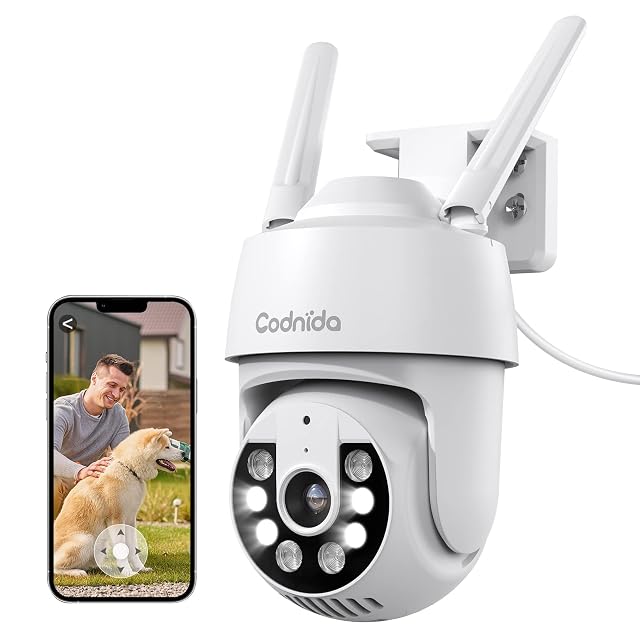
2K 3MP · 350° pan, 90° tilt · color night vision · siren · 2.4 GHz only
A 2K pan-and-tilt outdoor camera with a floodlight and a siren that trigger together on motion. Codnida states auto-tracking, a PIR sensor and custom detection zones, and the camera runs on mains power rather than a battery.
Best for: A driveway or side passage where the point is to make an approach visible and audible, not just recorded.
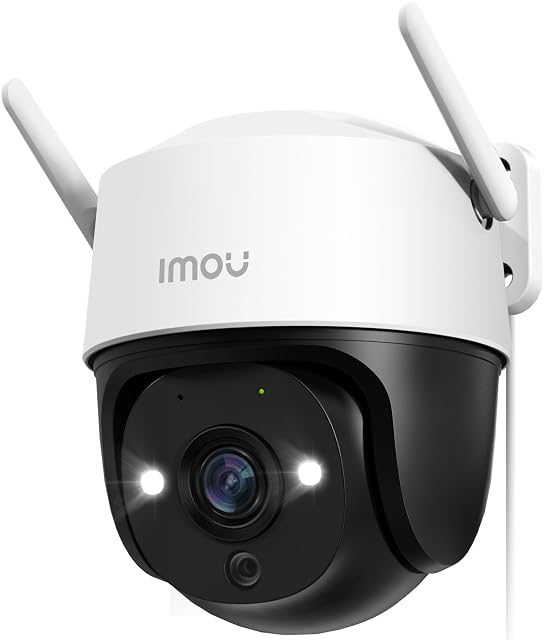
2K 3MP · 355° pan, 90° tilt · full-color night vision · 110 dB siren · IP66
Imou states a 3 MP sensor, four night-vision modes including full color, AI person and vehicle detection and a 110 dB siren, in a dual-antenna housing rated IP66. It also tracks what it detects, as the Codnida Q30S in this hub does.
Best for: A garden or driveway where false alarms from foliage and insects have already made a cheaper camera unusable.
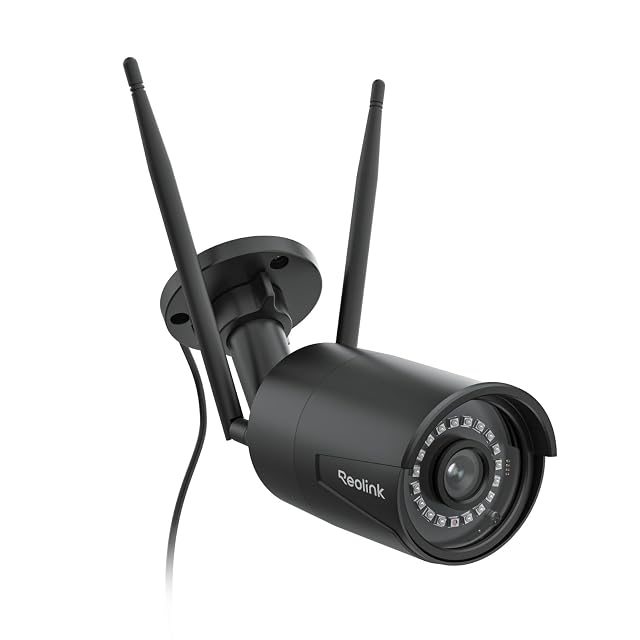
5MP · dual-band 2.4/5 GHz · 30 m (98 ft) IR · microSD to 512 GB, NVR or FTP · IP66
A fixed 5 MP bullet camera rather than a pan-and-tilt, and the only camera in this hub that will record to an FTP server, as well as to a Reolink NVR or a card. Reolink states dual-band Wi-Fi, person, vehicle and animal detection, and 30 m (98 ft) night vision.
Best for: Someone who wants a fixed camera pointed at one thing permanently, recorded somewhere other than the camera itself.