The conclusion The only listing on this shelf that tells you what it cannot do: Leak Sensor 1 has no built-in siren, in YoLink's own fourth bullet, with the SpeakerHub named as the fix. For an unattended house that is the right design — the response is a shut-off valve closing over LoRa with no internet, which is worth more than a noise in an empty cellar. Four sensors and a hub for sixty dollars, with no battery life published and base contacts only.
What the maker puts in writing
“Silent design: Leak Sensor 1 has no built-in siren; add SpeakerHub or a YoLink siren for audible or spoken alerts if desired.”
Hub plus four Leak Sensor 1 units · toilets, sinks, water heaters, laundry, dishwashers, sump areas
Long-range LoRa, up to 1/4-mile open air · app, email and SMS/text alerts, sensors named by location
“Works even without internet: with YoLink Control-D2D, sensors can directly trigger YoLink sirens or shutoff valves for local protection during outages.”
One hub supports 300+ YoLink devices
“The ‘Number of Items: 5’ refers to the five individual products in the package, not five sensors.”
No siren. No battery life. No probe. No cable. No IP rating.
It tells you what it cannot do
Which is the most unusual sentence on this shelf.
Of eight detectors here, four publish a decibel figure and four do not. Only this
one says plainly that there is no siren, and names what to add if you want one.
The other silent detectors simply never mention sound, and leave you to work it
out from an absence.
This shelf’s introduction makes local versus remote the first question to settle.
This is the only listing that answers it instead of making you deduce it.
Silence is a design, not a fault
If the house is empty.
A siren in a cellar at three in the morning wakes nobody. What you want is the
water stopped.
The sensor alerts the app, an email and a text — and with Control-D2D it closes a
YoLink shut-off valve directly over LoRa, with no hub, no router and no internet.
That is an action rather than an announcement.
If somebody is always in, the maker’s own Sensor 4 on this shelf has a 105 dB
alarm and is the better buy.
Named by location
Which is the practical half of the alert.
Four sensors reporting “leak detected” tell you almost nothing.
Four reporting “dishwasher”, “cylinder”, “washing machine” and “sump” tell you
where to go.
And no battery figure, oddly
Because the maker’s own Sensor 4 publishes one.
Two AAA cells, up to five years, on the noisy version.
A silent sensor should last longer, not less — it never drives a buzzer. The
figure has probably just been left off the page.
On a four-sensor kit the question is when all four come due, not whether. Ask.
Availability
On sale at around $60 on the American Amazon store at the time of checking.
Prices and availability are what Keepa reported on the date this page was updated; both move.
Prices quoted in this text were read on October 8, 2026. The live price is at the top of the page.
What reassures, and what does not
Strengths
It states its own limitation: no siren, in its own bullet
A shut-off valve that fires with the internet down
LoRa to a quarter of a mile
App, email AND SMS alerts
Sensors named by location, so an alert says which appliance
Four sensors and the hub for sixty dollars
Compromises
No siren: a leak while you are asleep makes no sound
No battery life published, where the maker's own Sensor 4 states five years
Base contacts only: no probe, no cable
No IP rating
A SpeakerHub or YoLink siren is an extra purchase to get sound
The shut-off valve is also a separate purchase
Specifications
Alerting
Remote only, and stated outright: "Leak Sensor 1 has NO BUILT-IN SIREN; add SpeakerHub or a YoLink siren for audible or spoken alerts if desired." This shelf's introduction makes local versus remote the first distinction worth understanding, and this is the only listing on this shelf that declares its own side of it rather than leaving you to infer it from silence
Shut-off valve
With YoLink Control-D2D the sensors directly trigger a YoLink siren or shut-off valve for local protection during outages — stated. On a silent sensor that device-to-device link is not a convenience but the entire response: the sensor cannot shout, so it closes a valve instead
Range
Long-range LoRa, reliable where Wi-Fi struggles, up to 1/4 mile open air — about 1,320 feet, stated. Second only to the maker's own Sensor 4 on this shelf and forty times the shortest range here
Alerts
App, email and SMS text alerts, with sensors named by location — stated. Naming by location is the practical half: four sensors reporting "leak detected" are useless, and four reporting "dishwasher" are not
Supplied
One YoLink Hub and four sensors, five items in total — and YoLink spends a bullet correcting Amazon's metadata, explaining that "Number of Items: 5" means five individual products and not five sensors
Platform
One hub supports 300+ YoLink devices, with standard Hub, SpeakerHub and Cellular Hub options — the SpeakerHub being the named route to making this silent sensor audible
Battery
NOT PUBLISHED. No cell type, no count and no runtime appears, where the maker's own Sensor 4 on this shelf states 2 AAA and up to five years. At least four of the fourteen detectors here publish a figure
Sensing element
Base contacts. No probe and no sensing cable, where one detector on this shelf supplies a 5 ft cable extendable to 500 ft
Placement
Named for toilets, sinks, water heaters, laundry, dishwashers and sump areas — the fullest placement list on this shelf, and it matches this shelf's buying tip: put them where water arrives
Amazon reference
B084WYB8PM
EAN
0850024791565
The questions we are asked
Why would I want a sensor that makes no noise?
Because a siren in a cellar at three in the morning wakes nobody and because the response you actually want is a closed valve. This sensor talks to the hub over LoRa, alerts the app, the email and a text, and with Control-D2D closes a YoLink shut-off valve directly — which stops the water rather than announcing it. If somebody is always in, a 105 dB sensor is better and the maker's own Sensor 4 on this shelf has one. If the point is an unattended house, silence costs nothing and a valve is worth more than a noise.
Is admitting it has no siren a good sign?
It is the most unusual sentence on this shelf. Of eight detectors, four publish a decibel figure and four do not — and only this one says plainly that there is no siren and names what to add if you want one. The other silent detectors here simply do not mention sound, which leaves a buyer to work it out from an absence. This shelf's introduction makes local versus remote the first question to settle, and this is the only listing that answers it for you rather than making you deduce it.
Why does this one not publish a battery life?
It is an odd gap given the maker's own Sensor 4 on this shelf states 2 AAA cells and up to five years. A silent sensor should last longer than a noisy one, not less, since it never drives a piezo buzzer — so the likely answer is simply that the figure was left off the page. At least four of the fourteen detectors here publish a runtime, and two of those claim five years. Ask the seller, because on a four-sensor kit the question is when all four come due rather than whether.
Against the rest of the water leak detectors
Between security devices of the same category and nearby price. Shown: what they all state. A half-filled column says nothing.
Model
Price
Alerting
Battery
Sensing element
YoLink YS1603+4YS7903 Leak Sensor 1 kit, 4 sensors and a hub
$60
Remote only, and stated outright: "Leak Sensor 1 has NO BUILT-IN SIREN; add SpeakerHub or a YoLink siren for audible or spoken alerts if desired." This shelf's introduction makes local versus remote the first distinction worth understanding, and this is the only listing on this shelf that declares its own side of it rather than leaving you to infer it from silence
NOT PUBLISHED. No cell type, no count and no runtime appears, where the maker's own Sensor 4 on this shelf states 2 AAA and up to five years. At least four of the fourteen detectors here publish a figure
Base contacts. No probe and no sensing cable, where one detector on this shelf supplies a 5 ft cable extendable to 500 ft
Both: a 100 dB alarm and LED status lights at the unit, plus mobile push and email notifications. One of four detectors on this shelf to publish a decibel figure and do both jobs
Not published. The device is described as battery-operated with no cell type, no count and no runtime, where four detectors on this shelf publish a figure and two of those claim five years
A 5-foot cable sensor that detects water along its ENTIRE LENGTH, with additional cables extending the run to 500 feet — stated. This shelf's introduction names exactly this as the second thing worth understanding: feet on the base detect water that reaches the unit, a sensing cable detects water somewhere awkward. At least seven of the fourteen detectors on this shelf are base contacts; this is the one that can be looped round a boiler or laid along a wall
Both, through the hub: an instant phone alert AND the local alarm on the Aqara Hub. The sensor itself makes no sound, so the noise happens wherever the hub is rather than where the water is
Not published. No cell type, no count and no runtime appears; Aqara only says to remove the battery tab before use and to check the battery level if the device does not work. At least four of the fourteen detectors here publish a figure
Highly sensitive probes on the body, with no wiring and no screws — placeable on any flat surface. No remote probe and no cable
Local only, and completely: no app, no hub, no radio, no phone alert. This shelf's introduction says a standalone sensor sounds where it is, which is useless if the leak starts while you are away — this is the purest example of that trade on the shelf, and the lowest-maintenance one
An internal 12 V battery sealed at the factory and NOT user-replaceable, with up to 3 years of active life — and a REPLACE-BY DATE STAMPED ON THE HOUSING. That stamp is unique on this shelf: a sealed battery with no visible expiry is a detector that silently stops working, and this one carries its own reminder
Two metal prongs on the base, sounding the moment water touches them, with explicit placement advice: lay the prongs flat on the floor in the most likely path of a leak — directly behind a toilet, under a supply line, or at the low point of a drain pan — for the fastest response to even a slow drip
What separates the models, in security devices
If price decides: Flood Buzz FB-6-C small water leak alarm, 6-pack, at $46.
What this one costs among water leak detectors
Details checked on October 8, 2026.
The buyer this one serves, among security devices
A house where the alert should go to a phone and a valve, not to an empty room at three in the morning
What buyers actually choose
Amazon reports what buyers took in the month before this page was last checked: at least 1,000.
The figure is a floor, rounded by Amazon, and read through Keepa — it says what buyers picked, not what a maker claims.
Sources
Specifications: the manufacturer sheet for home security products and the matching Amazon product page. Prices and availability: Keepa. Every figure on this page names its source.
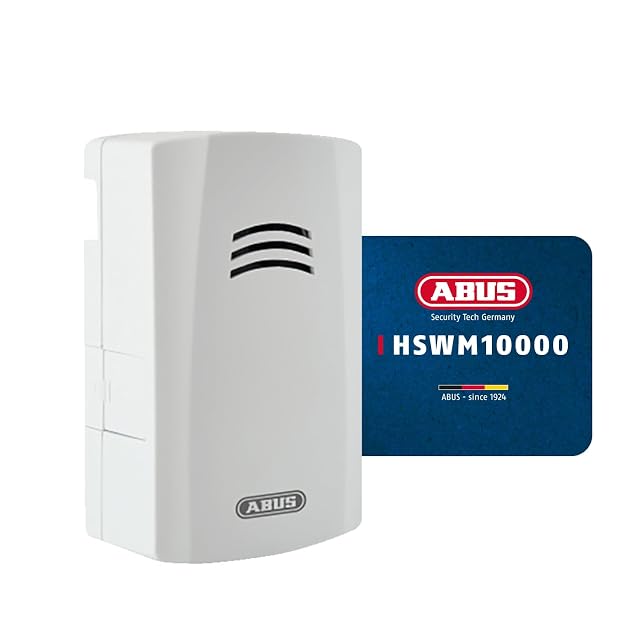
85 dB · two floor probes · stands on the floor · basement, laundry, kitchen, utility room
A standalone water alarm that stands on the floor with two probes underneath. ABUS states an 85 dB tone that sounds as long as the probes are in contact with water or another conductive liquid.
Best for: The floor beside a washing machine, a dishwasher or a water heater.
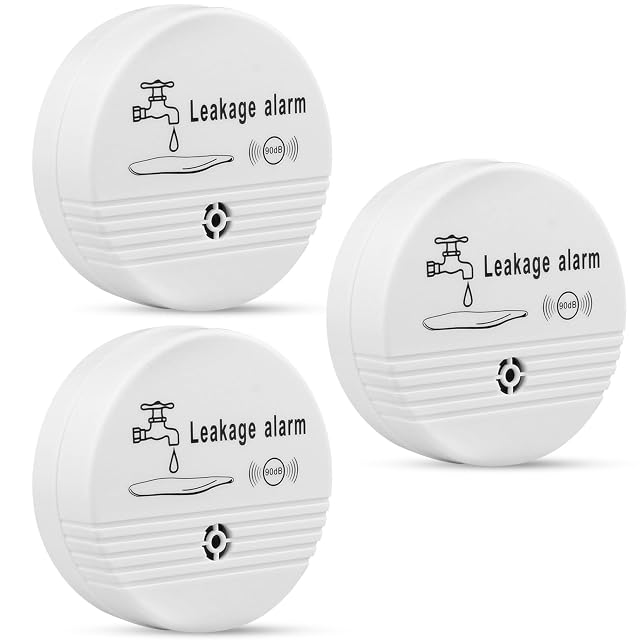
90 dB · three units · two electrodes on the base · wall or floor · ABS
Three water alarms at 90 dB with two electrodes on the base, which GOMETY states trigger immediately on contact with water. Wall or floor mounting, in ABS plastic, with no wiring or programming.
Best for: Covering three risks at once — the usual number in a house with a basement.
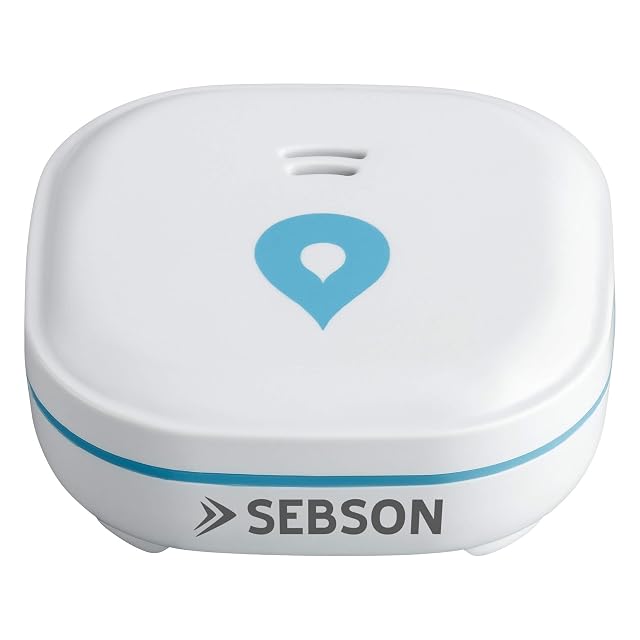
A miniature floor sensor with a sealed lithium battery that SEBSON states lasts ten years. No battery to change, and no battery compartment to corrode.
Best for: A place you will not revisit — under a bath, behind a built-in appliance, beside a boxed-in water heater.