The cheapest sensor in the house guards the most expensive damage · review
X-Sense SWS54 review
A connected leak detector: X-Sense states six sensing points — two upper and four lower — with a push notification to a phone as well as a local alarm and a tone from the base station.
The conclusion The one that works in an empty house, which is where leaks do their damage. Arrange a key holder before you rely on it.
A local-only detector makes a noise in the room it is in. If
nobody is in the house, that noise is a tree falling in a forest.
Where the money goes
A push notification to a phone. In a holiday home, a second property, or any
house whose occupants work away, that is the difference between an hour of
water and a weekend of it — and a weekend of it is a floor, a ceiling and a
kitchen.
It also sounds locally and on the base station, so a household that is in
still hears it in the room and elsewhere in the house.
The six sensing points
Four on the base, two higher up. The lower four report water arriving; the
upper two report it rising, which distinguishes a spilt bucket from a burst pipe.
Two honest caveats
It depends on Wi-Fi, and a flood serious enough to matter may also be a power
cut. And a notification is only worth what you can do with it: if you are two
hundred kilometers away, you need a neighbor with a key and a stopcock.
Arrange that before relying on the sensor.
What the listing specifies
X-Sense states detection from 0.4 mm of water, with a flashing red light, and an alarm adjustable up to 110 dB on both the sensor and the base, silenced from the app or by a button. Radio range is up to 500 m (1,640 ft), the housing is IP66, the included batteries are stated at about three years and the unit at five. The app shares the device with family, tests the sensor, warns of a low battery and snoozes the alarm for 10 minutes to 12 hours. It does not work with Alexa.
Who it suits
Anybody whose house is regularly empty.
Availability
Listed but with no offer on the American Amazon store — the reference exists there and nobody is currently selling it.
Prices and availability are what Keepa reported on the date this page was updated; both move.
What reassures, and what does not
Strengths
Push notification to a phone: it works when the house is empty
Six sensing points, including two above the base, for rising water
Sounds locally and on the base station, so both the room and the house are alerted
IP66, included batteries stated at about three years
Compromises
Requires the X-Sense base station and Wi-Fi
Costs more than a local-only detector
A notification is useless if you cannot get somebody to the house
Depends on the broadband being up, which a flood may not respect
Specifications
Sensing
2 upper and 4 lower sensors, stated by X-Sense
Alerting
Push notification to phone, plus local and base station alarm
Connectivity
Wi-Fi, via X-Sense base station
Type
Compact flood sensor
Volume
Adjustable up to 110 dB, on the sensor and the base
Sensitivity
From 0.4 mm of water, stated by X-Sense
Range
Up to 500 m (1,640 ft) to the base station
Weather rating
IP66, stated by the manufacturer
Battery
Replaceable batteries included, about 3 years; 5-year device life stated; not Alexa compatible
Amazon reference
DE B0BJ6B1LPQ · US B0BDFX2LR9 · GB B0BJ6B1LPQ · FR B0BJ6B1LPQ · IT B0BJ6B1LPQ · ES B0BJ6B1LPQ
EAN
0850042393499
The questions we are asked
Is a connected detector worth four times the price?
In an empty house, yes, without argument — a local alarm in an empty building is a noise nobody hears, and the difference between an hour of water and a weekend of it is the whole cost of a floor. In an occupied house it is a convenience.
What are the upper sensors for?
Rising water. Four points on the base detect water arriving; two higher up detect it continuing to rise, which distinguishes a spill from a flood. X-Sense states the two levels detect both leaks and floods.
What if the notification arrives and I am 200 km away?
Then you need somebody who can get there — a neighbor, a key holder, a letting agent. A connected sensor buys information, and information is only worth what you can do with it. Arrange the second half before relying on the first.
Our score
8.1/ 10
The one that works in an empty house, which is where leaks do their damage. Arrange a key holder before you rely on it.
What this one costs among water leak detectors
A reference exists on these Amazon stores: France, Germany, Italy, Spain, United Kingdom, United States. Listed is not the same as in stock — availability changes daily.
Details checked on September 2, 2026.
The buyer this one serves, among security devices
A property you leave — a holiday home, a second home, or any house whose owners work away.
Specifications: the manufacturer sheet for home security products and the matching Amazon product page. Prices and availability: Keepa. Every figure on this page names its source.
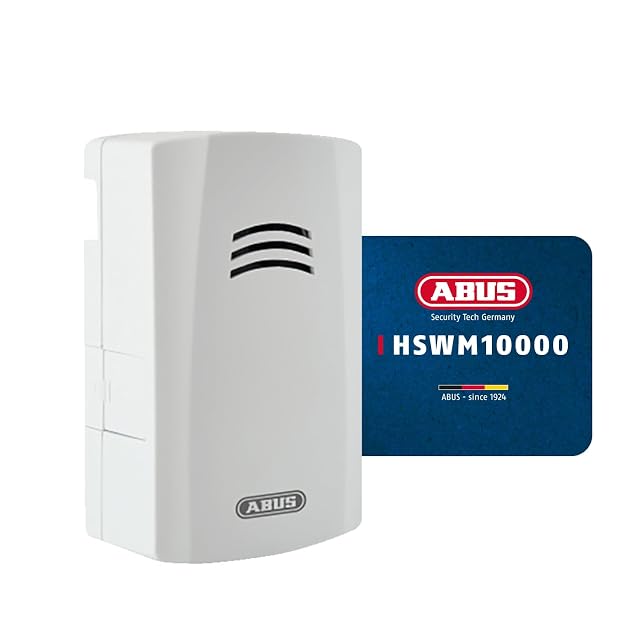
85 dB · two floor probes · stands on the floor · basement, laundry, kitchen, utility room
A standalone water alarm that stands on the floor with two probes underneath. ABUS states an 85 dB tone that sounds as long as the probes are in contact with water or another conductive liquid.
Best for: The floor beside a washing machine, a dishwasher or a water heater.
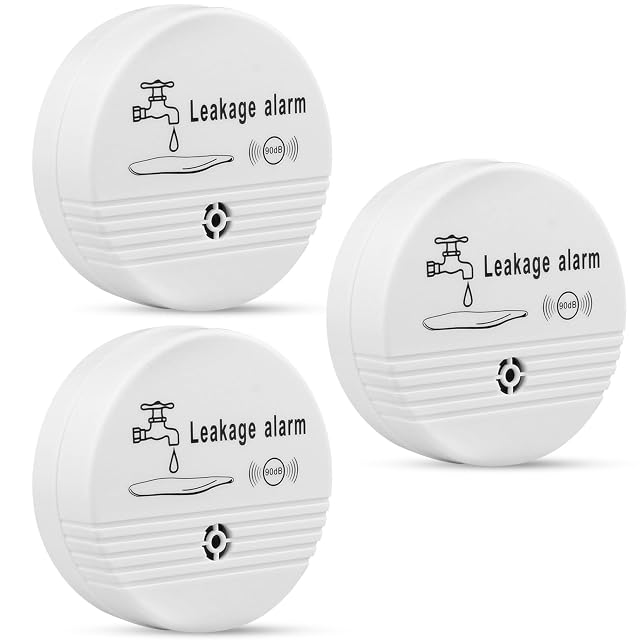
90 dB · three units · two electrodes on the base · wall or floor · ABS
Three water alarms at 90 dB with two electrodes on the base, which GOMETY states trigger immediately on contact with water. Wall or floor mounting, in ABS plastic, with no wiring or programming.
Best for: Covering three risks at once — the usual number in a house with a basement.
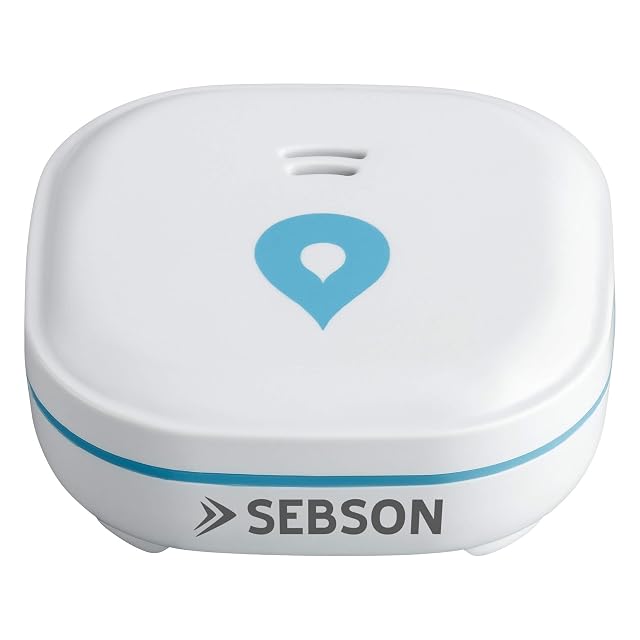
A miniature floor sensor with a sealed lithium battery that SEBSON states lasts ten years. No battery to change, and no battery compartment to corrode.
Best for: A place you will not revisit — under a bath, behind a built-in appliance, beside a boxed-in water heater.