Skip to content

Documents: four boxes, and the two different jobs

A fire box protects paper from heat and can be carried out under one arm. A safe resists force, and the ones in this guide state no fire protection. They are different products solving different problems, and a household with both irreplaceable papers and valuables needs one of each.

The commonest mistake in this family is buying one product and believing it does the other’s job.

Fire boxes

Double-walled, with an insulating layer, rated by a time and an internal temperature. They are light, portable and offer no resistance to being carried away — which is why one of the four here can be bolted down, and why that is unusual.

Safes

Single or multi-wall steel, resisting force. The two in this guide state no fire protection: nothing says papers inside would survive a house fire.

What goes where

Passports, certificates and deeds in the fire box. Cash, jewelry and anything a thief would want in the safe. Digital backups off-site, in somebody else’s house.

The rule that governs both

Bolt them down. An unbolted safe is a strongbox with a handle, and a fire box is one of the easiest things in the house to steal.

Which device does your home need?

You are protecting against fire
A fire-rated safe, and the rating tells you what it protects and for how long.
You are protecting against theft
A different rating entirely, and often a different safe.
You keep digital media
Media needs lower temperatures than paper, and ordinary fire safes do not provide it.
The safe is portable
A safe that can be carried away is a box that keeps your valuables together for a thief.

Picking by what you are protecting

Documents and passports

The commonest use, where fire is the risk paper cannot withstand.

Modest valuables

Where a bolted-down safe deters casual theft, though not a determined attack.

Digital media

Where a media-rated safe is needed, since paper survives temperatures that destroy drives and discs.

Firearms and controlled items

Where specific legal requirements apply and general-purpose safes are not sufficient.

What actually protects, and what is noise

Fire rating against burglary rating
They are different tests measuring different things. A fire safe may offer little theft resistance and vice versa.
How it is fixed
An unfixed safe is carried away and opened elsewhere. Bolting it down is what makes it a safe rather than a box.
What you are storing
Paper, digital media and cash all have different needs, and media in particular needs a lower internal temperature.
Where it goes
Somewhere concealed and structurally sound. A safe bolted to a chipboard floor is not bolted down.
The lock type
Key, combination or electronic, each with different failure modes. Electronic locks have batteries, which eventually matter.

Which figure for which entrance

What you storeWhat you needThe note
Paper documentsA fire ratingCheck the duration
Cash and valuablesA burglary rating and fixingUnfixed is not secure
Digital mediaA media ratingLower temperature than paper
AnythingBolted to something solidOtherwise it is portable

Where this is usually botched

Not bolting it down
A portable safe is a convenient container that a thief removes and opens at leisure. Fixing is not optional.
Confusing fire and burglary ratings
They are different tests. A safe that protects paper from fire may be trivial to force open.
Storing digital media in a paper-rated safe
Drives and discs fail at temperatures paper survives easily. A media rating exists for exactly this reason.
Losing the only key or forgetting the code
Plan for it before it happens.

By the home you have

The document keeper
Needs a fire rating more than a burglary one, and still bolts it down.
The one with valuables
Needs a burglary rating, proper fixing and to consider whether a bank is the better answer.
The one with backups
Needs a media-rated safe, or better still an off-site copy as well.

Batteries, updates and working life

Safes are ignored for years at a time, which is how their locks fail. Electronic locks run on batteries that die quietly, and a combination nobody has used since installation is a combination nobody remembers accurately.

  • Replace electronic lock batteries on schedule rather than waiting.
  • Operate the lock periodically so the mechanism does not seize.
  • Check the fixings occasionally; floors and walls move.
  • Keep a record of the code or a spare key somewhere secure but separate.

Safety

A safe is only part of an answer.

  • Do not keep the only copy of anything irreplaceable in one place; consider off-site copies.
  • Fix the safe as the manufacturer specifies; improvised fixing defeats the purpose.
  • Check insurance limits for cash and valuables kept at home.
  • Do not tell people what you keep in it or where it is.

The choices, and what settled them

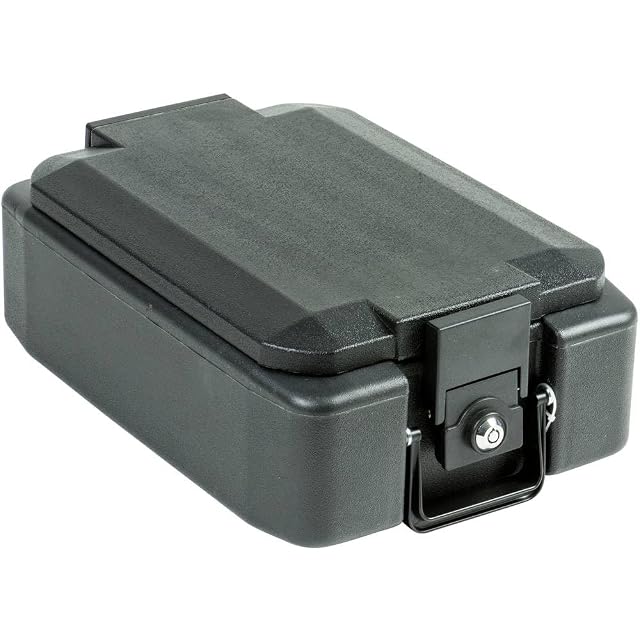
  1. BURG-WÄCHTER FP 22 K

    Double-walled · certified UL 72 fire protection, 30 min · key lock · bolts to the floor

    A double-walled fire box with certified UL 72 fire protection for 30 minutes, from a safe manufacturer, and the only one in this hub that can be bolted to the floor.

    Best for: Papers that need both fire protection and not to leave the house under somebody's arm.

    8.4/10

    ≈ $425

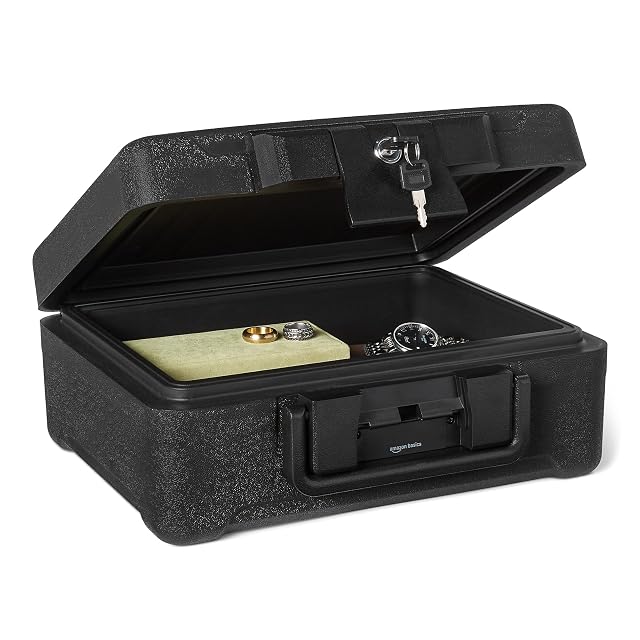
  2. Amazon Basics FP1401M

    6.2 L · UL 72 Class 350, 30 min at 843 °C (1549 °F) · fire and water resistant · key lock, 2 keys

    A document box with a published fire rating: Amazon Basics states UL 72 Class 350 for 30 minutes at 843 °C (1549 °F), in a 6.2-liter fire and water resistant case with a mechanical key lock.

    Best for: Passports, deeds and certificates — the papers that cannot be reprinted.

    7.2/10

    ≈ $40

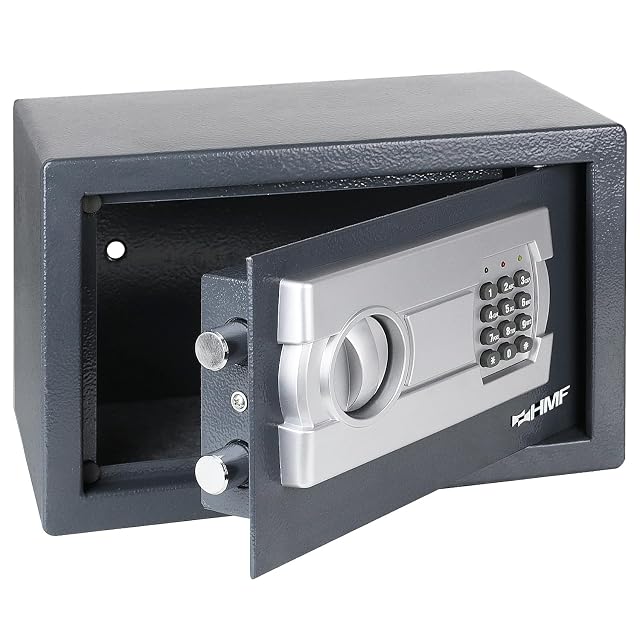
  3. HMF 4612112

    A5 documents · 3–8 digit code, silenceable · manual override · 1 mm (0.04 in) walls, 3 mm (0.12 in) door

    A furniture safe for A5 documents with a freely programmable three-to-eight digit code, a silenceable keypad and a manual override. HMF publishes the steel thicknesses: 1 mm (0.04 in) walls and a 3 mm (0.12 in) door.

    Best for: A hotel-style installation in a cupboard, where the published steel thickness lets you judge it honestly.

    8.1/10

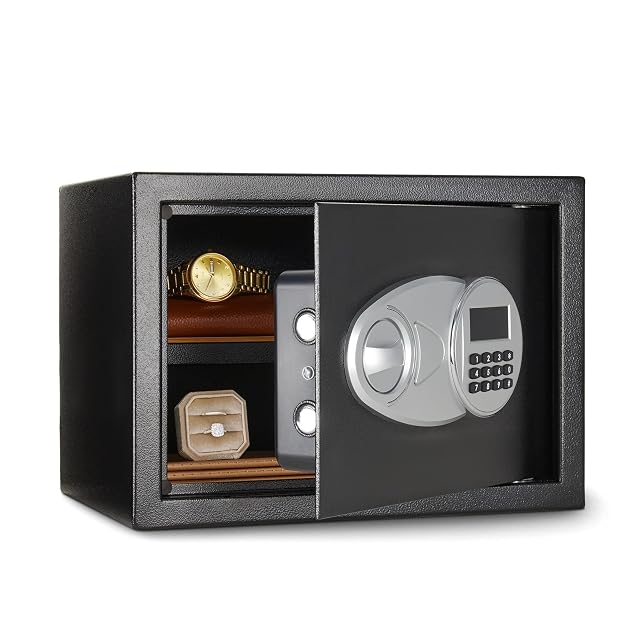
  4. Amazon Basics 25EI

    14 L · digital keypad · 2 override keys · concealed anti-pry hinges · adjustable shelf · 4 × AA

    A 14-liter steel safe with a digital keypad, two emergency override keys kept separately, concealed hinges described as anti-pry, and a removable adjustable shelf. It runs on four AA cells.

    Best for: The default household safe: big enough for documents, small enough to bolt into a wardrobe floor.

    8.1/10

    ≈ $58

The questions we are asked

What does UL 72 Class 350 mean?

Two numbers: the box was in a furnace for a stated time, and the inside stayed below 350 °F — about 177 °C (351 °F), the threshold below which paper survives. A rating with only one of those numbers has told you half of nothing, and this site reports which half is missing.

Can I keep a hard drive in a fire box?

Not in a paper-rated one. Drives and memory cards are damaged far below 177 °C (351 °F). The honest answer for digital backups is off-site storage, which survives the fire, the flood and the burglary at once and costs nothing.

Fire rating or burglary rating?

They are different tests. Decide which risk you are actually addressing, since a safe strong against one may be weak against the other.

Does it need bolting down?

Yes, without exception. An unfixed safe is a container a thief carries away and opens somewhere convenient.

What if I forget the combination?

It happens more than people expect. Keep a record somewhere secure but separate, and know what the manufacturer's recovery process is.

Where should the safe go?

Somewhere concealed and structurally solid. Bolting it to a thin floor or a stud wall does not achieve what bolting it down should.

Is a home safe better than a bank?

For documents you need regularly, yes. For genuinely valuable items, a bank facility is worth comparing against your insurance limits.

Each device, and the door it watches

BURG-WÄCHTER FP 22 K · $425

Designed for: Papers that need both fire protection and not to leave the house under somebody's arm.

Its main asset: Can be bolted down — the only fire box here that addresses theft at all

Its main gap: Plastic body with fire material — resistance to force is minimal even bolted

Read the full review →

Amazon Basics FP1401M · $40

Designed for: Passports, deeds and certificates — the papers that cannot be reprinted.

Its main asset: UL 72 Class 350 published, with both the duration and the temperature

Its main gap: Class 350 protects paper, not digital media

Read the full review →

HMF 4612112

Designed for: A hotel-style installation in a cupboard, where the published steel thickness lets you judge it honestly.

Its main asset: Steel thicknesses published — 1 mm (0.04 in) walls, 3 mm (0.12 in) door — the Kesser in this hub states only its 4 mm (0.16 in) door

Its main gap: 1 mm (0.04 in) walls are thin: this resists hands, not tools

Read the full review →

Amazon Basics 25EI · $58

Designed for: The default household safe: big enough for documents, small enough to bolt into a wardrobe floor.

Its main asset: 14 liters — genuinely usable capacity for the money

Its main gap: No published steel thickness or security grade

Read the full review →

What each level of spending protects

The short decision

Comparisons that matter here

Device against device, already covered, inside this guide or this aisle.

What this comparison is built on

The devices listed are drawn from the catalog of this site. Specifications are those the maker and the Amazon listing publish; prices are what Keepa recorded on the date shown, and both move. The order follows declared specifications, the balance between stated strengths and stated limits, and price. No device here has been installed or tested by us, and no page claims it was.

Last checked on

Prices quoted in these summaries are dated readings. The live price is shown next to each product.

The tool we use ourselves

Chosen your tool? Now buy it at the right price.

Cameras, alarm kits and safes swing by thirty dollars or more across the year, and the biggest "discounts" often land at prices the same model sold for six weeks earlier. UniverTrack tracks the real price history across retailers, spots fake reductions, and alerts you when it is genuinely the moment to buy.

Real price historyBuy-now alertsAI buying assistant
Try free for 14 days →
No commitment · Cancel in one click · 5 languages