Skip to content

Side gates: four things, and the one people often forget

A side gate can be improved for a few dollars, and the common mistake is buying a good padlock for a gate that lifts straight off its hinges. Secure one hinge, bolt the hasp properly, use a shrouded lock, know when somebody comes through, and light the passage.

Side gates are where people get into backyards, and they are often protected by hardware chosen at a checkout.

The hinge

Two pin hinges mean the gate lifts off. Secure one of them and the lock at the other end starts to matter. It is often the one people forget.

The fixings

Coach bolts, through, nuts inside. Screws into the outside face of a gate are a formality.

The lock

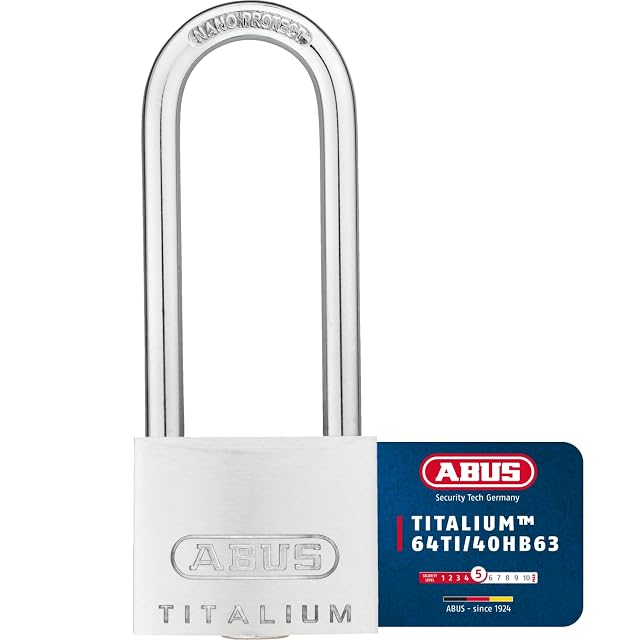
Shrouded, so a cropper has nowhere to sit. Buy the shortest shackle that will physically reach — every millimeter of exposed steel is attack surface. The ABUS in this guide is the 63 mm (2.5 in) long-shackle version: only take it if the hasp needs it. On an outer gate taking driving rain, a corrosion-resistant body matters more than an extra millimeter of shackle, because a seized padlock is one nobody uses.

Knowing

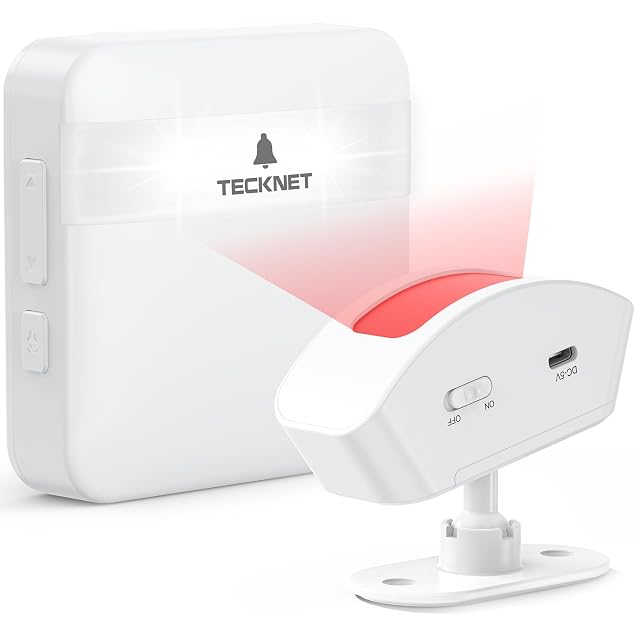
A driveway or passage alarm with the sensor outside and the receiver indoors tells you somebody has come through, which a lock never does. Aim it across the passage rather than along it.

The light

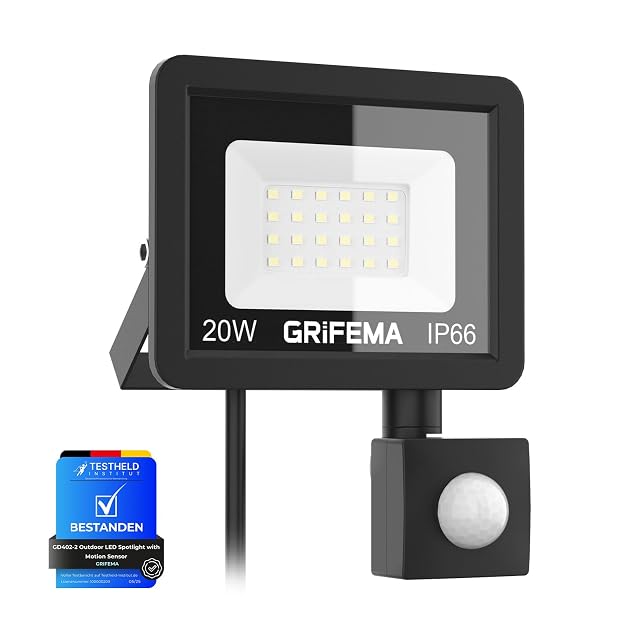
A motion floodlight over a side passage acts first, before anybody touches anything. Aim it down rather than out, and check what it lights from the neighbor’s window.

What the gate is protecting

Usually a shed, a bike and a back door. Secure those too.

Which device does your home need?

You have a side passage
A gate is the first barrier and it is often the weakest link in the whole property.
The gate is low
Height matters, because a gate that is easily climbed is decoration.
The gate hinges outward
The hinge pins may be accessible, which lets the gate be lifted off.
You want a deterrent
A gate that is noisy and visible is worth more than a silent one.

Picking by what you are protecting

Side passages

Where a gate removes the concealed route to the back of a house, which is the classic approach.

Garden access

Where a gate protects tools, bikes and the back door together.

Deterrence

Where a locked gate signals that going further is a deliberate act rather than a casual one.

Deliveries

Where a locked gate complicates parcels, which is worth planning for rather than discovering.

What actually protects, and what is noise

Height and climbability
A gate that can be stepped over is a formality. Height, and the absence of footholds, is what makes it a barrier.
The lock and where it sits
A bolt reachable over the top of the gate is not a lock. Position matters as much as quality.
Hinges
Accessible hinge pins let a gate be lifted off entirely. Hinge bolts or reversed pins prevent it.
The posts and the fixings
A strong gate on a rotten post is a weak gate. The post is part of the security.
Noise
A gate that squeaks or rattles is an alarm of sorts, and some people deliberately do not oil them.

Which figure for which entrance

The weaknessThe fixThe note
Low gateHeight or a trellis topClimbability decides everything
Bolt reachable over the topA lock lower downPosition matters
Liftable hingesHinge boltsOtherwise the gate comes off
Rotten postReplace the postThe gate is only as good as it

Where this is usually botched

Fitting a bolt that can be reached over the gate
It secures nothing. The lock needs to be where an arm over the top cannot reach it.
Ignoring the hinge side
A gate lifted off its hinges opens as easily as an unlocked one. Hinge bolts cost very little.
Building the gate up but leaving the fence low
People go around a gate, not through it. The barrier is only as high as its lowest point.
Not planning for deliveries
A locked side gate means parcels come to the front or not at all, which is worth deciding deliberately.

By the home you have

The terraced householder
Secures the side passage, which is often the only concealed route to the back.
The tool owner
Treats the gate as the first line protecting the shed, and secures both.
The one expecting deliveries
Plans how parcels arrive before locking the only side access.

Batteries, updates and working life

Gates move with the weather and the ground, and a gate that has dropped no longer meets its latch. That is usually why gates end up propped open or left unlocked, which is a security failure caused by maintenance rather than design.

  • Adjust hinges when the gate begins to drop or catch.
  • Treat timber and check posts at ground level, where rot starts.
  • Lubricate locks with a lock-specific product, sparingly.
  • Check that bolts still engage fully after seasonal movement.

Safety

A gate is a barrier for everyone, including you.

  • Make sure the gate can be opened from inside quickly in an emergency.
  • Do not fit anything to the top of a gate that could injure someone climbing it; the law is unsympathetic.
  • Keep the route through the gate clear and lit.
  • Consider access for emergency services when locking a property's only side entrance.

The choices, and what settled them

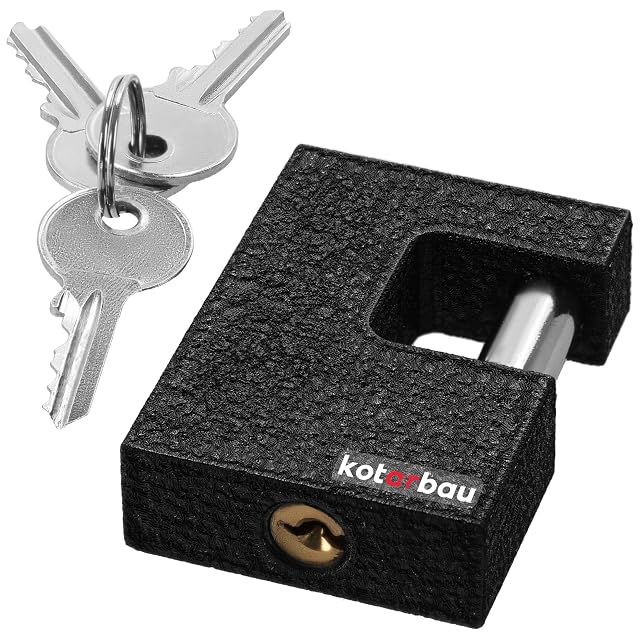
  1. KOTARBAU Monoblock 60 mm

    60 mm (2.36 in) cast-iron monoblock body · chrome-plated hardened bolt · shrouded shackle

    A monoblock cast-iron padlock: the body encloses the shackle so that very little of it is exposed. KOTARBAU states a chrome-plated hardened steel bolt in a solid cast body.

    Best for: A shed, a store or a gate where a cropper is the realistic threat rather than a curious hand.

    7.5/10

    ≈ $31

  2. ABUS Titalium 64TI/40HB63

    6.5 mm (0.26 in) shackle · 63 mm (2.48 in) high shackle · Titalium body, 107 g (3.8 oz) · paracentric key · ABUS level 5

    ABUS's everyday Titalium padlock with a high 63 mm (2.48 in) shackle: a special-aluminum body at 107 grams, a hardened steel shackle, a paracentric keyway against manipulation, and double shackle locking.

    Best for: Doors, lockers and tool boxes where the lock is carried, opened often, and left outdoors between times.

    8.1/10

    ≈ $28

  3. TECKNET TK-WD010

    Split sensor and receiver · 32 tones · 8 m (26 ft) × 110° PIR · wireless chime alarm

    A two-part driveway alarm: a PIR sensor outside and a receiver indoors with 32 selectable tones. TECKNET states an 8 meter (26.2 ft) by 110 degree detection field.

    Best for: Knowing somebody has entered a driveway or a yard before they reach the door.

    7.5/10

  4. GRIFEMA GD402-2

    20 W · 2,200 lm · 6500 K · IP66 · adjustable SENS, TIME and LUX

    A 20 W motion floodlight at 2,200 lumens and 6500 K, rated IP66, with three separate adjustments: sensitivity, on-time and the ambient light level below which it will trigger.

    Best for: A first security light where the three adjustment dials matter more than the brand.

    6.9/10

The questions we are asked

Why does the hinge matter more than the lock?

Because a gate on ordinary pin hinges lifts vertically off them with the lock still engaged at the other side. Securing one hinge — a hinge bolt, a reversed pin, or a plate that fouls the lift — is what makes the lock relevant at all.

What fixings should a hasp use?

Coach bolts through the timber with the nuts on the inside. Screws driven into the outside face of a gate are removed with the same screwdriver anybody carries, whatever lock hangs from them.

How high should a gate be?

High enough not to be stepped over, and without footholds. Height is the main thing that turns a gate from a formality into a barrier.

Where should the lock go?

Low enough that an arm reaching over the top cannot operate it. A reachable bolt secures nothing at all.

Should I oil a squeaky gate?

Some people deliberately do not, since noise is a modest alarm. It is a genuine trade-off between annoyance and warning.

Can I put spikes on top?

Anti-climb measures raise real liability questions in many countries. Check what is permitted before fitting anything that could injure.

What about deliveries?

A locked side gate changes where parcels go. Deciding that in advance is easier than discovering a courier has left one in the street.

Each device, and the door it watches

KOTARBAU Monoblock 60 mm · $31

Designed for: A shed, a store or a gate where a cropper is the realistic threat rather than a curious hand.

Its main asset: Monoblock construction shrouds the shackle — the single biggest step up in this family

Its main gap: Heavy, and it will mark a painted gate

Read the full review →

ABUS Titalium 64TI/40HB63 · $28

Designed for: Doors, lockers and tool boxes where the lock is carried, opened often, and left outdoors between times.

Its main asset: 107 g (3.8 oz) — light enough to carry without noticing

Its main gap: 6.5 mm (0.26 in) shackle, thinner than the Alutitan alongside it

Read the full review →

TECKNET TK-WD010

Designed for: Knowing somebody has entered a driveway or a yard before they reach the door.

Its main asset: Sensor outside, sound inside — you hear it, the visitor does not

Its main gap: Range depends on the axis: 8 m by 110° horizontally, 10 m by 30° vertically

Read the full review →

GRIFEMA GD402-2

Designed for: A first security light where the three adjustment dials matter more than the brand.

Its main asset: Three separate adjustments — sensitivity, time and daylight threshold

Its main gap: 6500 K is a harsh, blue-white light that neighbors notice

Read the full review →

What each level of spending protects

The short decision

Comparisons that matter here

Device against device, already covered, inside this guide or this aisle.

What this comparison is built on

The devices listed are drawn from the catalog of this site. Specifications are those the maker and the Amazon listing publish; prices are what Keepa recorded on the date shown, and both move. The order follows declared specifications, the balance between stated strengths and stated limits, and price. No device here has been installed or tested by us, and no page claims it was.

Last checked on

Prices quoted in these summaries are dated readings. The live price is shown next to each product.

The tool we use ourselves

Chosen your tool? Now buy it at the right price.

Cameras, alarm kits and safes swing by thirty dollars or more across the year, and the biggest "discounts" often land at prices the same model sold for six weeks earlier. UniverTrack tracks the real price history across retailers, spots fake reductions, and alerts you when it is genuinely the moment to buy.

Real price historyBuy-now alertsAI buying assistant
Try free for 14 days →
No commitment · Cancel in one click · 5 languages